#LSPPDAY29
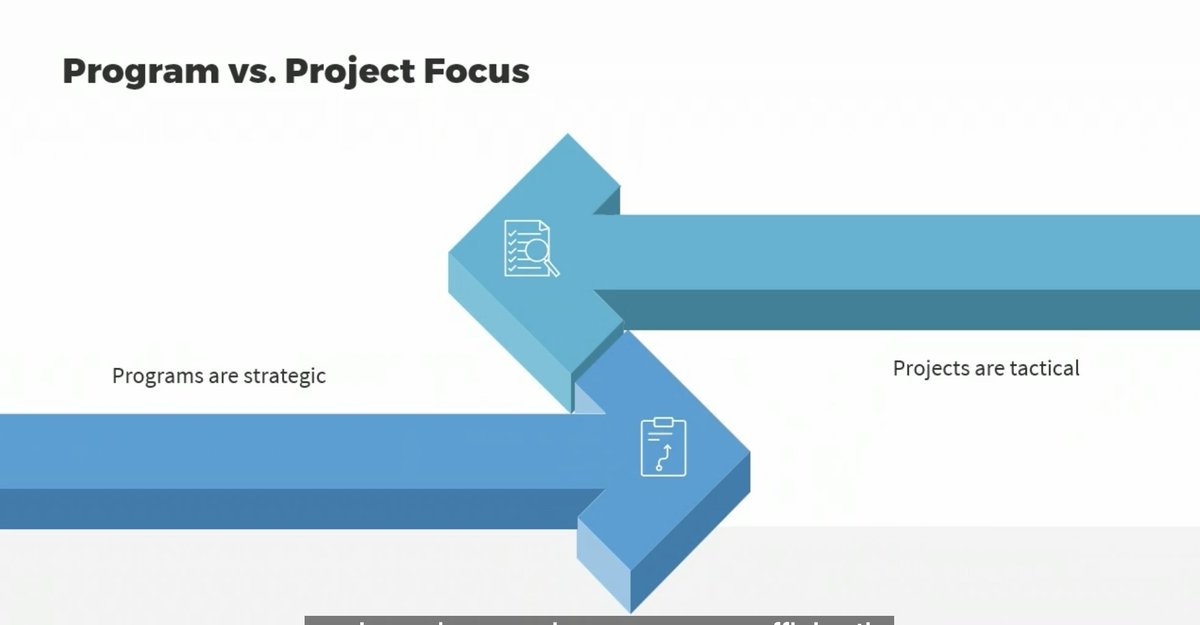
Key Characteristics of Programs:
Programs focus on achieving strategic outcomes.
It consist of interrelated projects and initiatives.
Program managers take a holistic view to align all projects with strategic goals.value.
#60DaysOfLearning2025#LearningWithLeapfrog
#LSPPDAY28
Today I explored the key characteristics of successful projects.
-Specific and well-defined, Goal-oriented, Milestone-based, Budget-conscious, Planned and reported, Communicative, Measurable, Achievable, Relevant, Time-bound
#60DaysOfLearning2025#LearningWithLeapfrog
#lsppday27
Key Learnings from the course of CAPM:
-Understanding What a Project Is
-Difference Between Projects and Operations
-Project Outcomes
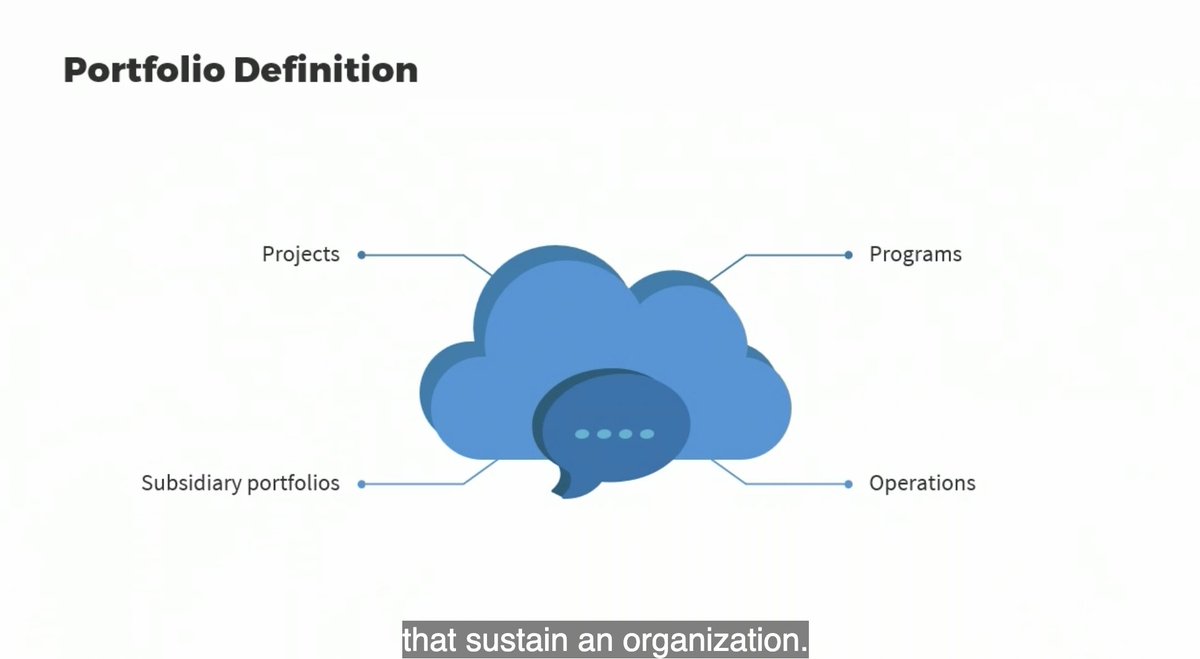
-Portfolios, Programs, and Projects
#60DaysOfLearning2025#LearningWithLeapfrog
#lsppday26
Upgraded the processing pipeline with smarter prompt for edge cases:
• Added conditional logic for ambiguous formats (checkboxes/options)
• Reduced false negatives in Q&A extraction by 40% through Gemini prompt refinements
#60DaysOfLearning2025#LearningWithLeapfrog
#lsppday25
Focused on refining the extraction logic by improving prompt for edge cases and ambiguous formatting.
Enhanced Excel handling pipeline using openpyxl + pandas to maintain consistency across sheets with irregular layouts.
#60DaysOfLearning2025#LearningWithLeapfrog
#LSPPDay24
I worked on designing clear and strict prompts to guide an LLM to extract structured Q&A pairs from docs.
I used openpyxl to read complex Excel sheets, handle merged cells, and convert them into clean DataFrames.
#60DaysOfLearning2025#LearningWithLeapfrog
#LSPPDay22
Key Takeaways
-Break problems into sub-questions (e.g., "Explain X, then analyze Y").
-Mitigate hallucinations with hybrid search (AI + verified sources)
-Bias-check: Ask the model to self-evaluate its reasoning.
#60DaysOfLearning2025#LearningWithLeapfrog
#LSPPDay21
Key Takeaways for Prompt Optimization
-Clarity is everything
-Setting context helps
-Breaking things down works better
-Encouraging step-by-step thinking improves reasoning
-Iterating is key
#60DaysOfLearning2025#LearningWithLeapfrog
#LSPPDay20
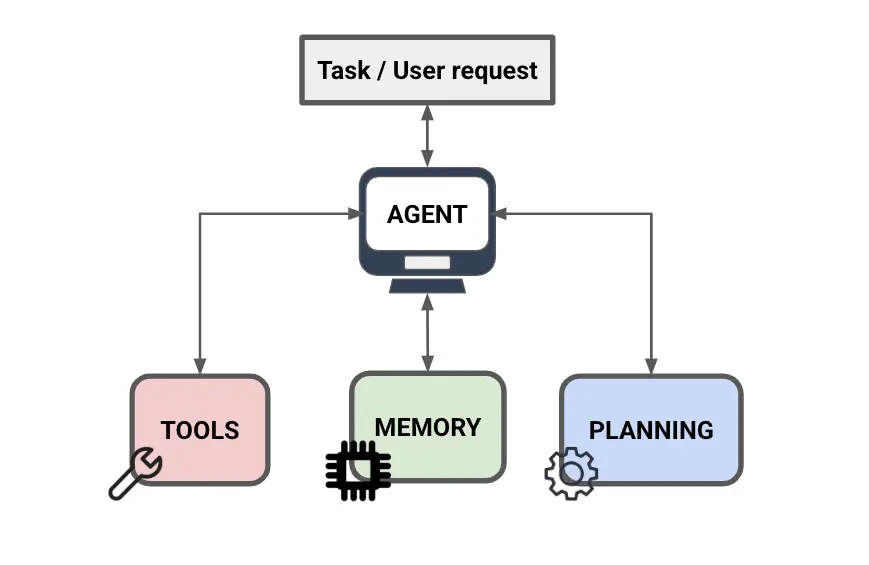
Components of AI Agents:
-AI agents consist of memory, planning, tools, decision-making, and feedback mechanisms to function autonomously.
-Short& Ling-term memory
-Planning(CoT & ToT)
-Tools & Actions
-Decision-Making
#60DaysOfLearning2025#LearningWithLeapfrog
#LSPPDay18
Continued GraphPrompt paper.
GraphPrompt unifies GNN pre-training & downstream tasks using a common template with learnable prompts for better task adaptation. Shows strong results across 5 datasets
#60DaysOfLearning2025#LearningWithLeapfrog
#LSPPDay17
Key Takeaways: Graph Prompting Technique
Graphs help organize information into nodes and edges, making complex data easier to analyze. Clearly define nodes, edges, and relationships in prompts to guide the AI accurately.
#60DaysOfLearning2025#LearningWithLeapfrog
#LSPPDay16
-Multimodal CoT combines text and visuals for better reasoning
-Smaller models can outperform bigger ones with the right prompting
-Multimodal input significantly reduces hallucinations
#60DaysOfLearning2025#LearningWithLeapfrog
- Reflexion is useful in low-resource settings or when nuanced feedback is more helpful than simple rewards.
- Verbal self-reflection makes the model's learning process more understandable and explainable.
- Depends on the model’s ability to self-assess accurately
#LSPPDay15
- Reflexion is a prompting framework where an agent learns from its own outputs by self-evaluating and iteratively refining future responses.
- It mimics a cognitive process: generate → evaluate → reflect → improve.
#60DaysOfLearning2025#LearningWithLeapfrog
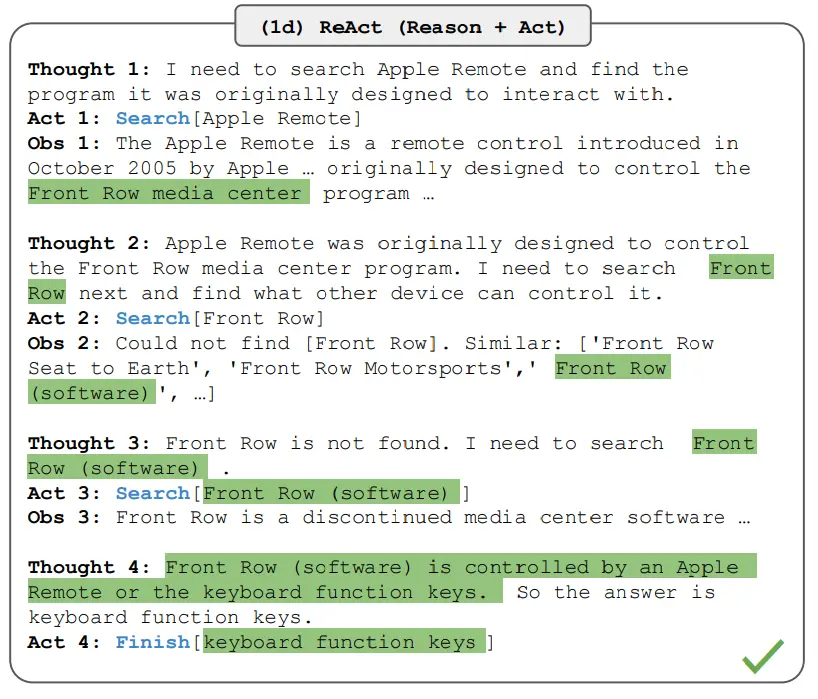
- ReAct can be effectively implemented using LangChain, allowing developers to create agents that dynamically reason and act using tools or APIs.
- ReAct is modeled after how humans solve problems: we think, take action, see the result, then adjust based on feedback.
#LSPPDay14
- ReAct is a prompting technique that enables language models to think and act in an interleaved manner, mimicking human behavior.
- By grounding reasoning with real-time observations, ReAct helps mitigate hallucinations.
#60DaysOfLearning2025#LearningWithLeapfrog
-DSP improves performance in tasks like: Text summarization, dialogue systems, reasoning tasks.
-Achieves strong results using very limited labeled data, making it practical for low-resource settings.
-Works with frozen LLMs.
-Enables fine-grained control over LLM behavior.
#LSPPDay13
Key takeaways:
-DSP guides LLMs by generating stimuli prompts that influence outputs without changing the LLM itself.
-A lightweight, trainable model generates instance specific prompts that steers LLM in a desired direction.
#60DaysOfLearning2025#LearningWithLeapfrog