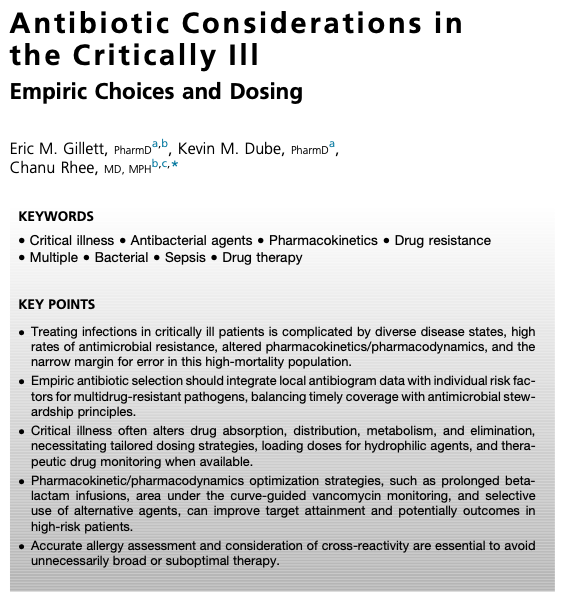
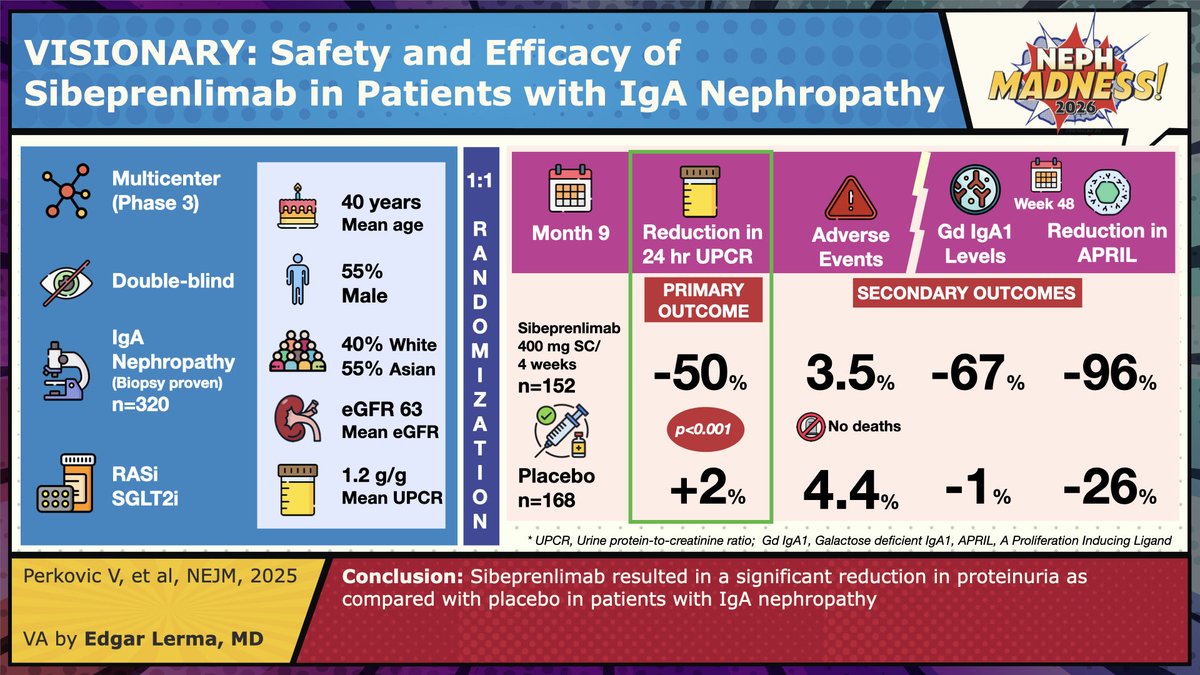
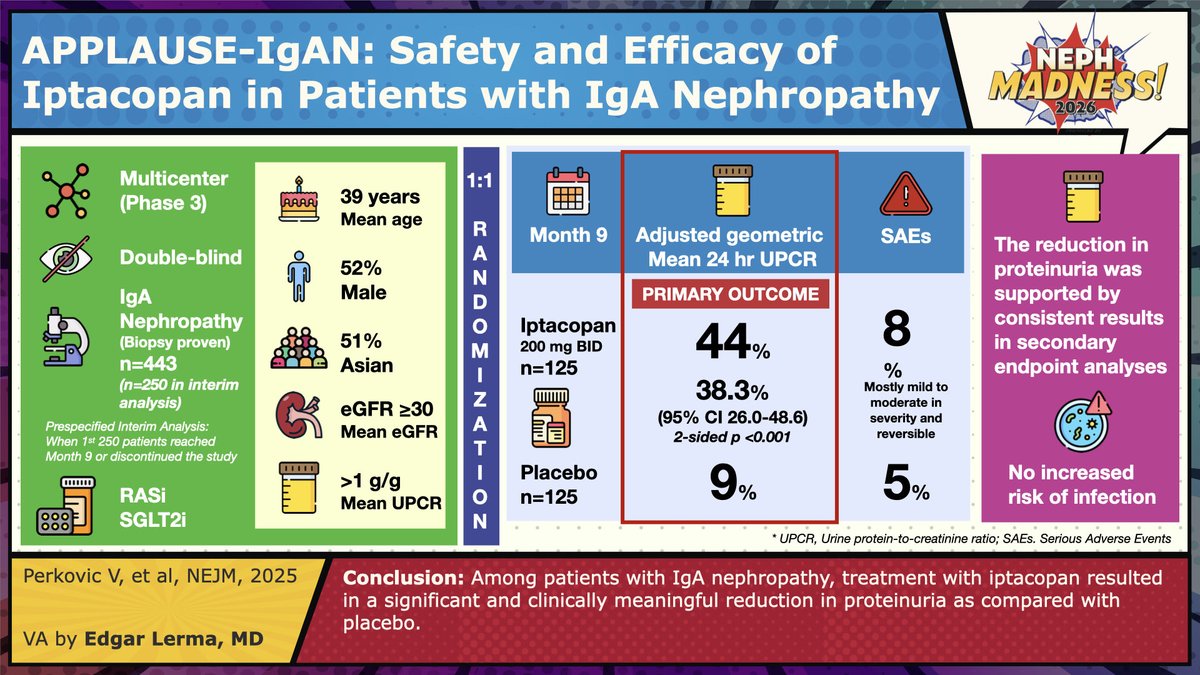
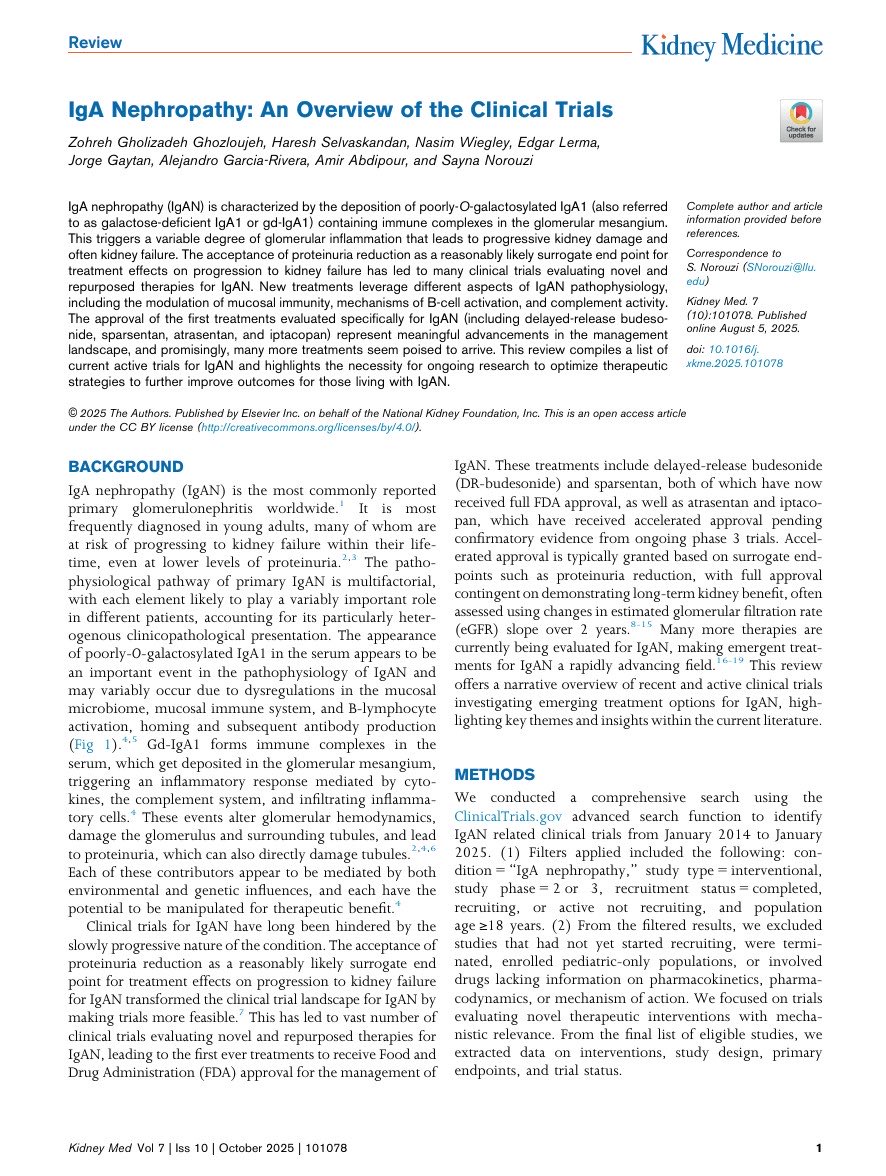
The first educational material I made after becoming an attending nephrologist.
One sheet of cardstock. Full color. Two-sided.
Everything you needed to know about CKD.
Before the smartphone. Before apps. Before UpToDate in your pocket.
There was cardstock.
Lupus Nephritis: The era of TRIPLE THERAPY is here.
For decades, induction therapy largely meant:
Glucocorticoid + MMF
The paradigm is changing.
The 2024 ACR guideline conditionally recommends upfront triple immunosuppressive therapy for active Class III/IV ± V lupus nephritis:
💊 Glucocorticoid
➕ MPAA/MMF
➕ ONE of:
🔹 Belimumab
🔹 Calcineurin inhibitor (CNI)
🔹 Low-dose IV cyclophosphamide + belimumab
📊 What does the evidence show?
BLISS-LN | Belimumab
At 104 weeks:
• Primary renal response: 43% vs 32%
• Complete renal response: 30% vs 20%
• Renal-related event/death: HR 0.51
→ Belimumab added to standard therapy improved renal outcomes.
AURORA-1 | Voclosporin
At 52 weeks:
• Complete renal response: 41% vs 23%
• OR 2.65
• Serious adverse events: 21% vs 21%
→ A CNI + MMF + low-dose steroids produced a rapid and significant renal response.
REGENCY | Obinutuzumab
Another important development:
• Complete renal response at week 76: 46.4%
→ B-cell depletion is expanding the therapeutic landscape of LN.
🎯 But “triple therapy” does NOT mean one regimen for everyone.
Proteinuria ≥3 g/g?
➡️ ACR favours MMF + CNI over belimumab-containing triple therapy.
Significant extra-renal disease?
➡️ A belimumab-containing regimen may be attractive.
eGFR ≤45 mL/min/1.73 m², severe hypertension or significant chronicity?
➡️ Belimumab preferred over CNI, given concerns about CNI nephrotoxicity/hypertension.
And an important caveat:
⚠️ There are still no head-to-head RCTs comparing the major triple regimens.
So the future isn’t simply:
“Triple therapy for everyone.”
It is:
“The right third drug for the right patient.”
From steroid + MMF
➡️ to phenotype-driven combination therapy
➡️ with an increasing focus on rapid proteinuria control + steroid minimisation + long-term kidney preservation.
Lupus nephritis treatment is becoming more precise.
#Rheumatology #Lupus #LupusNephritis #SLE #Nephrology #Immunology
HLA matching tells us how similar donor & recipient are at the antigen level.
But can we look deeper? 🧬
Eplet matching looks at tiny molecular differences on HLA that may influence antibody recognition & DSA formation.
A follow-up to Step 2. 👇
#HLA#EpletMatching#FOAMed
Pre-transplant immunology 🧬 | Step 2
After ABO compatibility comes HLA typing & matching.
HLA helps the immune system distinguish self from non-self.
What do we look for in donor & recipient—and what does an “HLA match” mean?
Let’s break it down. 👇
#NephTwitter#FOAMed
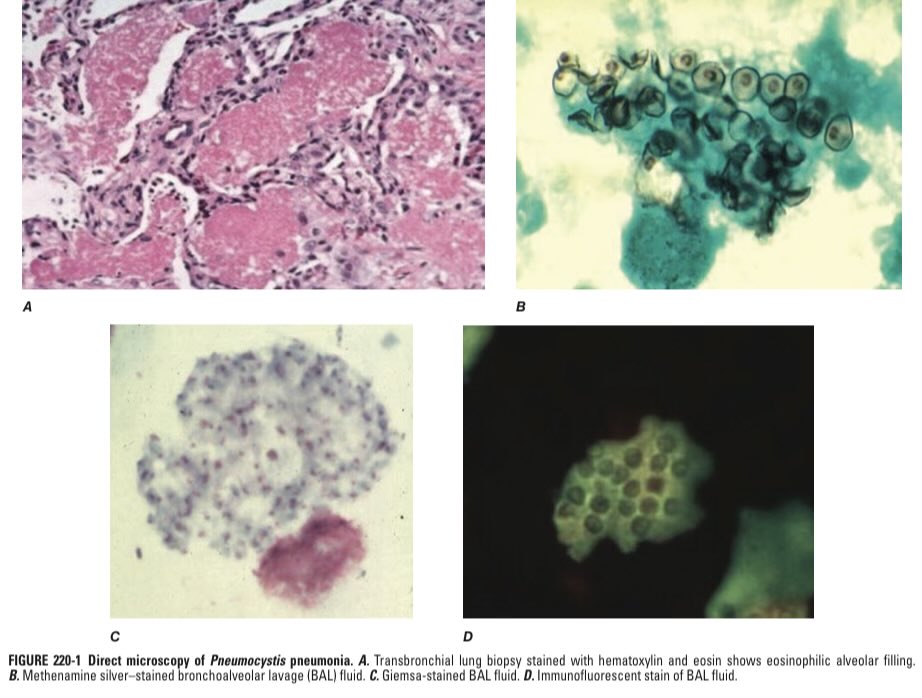
🦠 PCP Pneumonia
The infection every clinician must recognise early because a delay can be fatal.
Let’s break it down in the simplest and most practical way 👇
#MedTwitter#FOAMed#InternalMedicine
🔥 What is PCP
● Caused by Pneumocystis jirovecii
● A fungus that behaves unlike any other fungus
● Lives in alveoli and fills them with foamy proteinaceous material
● Major killer of immunocompromised patients
🎯 Who is at highest risk
● HIV patients with CD4 count below 200
● Most cases occur when CD4 drops below 100
● Cancer chemotherapy
● Solid organ and stem cell transplant
● Patients on high dose steroids
● Patients on rituximab, TNF inhibitors, cyclophosphamide
● Severe malnutrition
● Those unaware they have HIV until they present with PCP
#HIV #CriticalCare
😷 How does PCP present
● Slow onset in HIV patients
● Rapid and aggressive in non HIV immunosuppressed patients
● Fever
● Dry cough
● Progressive breathlessness
● Hypoxia out of proportion to chest findings
● Exertional desaturation is very characteristic
● May appear stable but can crash suddenly
🩺 Exam hints
● Chest exam may be normal early
● Later: diffuse crackles
● Cyanosis and respiratory fatigue indicate impending failure
● Always check walking saturation
🧪 Lab clues
● LDH often elevated
● ABG shows A–a gradient rise
● Beta D glucan may be high
● CBC often nonspecific
● HIV positive patients may have surprisingly normal WBC
📸 Radiology
● CXR: bilateral interstitial infiltrates
● HRCT: diffuse ground glass opacities
● Presence of pneumatoceles or spontaneous pneumothorax points strongly to PCP
● A normal CT almost rules out PCP
🔍 Diagnosis: What confirms it
● BAL is the best sample
● Induced sputum works if done by experienced hands
● Silver stain, toluidine blue, Giemsa
● Immunofluorescence stain is highly sensitive
● PCR is very sensitive but may pick up colonisation
● Negative PCR helps rule out active disease
💔 Why hypoxia is severe
● Organisms coat the alveoli
● Surfactant dysfunction
● Impaired gas exchange
● Alveoli become filled with foamy protein material
● Severe V/Q mismatch
💊 Treatment
🌟 First line
● TMP SMX for 21 days in HIV and severe cases
● 14 days may be enough in mild non HIV cases
💊 Alternatives
● Atovaquone for mild cases
● Clindamycin plus primaquine
● IV pentamidine for severe or intolerant patients
⚠️ Important cautions
● Primaquine can cause hemolysis in G6PD deficiency
● Pentamidine is toxic: renal failure, pancreatitis, hypo or hyperglycemia, arrhythmias
🔥 Steroids save lives in moderate to severe PCP
Use when
● PaO2 below 70 on room air
or
● A–a gradient above 35
Start at the same time as antibiotics. Do not delay.
📅 Steroid regimen
● Prednisolone 40 mg twice daily for 5 days
● Then 40 mg once daily for 5 days
● Then 20 mg once daily for 11 days
💥 Treatment failure
If no improvement by day 4 or worsening
● Re evaluate diagnosis
● Switch to pentamidine or clindamycin plus primaquine
● Consider adding steroids if not already given
● Check for CMV, bacterial pneumonia, PE, ARDS, drug toxicity
🧬 ART in HIV patients
● Start within 2 weeks of PCP treatment
● Watch for IRIS
● Delay only in severe respiratory compromise
🛡 Prophylaxis
Who needs it
● CD4 below 200
● History of PCP
● Prolonged high dose steroids
● Rituximab, TNF inhibitors
● Transplant recipients
● Hematologic malignancy
Best options
● TMP SMX single tablet daily
● Or thrice weekly double strength
Alternatives
● Dapsone
● Atovaquone
● Aerosolised pentamidine monthly
CKD staging isn’t just about GFR anymore. Albuminuria changes everything. 🫘
CKD is classified by 3 things:
📌 Cause (C)
📌 GFR (G)
📌 Albuminuria (A)
Here’s why it matters clinically:
Same GFR, very different risk:
A patient with GFR 60 (G2) and normal albumin → 🟢 Screen only
That same patient with GFR 60 + albumin ≥300 mg/g → 🔴 Treat AND refer
The referral thresholds:
🟢 G1–G2 + A1 → Screen (monitor, no CKD if no other markers)
🟡 G1–G3a + A2 / G3a + A1 → Treat (1–2x/year follow-up)
🟠 G3b+ or A3 → Treat and refer (3x/year)
🔴 G4–G5 (any albuminuria) → Treat and refer (4+ visits/year)
Bottom line:
Don’t just check the creatinine.
Check the urine albumin.
A patient with preserved GFR and heavy proteinuria is already high risk.
The number in each cell = recommended monitoring visits per year. Act accordingly.
#CKD #Nephrology #KidneyDisease #Albuminuria #GFR #InternalMedicine #MedEd
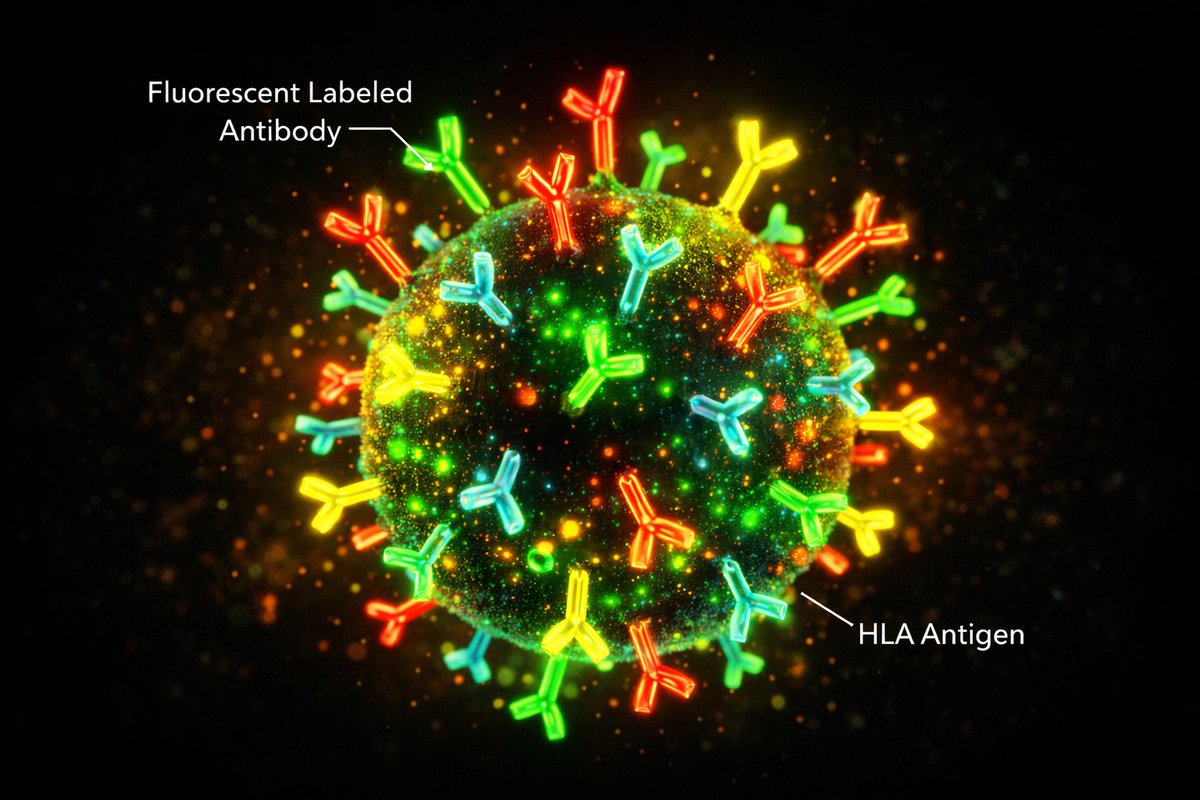
HLA-DQ Antibodies: Small Signal, Big Graft Impact
************************
⚡Most common de novo DSA after transplant
⚡Strongest link to ABMR, TG & graft loss
⚡Higher sensitization → ↑ cPRA → harder retransplant
⚡Risk is independent of HLA-A, B, DR
⚡Unique structure: both α & β chains polymorphic → multiple heterodimers
⚡Low expression ≠ low pathogenicity
⚡Direct endothelial activation (Akt/mTOR, IL-6)
⚡HLA-DR data cannot be extrapolated to DQ
⚡High-resolution DQ typing is essential
⚡HLA-DQ mismatch = high immunologic risk
#KKNephBytes
#Immunology
Living Kidney Donation in Prediabetes: Balancing Benefit and Harm
***************************************
🚨Prediabetes is not benign
🚨Early renal and vascular injury can occur even before diabetes develops.
🚨Prediabetes is not a single entity
IFG, IGT, and IFG + IGT carry different levels of risk.
🚨IFG + IGT is the highest-risk phenotype. It predicts faster progression to diabetes and kidney disease.
🚨HbA1c alone is insufficient
Post-prandial dysglycemia may be missed; OGTT often adds value.
🚨Kidney donation removes ~50% nephron mass.This increases long-term vulnerability in metabolically at-risk donors.
🚨Hyperfiltration may become maladaptive after donation
🚨Prediabetic hyperfiltration plus nephrectomy can accelerate injury.
🚨Short-term outcomes appear safe, long-term risk is uncertain
Most studies lack follow-up beyond 15–20 years.
🚨Risk modifiers matter more than glucose alone
🚨Young age, obesity, hypertension, smoking, and family history amplify risk.
🚨Prediabetes should never be assessed in isolation
🚨Donor evaluation must be holistic, not glucose-centric.
🚨Donor safety takes precedence
Decisions should be conservative, individualized, and ethically sound.
#KKNephBytes
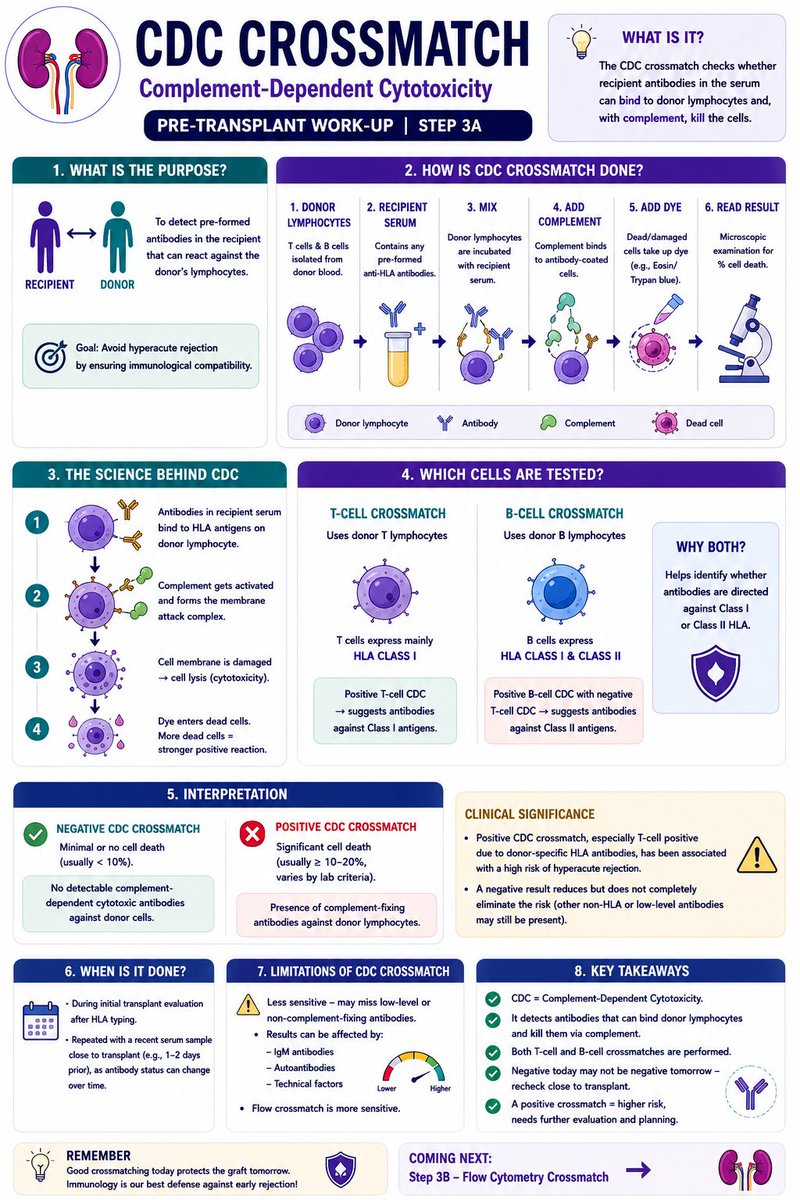
Flow, CDC & the Truth in Between
****************************************
1⃣CDC positivity remains a contraindication to transplant in most centers despite modern assays.
2⃣Flow crossmatch can be positive even when CDC is negative due to low-level antibodies.
3⃣Dead lymphocytes mimic CDC positivity, making viability assessment mandatory before reporting.
4⃣Excess donor cells can cause a prozone-like effect, leading to false-negative CDC results.
5⃣IgM antibodies often cause CDC positivity but may be clinically irrelevant, though class switching can occur.
6⃣DTT treatment helps distinguish IgM from IgG antibodies in CDC interpretation.
7⃣Non-HLA antibodies can cause flow positivity with negative SAB, creating interpretation dilemmas.
8⃣Pronase improves B-cell flow specificity but can reduce HLA expression if overused.
9⃣Flow crossmatch reflects risk, not inevitability of rejection, unlike true CDC positivity.
1⃣0⃣Transplant decisions should be risk-stratified, not test-driven, using combined immunologic data.
#KKNephBytes
@arvindcanchi@hardik4u24@priti899 @
SAB Luminex: From Noise to Precision in DSA Detection
*****************************
💡LXM ≠ final decision tool — high false-positive rate, especially Class II DSA
💡SAB is the gold standard for confirming true DSA
💡High MFI on LXM alone does NOT mean rejection risk
💡Always correlate with SAB + donor HLA typing (VXM)
💡LXM positivity without SAB-DSA should NOT exclude donors
💡Combined testing prevents unnecessary donor rejection and overtreatment
#KKNephBytes
#Immunology