For no reason in particular, here are places I can be found and other important information!
♥️ https://t.co/5ceNGHIlqC
♠️https://t.co/cGomzmxWeS
♦️https://t.co/15ANMqxWxe
♣️ https://t.co/yzFQXbir83
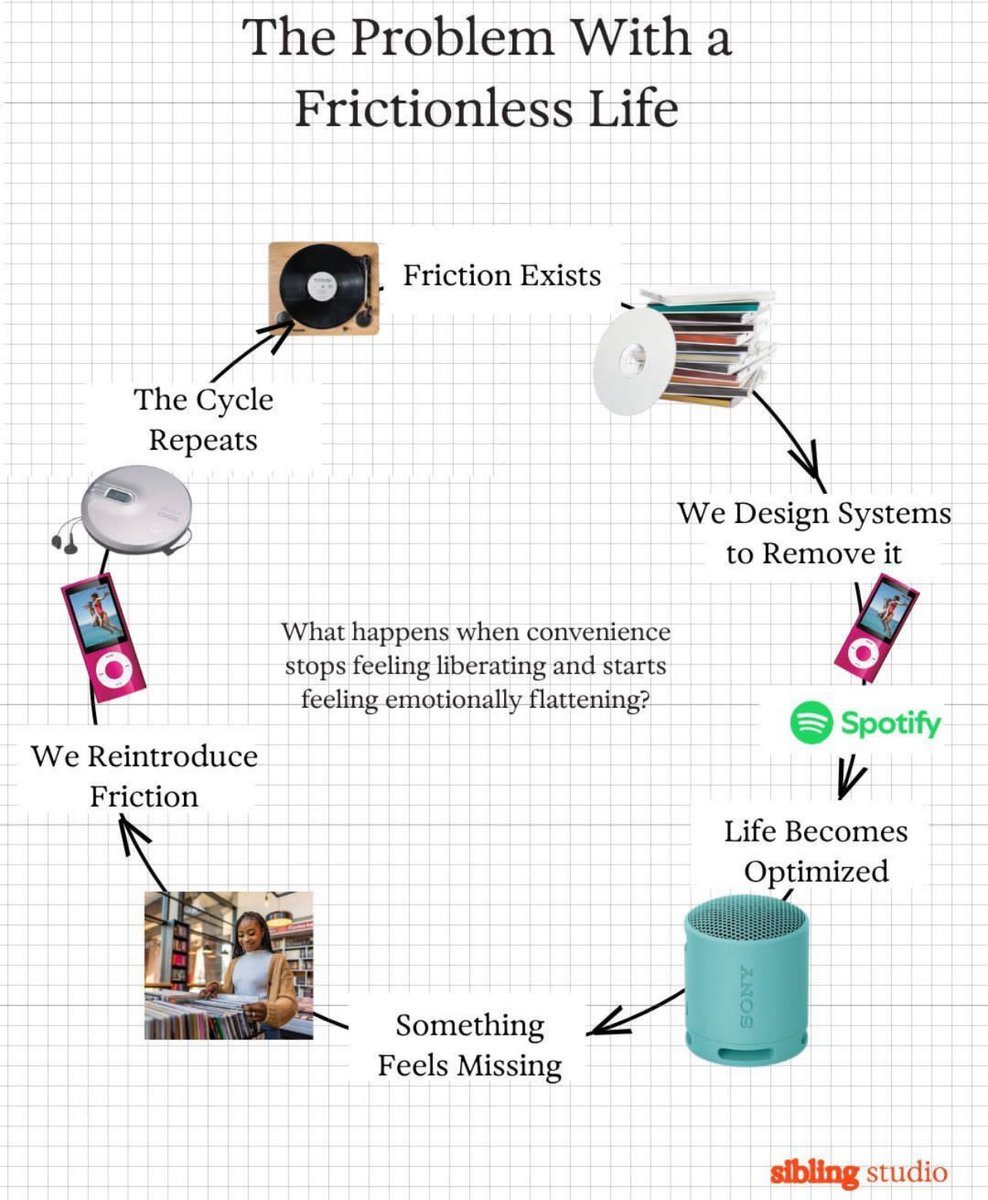
I'm fascinated by the rise of frictionmaxxing as a response to a frictionless life. We engineer away inconvenience, only to discover that some of the friction we removed was part of what made life feel alive in the first place
a lot of people who defend jinshi understand the historical context and what the story is actually trying to convey. it's not just maomao who has trauma or struggles... every character has their own history, flaws, and reasons for acting the way they do, just like people do in real life. jinshi isn't perfect, and neither is maomao. they both make mistakes, grow, and mature throughout the story. if you only want characters who never make mistakes or need to grow, then maybe you just prefer a fantasy that doesn't reflect real life. the point is to understand the characters within the world and context they live in, not judge them solely by modern standards.
Within 10 seconds of meeting an autistic person, strangers rate them as awkward and lose interest in getting to know them. Show those same strangers only a written transcript of what was said, with no audio or video, and the bias completely disappears.
That finding came from a 2017 study at the University of Texas at Dallas, led by psychologist Noah Sasson and published in Scientific Reports. The bias came entirely from how autistic people sounded and looked.
For 40 years before that, scientists had been treating autism as a brain that couldn’t read other people. Diagnostic manuals listed it as a “social communication deficit.” When communication broke down, the autistic person was the broken link.
That whole frame has been coming apart over the last decade. The replacement is called the double empathy problem. Damian Milton, an autistic researcher, named it in a 2012 paper. When autistic and non-autistic people don’t understand each other, Milton argued, both sides are missing something. Autistic people don’t always read non-autistic people right, and the reverse is just as true. The breakdown belongs to both sides.
Catherine Crompton at the University of Edinburgh tested this with a telephone game in 2020. She lined up 72 adults in three kinds of groups: all autistic, all non-autistic, or mixed. The first person in the chain heard a story, then passed it down to person 2, then person 3, all the way to person 8.
The all-autistic groups passed the story along just as accurately as the all-non-autistic groups. The mixed groups lost the most details. People in the mixed groups also rated each other as feeling less connected.
In 2025, Crompton ran the whole thing again across Edinburgh, Nottingham, and UT Dallas with 311 participants. Nature Human Behaviour published the result. Same outcome.
Brett Heasman at the London School of Economics looked at families in 2018. He found that autistic people could usually guess what their non-autistic relatives thought of them, even when they disagreed. The non-autistic relatives, meanwhile, kept overestimating how self-absorbed their autistic family members were. The relatives were the ones missing things.
About 5.4 million American adults are on the autism spectrum. For most of their lives, the official story said their wiring was broken. The newer evidence puts the breakdown in a different place: between two brains trying to understand each other.