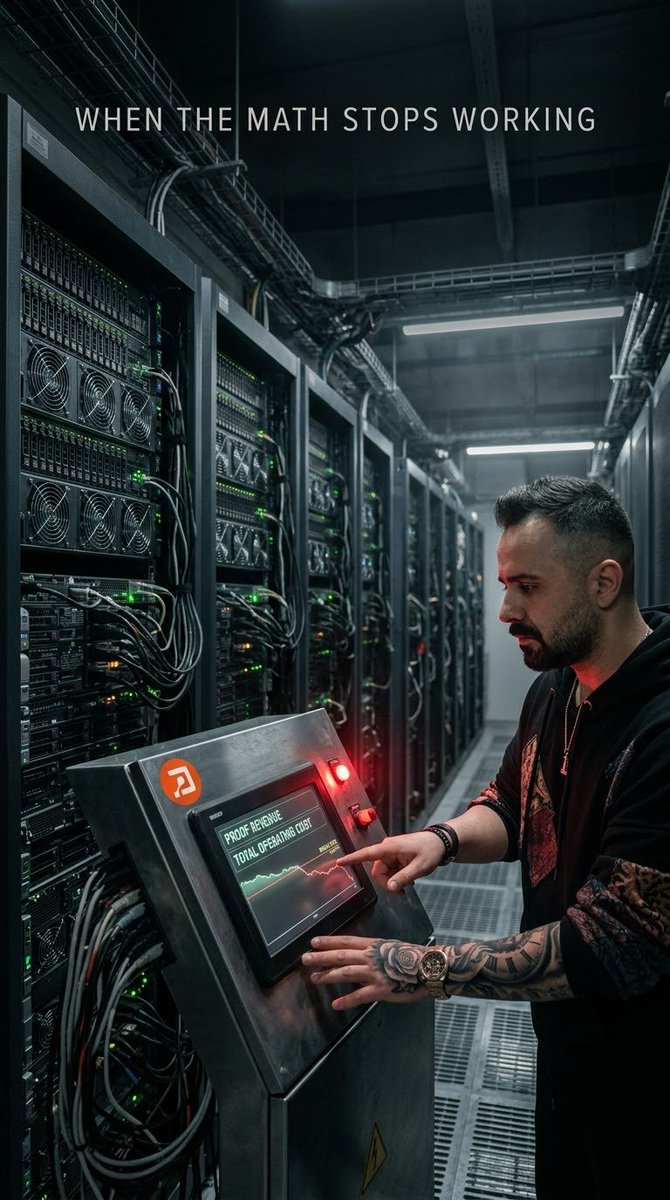
The biggest threat to heavy-compute networks isn't a smart contract exploit.
It's the operator break-even point.
When proof revenue can't cover electricity, hardware depreciation, and operating costs, node runners don't complain on Discord. They just unplug the rack.
We obsess over cryptographic security, but network liveness also depends on whether operators can afford to keep running.
A perfectly secure network can still lose capacity if its infrastructure economics don't work.
The real question for @PrimusLabs is whether its prover economics can sustain the infrastructure behind the proofs.
The next cycle belongs to whoever masters the infrastructure P&L 👇
https://t.co/tUE8ACfxvs
Third-person video shows what an action looks like.
Egocentric data helps reveal how it unfolds from the actor’s perspective.
For embodied AI, that distinction matters.
A robot needs more than images of a human picking up an object. It needs to learn how visual input relates to hand movement, spatial position, contact, and the consequences of each action.
That’s why first-person capture is an important direction for physical AI.
The real opportunity for @4Dlabs_Official isn't just collecting more footage. It's capturing richer links between perception and physical interaction.
Because teaching a robot what an action looks like is different from teaching it how to perform one.
The question is how much first-person data, paired with reliable motion and physical signals, can close that gap.
@web3_NR23@quipnetwork The key challenge is protecting existing assets without forks while keeping post-quantum authorization practical and verifiable.
@rxhridoy0017@utexocom@Utexoasia The real test is atomic coordination across Lightning and RGB without adding new trust assumptions or liquidity bottlenecks.