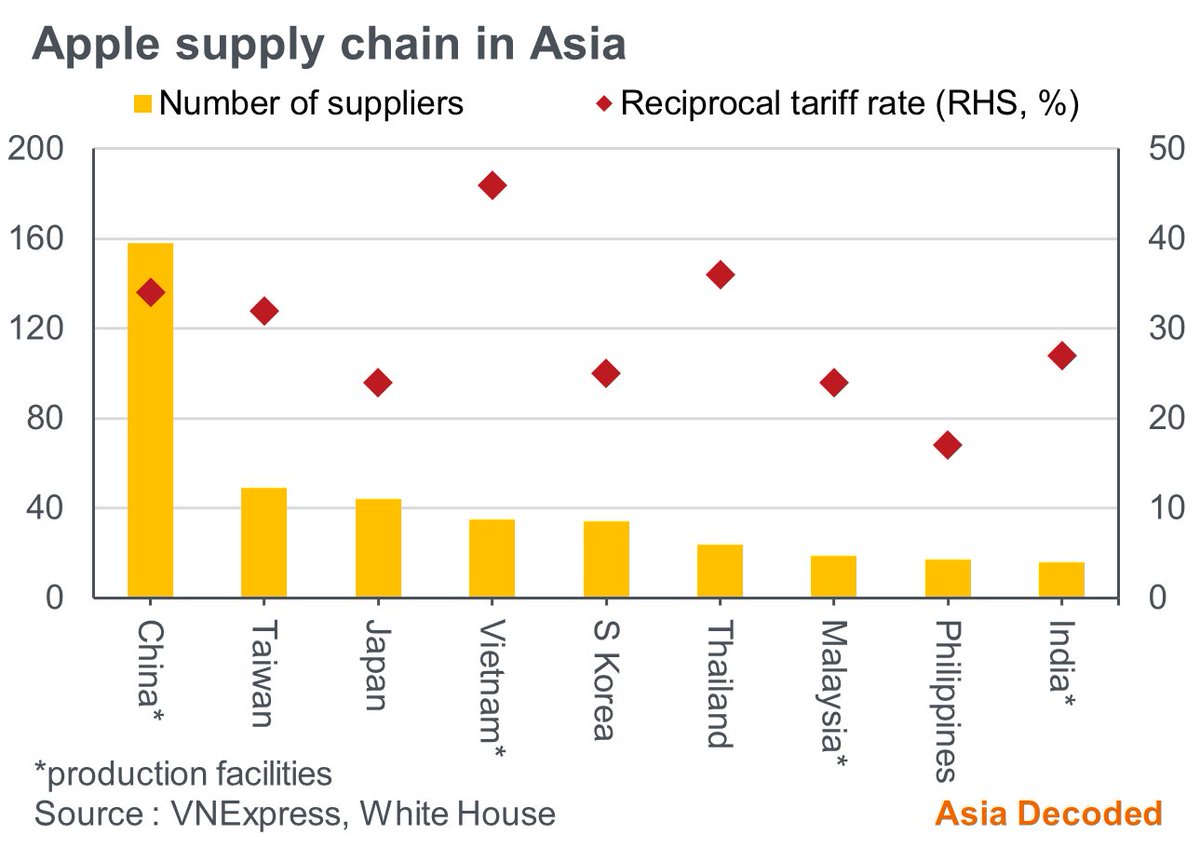
Will Trump tariffs accelerate supply chain diversification? We argue the impact will be quite the opposite. Investments will slow to a crawl amid skyrocketing uncertainty.
https://t.co/8cVts9qvWg
It’s open it’s not 😏
A day after the country’s foreign minister announced that the strait was open, the Islamic Revolutionary Guard Corps fired on at least two commercial ships in the Gulf
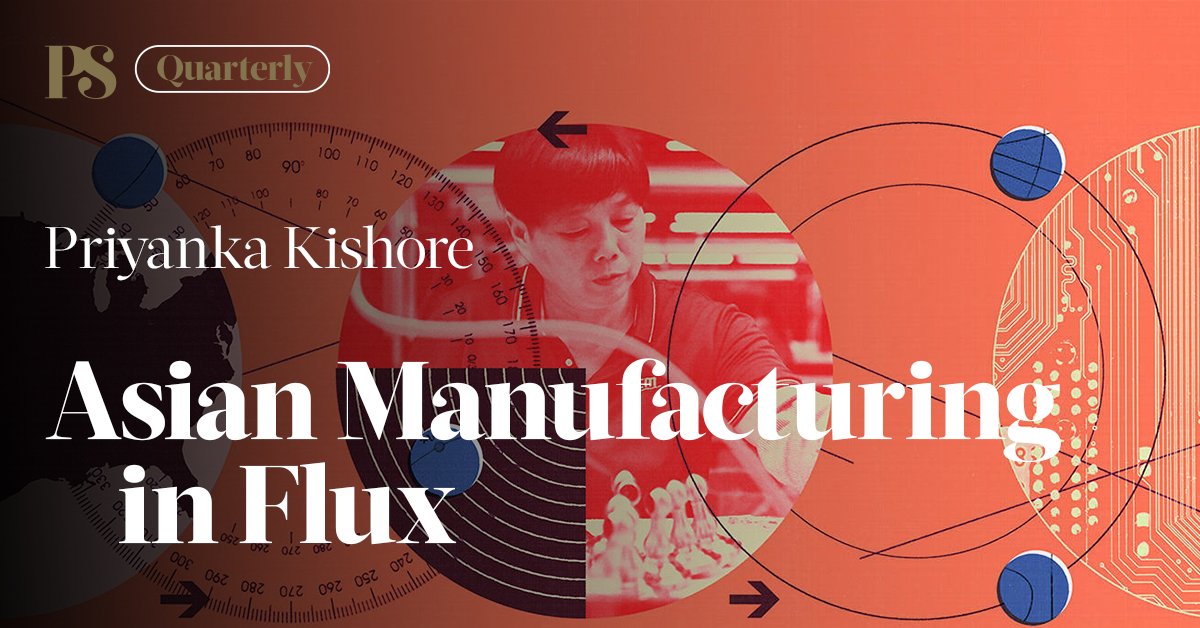
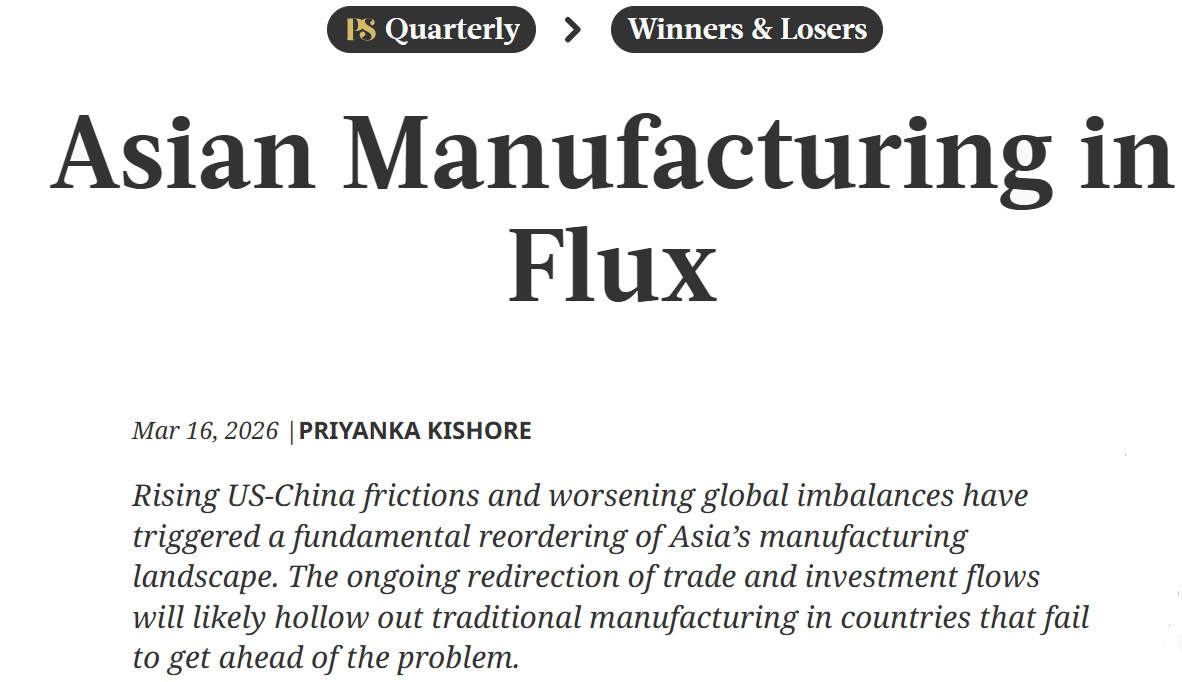
Rather than responding in kind, Asian economies grappling with US protectionism and Chinese excess capacity should focus on addressing the root causes of their own manufacturing weakness, @Pri_Kishore argues.
https://t.co/CB5aSud0Cf
Faced with moderating demand in the West and a consumption slump at home, China has aggressively redirected exports to Asia as it has grappled with excess capacity, notes @Pri_Kishore.
https://t.co/CB5aSud0Cf
Vietnam will be included in FTSE Russell’s secondary emerging markets group for the first time, propelling one of Asia’s fastest growing economies into the same league as China, India and Indonesia.
The IMF's classification of the INR regime to a 'crawl-like arrangement' highlights the inherent conflict between how the RBI describes the exchange rate system and how it manages it, argue @Sasi_Gopalan11 and Ramkishen Rajan in a guest commentary
https://t.co/2Lg2Rc7qec
Asian countries that have secured access to Strait of Hormuz
China
India
Pakistan
Bangladesh
Malaysia
Thailand
Japan
Philippines
Traffic is still a small fraction of pre-war levels highlighting unpredictability of the arrangements
@Pri_Kishore In Conclusion:
"A severe disruption in energy supplies lasting beyond four to five months will raise recession risks for several Asian economies." — Priyanka Kishore
5/
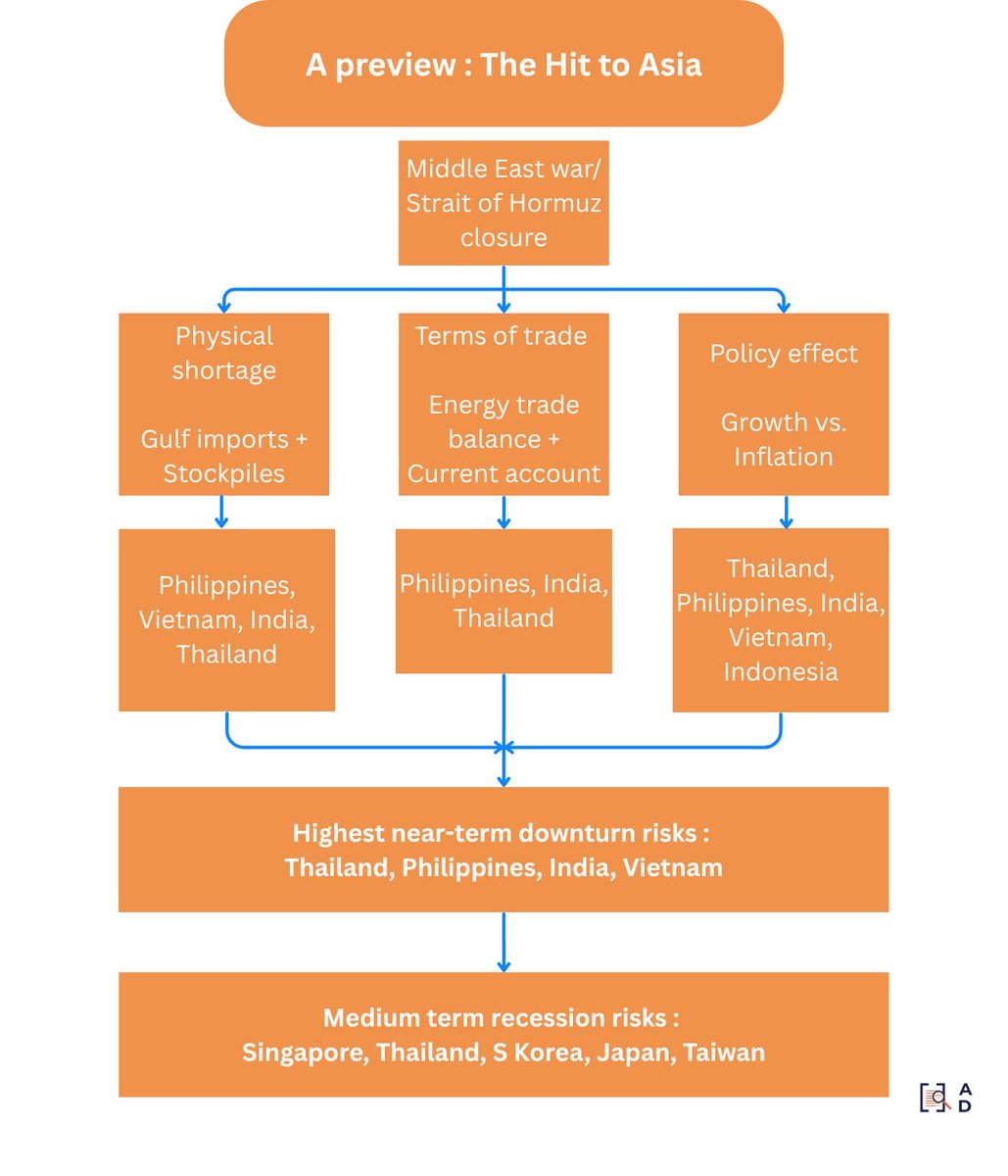
@Pri_Kishore A prolonged supply interruption extending beyond four to five months will likely amplify recessions risks for Singapore, Thailand, S Korea, Japan and Taiwan.
4/
@Pri_Kishore The Middle East war is tightening energy supplies, worsening terms of trade, and narrowing the policy space to cushion the blow simultaneously.
2/
Asia’s growth risks are compounding
The Middle East war is tightening energy supplies, worsening terms of trade, and narrowing the policy space to cushion the blow, simultaneously.
Asia Decoded
Can India become the world's largest economy?@berthofmanecon responds
Want to know more? Watch our podcast on whether India and China could swap positions in the very long run https://t.co/Hi0mrj7obq
Can India become the world's largest economy? @CafeEconomics responds
Want to know more? Watch our podcast on whether India and China could swap positions in the very long run https://t.co/JSBhxfNSUw
The ongoing redirection of trade and investment flows triggered by US tariffs and Chinese overcapacity could hollow out traditional manufacturing in the economies caught in between, unless they they move decisively on reforms, warns @Pri_Kishore
The spillover risks for the Asian economies and industries caught in between US tariffs and Chinese overcapacity is large. I write for @ProSyn.
https://t.co/qwJ92XNA8r