I translate the global economy into plain English 📊 Understand the "why" behind the news, the prices, and the trends affecting your daily life. Clear insights
Want to understand why prices are rising, why your grocery bill hurts, and what the Fed is really doing without the jargon?
I break down the global economy in plain English.
Tired of confusing coverage? Follow for the ‘why’ behind the headlines.
Free weekly newsletter + blog in bio
New Fed Chair Kevin Warsh just broke from decades of Fed tradition.
He rejected the idea that the Fed faces a "cruel choice" between fighting inflation and protecting jobs, the old framing every Fed chair before him accepted. CNN
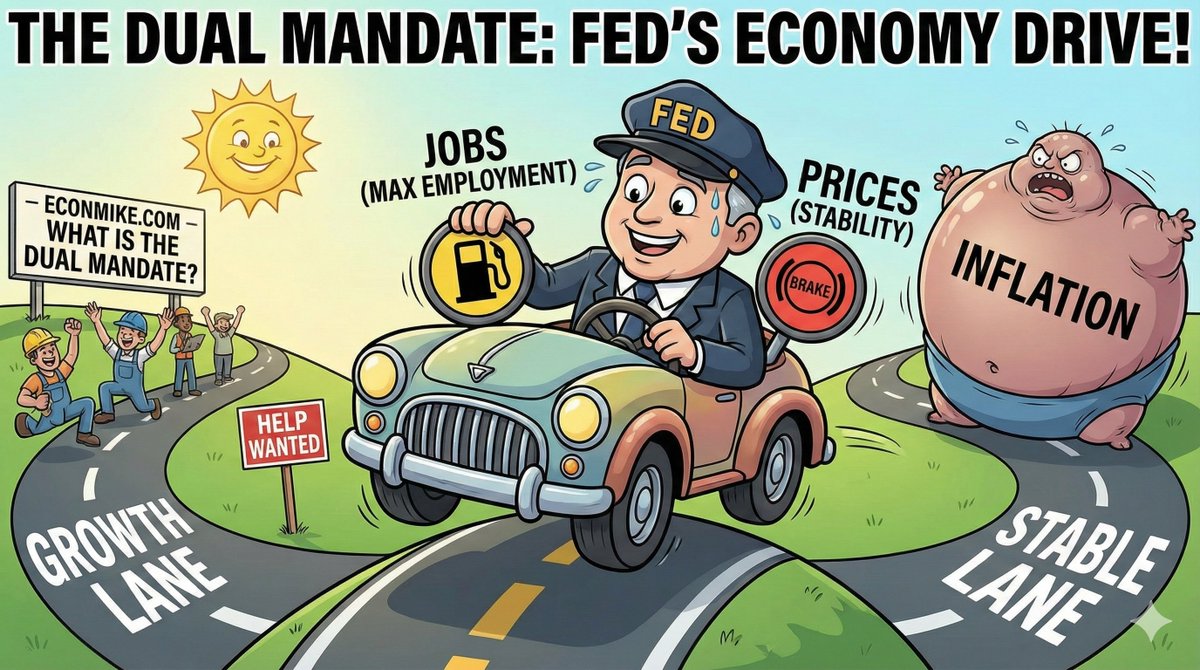
If you've ever wondered what the "dual mandate" actually means (and why it's suddenly a big deal), I broke it down in plain English 👇
Inflation acts as a hidden tax on cash and fixed incomes. Creating more dollars reduces what each one buys. It hits people who hold cash or live on fixed paychecks hardest. Asset owners often see their holdings rise in nominal terms. New money reaches some people first. They spend before prices fully adjust. Everyone else faces higher costs later. That is how monetary expansion redistributes purchasing power.
An oil price spike from war is a supply shock. It lifts one part of the CPI basket. Broad inflation comes from too much money chasing goods overall. Raising rates cools borrowing and spending across the economy. It does nothing to increase oil supply. The Fed’s tool targets demand pressures. It does not fix specific supply disruptions.
CPI tracking the 1980s shows inflation has turned sticky. Back then, persistent prices forced sharp rate hikes. Those hikes cooled the economy hard but broke the cycle. Today, high debt makes big rate increases riskier for growth and asset prices. Easing too soon risks locking in higher inflation expectations. The Fed faces the classic trade-off between stable prices and economic support.
Inflation raises prices on what wealth buys. A million now covers a less luxurious lifestyle than before. People who own assets see their net worth rise as prices rise. Cash holders do not. One million still buys a solid life in many places. The number alone does not tell the full story.
Gas prices follow supply and demand. A drop follows more supply or less tension. Drivers keep more money at the pump. That cash gets spent elsewhere. The falling inflation rate slows new price rises. It does not reverse old ones. Past losses in purchasing power stay. The rate change only limits future damage.
Energy prices jumped due to a war supply shock. It raised one price relative to others. Companies saw it as temporary. They held other prices to protect sales.
Raising prices on everything would cause customers to leave once energy prices fall. The Fed reacted to the headline number. Supply shocks shift relative prices. They do not print new money.
@unusual_whales The dollar lost 30 percent of its power because more dollars were printed. Supply and demand rule the money value. Extra dollars chased the same output, like printing more tickets for the same game. Early ticket holders buy cheaply. Cash holders lose.
@rev_cap Insurance weakens price signals. Weak incentives persist. Like a company dinner with no bill shown. Diners order premium, and totals rise. Core PCE stays elevated while incentive problems persist.
@DannyDayan5 Markets sold off as inflation hit 4.2% on energy prices from the conflict. Supply shocks raise energy costs that act like a tax. Real incomes fall. Like a fuel surcharge on deliveries. Goods cost more and spending slows. The selloff shows markets pricing in slower growth.
@SputnikInt Markets sold off as inflation hit 4.2% on energy prices from the conflict. Supply shocks raise energy costs that act like a tax. Real incomes fall. Like a fuel surcharge on deliveries. Goods cost more and spending slows. The selloff shows markets pricing in slower growth.
@web3Lyra Markets debate hold or hike after mixed CPI. Energy-driven headline is a supply shock. Rate hikes do not increase supply. Like raising rates after storm damage to ports. Delays and costs persist. Hiking into a supply shock adds contraction without fixing the source.
@BingXOfficial Markets cheered milder core inflation while headline stayed hot. Like ignoring higher gas because average spending looks stable. The tank costs more every week anyway. Crypto rebounded on the narrative shift to longer restrictive policy.
@wliang Markets expect the Fed to blame energy inflation and hold rates. Like promising steady prices after a harvest failure. People buy extra now, but shortages push prices higher anyway. Policy that follows market hopes often ignores the supply pressures driving inflation.
Stop viewing UBI as a 20th-century entitlement. It’s a shared dividend on automated abundance. Read the full analysis to see how the economic engine survives the automation shift: https://t.co/gg9ys3qupR #UBI
Is Universal Basic Income an unaffordable welfare expansion? Not in the age of AI. Advanced tech completely rewrites the rules of redistribution. We aren't taxing human paychecks anymore—we’re capturing machine abundance. Let’s break it down👇
Creative Destruction 🔄 Routine cognitive jobs will rapidly evaporate, but new human-centric industries will emerge. Humans can't retrain overnight. UBI acts as the ultimate macroeconomic shock absorber, giving displaced workers room to upskill.