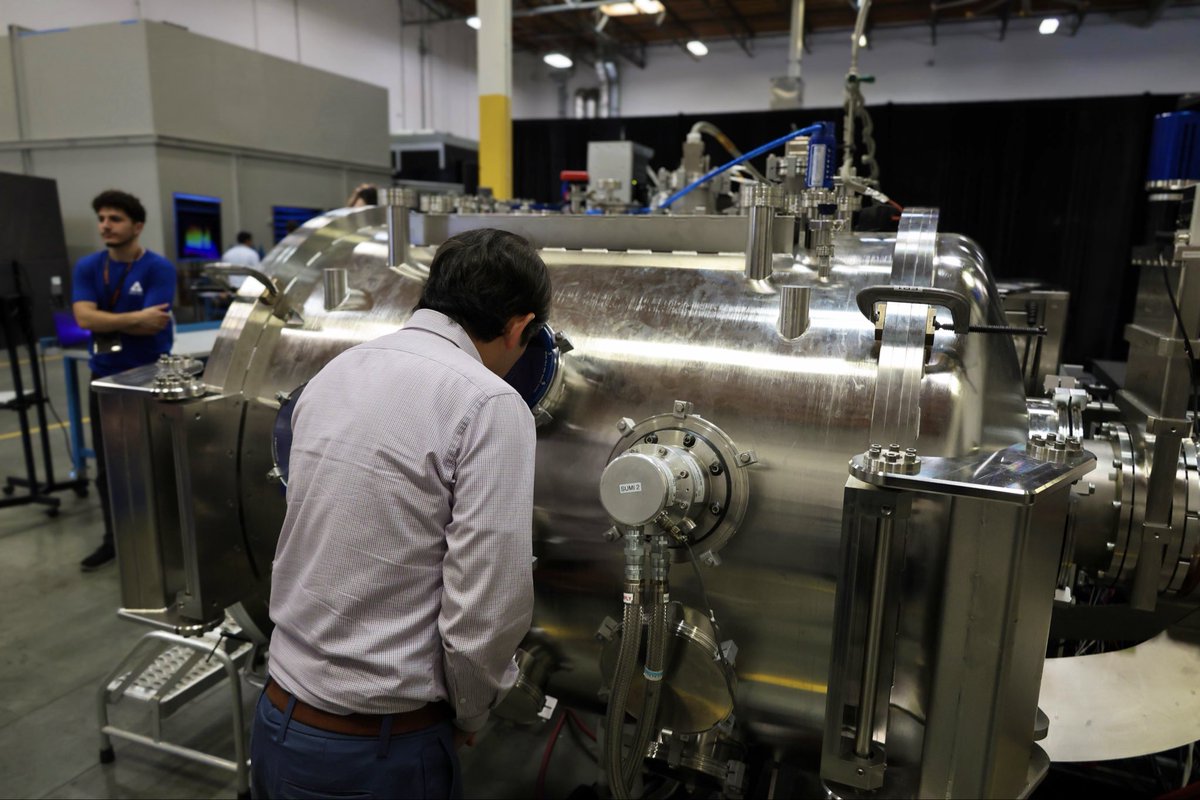
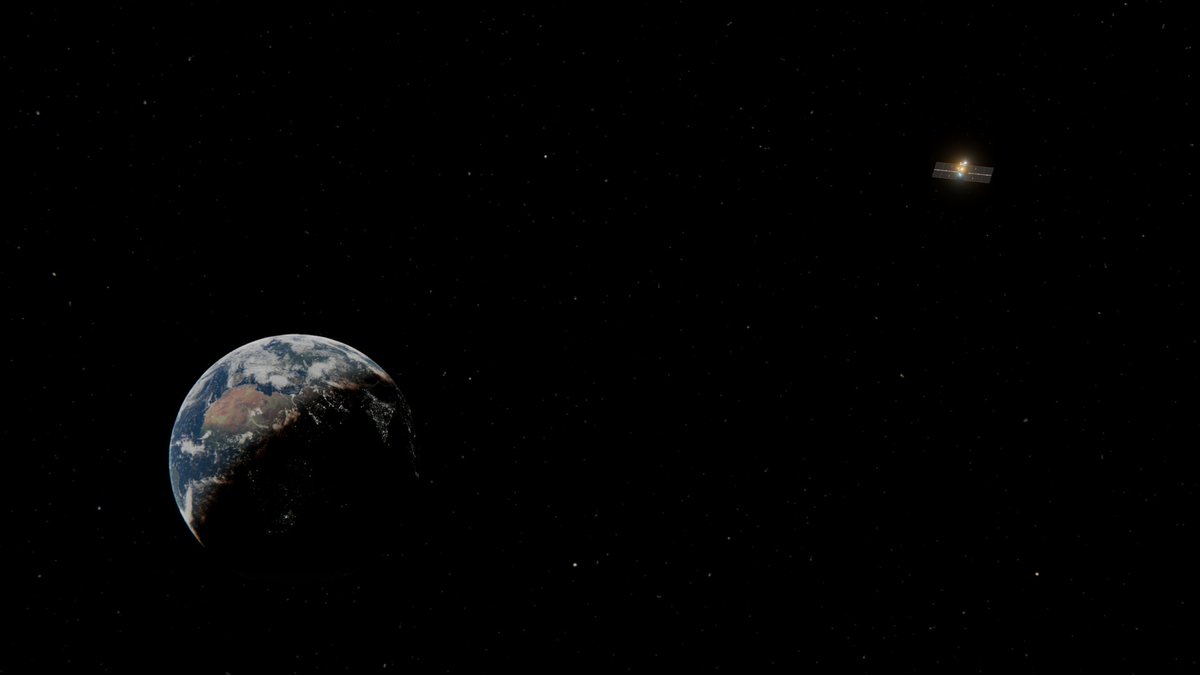
Special delivery! Our new vibration table arrived and has now been set up in our factory, marking the final major piece of our in-house spacecraft testing infrastructure. 🤘
We’ve made launch cheaper. We’ve made spacecraft cheaper.
The next bottleneck is operations.
Solo moves mission operations onboard, allowing spacecraft to detect problems and make decisions – independent from Earth.
This is how we scale into the Solar System.
The physical AI revolution will start in space for two reasons:
1. The problem space is bounded. Spacecraft are complex and dynamic, but Solo reasons across a known physical system, with defined hardware and telemetry, governed by physics, and a finite set of rules and possible actions.
2. The training data is organically generated as part of the spacecraft build process. And not just that – conditions that can't easily be reproduced physically are already simulated in test. With our hardware-in-the-loop testbed, we subject hardware to edge cases and anomalies and see how it responds.
Our blog dives deeper. Link in reply.
NASA’s Eyes on Asteroids visualization tool now tracks 42,580 known near-Earth objects. When the tool launched five years ago, it tracked ~28,000.
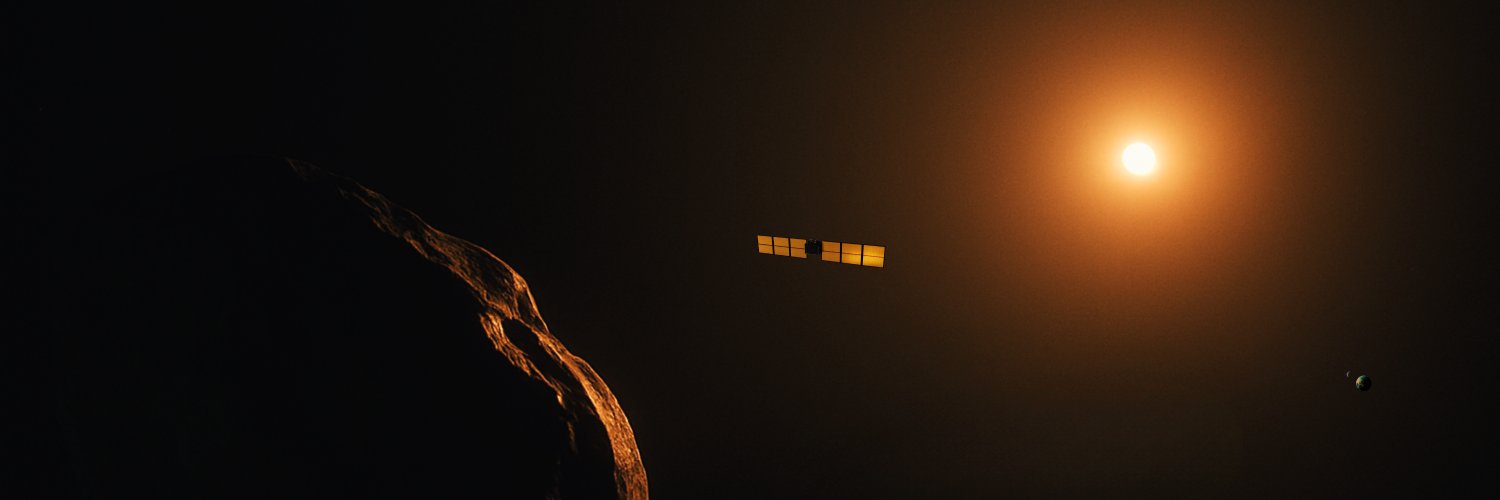
Humanity is getting much better at finding asteroids. We're building the spacecraft and autonomy to reach them at scale.
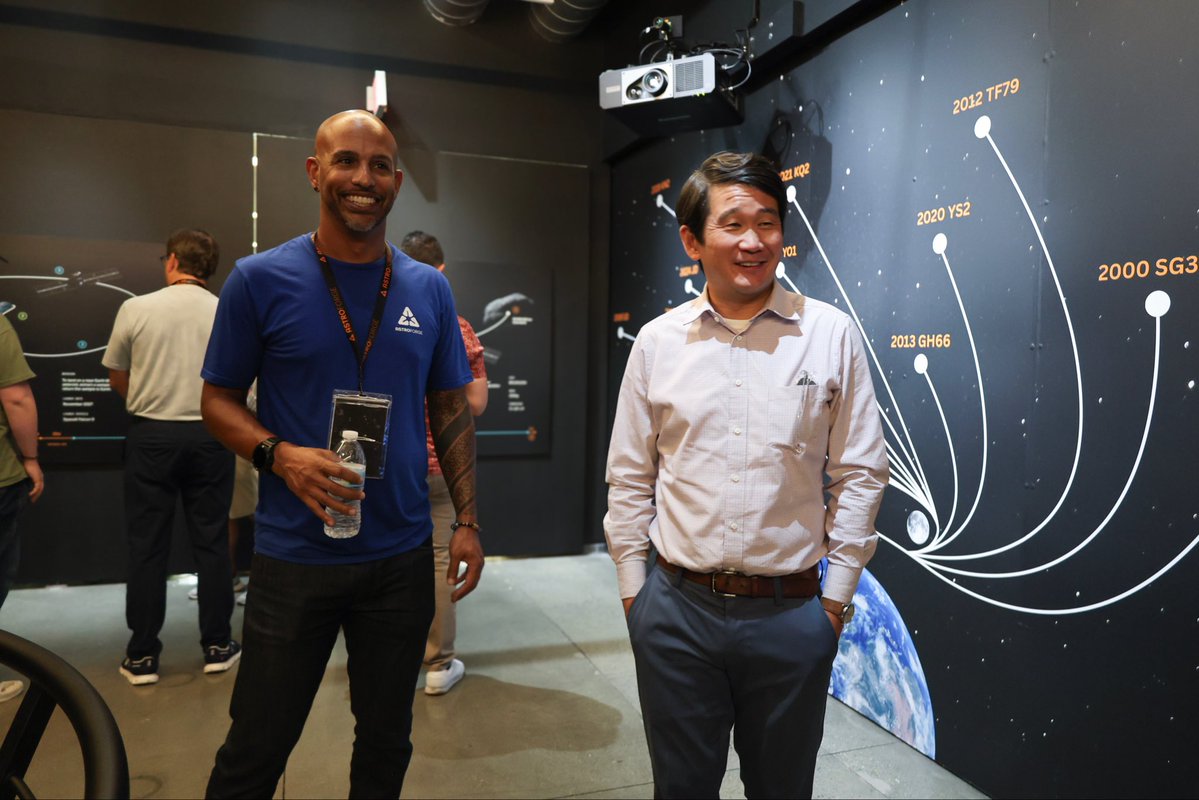
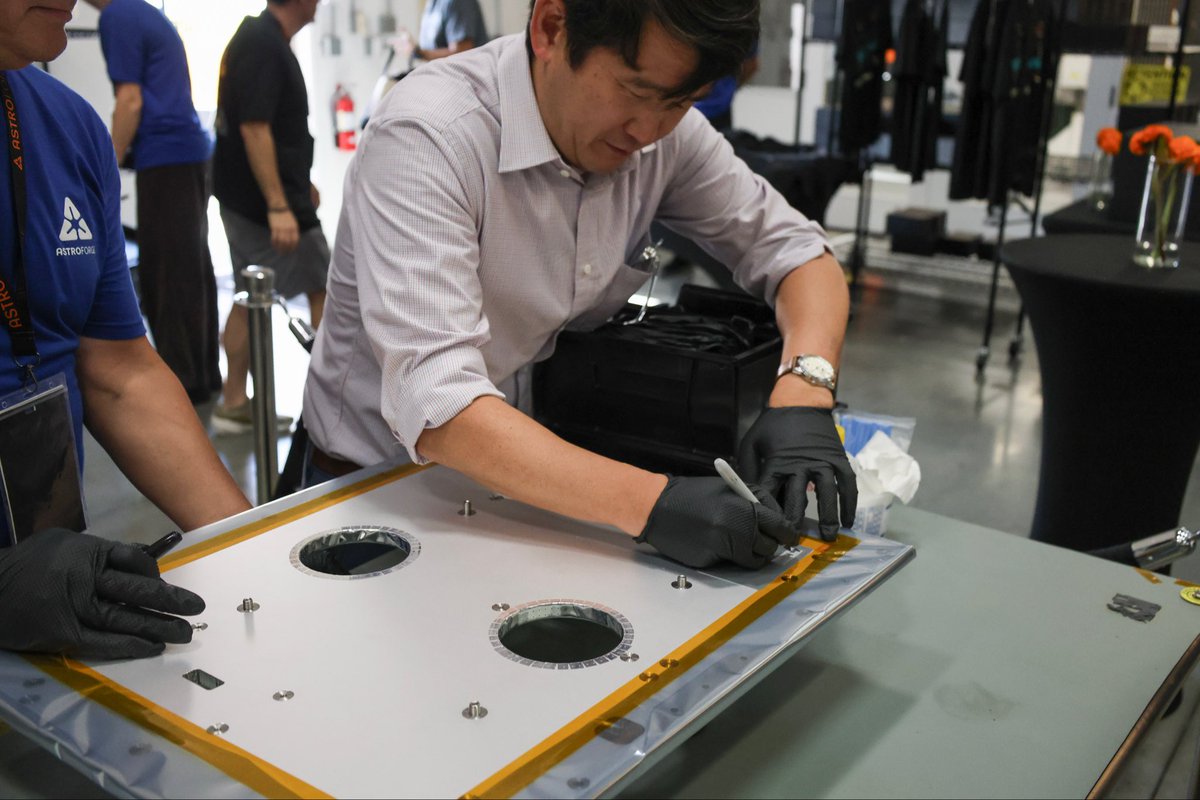
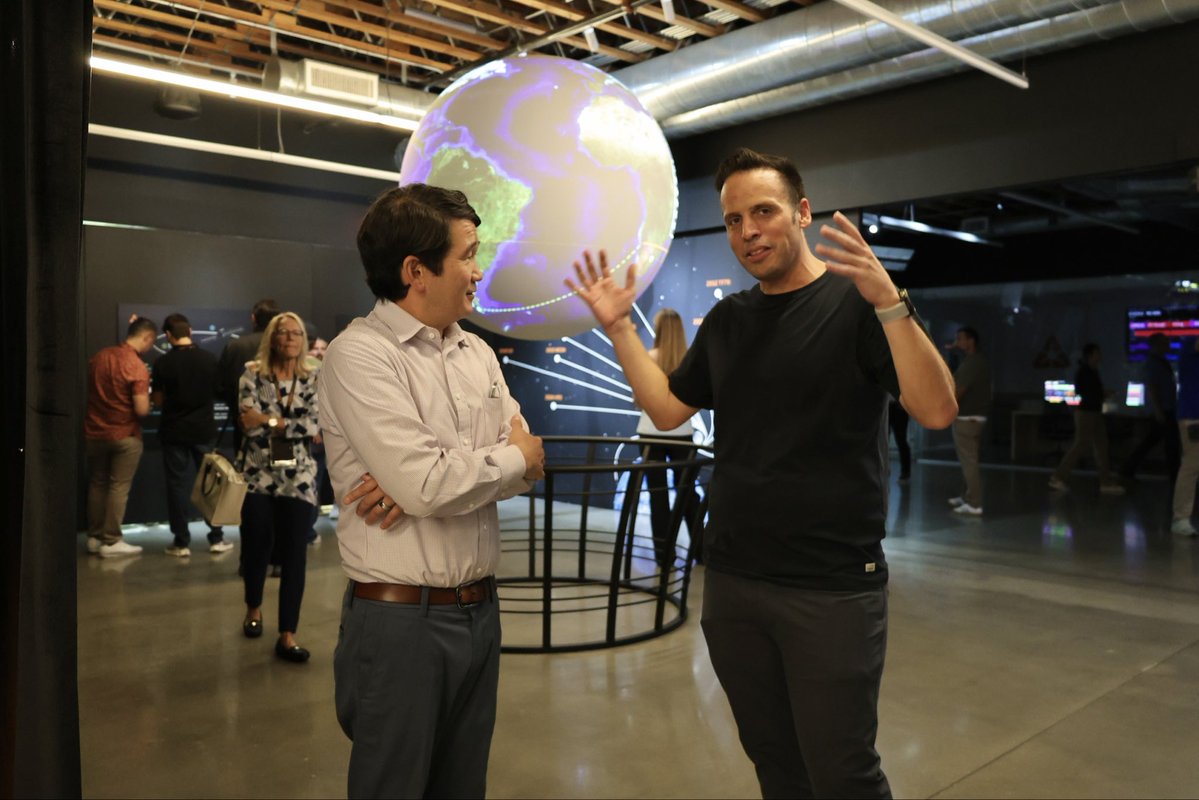
I was excited to join AstroForge in Huntington Beach for the unveiling of DeepSpace-2, its newly built spacecraft set to launch in early 2027.
AstroForge is working right here in Orange County on technology that could help shape the future of space exploration and critical mineral supply chains, with the goal of becoming the first commercial company to successfully mine asteroids for platinum group metals.
It was great to see this kind of cutting-edge aerospace innovation happening in CA-47, and I’m looking forward to seeing what comes next.
Asteroid hunting is a team sport. This episode of First Principles visits the observatories we partner with to find & track asteroids, before stopping by our factory, where we’re building the tech to go to them (and bring some back).
Thanks for stopping by, @pronounced_kyle!
In this episode of First Principles, we'll learn about asteroids, the telescopes that find them, and the satellites that protect us against them.
✧
In 2004, astronomers discovered a new, 60-million-ton asteroid hurtling towards Earth.
They scrambled the world's best telescopes, traced its path in the sky as accurately as they could, and concluded that the asteroid, 99942 Apophis, had a 2.7% chance of causing "regional devastation" here on Earth.
Today, that estimate has been revised down. We now know that Apophis will make its closest pass on Friday, April 13th, 2029, missing Earth but only just barely: the asteroid will pass closer than satellites in geostationary orbit, and will be visible to the naked eye.
Exactly how we know that — and what we would do if we determined an asteroid really *was* heading our way — is the focus of today's episode.
In this episode, we'll visit the telescope that discovered Pluto, one of the biggest optical reflecting telescopes in the world, and the factory floor of @AstroForge, a company building satellites for asteroid mining and planetary defense.
Special thanks to @MattGialich, whose connections to Lowell Observatory made this episode possible — and whose meteorite collection is the envy of space nerds everywhere.
✧
00:00 — Asteroids & Apophis
1:08 — Pluto Discovery Telescope Overview
1:57 — Pluto Discovery, Tracking
2:34 — Pluto Discovery, Optics
3:38 — Pluto Discovery, Sensor
5:06 — Lowell Discovery Telescope Overview
5:24 — Lowell Discovery, Tracking
7:08 — Lowell Discovery, Optics
8:07 — Lowell Discovery, Sensor
9:35 — Driving the Lowell Discovery Telescope
11:26 — The @AstroForge Satellite Factory
13:46 — How AstroForge Deflects Asteroids
14:49 — AstroForge 1.5 kW Laser Demo
Q: "Can’t you just write rules for every failure mode?"
A: We already write deterministic rules for well-understood conditions, but you can’t anticipate, and write a rule, for every combination of conditions a spacecraft will encounter. There is a wide range of problems between conditions that are addressable with predetermined rules and problems no intelligence model could possibly solve. Experienced mission operators operate in that middle ground today, using the available data, along with their judgement and experience, to determine how to respond. Solo is an attempt to move this reasoning onboard.
Yesterday we announced Solo, our spacecraft intelligence model, and there are a few questions we’ve gotten repeatedly. So let's answer them! A Q&A 🧵
Q: "So is Solo a digital twin of the spacecraft?"
A: No. We use physics-based models and deterministic algorithms where they’re the right tool, but Solo itself isn’t a digital twin of the spacecraft.
Solo is an autonomy stack designed to reason across information from different spacecraft systems and determine what should happen next.