@archpng Thanks for the share.
They are/were all greate at their own time and place.
A piece of beauty should be appreciated, rather compare and compete.
There has been a lot of discussion today about the Pashupati seal from the Harappan civilization and whether it represents the god Shiva. Here is what the archaeologists say...
A British scientist invented the single most valuable piece of technology in human history, then signed a document that legally guaranteed he would never make a cent from it, and he did it on purpose while every university around him was racing to patent everything they could.
His name is Tim Berners-Lee, and the invention was the World Wide Web (WWW).
Not the internet, which already existed as a way to connect computers, but the actual web of pages and links you are using to read this right now. HTML. HTTP. The URL. He built all three while working at CERN, a physics lab in Switzerland, between 1989 and 1991.
He wrote the first browser on a NeXT computer and stuck a label on it that said "DO NOT POWER IT DOWN" because if anyone unplugged it, the entire web would vanish.
Here is the part that should stop you cold.
CERN owned the invention. Under the rules of the time, the lab could have licensed it, charged a fee for every installation, and collected a royalty on every server that ever came online.
His colleague Robert Cailliau confirmed they actively discussed exactly this, because in the early 1990s patenting university inventions and squeezing money out of them was the standard move.
They could have charged for every search. Every upload. Every page load on Earth, forever.
Berners-Lee fought to give it away instead.
He pushed CERN to release the source code into the public domain with no patent and no fee of any kind. On April 30, 1993, two CERN directors signed a half-page document that relinquished all intellectual property rights to the World Wide Web. A few signatures on a single sheet of paper.
That was the moment nobody came to own the thing that now connects more than five billion people.
His reasoning was not sentimental. It was mechanical.
He understood something most inventors never grasp. The value of the web was not in the code. It was in the network. And a network only grows if everyone can join without asking permission.
The second you charge a toll, people route around you, and you end up with a hundred tiny incompatible webs instead of one universal one. He said it plainly years later.
If he had demanded fees, there would be no World Wide Web. There would be lots of small webs, and none of them would have mattered.
So the thing that made the web worth trillions is the exact same thing that guaranteed he would never personally capture any of it. Openness was not a sacrifice he made against the invention's success. Openness was the success. The free part was the product.
People who made far less consequential things became billionaires off the platform he built. He watched it happen and kept running a nonprofit standards body out of an office at MIT, setting the rules that keep the web working for everyone, paid like a normal professor.
When an interviewer once asked him why he never cashed in, he refused the premise of the question. He said that framing only makes sense if you measure a person's worth by their net worth. People are what they have done and what they stand for, not what sits in their bank account.
The man who could have owned a piece of every click ever made chose to own none of it, because he understood that the only way to give the world something this big was to make sure he could never take it back.
The most valuable thing ever built belongs to everyone, and that was the entire point.
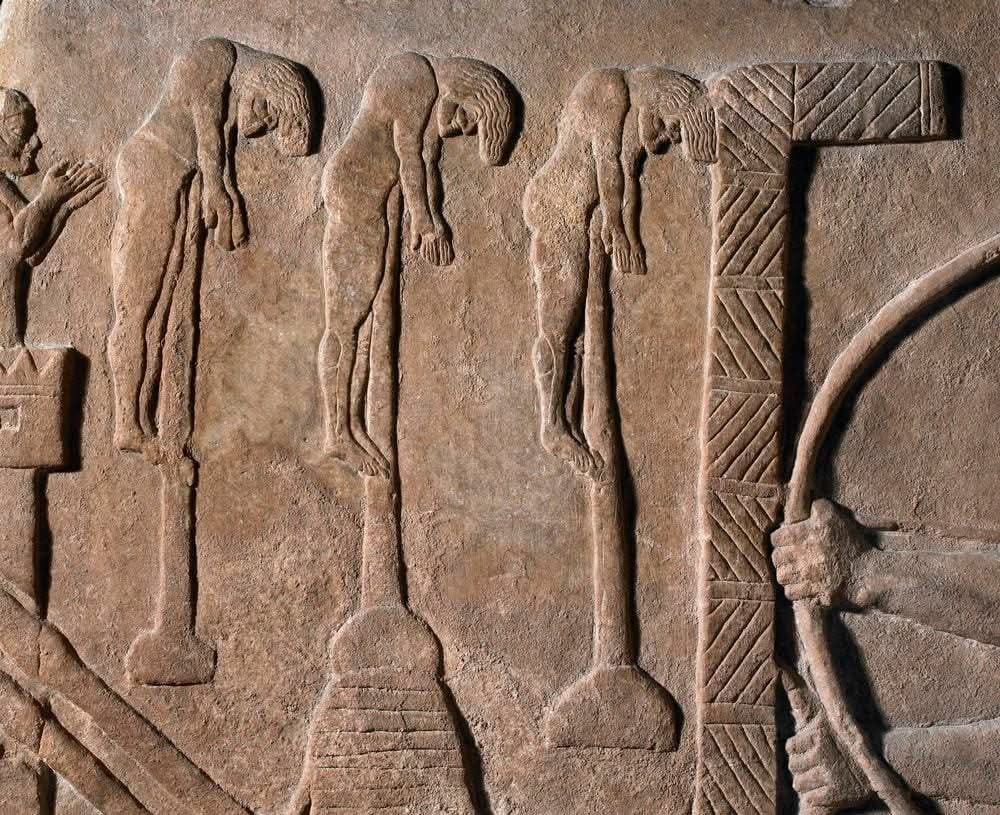
The Assyrians were pioneers in the use of impalement, a brutal method of execution that served not only as punishment but also as a tactic of psychological warfare, well ahead of its notorious reputation linked to figures like Vlad the Impaler and the Ottoman Empire.
This ghastly practice, often remembered due to Vlad Dracula and the Ottomans, was widely utilized by the Assyrians during their dominance from 9th-7th Centuries BC. Prominent leaders such as Ashurnasirpal II employed impalement to instill terror among adversaries and suppress rebellions, regularly displaying the corpses of executed enemies to send a chilling message. Although Vlad the Impaler is often associated with this gruesome method, it had already been enacted by various ancient civilizations, including the Babylonians and Persians, long before his era.
#archaeohistories
Three Pakistani tech stories you should know before the next AI wave reshapes the country's IT sector:
The $1.6B unicorn Pakistan almost had. Built by Zia Chishti.
The $800M compounder Pakistan didn't notice. Built by Asif Peer.
The $350M exit nobody talked about. Built by the Gadit family in Karachi.
Each took a completely different route. Full piece below.
🚨BREAKING: For the first time, the original Pakistani cypher — cable I-0678, the document that triggered the removal of former Pakistani Prime Minister Imran Khan — is being released in full by Drop Site.
@archpng Travel is not a real benchmark of heritage and cultural sites.
Medieval sites: Italy, Spain, France, Turkey, Russia.
Ancient sites: Egypt, Greece, China, Iran, India.