👩🏽🚀 NASA Astronaut aboard the ISS | 🚀Soyuz launch from Kazakhstan 14 July 2026 | 🎖️Colonel United States Space Force | ⚕️Emergency doctor at UT Houston
I’ll never forget this sight. Tonight I saw my first aurora from space. Luckily, there is a video to help remember and captured it perfectly. The KP index was over 5 tonight because of a solar event and the sky over Australia lit up and the green snaked across the atmosphere. I was filled with awe and gratitude. It’s a beautiful planet we share.
Thanks to the arrival of @SpaceX 35 which is captured here approaching the @Space_Station we now are starting a busy season of science. Some of that science arrived in cooled cargo and will return on dragon when it departs directly to the scientist doing that work. We are grateful to be the on-orbit hands of the scientists that are helping to pave the way to the Moon and Mars.
Crew-13 arrived on a Dragon and now Expedition 75 is capturing a Dragon. @SpaceX cargo vehicle 35 launched two days ago and is arriving to @Space_Station now. @Astro_Kutryk is leading the way by monitoring the approach in this video.
Because we don't use our lower body much in space we essentially get no exercise from walking or being active. So, we try to exercise daily to counteract that. However, some studies show that you can establish an effective countermeasure with weights 3 times per week in space (SPRINT study).
Stay Hard! Exercise on station takes focus, determination, and grit. Without exercise you lose 3% of bone mass per month, 10-15 % of muscle mass and body weight, and see over 10% decrease in VO2 max. Navy Captain Jack Hathaway was a friend and, at times, a personal trainer and coach that pushed me to new levels like David Goggins.
With so much happening in space, on @Space_Station, and Earth, we have been working hard and trying to share as much as possible. Here is the behind the scenes look at how we do it! Next up, SpaceX 35 docking. Tune in tomorrow!
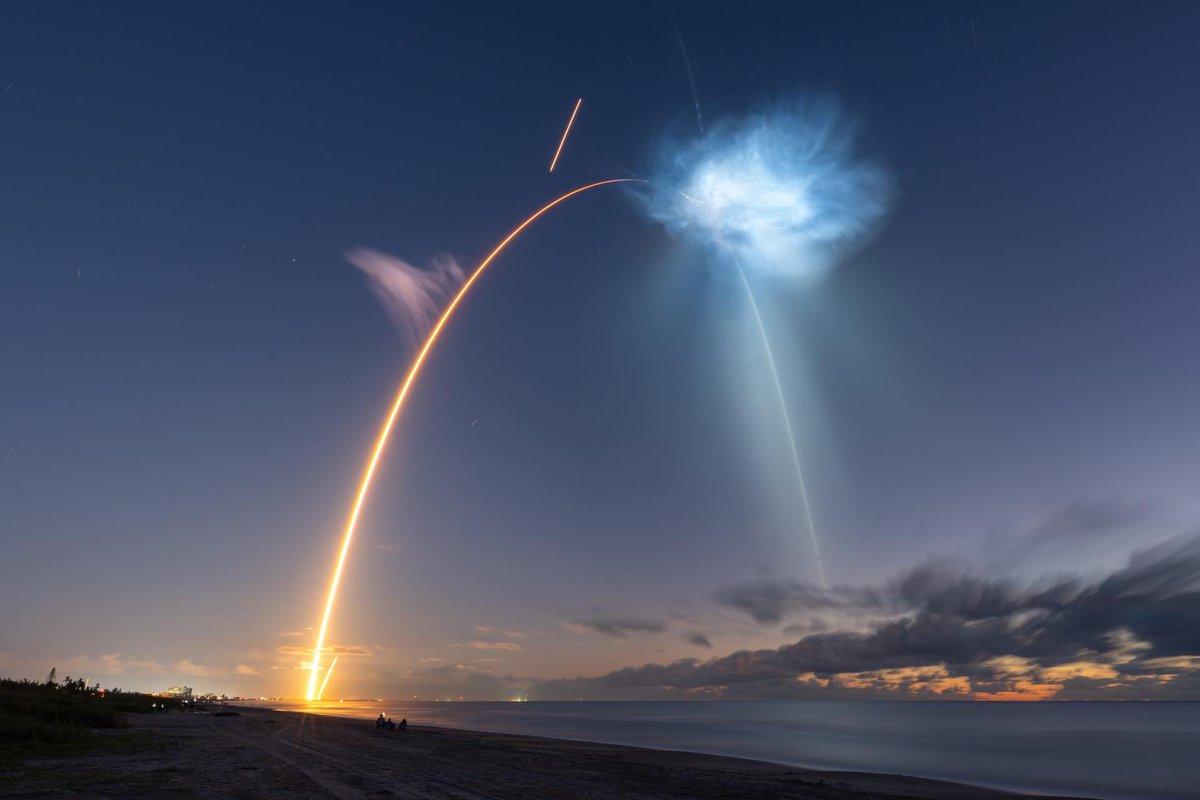
These incredible photos from the ground and from space capture the launch of SpaceX CRS-35. Expedition 75 eagerly awaits its arrival, carrying important science to help further our ambitious goals of space exploration as well as critical hardware for extending the life of @Space_Station which will be used in future spacewalks.
Photos 1-2: NASA/John Kraus
The challenge is seeing such bright light late at night disrupts the circadian rhythm. So, we set bright lights (more blue 480nm) in the morning, then reduce them to low blue in the evening and I try to avoid seeing a sunrise in the evening. You're right, a routine really helps but it can be challenging to find a sleep rhythm in space.
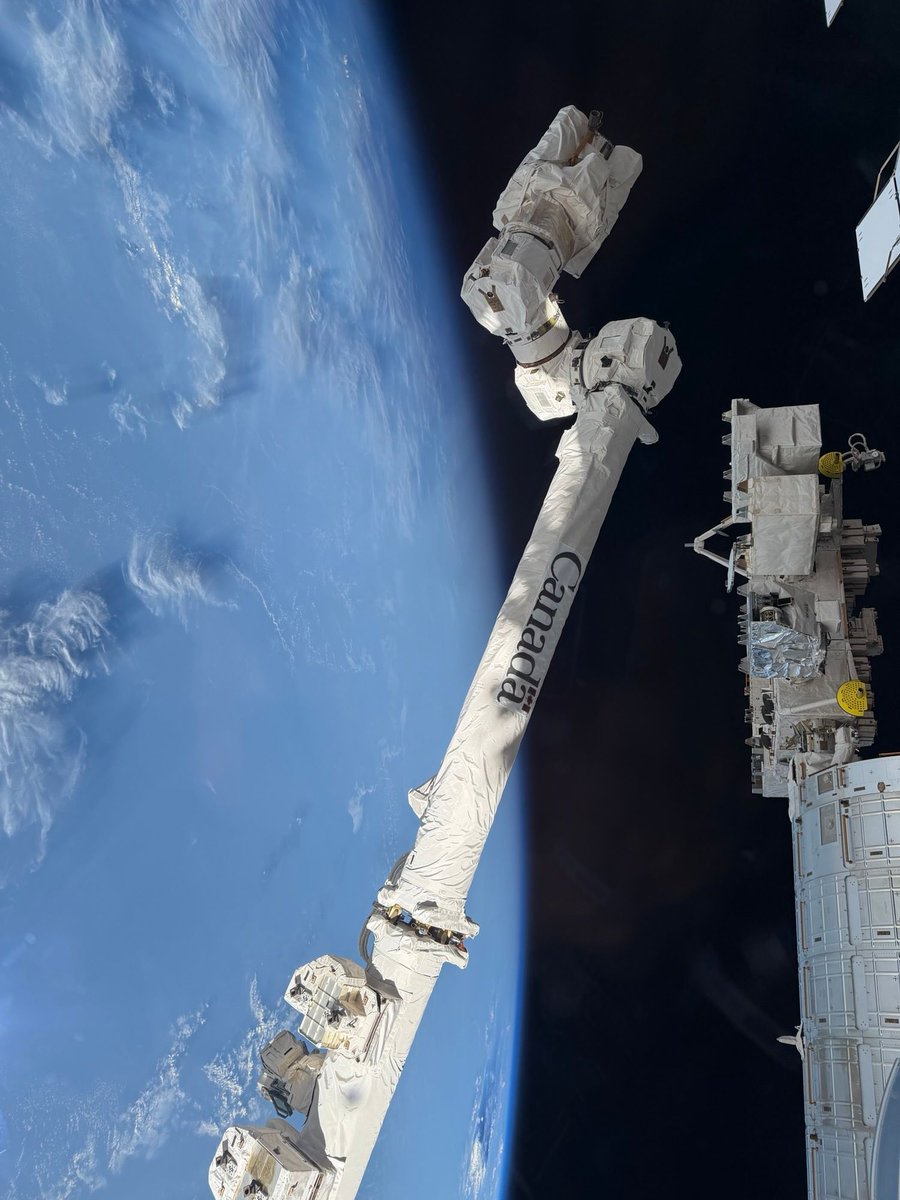
The Nights Watch! Nights are getting shorter and shorter during each orbit as we approach high beta where it’s always sunny in space. I love the view from the cupola with the robotic arm poised and ready for action.
@mattyapro Flying though is rare and amazing. You can see the lights on the outside of station reflecting back like Christmas LEDs. It's definitely more immersive.
There is so much packed into these photos. Unforgettable memories. Dragon has departed with Crew-12 and is on the way back to Earth after eight months.
In front of Dragon is the antenna we installed together. These were both peak teamwork moments for @Space_Station and ground teams across @NASA and commercial operators.
On Earth, the blood pools in your lower extremities because of gravity. We have adapted to that on Earth. When that no longer happens in zero gravity there is a relative movement of blood to your upper body. This leads to congestion in the face, nose, and your body removing it via urination.
Cygnus is leaving us today. It carries with it science to help us on our next steps further from earth such as a heat shield test from the University of Kentucky called KREPE
@sleepin_volk What ends up happening is that the fan circulation of air draws all particles towards a filter so everything ends up getting caught there and once a week we vacuum those filters so when we pick it all up