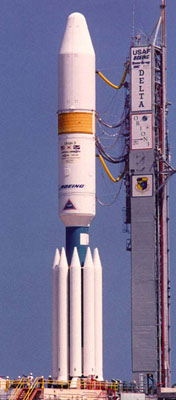
Seems very reasonable - I was just watching your update. I wonder if the booster flies open loop on trajectory and they let Centaur figure it out?
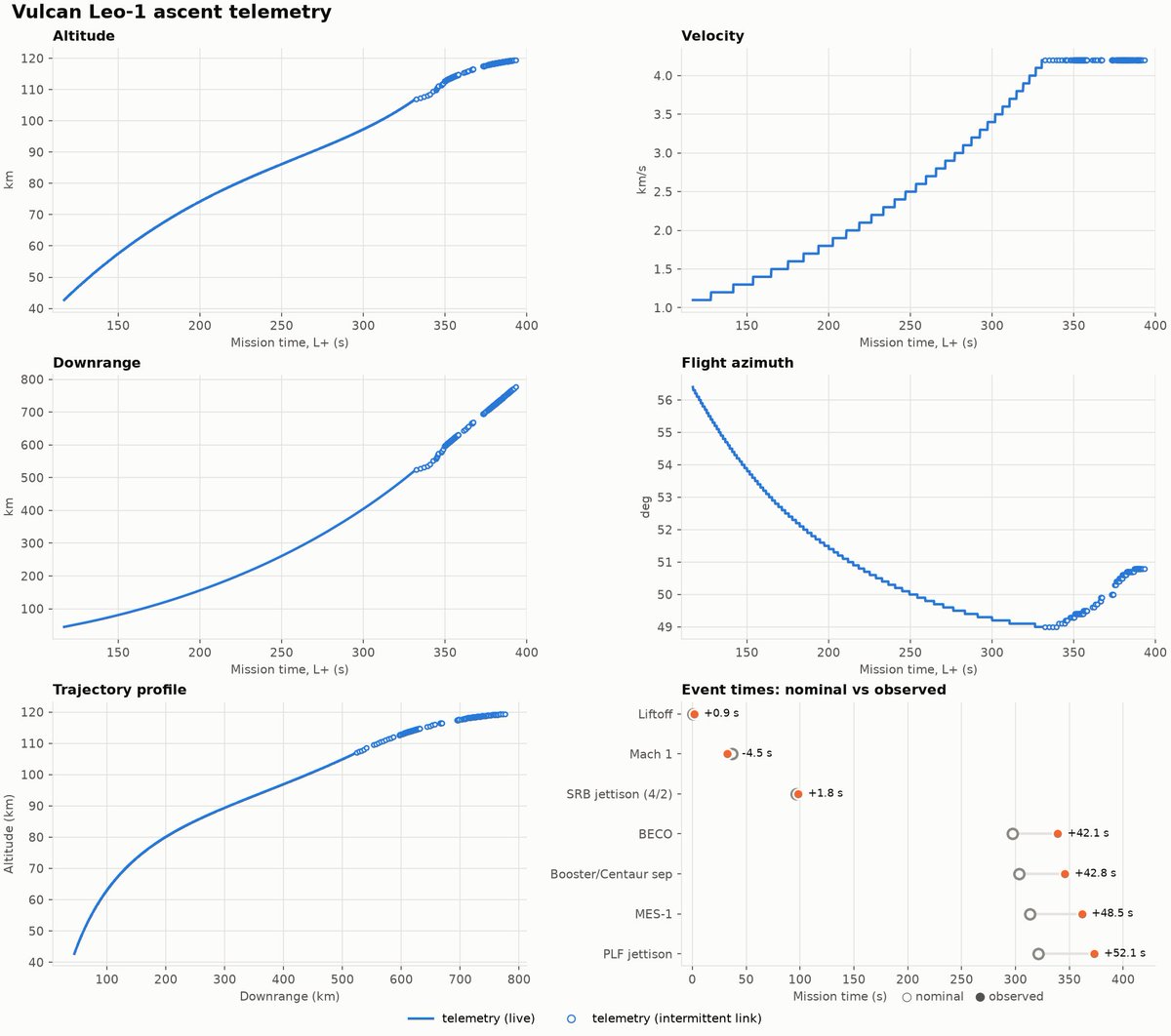
dV/dt at the last few frames of first stage flight were ~27.5m/s. For the telemetry on USSF-87 it was about 36 m/s. That's a very noisy measurement and the payloads and trajectories are different but it seemed pretty low to me.
If it were just the trajectory I'd expect acceleration to be similar between the two.
OCR to pull out the telemetry data from Leo-1 doesn't show anything obvious.
With some very gross assumptions at shutdown thrust looks like about 90% of expected.
Good luck and swift resolution to ULA (and probably Blue Origin too). We need more launch vehicles.
This summer, we opened our new home in Hawthorne, where we design, build, and test the satellites that will use sunlight to deliver clean energy and help save lives.
Thank you to everyone who came out to celebrate this milestone with our team. If you haven’t seen the space yet, we’d love to have you by the office soon!
@PhilipJohnston Delta II is perfection. Delta IV Heavy is iconic. Delta IV M is fine. Delta III is a stain on our space program and well past when we knew better.
We’re excited to announce we’ve purchased two dedicated launches with @SkyrootA to deploy future spacecraft.
Our aim is to expand solar energy generation to reduce reliance on fossil fuels and help save lives by supporting search-and-rescue operations at night.
These launches give us assured schedule and capacity alongside our other planned launches from US sites.
Following the FCC’s approval of our first demo mission, we remain focused on engaging with key stakeholders to earn the right to scale.
Onwards!
Full announcement: https://t.co/TjqwCHx8eF
@DJSnM There's more payloads then there are rockets right now! I suspect anyone with a working launch vehicle will have plenty of customers for the next few years.
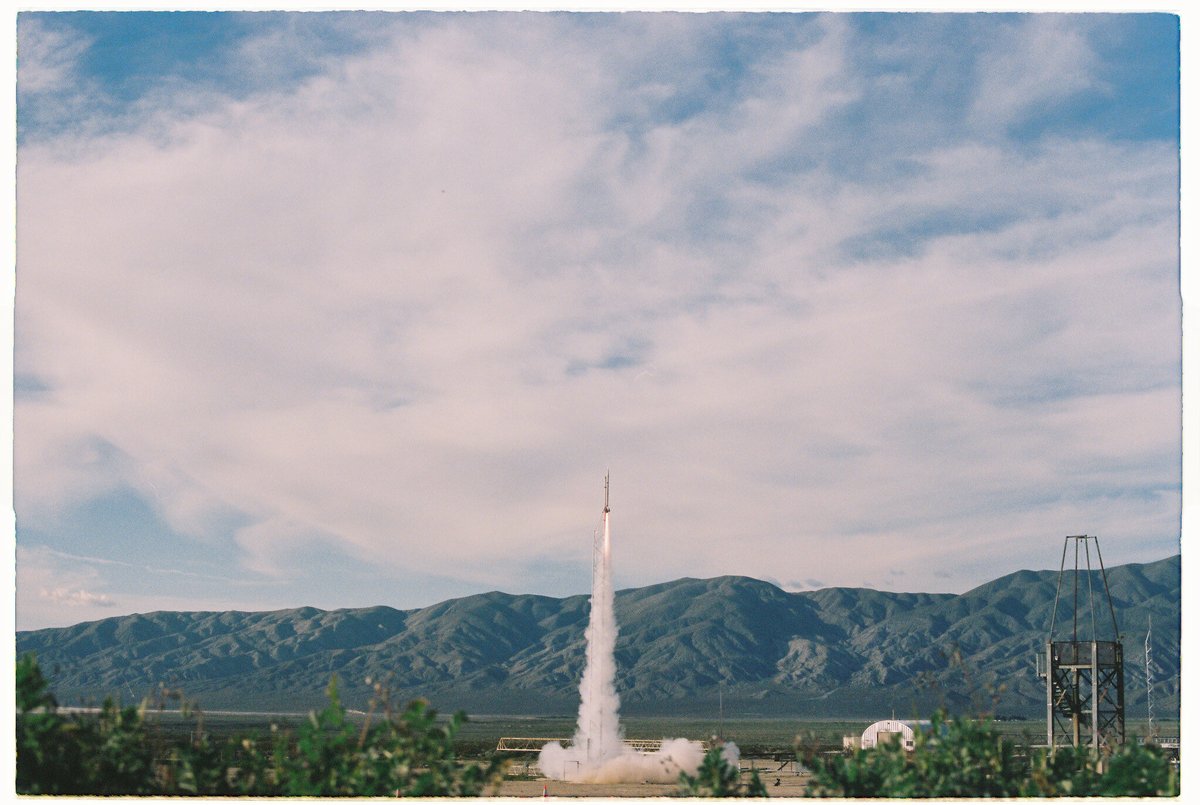
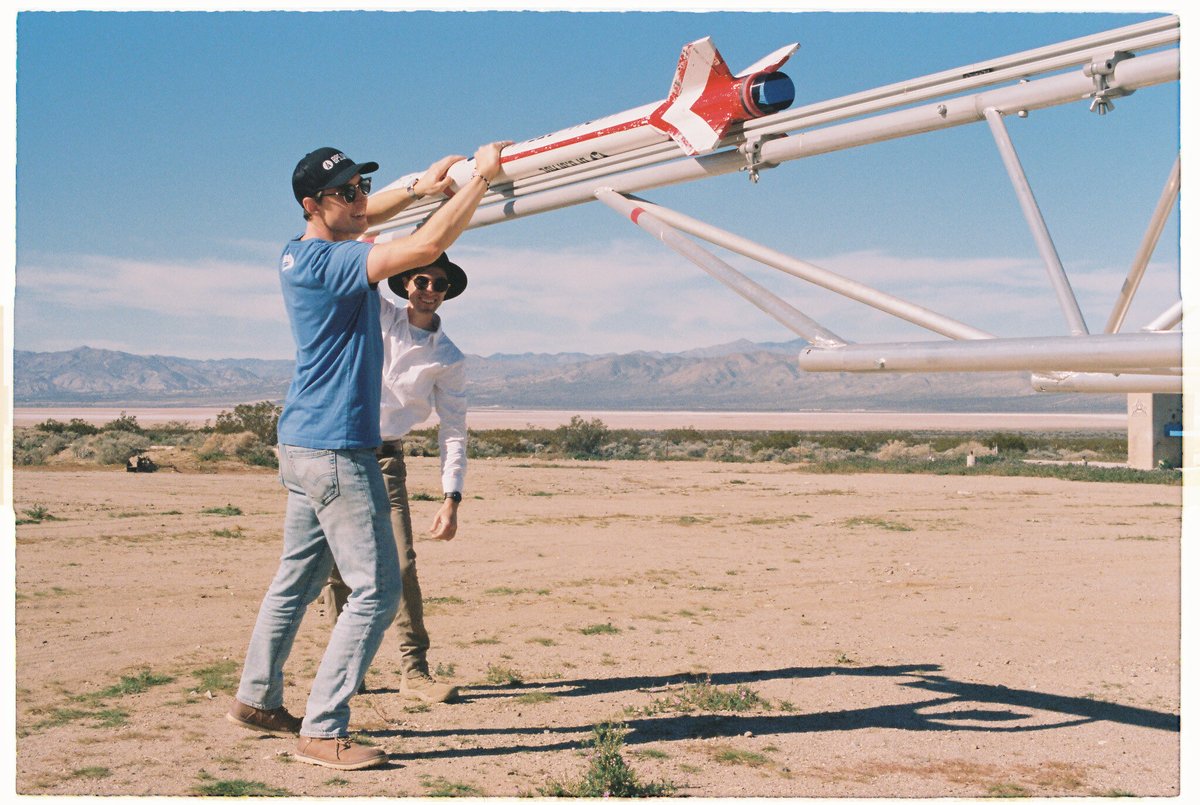
Mojave Sphinx Heavy is now fully stacked and leak checked ahead of its static fire test a week from today. This will be the first ever clustered liquid in amateur rocketry, producing almost 500 lbs of thrust in total.
@OSHBuilt@grok There are different forms of efficency loss and controllability needs. The better Isp of RVac doesn't win against the gravity losses and controllability issues you get from running RVac only in those cases.
Solar panels are awesome for about ~8 hours a day, but the world still generates most power from fossil fuels. Solar will cap out unless we deploy way more battery capacity faster. Orbital power can be a global investment in addressing the need for cheap, clean, power and it is applicable to the entire world once built, compared to a local battery/geothermal/nuclear/wind power plant.
https://t.co/zvnOSFsDy9