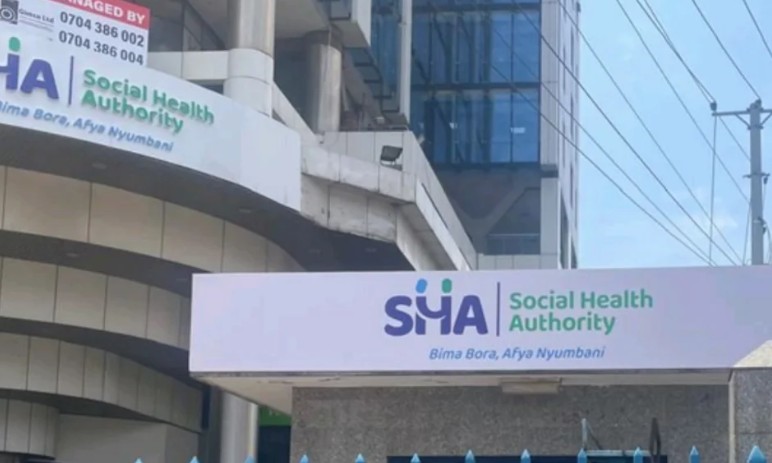
Thank you, Citizen TV Kenya, for airing that report on the Social Health Authority (SHA).
I’ve been doing my own background checks on SHA, and what we found is disturbingly close to what was exposed.
We spoke to 15 people in Nairobi and Mombasa. Out of those 15, fourteen were assigned premiums of KSh 1,000 per month.
Here’s the shocking part: most of them are unemployed or survive on casual mjengo jobs.
And the so-called “appeal” process? It barely works. Many say once you try to appeal, the system asks what phone you use, and the moment you submit, it’s rejected.
Now it gets worse: some are being forced to pay annual premiums upfront. That’s KSh 12,000 at once for someone struggling to put food on the table.
SHA is becoming a crisis, and Duale knows it. And this is just the beginning. More details coming.
A Nairobi lady has sued Safaricom PLC after her KSh 2,700, mistakenly sent via M-Pesa, was used to offset the recipient’s Fuliza debt.
Her reversal request was declined. She has now moved to the High Court challenging that policy as unconstitutional.
When I send money to someone, my intention is clear that I am transferring funds to THAT person. I am not entering into a contract with Safaricom to help them recover loans. I am not agreeing to become a guarantor. I am not volunteering to settle another adult’s overdraft.
How then does my money automatically clear someone else’s debt without my consent?
We must be very careful as a country not to normalise silent policies that shift financial burdens to third parties. Digital convenience should not override basic principles of fairness and property rights.
Yes, the recipient may have agreed to Fuliza terms. But I did not.And this is the core issue.
If money is mistakenly sent and reversal is denied because it has already been swallowed by a debt recovery system, then we are creating a dangerous precedent one where corporations quietly prioritise loan recovery over consumer protection.
At the very least, there should be a clear warning before completing a transaction:“The recipient has an outstanding Fuliza balance. Funds may be used to offset debt. Proceed?”
This case is bigger than 2,700 shillings. It is about how far automated financial systems can go without violating basic rights.
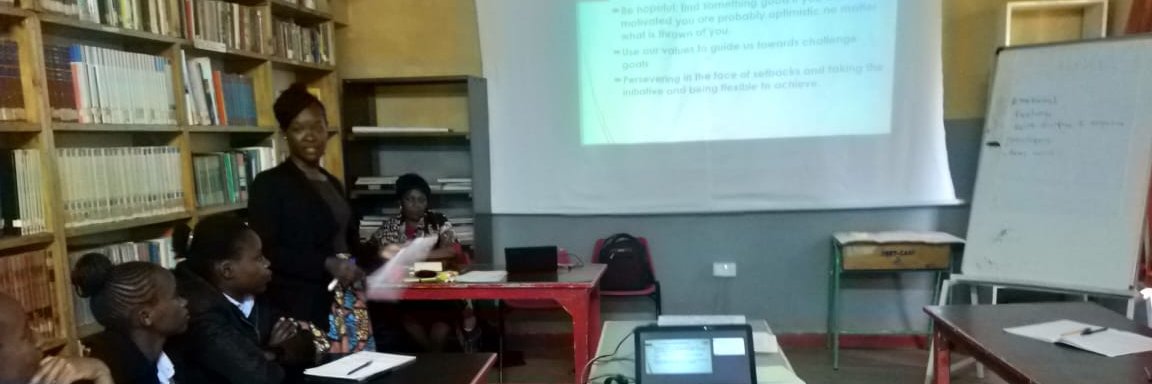
Are you a young mum below 20 trying to figure out life while raising a baby? Hatua Dada Program supports young mums in Kawangware & Nairobi environs with:
💼 Business skills
🧠 Wellbeing support
🌟 Mentorship
📍 Hope Church, Lavington – Nairobi
Apply: https://t.co/OyOibnUAO7
I’ve just watched CS Alfred Mutua deny that the Kenyan government knew our youth were being lured to Russia and ending up in a foreign war.
Denial is easy. Records are harder to erase.
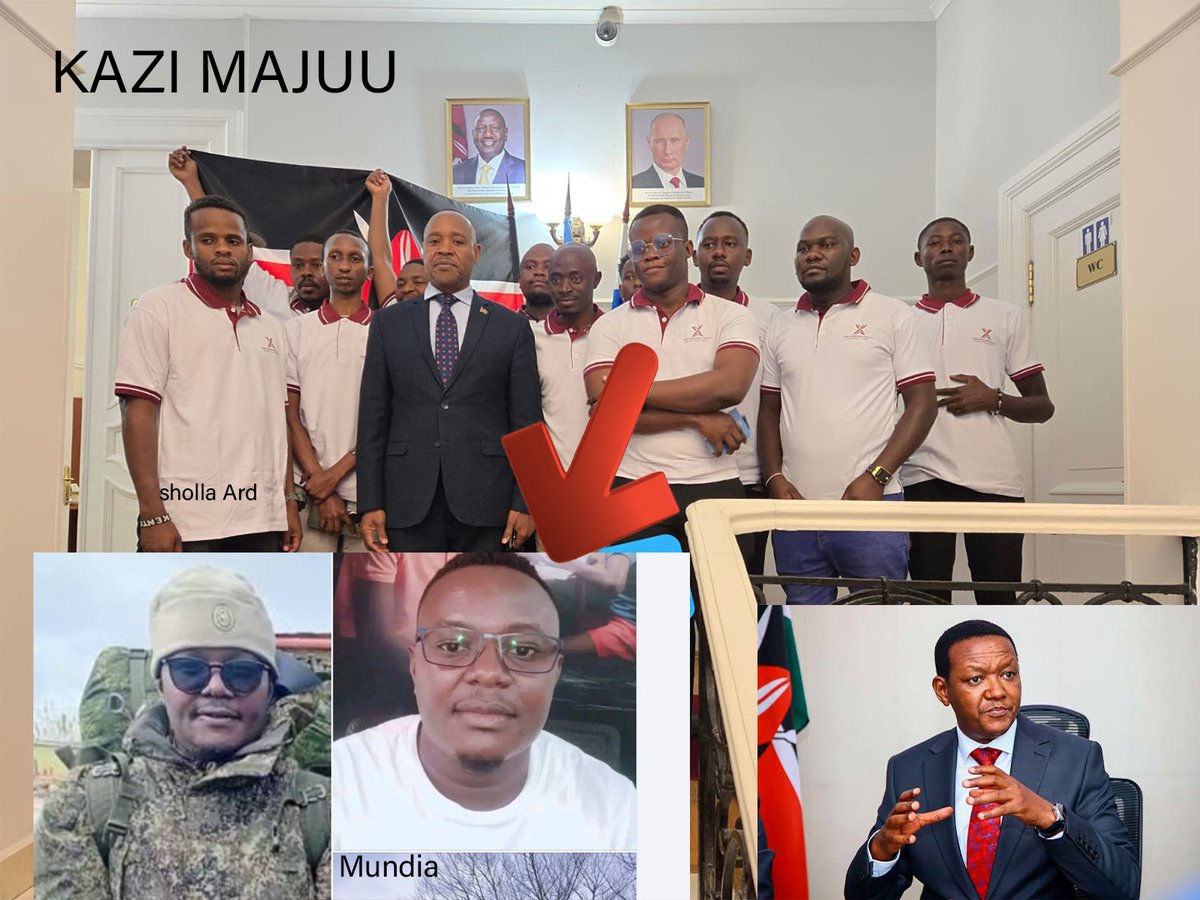
Below is a photo taken in 2025 during activities linked to the Kazi Majuu program, with recruiters present, and a government official present. This didn’t happen in the dark.
One of those believed to have gone through this route is Mundia. Today, his family is stranded, with reports that he may already be dead, and little hope of his body ever returning home.
So let’s speak plainly.
Kenyans did not wake up one morning and accidentally fall into a war zone using tourist visas.
Pathways were opened. Silence followed.
When a government creates routes, watches quietly, then pleads ignorance, that is not a mistake; it is abandonment.
Leadership means owning consequences.
Evasion is a confession.
Alfred Mutua, you should take responsibility
I own a small bakery. Business has been slow. Rent is up. I was thinking about closing.
Last Friday, a teenager came in. He looked nervous. He counted out change for a cookie. He was short 50 cents.
"It's okay," I said. "Take it."
He ate it at a table, looking at his math homework. He looked stuck.
I used to be a math tutor.
I walked over. "Quadratic equations?"
He nodded. "I don't get it."
I sat down and helped him for 20 minutes. He got it. He left smiling.
The next day, he came back with two friends. They bought cookies.
The day after that, five kids came.
Apparently, he told the school, "The lady at the bakery helps with homework."
Now, my bakery is the after-school hang-out spot. It's loud. It's messy. There are backpacks everywhere.
Yesterday, I found a note in the tip jar. It was wrapped around a $20 bill.
"Thanks for helping my son pass math. A Mom."
I'm not closing the bakery.
I think I finally found my purpose.
It's not cookies. It's community.
10 Curated YouTube Documentaries to Binge Watch
1. Behind Closed Doors: How Politicians & The Rich Betray People— Endevr Documentary
2. Empathy, Attachment & Alienation: How Children Develop — DW Documentary
3. The Drug Mule Scam: Trafficked by Marianna Van Zeller —Nat Geo
4. Uncovering The Toxic Culture of Surgeons — ABC News In-depth
5. World Largest $100 Billion Failed Ghost City —YesTheory
6. How Predators are Targeting Children in Childcare — ABC News In-depth
7. Why Millions are Changing How they Eat — Food For Thought
8. Why Junk Food Targets the Poor — Java Discover
9. True Crime Compilation — The Decoder
10. A Teen Girl’s Battle — PBS Frontline
Extras on Amazon Prime
11. Iraq’s Secret Sex Trade
12. The Fake Sheikh
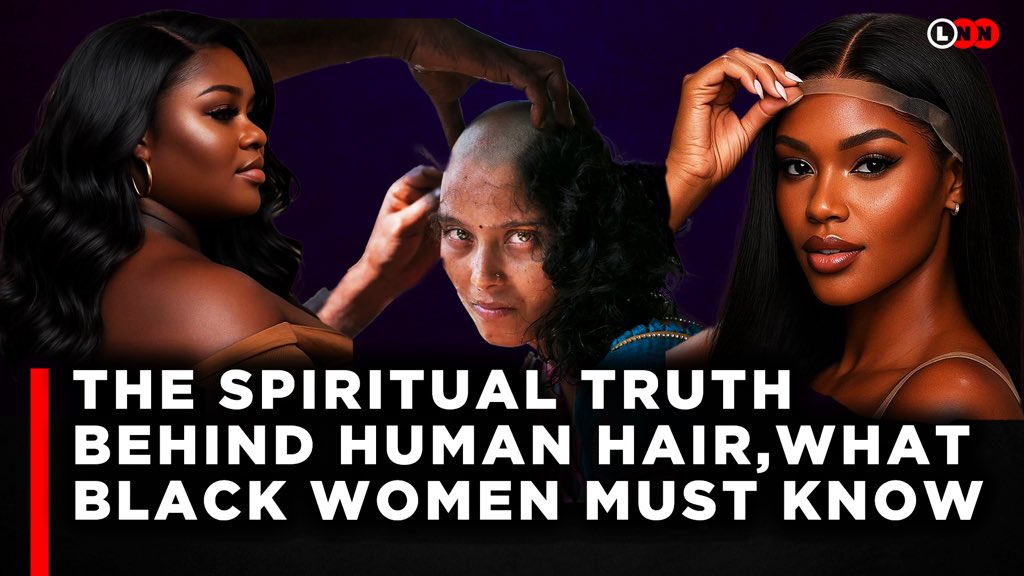
The Human Hair Revelation: The Spiritual,Psychological & Economic Truths We Must Learn As Black Women…
Most Black women wear human hair, but very few know the real story behind it. Not the marketing. Not the glam. The truth.
Where it comes from.
How it’s collected.
What it means spiritually.
Why it’s tied to poverty.
How it shapes our confidence.
And why a billion-dollar industry built on Black women does not belong to Black women.
This episode is not about attacking wigs or judging anyone. It’s about asking the questions we have avoided for too long:
What are we really carrying on our heads?
Why did we stop trusting our own hair?
And how did we become the consumers of an industry we do not own?
If you wear human hair, if you love it, if you’ve ever questioned it, or if you simply want to understand the system behind it,
this is your episode.
Watch to understand.
Not to feel guilty.
But to finally know the truth.
Full episode here https://t.co/vMsxGurFpZ
Nestle has always had a thing out for African kids. In the 80s it took the US Congress for them to stop pushing baby formula over breastfeeding to African mothers.
Africa always gets low standard products..but Nestle takes the trophy for always intentionally targeting children
I’m honestly not surprised. Africa has always been treated like a testing ground for Western corporations, and Nestlé is just the latest proof. They deliberately load their baby cereals with added sugar for African markets, yet the exact same products are sold sugar-free in Europe. That double standard says everything about how they view African children’s health.
What makes it worse is that people like Professor Vandana Shiva have been warning us for decades about how these global corporations exploit the Global South experimenting on our communities, dumping lower-quality products, and pushing practices they wouldn’t dare use in their own countries. And here it is happening again, right in front of us.
It’s shameless, predatory behavior. These companies profit from parents who just want to feed their babies, all while giving African children ingredients they would never give to European kids. It’s exploitation masked as business.
DNA, blood-type data for Sim-card registration sounds like providing product information for advanced human trafficking such that whoever has access to your data can use it or sell it for use. Worst case, you match what or who is needed, you are located by sim and picked up. ⚖️
Shock as a New York Times piece claims that President Ruto, First Lady Mama Rachel, and their daughter Charlene are allegedly profiting from Kenyan domestic workers facing exploitation in Saudi Arabia.