You can now chat with Lovable about anything.
Think out loud (literally, with voice support). Chat has deep context on your Lovable apps and connected tools, and it’s free.
So true, I find that in a lot of cases the humans are overly prescriptive. If they just tell the agent to discover what is there first and recommend me what to do it will most of the time recommend something good. They instead just say, without looking into what is already there and the possible choices that led us there, "I know exactly what I want, build XYZ make no mistakes" and the agent doesn't push back enough unfortunately.
we've mostly gotten past the slop issue in this new world of working together with AI
the next problem is people keep accidentally undoing functionality
this is happening because everyone is more in everyone else's business. hit an issue? fix it right away without nagging anyone
the problem is it's unclear how intentional the current behavior is and what absolutely should not be rolled back
you can say tests should be this. but they don't capture the fact that you discarded seemingly valid solutions 1-4 and settled on 5. someone later (an agent) might thing "oh 3 is simpler"
any additional document also doesn't feel like it solves the problem because it's yet another thing that can drift
where is the source of truth for how your software is supposed to work?
Introducing flow-1, our new model trained with RL to find errors in agent traces.
It matches GPT-6-sol in trace intelligence while being 23x cheaper. It also costs 25% less to run than GPT-6-luna.
flow-1 finally makes it possible to monitor and understand every agent run, without sampling. 1/6
Over the last 30 days, Lovable Realtime sent 1.11 TB of application payload. If we'd sent every result as a full snapshot, we estimate it would have been around 40 TB.
Three optimizations account for the difference:
1. Don't send what didn't change.
A change in the database doesn't always change what a subscriber sees. Maybe it touched a field they can't read, or only bumped a timestamp. So we recompute their authorized view, fingerprint it, and compare. 88.4% of the time nothing had changed, so we sent nothing.
2. Send a patch, not the whole thing.
When the result did change, we send a patch if it's smaller than a full snapshot. New subscriptions still got the full snapshot. Patches cut the payload volume of changed updates by 94.5%.
3. Don't resend what the client already has.
When a client reconnects, it tells the server the fingerprint of the state it's holding. The server rechecks authorization and loads current data. If the fingerprints still match, it replies with a tiny "resumed" frame and the client keeps what it had. On top of the first two, this saved another ~50%.
All in, that's about a 97% reduction. 💪
I built a small simulator so you can watch it happen. Change a field, revoke a permission, or trigger a deploy, and see exactly what goes over the wire:
https://t.co/kbFjOddjjx
Okay, I promise this is the last teaser 😅 Blog post coming very soon ⚡️🚀
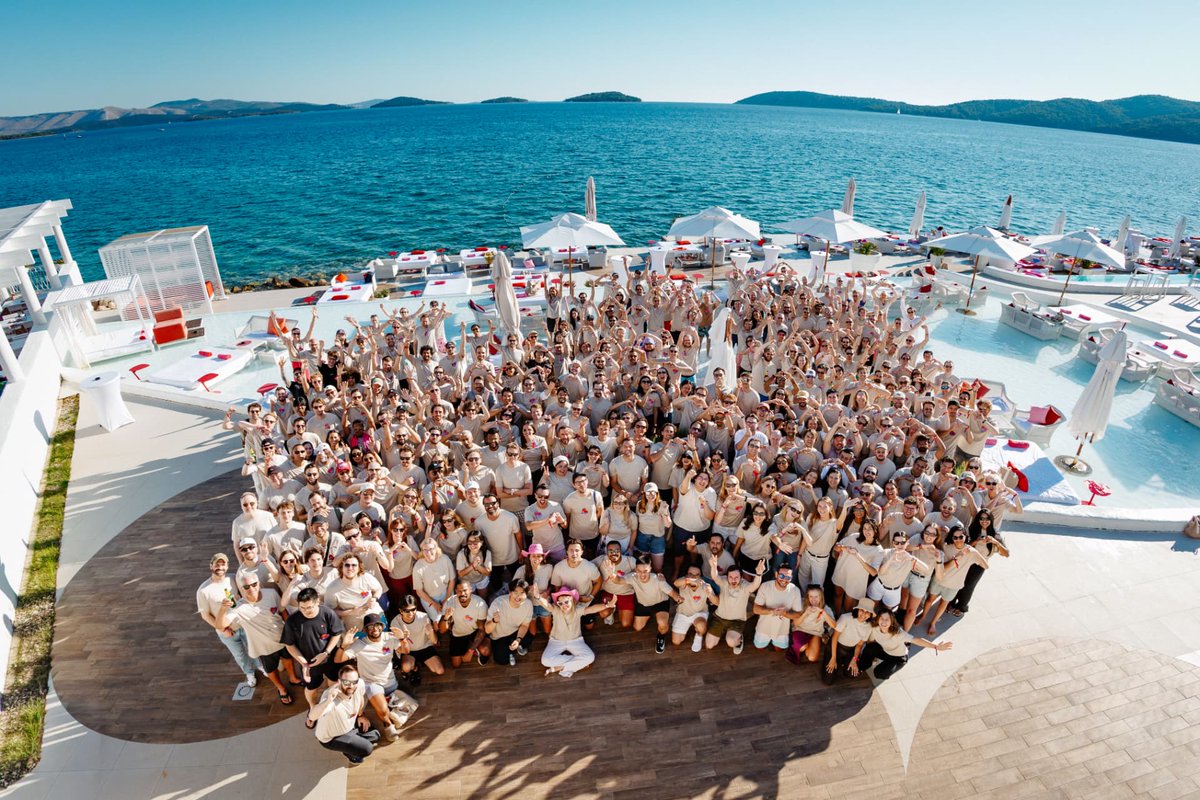
The Lovable team got together in Croatia to connect and plan for the future. Big conversations, great people, and more karaoke than planned.
@lovable 2026 offsite.
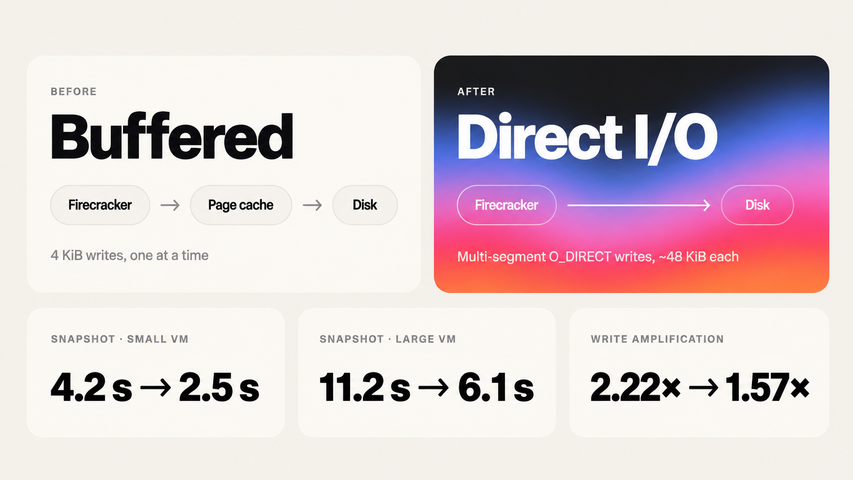
We've patched Firecracker snapshots to support io_uring and O_DIRECT writes 🤭
Our sandboxes utilize around 2G of resident memory in the p90 case, due to deps like Vite, FFmpeg or Chromium.
That's becoming less of a problem with these types of improvements! Feels good.