Transform your tissue analysis with HORIZON™, our image analysis software designed for COMET™ hyperplex immunofluorescence images. HORIZON™ can support you with precise single-cell data, enhancing your assay development.
https://t.co/0FdNrdWGGj
In advance of #WorldCancerDay, we’re raising awareness of the role that #spatialbiology plays in advancing #cancerresearch.
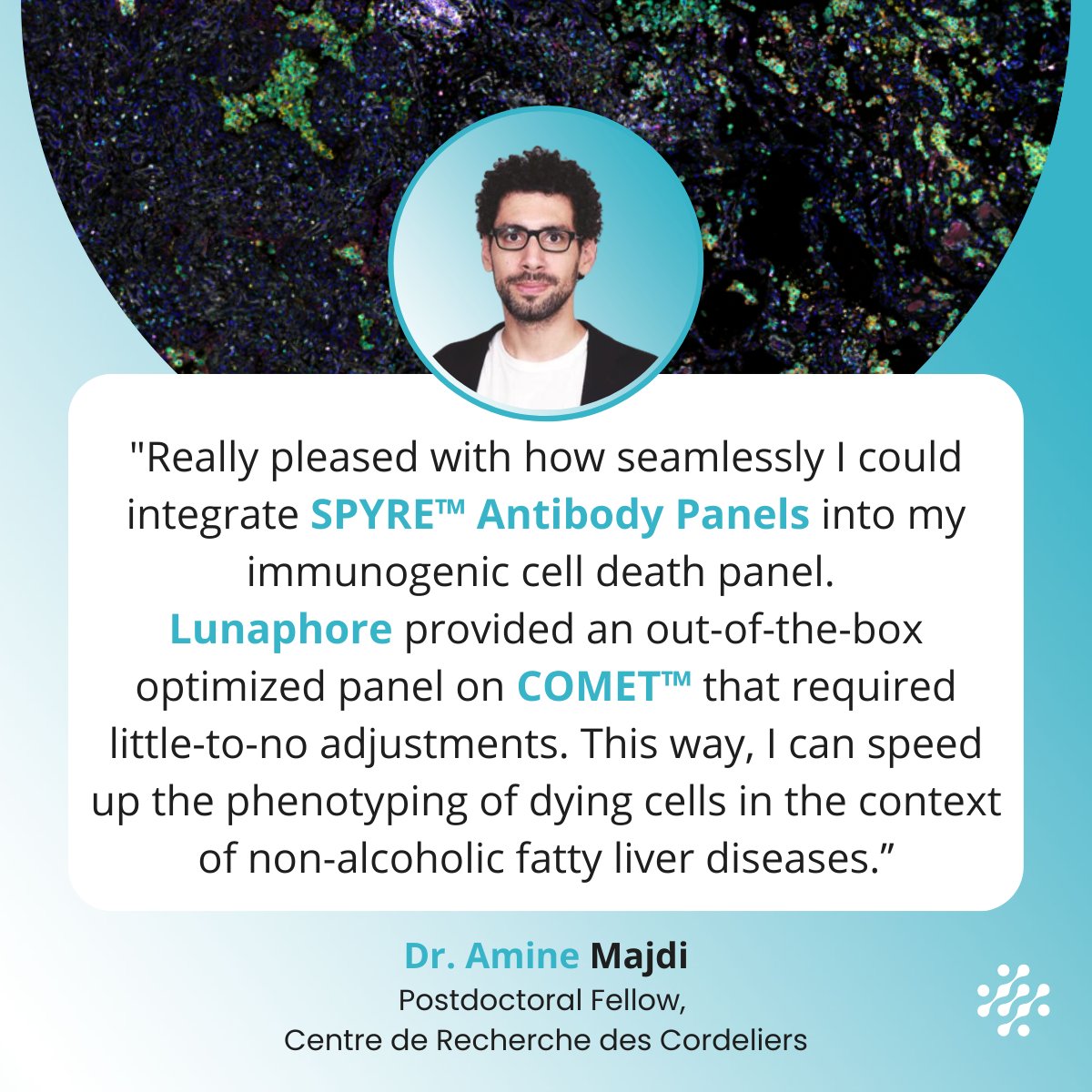
The staining images were generated by Dr. Amine Majdi, and the research team at @CRCordeliers, using the COMET™ platform and SPYRE™ Antibody Panels.
SPYRE™ Antibody Panels are designed to support specific research needs with maximum flexibility and minimum effort. See how Dr. Amine Majdi leveraged the panels to suit his research. https://t.co/ouTnTT5nni
Thanks to Dr. Jan-Philipp Mallm for hosting The Spatial Biology Tour™ at the DKFZ German Cancer Research Center.
Check out the upcoming city stops to connect with scientists and dive into the spatial revolution. https://t.co/qHUCh3NK6g
The Spatial Biology Week™ is concluding, but you still have much to learn! Join us on the final day and discover how #spatialbiology enables success in discovery and translational research settings. https://t.co/y7RDHcKLDo
Are you ready for the 3rd day of The Spatial Biology Week™? Today, you can explore real-world examples of #spatialbiology studies focusing on the identification of clinically relevant biomarkers. Join us and learn from top-notch experts. https://t.co/y7RDHcKLDo
We hope you enjoyed the opening day of The Spatial Biology Week™! Today, speakers will present cutting-edge research using #spatialbiology to interrogate the brain, revealing previously unknown insights. Make sure you connect. https://t.co/y7RDHcKLDo
How can the spatial omics approach enhance our understanding of biological mechanisms? Join us on the first day of The Spatial Biology Week™
We are starting soon! https://t.co/y7RDHcKLDo
Last call for registration - The Spatial Biology Week™ is right around the corner; secure your spot now!
Learn more about how #spatialbiology brings context into single-cell data. Connect with top-notch scientists and innovators. https://t.co/y7RDHcKLDo
Proliferation is one of the most fundamental biological processes in tumors. Measuring its rate can provide key information on the prognosis and aggressiveness of each cancer.
Download our Technical Note to learn how you can leverage SPYRE™. https://t.co/AHm6bkuZFX
Are you a scientist who wants to explore the new spatial paradigm? Would you like to connect with and learn from world-class researchers? Then join us at The Spatial Biology Week™ and find out where the future of #spatialbiology research is headed.
https://t.co/VoPOHEBsB4
The Spatial Biology Week™ will cover innovative projects integrating multiple technologies ranging from single-cell analysis to spatial #multiomics and multimodal imaging. Dive into discussions on how they can address a variety of research questions. https://t.co/VoPOHEBsB4
We were excited to open the first stop of The Spatial Biology Tour™ at the University of Zurich. Thanks to Dr. Olivia Hanley for hosting us!
If you want to connect with researchers and innovators, check the upcoming stops and join us in a city near you. https://t.co/BfcNinNCC0
The Spatial Biology Week™ returns in October 2023, hosting a significant group of top-notch experts. Join us for one week and learn about cutting-edge research and technologies. Let’s explore the new avenues for discovery together! https://t.co/NxVwz2AaNw
Explore advances in Candida albicans research and immune modulation with #spatialbiology. Discover how the innovative sequential immunofluorescence (seqIF™) approach enhances our comprehension of this infection by reading our latest blog post. https://t.co/EZFkpHrPfG
The Spatial Biology Tour™ is back! The tour stops are hosted by prominent research institutes across Europe. Click on the link to find the closest one to you. We look forward to exploring together how #spatialbiology can accelerate your research. https://t.co/TMVPTT5B9x
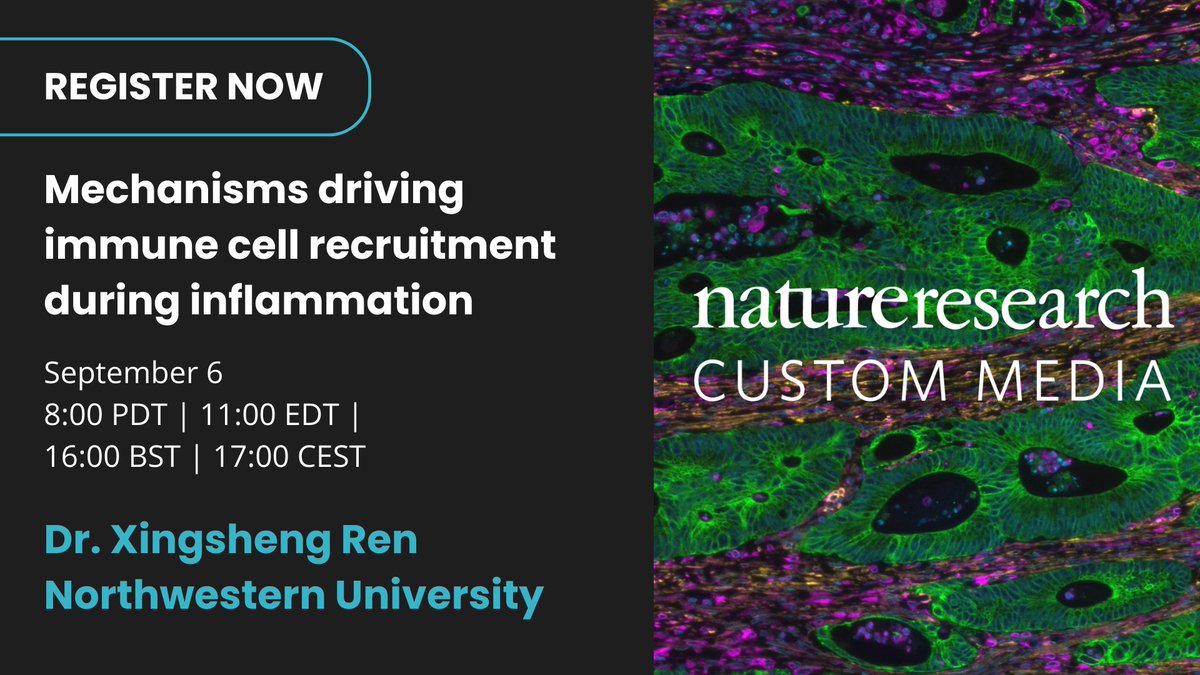
Learn from Dr. Xingsheng Ren, Northwestern University, who will present how he used spatial cell profiling to study the characterization of immune cell recruitment during inflammation.