"Athena Tuition has not only provided our daughter with the best tutors and results any child could wish for but also furnished the family with some of the most interesting, diverse and lovable people we have ever met! I can’t recommend them more highly." - #EmmaThompson
ppl are so overly negative about the UK vs reality.
- 4 of top 10 universities globally
- third largest VC market globally behind only USA, China. 1/3 of all VC in europe
- powerhouse in creative industries - second largest music exporter in the world
- largest biotech ecosystem in europe - massive growth sector in the coming years
- London is the top western hub for AI after Silicon Valley.
- excellent financial services base and broader services economy. Number one for FX, number two for PE and Hedge Funds
- produces 20% of global offshore wind
TLDR UK is overwhelmingly a top 3 or top 5 player globally across finance, law, defence, biotech, clean energy, creative industries, and tech (especially AI)
We are incredibly well positioned for the future.
We have a number of problems we need to fix - I believe we will do so.
Extremely bullish on this country
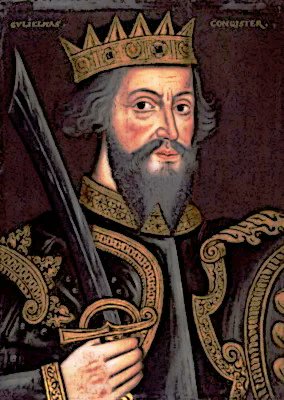
When William the Conqueror rode into England in 1066, he didn’t just bring knights and taxes. He brought a new ruling language. Overnight, the people at the top of society stopped speaking like the people at the bottom.
In royal courts, great halls, and law courts, the new Norman elite used French (technically Anglo-Norman). Charters, lawsuits, royal commands—if it mattered to power, it was written and spoken in French or Latin. The king was roi, the court was cour, and the law was loi.
Meanwhile, the vast majority of the population—Anglo-Saxon farmers, craftsmen, and villagers—kept speaking Old English. It was a West Germanic language, closer to modern German and Dutch than to what we speak today. Everyday life still ran on words like hus (house), cū (cow), swīn (pig), hlāf (loaf).
For almost 300 years, these two worlds coexisted uneasily. A peasant might never utter a word of French, yet French still governed his taxes, his trials, and his king. Slowly, though, the languages began to bleed into each other. Children growing up near towns and courts heard both tongues; scribes started to mix spellings; priests translated sermons for mixed audiences.
Out of this long contact came a linguistic double vision we still live with. The people who raised animals used their old Germanic words: cow, pig, sheep. The nobles who ate the prepared meat used the French ones: beef (from boeuf), pork (from porc), mutton (from mouton). We govern with French and Latin—justice, parliament, nation, crown—but we feel with English: love, hate, home, hearth.
By the 14th century, the two streams had merged into Middle English, the language of Chaucer. It was neither pure French nor pure Old English, but a layered, flexible mix that could talk about kings and cabbages with equal ease.
That is the strange legacy of the Norman Conquest: a country split by language that, over time, forged one of the richest vocabularies on Earth—precisely because it once could not agree on how to speak.
#archaeohistories
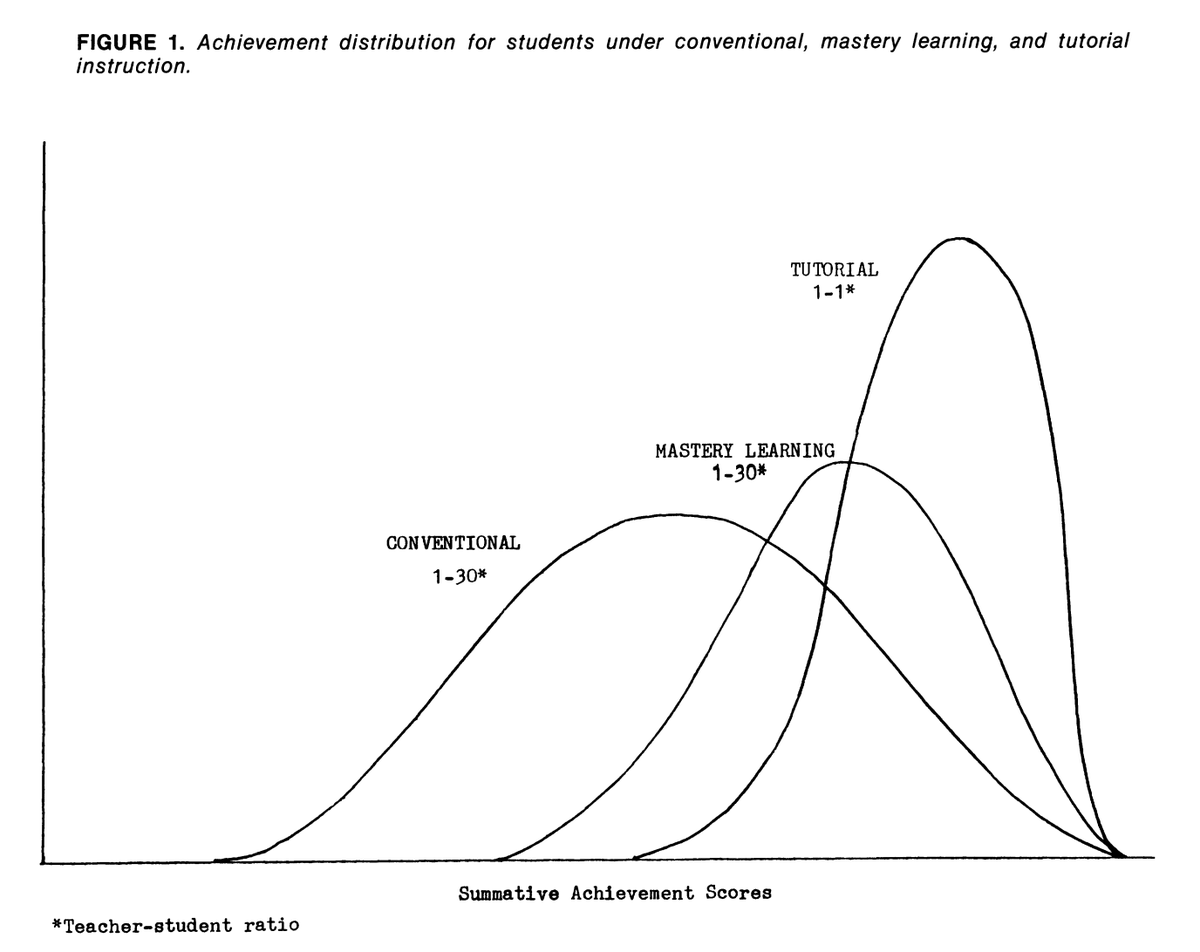
Why AI based tutors are going to be such a big deal
1:1 tutoring = 2 sigma improvement in learning achievement
Image from "The 2 Sigma Problem: The Search for Methods of Group Instruction as Effective as One-toOne Tutoring" by Benjamin S. Bloom
former nato sec gen rasmussen: “the security architecture that europe has relied on for generations is gone and is not coming back...we no longer know where america stands. if the mission of defending freedom and democracy in europe falls solely on us, we must finally be ready to take it on.”
Yes.
Aristotle was completely correct when he said that the ability to entertain a thought without accepting it is the mark of an educated mind.
Our society has a shortage of educated minds, despite so many being credentialed.
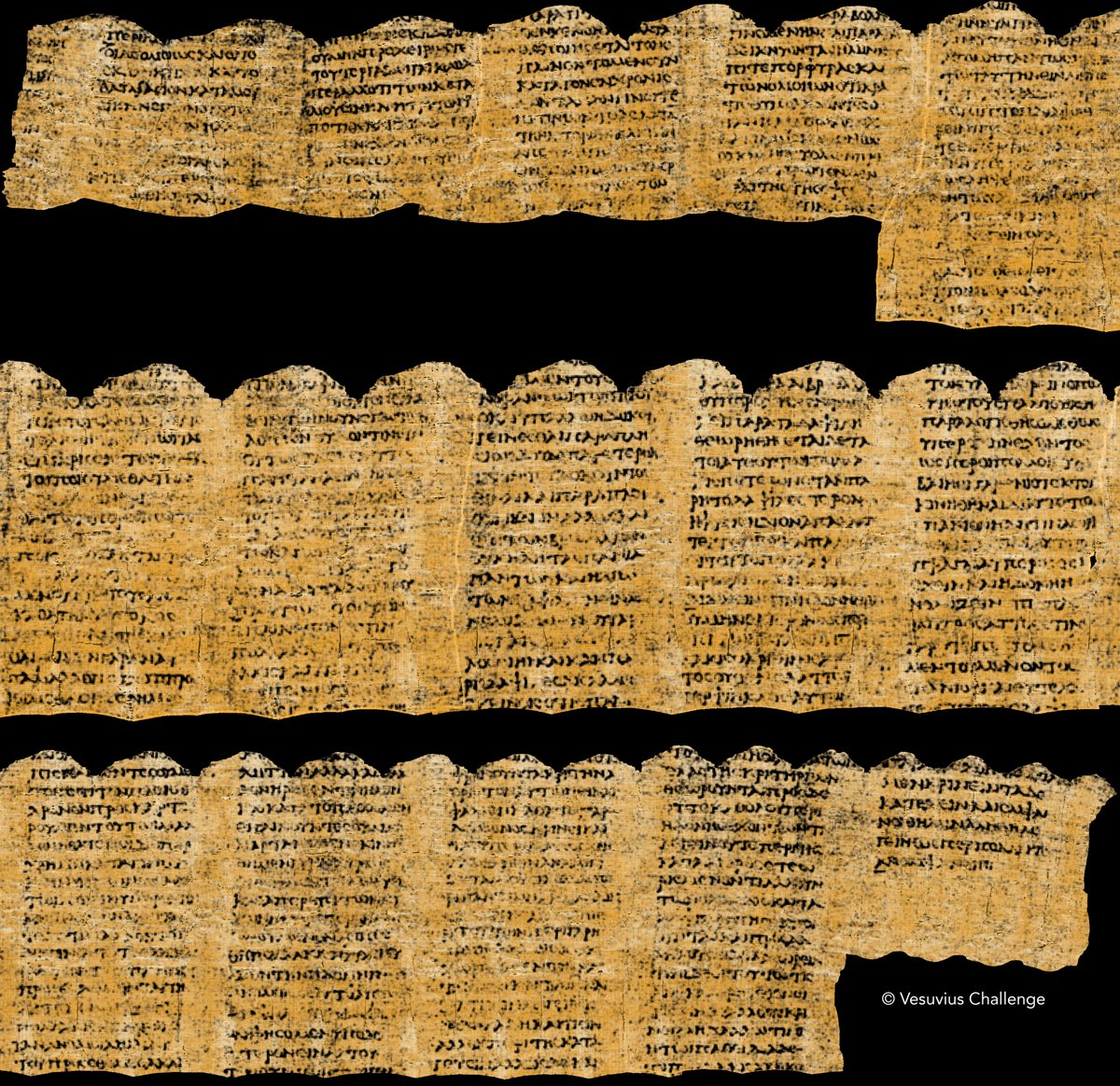
Ten months ago, we launched the Vesuvius Challenge to solve the ancient problem of the Herculaneum Papyri, a library of scrolls that were flash-fried by the eruption of Mount Vesuvius in 79 AD.
Today we are overjoyed to announce that our crazy project has succeeded. After 2000 years, we can finally read the scrolls:
This image was produced by @Youssef_M_Nader, @LukeFarritor, and @JuliSchillij, who have now won the Vesuvius Challenge Grand Prize of $700,000. Congratulations!!
These fifteen columns come from the very end of the first scroll we have been able to read and contain new text from the ancient world that has never been seen before. The author – probably Epicurean philosopher Philodemus – writes here about music, food, and how to enjoy life's pleasures. In the closing section, he throws shade at unnamed ideological adversaries – perhaps the stoics? – who "have nothing to say about pleasure, either in general or in particular."
This year, the Vesuvius Challenge continues. The text that we revealed so far represents just 5% of one scroll.
In 2024, our goal is to from reading a few passages of text to entire scrolls, and we're announcing a new $100,000 grand prize for the first team that is able to read at least 90% of all four scrolls that we have scanned.
The scrolls stored in Naples that remain to be read represent more than 16 megabytes of ancient text. But the villa where the scrolls were found was only partially excavated, and scholars tell us that there may be thousands more scrolls underground. Our hope is that the success of the Vesuvius Challenge catalyzes the excavation of the villa, that the main library is discovered, and that whatever we find there rewrites history and inspires all of us.
It's been a great joy to work on this strange and amazing project. Thanks to Brent Seales for laying the foundation for this work over so many years, thanks to the friends and Twitter users whose donations powered our effort, and thanks to the many contestants whose contributions have made the Vesuvius Challenge successful!
Read more in our announcement: https://t.co/rUlrdGXBMs
In the NYT today, Cade Metz implies that I left Google so that I could criticize Google. Actually, I left so that I could talk about the dangers of AI without considering how this impacts Google. Google has acted very responsibly.
Our perpetual information flow suffered a minor bump in the road, but no matter! Back at cruising altitude, here is our Medicine and Biomed admissions resources blog. Absorb, assimilate, leap over admissions hurdles. Splendid
https://t.co/LkE9SDnk3a
Hello and Welcome!
Entry number 4 of our undergraduate book recommendation series.
Linguistics is the subject of the week this week.
Enjoy!
https://t.co/2vmX92Q19r