A Jewish merchant from Market Street mailed a copy of the Declaration of Independence 250 years ago. It’s back in Philly. https://t.co/pIKyS79VZz via @phillyinquirer
‼️ Πολύ κακή είναι λογικά η κατάσταση στις τάξεις ειδικά της Τουρκικής πολεμικής αεροπορίας, αφού μέσα σε 6 μόλις μήνες ο "2ος πιο ισχυρός στρατός του ΝΑΤΟ" (και καλά) έχει χάσει ένα μεταγωγικό αεροσκάφος C-130 τον Νοέμβριο του 2025, ένα F-16 τον Φεβρουάριο του 2026 και τώρα τον Απρίλιο του 2026 ένα μεταγωγικό ελικόπτερο Chinook.
🇹🇷🇺🇲Το πρόβλημα ξεκίνησε από όταν το 2020 ο πρόεδρος των ΗΠΑ Ντόναλντ Τραμπ επέβαλε τις περίφημες κυρώσεις CAATSA στην Τουρκία, εξαιτίας της αγοράς του Ρωσικού συστήματος αεράμυνας S-400 από την Άγκυρα. Εξαιτίας των κυρώσεων η Τουρκία:
👉 1ον δεν μπορεί να αναβαθμίσει τα υπάρχοντα Αμερικανικά όπλα της π.χ. F-16.
👉 2ον δεν δύναται να αγοράσει νέα π.χ. F-35.
👉 3ον δυσκολεύεται να προμηθευτεί ανταλλακτικά για να συντηρήσει έστω ότι συστήματα διαθέτει.
💀Όλη αυτή η κατάσταση έχει φέρει τρομερές επιπτώσεις για την Τουρκία, αφού από τις πτώσεις των πτητικών της μέσων σε καιρό ειρήνης έχασε σε 6 μήνες 21 στρατιωτικούς (20 στο C-130, 1 στο F-16 και 0 στο Chinook) με κανέναν να μην γνωρίζει πώς άραγε ένας τέτοιος στρατός θα δράσει σε πραγματικό περιβάλλον σύγκρουσης.
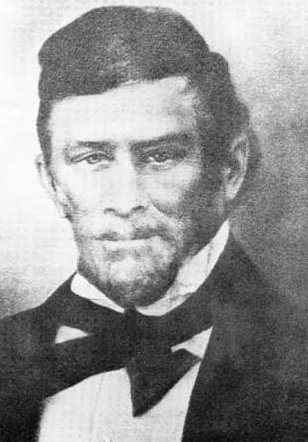
David Whippey was an American sailor born in Nantucket, Massachusetts in 1802 who went on to become one of the most influential foreign residents in the history of Fiji.
At just fourteen years old, Whippey departed Nantucket in 1816 aboard the whaling ship Hero, beginning a life of adventure that would take him far from home.
He deserted the ship in Peru, setting himself on a path that diverged sharply from the whaling trade that defined so many Nantucket lives.
In 1824, Whippey arrived in the Fijian Islands aboard the brig Calder, under the command of Captain Peter Dillon.
Dillon left Whippey behind on the islands with the task of collecting tortoise shell, intending to return for him, but remarkably failed to come back for thirteen years.
Rather than being stranded helplessly, Whippey adapted and thrived in his new environment, becoming what was known as a beachcomber, a term for white men who settled among Pacific island communities and served as cultural go-betweens.
By 1826, just two years after his arrival, Whippey had earned the prestigious title of Mata ki Bau, meaning envoy to the powerful Fijian tribe of Bau, one of the most dominant political forces in the islands.
He settled in Levuka on the island of Ovalau, which would later become the first colonial capital of Fiji.
Whippey married a local Fijian woman and went on to have at least eleven children with multiple women over the course of his life.
He became a vital mediator between the Fijian people and the growing number of foreign sailors and traders passing through the islands.
His diplomatic and linguistic skills earned him enough trust and respect that in 1846 the United States appointed him as their vice-consul to Fiji.
Whippey served in that diplomatic role until 1856, representing American interests in the islands during a period of growing international attention to the Pacific.
In his later years he turned his attention to agriculture, making the first known attempt at commercial sugar production in Fiji on Wakaya Island in 1862.
He constructed a sugarcane mill on the island, hoping to capitalize on the crop that would eventually become central to Fijian economic life.
The venture ultimately failed because Wakaya Island was too small and poorly suited for large-scale sugarcane cultivation.
Whippey spent the remainder of his life on Wakaya Island and passed away there in 1871 at the age of sixty-nine.
David Whippey's remarkable life had a lasting impact on both Fiji and American diplomatic history, as his role as Mata ki Bau helped stabilize relations between the powerful Bauan Fijians and the increasing flow of foreign traders and sailors during a volatile period of Pacific contact, while his appointment as US vice-consul marked one of the earliest formal American diplomatic presences in the Pacific Islands region. Although his attempt at commercial sugar production on Wakaya Island failed, it foreshadowed the sugar industry that would later transform Fiji's economy, labor force, and ethnic composition, making Whippey an early, if unsuccessful, pioneer of the agricultural enterprise that would define the islands for over a century.
#archaeohistories