A Canadian veteran has uncovered a horrifying truth about Canada's Medical Assistance in Dying (MAiD) program. What is being sold as "compassionate care" is, according to expert testimony, a chemical drowning.
Kelsi Sheren reveals the shocking details from a Senate subcommittee hearing, featuring the testimony of a 25-year veteran anesthesiologist.
The core of the issue is the drug Sodium Thiopental. Here’s the breakdown:
• The Source: The drug is made in Italy. Under EU law, it is illegal to manufacture a drug used for executions.
• The Demand: Canada and the U.S. have been using it for death penalties and MAiD, leading to a shortage for anesthesiologists who need it for surgeries.
• The Mechanism: A Freedom of Information request and analysis of over 300 autopsies of individuals executed with this drug revealed a terrifying fact: 85% showed a 2x increase of water in the lungs.
This means the drug induces a death akin to waterboarding or drowning.
So why do MAiD deaths appear peaceful? Because patients are given a paralytic first. They are chemically paralyzed, then administered the drug and begin to drown to death internally, unable to move or cry out.
The procedure takes 10-15 minutes via IV, and up to 24 hours if taken orally. All while the person is consciously drowning.
We waterboarded terrorists and called it "cruel and unusual punishment." Now, the Canadian government and "Dying with Dignity" are offering it to its citizens as "compassion."
This is the same slippery slope history warned us about, echoing the verbiage and expansion of categories seen in the darkest chapters of human history. It's now being offered to veterans instead of treatment—a cost-saving measure disguised as empathy.
The truth is being hidden. Families, like one in Fraser Health, are being denied autopsies. The public is being lied to.
This isn't compassion. It's a brutal, concealed execution. It’s time to talk about what MAiD really is.
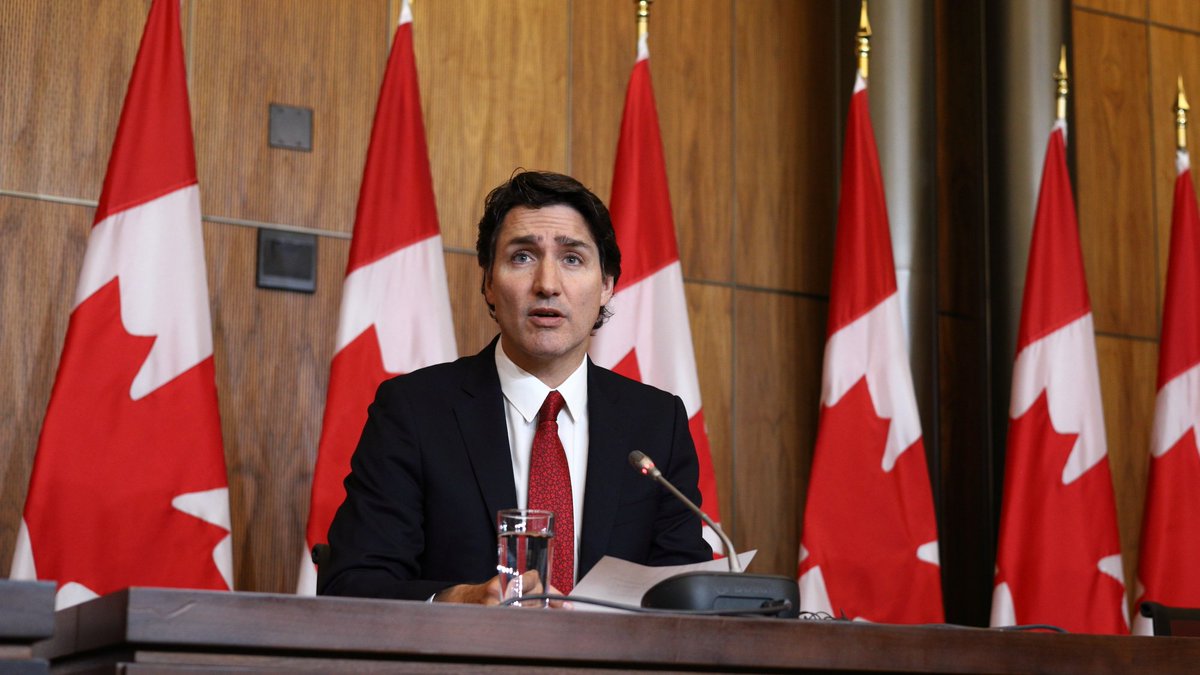
*Slow clap.* Ah, the age-old dance between big tech and government. Yesterday, in the latest installment of this drama, Prime Minister Justin Trudeau stood before the nation, condemning Meta's decision to block news on their platform, particularly amidst the forest fires encroaching upon NWT and Kelowna. And in classic Trudeau fashion, he waxed poetic about the 'recklessness' of the decision. Their crime? Deciding to block news on their platform amidst the forest fires ravaging NWT and Kelowna. Now, Trudeau believes that if Meta considers Canadian news sacred, then they should, naturally, pay Canadian news companies for the right to share those links on their platforms.
Meta, in a move that surprised no one, clapped back to Trudeau news bill C-18 by... you guessed it, blocking Canadian news.
Let's not get it twisted. Meta isn't a crown corporation or a charitable organization. They're a private company. Their allegiance? Not to Justin Trudeau's whims or the beckoning of any government or lobbying group, for that matter. But to their shareholders and their bottom line.
Now, before we dive deeper into Trudeau's holier-than-thou rebuke of Meta, let's chew on a juicy piece of government hypocrisy, shall we? Meta, for all its faults, offers its service to Canadians at the grand price of... *zero*. That's right, nothing. But you know what Canadians *do* shell out for? The highest cell phone bills in the world. And who's been in charge while that travesty unfolded? None other than the Trudeau government.
In the great theatre of politics, Justin Trudeau seems to have a particular penchant for pointing fingers at Silicon Valley. But perhaps, just perhaps, before he begins his ritual of casting stones in that direction, he might consider taking a long, hard look in the mirror. The Trudeau track record is littered with instances of bowing to the whims of lobbyist big business buddies. So, let’s be clear, before you start preaching about the sins of others, maybe it's time to examine your own backyard.
Let's talk about something crucial that affects your daily life and wallet: mobile wireless pricing. In the vast country of Canada, the Competition Bureau has shed light on a fact that shouldn't surprise many of you - competition works. Where there are strong regional competitors, prices for mobile wireless services are, in fact, lower than in areas dominated by the so-called 'big three'. It's the principle of the free market in action.
Now, consider countries like France and Ireland. These aren't mythical lands; they're real places where real people saw their wireless prices plummet because the market welcomed more competition. It's a simple story of supply and demand, and consumers are the big winners.
But here's where things take a dark turn. The federal government, perhaps recognizing this global trend, made attempts to introduce fresh competition into the Canadian wireless market. An initiative many would argue is in the best interest of its citizens. But guess who didn't like that? That's right, the major carriers. These giants lobbied fiercely against such efforts, apparently preferring a stranglehold on the market to genuine competition.
And here's the real kicker, the part that might just ruffle your feathers. Much of Canada's telecom infrastructure, the very backbone these companies profit from, is bolstered by funding from both federal and provincial taxpayer dollars. That's right. Your money might just be aiding the giants that then turn around and charge you premium rates while stifling competition.
In light of Justin Trudeau condemnation of Meta, it's quite rich to hear the Trudeau government champion the cause of Canadians. Let's rewind a bit: Months ago, this same government approved the Rogers-Shaw merger, effectively stifling competition in a telecommunications market where Canadians are already shouldering some of the world's highest cell phone bills. Minister François-Philippe Champagne might've presented conditions designed to 'benefit consumers', but the true colors of this administration show when they fold to the pressures of corporate lobbying.
Ask yourself, When in history has reducing competition ever genuinely benefited the consumer? It's a basic principle of economics: competition drives innovation, better services, and, most importantly, fair prices. Every time we've seen a market consolidate into the hands of a few, consumers invariably suffer. Higher prices, fewer choices, and reduced quality often follow. So, as we examine the Rogers-Shaw merger and its ramifications, one must ask: In what alternate universe does the Trudeau government live where less competition somehow equates to a better deal for Canadians?
So while the Trudeau government might tout its achievements and decisions as being in the best interest of Canadians, the reality seems to contradict their narrative. It's a tale of two Canadas: One where corporate interests reign supreme, and another where the voice of the people is continually drowned out by a chorus of partisan narratives
Nobody called for C-18, except, of course, the taxpayer-funded media. That very same media, whose ratings are plummeting, always seems to be in the pocket of the Trudeau administration. And why wouldn’t they be? Never bite the hand that feeds, right? But let's ask a fundamental question: Why are these media outlets floundering? It's simple. The public isn't buying what they're selling. Yet, while they struggle, independent media voices – like mine, True North, Sam Cooper – are flourishing. What's our secret? We don’t spoon-feed Canadians a carefully crafted Liberal narrative and then have the audacity to label it 'news'.
As history has consistently shown, Justin Trudeau seems more invested in catering to his lobbying pals and protecting the murky depths of the Ottawa swamp than genuinely serving Canadians. Think about it: Who clamored for C-18? Corporate lobbyists. Who was keen to stifle competition in the telecommunications arena? Again, corporate lobbyists. Perhaps it's high time Justin Trudeau prioritized the interests of everyday Canadians over the entreaties of the Ottawa elite.
So, my dear readers, let’s not forget the reality here: news sharing was once a gift to Canadians, a service provided at no cost, one that Meta claims was equivalent to over $200 million in free advertising for Canadian news outlets. Yet, in the wake of Bill C-18, this gift was snatched away. Prime Minister Justin Trudeau's indignation at Meta's response is nothing short of astonishing. It sheds light on the profound entitlement and privilege that colors his perspective. Born with the proverbial silver spoon, Trudeau has never known a day of want, living in the shadow and reaping the benefits of his father's legacy. And now, what we are witnessing is the culmination of that legacy – where nepotism meets ineptitude, and the Canadian populace is left to bear the brunt.
#cdnpoli
Our daughter and granddaughter called hiding in stock room of a store doors locked light off, apparently swat is walking around armed in the mall. Praying for them all we can do.
Anyone know whats going on at west Edmonton mall?
#wem#yeg
Daughter called and told me they are in lock down, hiding in the stores, keeping out of sight.
The unethical truth of net zero. Around 40,000 child slaves in Congo work in hazardous conditions in cobalt mines, with inadequate safety equipment and for very little money. The cobalt is used in many products - including electric car batteries.
@Sportsnet@EdmontonOilers why the constant echo happening during the game? All stick slapping the ice are echoing like a bad reverb, not happening on any other feed.