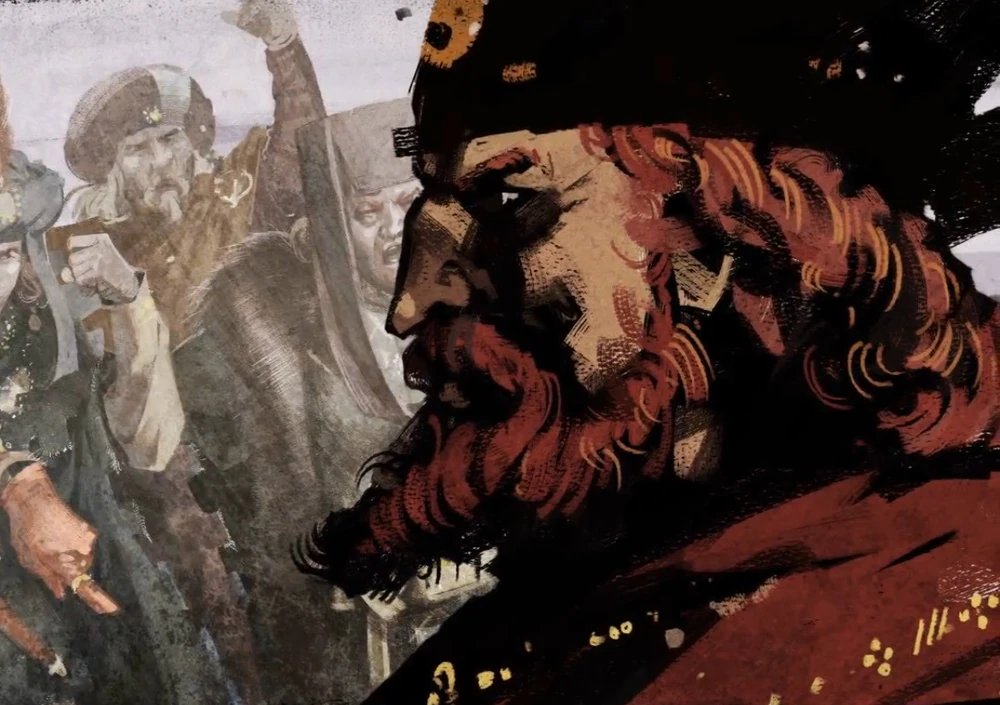
King and Emperor Sigismund of Luxembourg is widely known for his actions and his kingdom of Hungary in Eastern Europe during the late XIVth and XVth centuries, yet there were no limits to his ambitions.
He even nearly played a major role in the Hundred Years' War but was narrowly prevented from doing so.
Following the Battle of Agincourt in 1415 and the annihilation of much of the French knighthood, Sigismund began to focus more on France. He had already been present in the kingdom of France on occasion, particularly regarding the Council of Constance, but these visits were infrequent due to the civil war. This time, however, he sensed an opportunity.
In the spring of 1416, he arrived in Paris as a "diplomat" with a force of several hundred men to seek an agreement and a solution to the war with England, as well as to the conflict between the Armagnacs and the Burgundians.
He acted as an intermediary between the two sides and immediately went to see King Henry V of England in Canterbury. There, he forged a secret alliance: he promised the King of England that he would participate in the invasion of France in early 1417.
The details of his invasion are unclear, but he was to relieve pressure on the Norman front, possibly by passing through a city he greatly coveted: Lyon in southern France.
In March 1417, he declared war on the Kingdom of France, and the entire population panicked. Everything had been planned with the Duke of Savoy for a large-scale invasion of southeastern France, but it never materialized.
The political and religious pressure was immense upon hearing of the declaration of war. Spaniards, Italians, and Germans protested and threatened to exacerbate the schism. At the last minute, he backtracked and declared in July 1418 that he would first focus on eradicating heresy in the Kingdom of Bohemia and then go to war in France.
The Hussite Wars in Bohemia lasted from 1419 to 1434. Sigismund's invasion of France never took place, and therefore he was never able to help King Henry V or the English, even after the Hussite wars. Despite having approved the Treaty of Troyes in 1420 "except for the rights of the Empire," and Henry V, in 1421, proposing the return of the Dauphiné to him, and the regent Bedford in January 1423, unsuccessfully requesting confirmation of the alliance from him.
The great irony? Because of Burgundian expansionism in the north, in the Low Countries, which were allied with England, Sigismund decided after the events of 1429 to ally himself with King Charles VII of France, seeing the tide turning.
If the Hussite Wars had never taken place in Bohemia, or if Jan Žižka had not been present to represent a major threat, Sigismund would have, at the same time as the English invasion of Normandy, invaded the Dauphiné with a German army.
⭐️GIVEAWAY⭐️
Christmas Giveaway time! 2 winners get 1x Baldur's Gate 3 plushie of their choice for free. All you gotta do:
☃️ Like, Retweet + Follow me
Shipping is international. If you already bought them, you will be reimbursed.