We cannot stop El Niño, but we can prevent workers and farmers from bearing the brunt of the damage. Preparation is not just about storing water—we also need to protect jobs, income, crops, and food," WPP Secretary General Allan S. Montaño said in Filipino.
https://t.co/LZKyId8K8P
NAGKAISA spokesperson Rene Magtubo has argued that the delayed approval of the labor groups’ intervention does not undo the financial impact on workers.
The coalition is seeking payment of wage differentials withheld because of the injunction.
SENTRO Deputy Secretary General Nicey Coronacion has also questioned the trial court’s authority to halt the wage order, maintaining that reducing the bond does not resolve the issue of jurisdiction.
https://t.co/rH4hN3Uccm
He is the workers’ pope! Pope Saint John Paul II’s solidarity with Polish workers helped them bring down communist rule in Poland.
In his encyclical Laborem Exercens (On Human Work, 1981), he taught: “work is ‘for man’ and not man ‘for work’” (§6)—a powerful reminder that the dignity of workers must remain at the heart of economic life.
Quotation: Laborem Exercens, §6.
O Pope Saint John Paul II, workers’ pope, intercede for our unions in the Philippines. Help us grow stronger, organize more workers into unions, negotiate more collective bargaining agreements, and secure better wages, benefits, and working conditions.
May God guide us in unity, courage, and solidarity as we uphold the dignity of labor. Through Christ our Lord. Amen.
O Pope Saint John Paul II, workers’ pope, intercede for our unions in the Philippines. Help us grow stronger, organize more workers into unions, negotiate more collective bargaining agreements, and secure better wages, benefits, and working conditions.
May God guide us in unity, courage, and solidarity as we uphold the dignity of labor. Through Christ our Lord. Amen.
Iginiit din ni Matula na hindi dapat agad ituring na sanhi ng inflation ang katamtamang umento sa sahod, dahil ginagamit ng mga manggagawa ang kanilang kita sa pagbili ng mga pangunahing pangangailangan sa bansa, na nakatutulong sa pag-ikot ng ekonomiya.
https://t.co/dMoqjIY42R
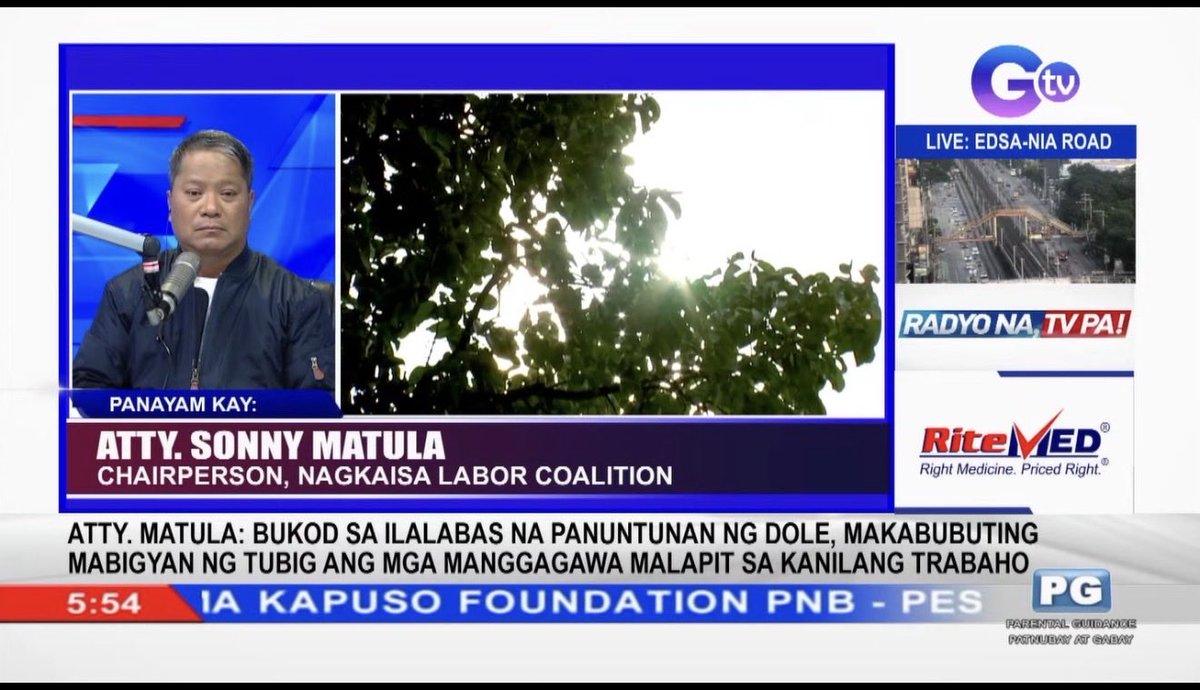
@AttyMatula .@AttyMatula on labor advisories for employers, workers amid El Niño: ‘Yung heat break ay kinakailangan at siyempre suggestion din namin na dapat may malinis na inuming tubig na malapit sa mga manggagawa.
LIVE sa DZBB: Atty. Jose “Sonny” @AttyMatula, Nagkaisa Labor Coalition chairman at Federation of Free Workers (FFW) president
📻: @dzbb 594 kHz
📺: #DobolBTV
📡: https://t.co/Q2O7oZOmUH
📱: https://t.co/nXPJqtUfiX
▶️: https://t.co/g4RYtYqeSq
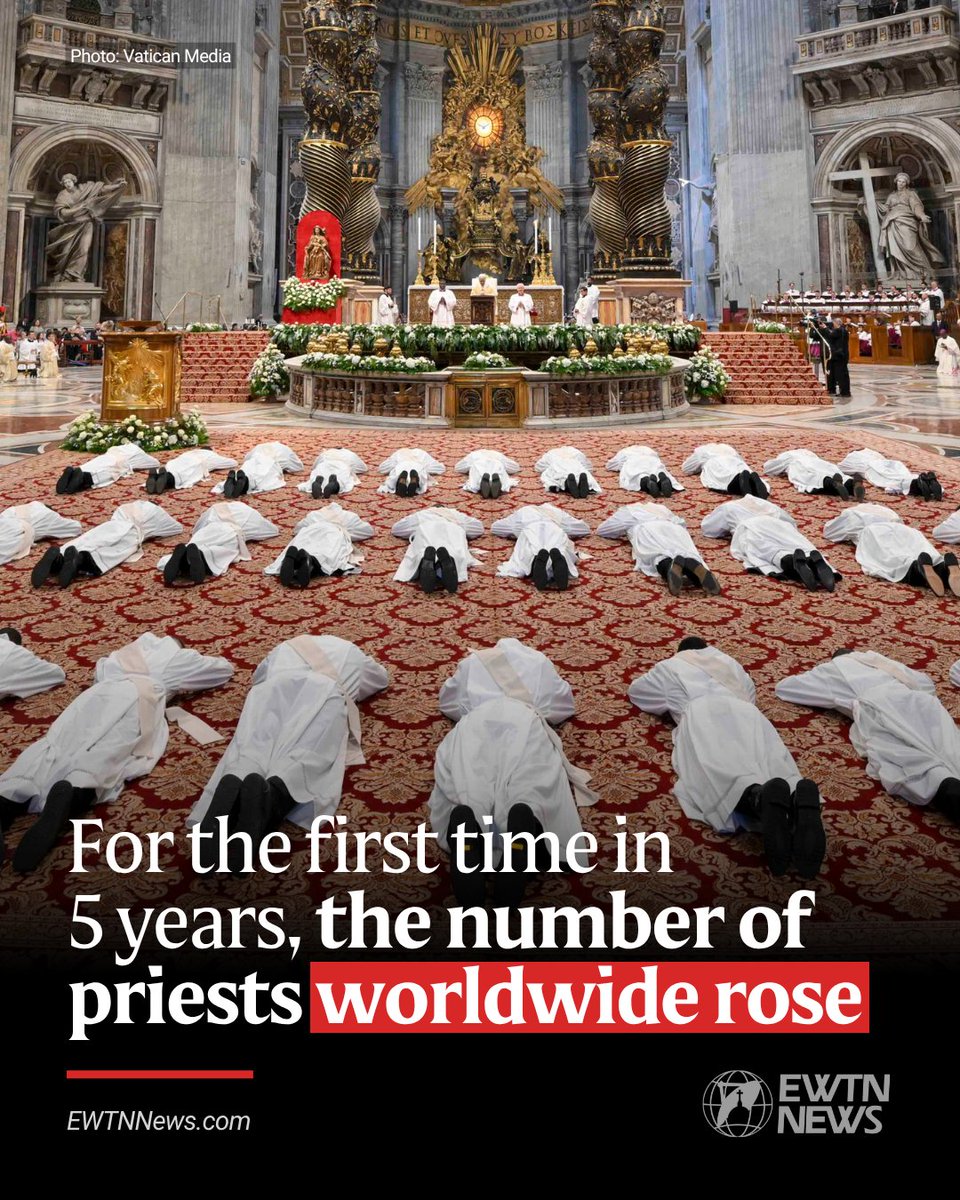
The number of Catholic priests worldwide has risen again after five years of no growth, according to statistics published by the Vatican agency Fides ahead of the 100th World Mission Sunday, which will be celebrated Sunday, Oct. 18.
According to the Fides report, the total number of priests rose from 406,996 to 407,421, representing an increase of 425 compared with the previous year. The Vatican agency noted that the data comes from the Statistical Yearbook of the Church and is current as of Dec. 31, 2024.
Africa recorded the largest increase with 1,676 more priests, followed by Asia with 1,065. The Americas also reversed the previous yearʼs downward trend, adding 199 priests.
In contrast, Europe lost 2,483 priests over the course of the year, while Oceania recorded a decrease of 32.
The overall increase is attributed to the growth in the number of diocesan priests, which reached 279,238, an increase of 496 compared with the previous count. Meanwhile, the number of religious order priests fell by 71, standing at 128,183.
Despite the increase in the number of priests, the number of Catholics per priest also rose, reaching 3,491 — an increase of 38 compared with the previous year. The average number of inhabitants per priest also climbed, reaching 16,104.
Fides statistics further indicated that the global Catholic population reached 1,422,144,000 as of June 30, 2024, an increase of 16.69 million over the previous year. Based on these figures, Catholics represent 17.8% of the worldʼs population.
Africa saw the largest growth in the number of Catholics, with an increase of 7.58 million, followed by the Americas, with a rise of nearly 7 million. Asia added 968,000, Europe 911,000, and Oceania 239,000.
While the number of priests is rising, the number of seminarians is decreasing. The number of major seminarians stood at 103,604 worldwide, a decrease of 2,891 from the previous year.
Africa was the only continent to record growth, with 786 additional seminarians, whereas Asia saw a decline of 2,733, Europe 701, the Americas 227, and Oceania 16.
The number of minor seminarians also decreased, falling to 94,041, which is 980 fewer than in the previous count. Africa reversed the previous yearʼs trend, adding 132, while Oceania recorded an increase of 20. In contrast, Europe lost 872, Asia 182, and the Americas 78.
More: https://t.co/dO1xwVEvUk
Atty. Sonny Matula (FFW) and Gigi Mathay (FFW) with Labor Secretary Francis Tolentino at the ASEAN Green Jobs Forum 2026.
“One practical step is for ASEAN to formally recognise the ASEAN Trade Union Council and establish a regular consultative mechanism for representative trade unions, comparable in seriousness and access to the engagement enjoyed by the ASEAN Business Advisory Council.
This should include regular dialogue with labour and economic ministers, opportunities to submit recommendations before decisions are finalised, and a process for responding to workers’ proposals on green jobs, digitalisation, migration, and regional supply chains.
If business has a standing invitation, labour should not have to wait for a spare chair.
Workers help build ASEAN’s prosperity. Their organisations should have a recognised voice in shaping its future. A just transition requires governments, employers, and workers to plan together—and share responsibility for the results.” — Atty. Sonny Matula speaking before the forum.
“A calculator can settle the arithmetic. It cannot settle who receives the gains or who bears the losses. That requires social dialogue and human review.” — Atty Sonny Matula, FFW President, speaking at the ASEAN Green Jobs Forum 2026.
In the picture from left to right: Rekson Silaban (KSBSI-Indonesia), Huiyi Lim (Moderator-Singapore), Atty . Sonny Matula (FFW President) and Rainier Cruz (ASETUC-Phils).
In a statement Sunday, October 18, Sonny Matula, chair of NAGKAISA, called on the government to submit its legal comment as soon as possible, saying workers are still waiting for issues surrounding Wage Order NCR-27 to be resolved.
https://t.co/r65WXEPOCP
ALAALA NI ATTY. SONNY MATULA: SI FR. ARCHIE—PADRE, DOKTOR, AT PARANG AMA KO SA MAYNILA
Remembering Fr. Romeo “Archie” Intengan, SJ
18 October 1942–10 October 2017
Today, we remember Fr. Archie—priest, doctor, theologian, labor chaplain, teacher, activist, and, to me, parang ama sa Maynila.
I met him in Iligan when I was still a first year law students at MSU-Marawi campus in 1987. A year later, he invited me to Manila to help translate PDSP materials from English into Cebuano/Bisaya. Akala ko, mga babasahin lang ang isasalin ko. Pati pala ang buhay ko—mula Mindanao tungong Maynila!
He gave me more than work: he gave me trust, guidance, and a home away from home. I later became his deputy in the PDSP Education Commission, where he taught me that political education means translating principles into service and convictions into action.
His concern for workers began during his medical-student days at UP, when he served as a volunteer educator and organizer of the Federation of Free Workers. When I became FFW president in 2011, he became our chaplain—a role he held until his death.
Bago pa siya naging doktor, marunong na siyang makinig sa pulso ng manggagawa.
Fr. Archie lived his faith beyond the church walls. He stood with workers, defended human dignity, and faced dictatorship at great personal cost. He was arrested, imprisoned, forced into exile, and returned only after People Power.
A priest who went to prison. A doctor who confronted authoritarianism. A teacher who helped young people find both conviction and courage.
But beyond history, I remember the man who welcomed a young law student from Mindanao and believed in him before he fully believed in himself.
Maraming salamat, Fr. Archie. Naging deputy ninyo ako sa trabaho, estudyante ninyo sa buhay, at anak ninyo sa paglilingkod.
Happy heavenly birthday, Padre. Patuloy naming isasalin sa gawa ang inyong mga aral—dahil ang pananampalataya at katarungan ay hindi dapat manatili sa papel.