Most people think their online communication is understood 90% of the time.
The reality?
50% of emails and texts are misunderstood (according to Nick Morgan, author of Can You Hear Me).
And that number only goes up for neurodivergent people. (Just ask any ND person how often they’re misunderstood).
At best, this means online conversations get confusing.
At worst, it can lead to misunderstandings that affect how others perceive you,
making you seem uncooperative or even overly critical.
At Autentik AI, we’ve been working hard to ensure online communication feels safe and supportive for everyone.
We’ve been building AI tool that help you:
✅ Navigate online communication
✅ Analyze messages—yours or others
Instead of asking you to change your communication style, we’re putting the control back in your hands for how you come across in emails, texts, and direct messages.
We call it our SafeTalk Bot 🤖
And it’s exactly what it sounds like:
An AI bot that analyzes messages to determine if they are:
✔️ Definitely toxic
❓ Potentially toxic
✅ Definitely not toxic
Right now, the bot works in WhatsApp, but that doesn’t mean you can’t copy & paste messages from other platforms into the bot!
It works on both desktop and mobile, so you can truly take it anywhere you are online.
Give it a try today at https://t.co/lGu6ljVuMn ✨
#neurodivergence #neurodiversity #neurodiversityatwork
Scripts that help avoid workplace misunderstandings
The hallmark of neurodivergence in the workplace?
Misunderstandings.
The one thing we see time and time again in our community is the struggle, crying, and full-blown meltdowns over the feeling of constantly being misunderstood.
We get it. It’s tough. There’s nothing like that particular negative bias being confirmed time and time again.
But there's also something you can do about it.
Learn to reconcile misunderstandings after you’ve realized they’ve happened. (After, because let’s be honest, most times we don’t see them coming.)
It can feel like it’s entirely on your shoulders to deal with miscommunications, but when it comes between losing your job or taking on this extra work—well, the reality of being neurodivergent in the workplace becomes even more real.
Next time you realize your communication's gone awry, here are a few scripts to try:
🦋 “I think there might be a misunderstanding here. Can we clarify what we both meant?”
🦋 “We might be on different pages about this. Can we talk it through?”
🦋 “Can you help me understand your perspective better?”
🦋 “I may have misunderstood you when you said [repeat what they said]. Can we revisit what you meant by that?”
🦋 “Let’s summarize what we both understand to ensure we’re aligned.”
Notice how most of these are questions?
When you ask a question rather than make a statement, you’re inviting the other person to participate in the conversation.
This is a great way to gauge whether or not the other person wants to avoid future miscommunications, too, or if they might be someone to try to avoid in general.
#inclusiveworkplace #neurodiversity #adhdatwork #autismatwork
Exciting News! @Autentik_AI is heading to #WebSummit in Lisbon next week! 🎉
We’re excited to join one of the world’s largest tech gatherings to introduce our B2B solution—AI-powered tools designed to enhance communication and clarity in corporate settings. At @Autentik_AI , we believe technology should help everyone feel seen, heard, and supported in the workplace. Our solutions are specifically tailored for diverse teams, fostering inclusivity and making it easier for employees to communicate effectively, reduce misunderstandings, and build a more collaborative, productive environment.
On 13th November at Stand A528, our co-founders will be there to meet up, connect, and share ideas. We’d love to explore ways to create a more inclusive, effective workplace.
We’re also inviting everyone to join us for our Startup Showcase on 14th November at 12:00 on Stage 13, where we’ll present our vision for the future of workplace communication. Don’t miss it!
Can’t wait to meet you all there 🙌
#WebSummit #AutentikAI #InclusiveTech #FutureOfWork
Did you know that 65% of #neurodivergent employees are hesitant to share their condition at work due to fear of discrimination? And 47% of #autistic employees choose to keep their diagnosis private.
Our latest blog explores the challenges and considerations of disclosing an autism diagnosis in the workplace, offering helpful insights to guide this personal decision.
👉https://t.co/Ja6awTtusu
We’d love to hear your thoughts on fostering a more inclusive workplace!
#ActuallyAutistic #InclusiveWorkspace #AutentikAI
Being an inclusive employer isn’t just a box to be ticked.
It's ensuring all employees feel welcome and supported within the workplace.
One way to be more inclusive is to avoid making assumptions, every #neurodivergent individual has different needs.
👉 https://t.co/SYKCnw2Zq7
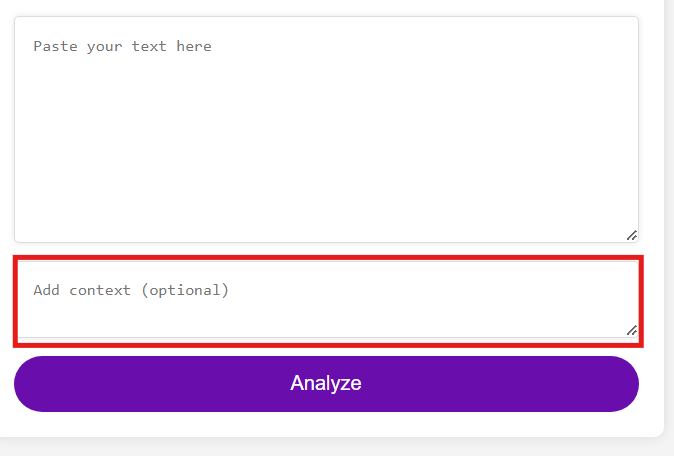
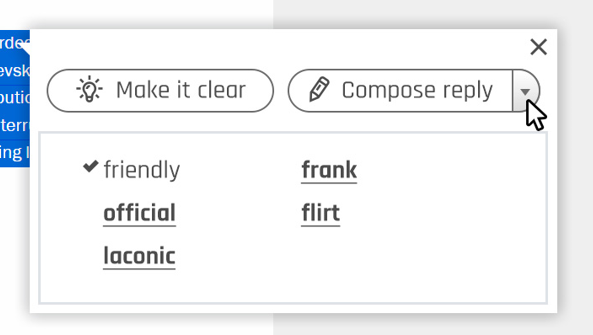
Different versions of our solutions actually included tone of voice and custom context. However, after tests with a real audience, we decided to skip these features to make the product more straightforward. When we say that our goal is not to substitute your own voice, we mean that we aid with small talk and ritualistic phrases, but not with meaningful conversations. Our audience says that the tool is really helpful.
You ask, why do we ignore context. In fact, we have various products that take context into consideration. For example, we build AI tools for work environments where we consider the communication scenarios and the specific work tool being used. We've experimented with adding context from sentiment analysis of audio input and visual context, but haven't yet found an ideal fit for this. We also plan to add personal information and preferences for personalization of inclusive communication, once we've fulfilled the associated security tasks.
@thecollegehill You said, "I would be extremely qualified and probably willing to work for these people." Btw, I'd be happy to chat with you on this topic
1. The word "explain" doesn't necessarily imply understanding. A dictionary can explain something. An event can explain some outcomes.
2. Geoffrey Hinton, one of the main experts on LLMs, thinks that latest LLMs can reason and produce meaningful information beyond the datasets used to train them: https://t.co/b2LOcueSt9
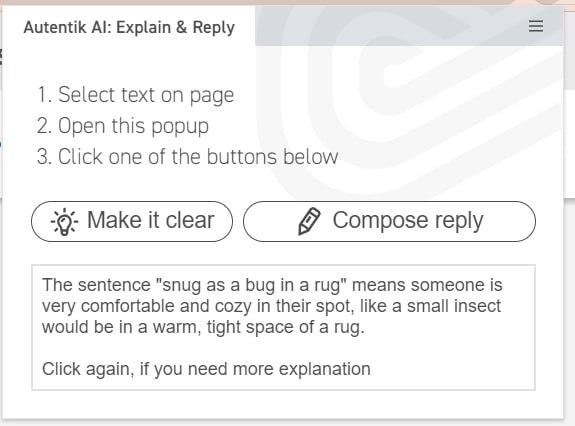
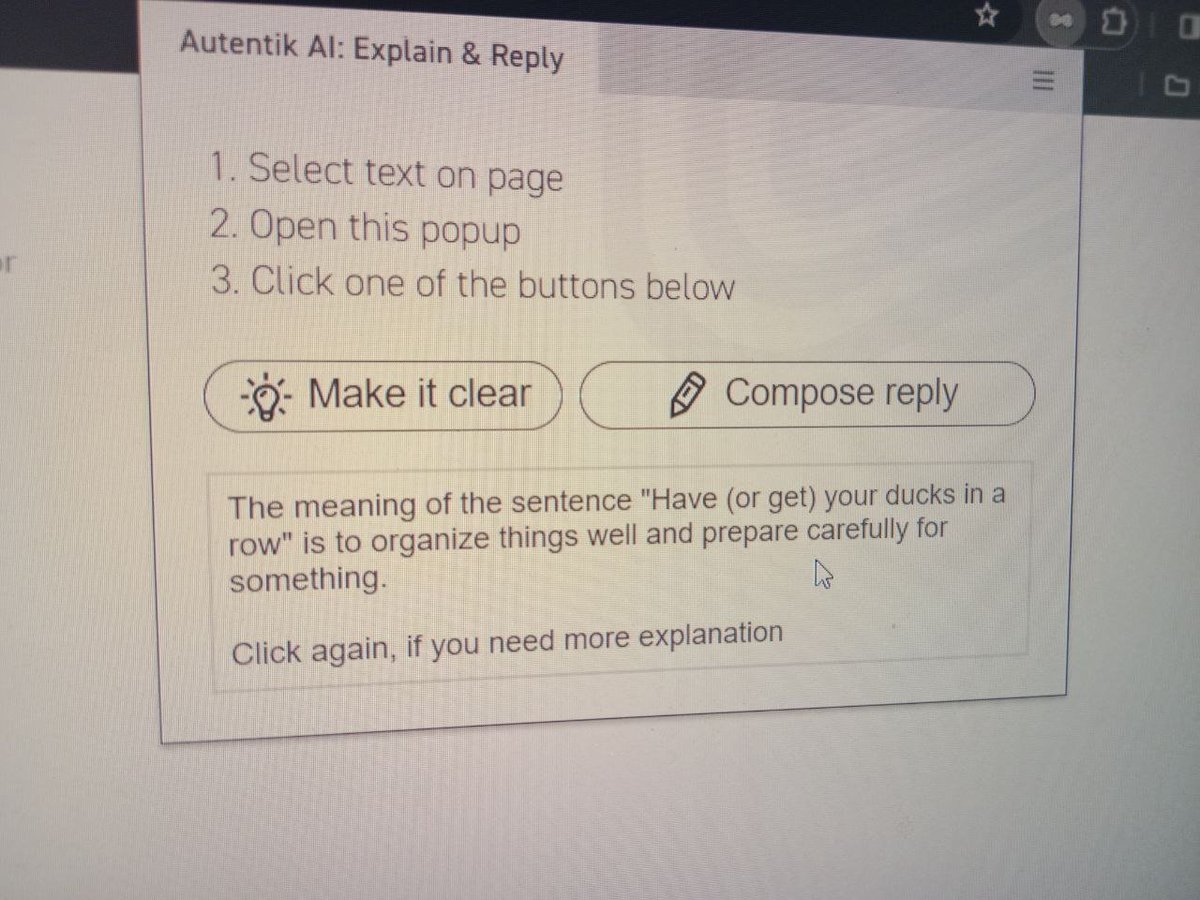
@thecollegehill We don't say that it understands something, but we say that it explains hidden meanings. Let me provide you with some examples given by our users.
@thecollegehill Good idea, thank you. We will add a steering committee, an advisory board, and information about the team for this type of credibility.
I'll provide more details: I am a software dev by education. I had a decent career in EdTech and creative fields, despite my neurodivergency and MH issues. A year ago I became obsessed with the idea of utilizing GenAI to help autistic people with instructions, explanations, etc. From the first day, I asked autistic individuals to work with me on this project. Another cofounder, whom you mention, is an investor, who gave initial funding to realize the idea, and to pay ND employees we hired. I have also invested my full-time work into the project since then.
Megan Anna Neff actually tried our tools, and the quote says so. Dr. Neff also sent an email to her subscribers about our product (proof is attached). Daniel Jones not only tested the tools, but also helped with ideas from the early days. We never stated that Dr. Neff helped with "ideas, testing, and advice," you compiled the information from different blocks.




![Autentik_AI's tweet photo. Scripts that help avoid workplace misunderstandings
The hallmark of neurodivergence in the workplace?
Misunderstandings.
The one thing we see time and time again in our community is the struggle, crying, and full-blown meltdowns over the feeling of constantly being misunderstood.
We get it. It’s tough. There’s nothing like that particular negative bias being confirmed time and time again.
But there's also something you can do about it.
Learn to reconcile misunderstandings after you’ve realized they’ve happened. (After, because let’s be honest, most times we don’t see them coming.)
It can feel like it’s entirely on your shoulders to deal with miscommunications, but when it comes between losing your job or taking on this extra work—well, the reality of being neurodivergent in the workplace becomes even more real.
Next time you realize your communication's gone awry, here are a few scripts to try:
🦋 “I think there might be a misunderstanding here. Can we clarify what we both meant?”
🦋 “We might be on different pages about this. Can we talk it through?”
🦋 “Can you help me understand your perspective better?”
🦋 “I may have misunderstood you when you said [repeat what they said]. Can we revisit what you meant by that?”
🦋 “Let’s summarize what we both understand to ensure we’re aligned.”
Notice how most of these are questions?
When you ask a question rather than make a statement, you’re inviting the other person to participate in the conversation.
This is a great way to gauge whether or not the other person wants to avoid future miscommunications, too, or if they might be someone to try to avoid in general.
#inclusiveworkplace #neurodiversity #adhdatwork #autismatwork](https://pbs.twimg.com/media/Gc63rOfX0AA9gqS.jpg)