🧵1/ To access Dapps users need to use a wallet to connect with, this creates a new challenge for developers who want to scrap and/or test Dapps using tools like Selenium.
Introducing a package I developed to automate Fetch Wallet extension using #Python & #Selenium WebDriver
🚨 https://t.co/jQHISjPvoi is launching AEVS - the Agent Execution Verification System!
Your agent says “Refund processed”, “Payment approved” or “Email sent”. But how do you know it actually performed the task?
You don’t. Logs can be changed. LLMs hallucinate.
AEVS, the must-have verification system, provides a publicly verifiable receipt for every agent execution. Every action is signed. Hash-chained. Tamper-evident. Independently verifiable.
No changes to your existing tools. Just two lines of code. Open source by https://t.co/jQHISjPvoi. Sixty seconds from install to signed.
👉 Read more: https://t.co/gkhApDQDMB
👉 Get the code from @Github: https://t.co/fAVUAvQnfm
👉 PyPi: https://t.co/oWDwOLncLF
Did some experiments with @Fetch_ai agent tech + @openclaw to test interoperability between the two systems.
The idea: Fetch agents handle discovery, identity, and messaging across a decentralized network.
OpenClaw handles safe local execution with policy enforcement and sandboxing. What if you connect them?
So I built a reference integration. A Fetch agent (uAgents + Agentverse + ASI:One) receives natural-language requests, plans tasks using the ASI:One LLM, signs them with Ed25519, and dispatches to an OpenClaw connector running locally. The connector verifies the signature, checks local policies, executes the work, and returns results back through the Fetch network.
To test the integration, I wired up a GitHub repo analyzer as a sample workflow. You can type "Analyze https://t.co/P4F5jtJgNU" on ASI:One and get back a real health report with actual line counts, git stats, test detection, and dependency audit. No hallucinated numbers, real tool execution.
What made the two technologies click:
- @Fetch_ai gives you agent identity, Almanac discovery, @Agentverse_ai mailbox (local agent, global reach), AgentChatProtocol for ASI:One, and an LLM API for intelligent planning
- OpenClaw gives you sandboxed execution, declarative task plans, action allowlists, path sandboxing, and cryptographic request verification
- Together: dual policy enforcement where neither side can bypass the other
The whole thing is open source with a full technical blog covering the architecture, code snippets from every layer, the security model, and a step-by-step walkthrough.
Sample chat on ASI:One: https://t.co/hiCSN4NMnR
Full blog: https://t.co/AeRcXOInWT
Repo: https://t.co/P4F5jtJgNU
Excited to see what others build with Fetch agent tech. The interoperability story is solid.
I've been sitting with a question for a while:
Why is there no standard way to know what an AI agent can do without executing it?
We have OpenAPI for APIs. We have an MCP for model tools. We have plugin manifests locked to specific platforms.
But there's nothing at the agent level. No structured, machine-readable way for an agent to say: "Here's what I do, here's what I take as input, here's what I return, here's what I cost."
So I started building something.
Agent Capability Declaration SDK (ACDS): a lightweight spec and SDK where agents declare their capabilities in a simple JSON manifest.
The idea is straightforward:
• Agent publishes an agent.capabilities.json file
• It lists capabilities with inputs, outputs, pricing, and latency class
• Any system can read and validate it; no execution, no LLMs, no network calls
This isn't a runtime framework. It's not an orchestrator. It's not a marketplace.
It's a pre-execution contract. A claim, not a guarantee.
Why does this matter?
→ Orchestrators can select agents by capability instead of guessing
→ Marketplaces can index and compare agents automatically
→ Enterprises can review what an agent declares before approving it
→ Developers can validate inputs before making a call
It's early. This is the raw v1 schema, Python + TypeScript validators, a CLI tool, and a couple of example manifests. Zero runtime dependencies.
I'll be iterating on this in the open. If you're building agent infrastructure, working on multi-agent systems, or thinking about agent interoperability, I'd genuinely love your feedback.
https://t.co/YbyT9sMwxi
#AIAgents #OpenSource #AgentInfrastructure #DeveloperTools
🤝 #Mettalex x #SentismAI
We’re excited to partner with @Sentism_ai, the sentiment layer powering autonomous agent decision-making in #DeFi.
By integrating real-time sentiment signals into Mettalex, agents can trade on more than just price, but based on how the market feels.
This partnership unlocks a new frontier of intelligent, agent-based trading.
Naming shouldn’t take days.
💡 Find a name → ❌ Domain taken → 😩 Repeat.
Try Nameflux → Powered by ASI:One (@Fetch_ai).
AI generates names from your business idea + checks domains live.
✨ Faster decisions. Better brands.
👉 https://t.co/q6dxV5EOZy
Our Q2 2025 #Mettalex Quarterly Update is here!
Explore our refreshed public beta UI, technical enhancements, and the release of Mettalex Vision Paper and more.,
Check it out: https://t.co/p8NWhYo2QV
Stay tuned! A parameter change aligning the ASI Mainnet (previously https://t.co/jQHISjPvoi Mainnet) with Dorado testnet is on the horizon—pending approval of a forthcoming governance proposal. Read our short thread below to stay informed.. 🧵
This improvement will align block limit parameters with the Dorado testnet, supporting smoother transitions for deployments and enabling more complex smart contract based applications.
Why This Matters?
This upgrade will strengthen the https://t.co/jQHISjPvoi ecosystem by ensuring solutions tested on Dorado can deploy directly to Mainnet without changes, addressing current constraints and accommodating more complex contract-based solutions. Only $FET delegators on the ASI Mainnet (Previously https://t.co/jQHISjPvoi mainnet) can vote, while those on Ethereum, BSC, or Cardano remain unaffected.
✨ Key Changes
✅ Max Gas Limit – Increased from 3,000,000 to 6,000,000 gas per block, enabling more gas-intensive executions.
✅ Max Bytes Limit – Increased from 300,000 to 600,000 bytes per block, supporting larger codebases and transactions.
🔗 Monitor for the upcoming proposal and prepare to vote: https://t.co/DDrMs1aJyM
🔗 Guide on participating in governance: https://t.co/X56x3Hj4U2
We're building in the AI agent space, but the ecosystem is still evolving.
If you could prioritise just one thing right now to accelerate adoption or development, what would it be?
Vote below 👇 and drop a comment if you think something else is more urgent.
Let’s build what matters. 💪
“We’re not just DeFi. We’re DeFAI.”
Discover the principles behind #Mettalex's shift to agentic, autonomous, cross-chain trading, straight from our CEO @HMsheikh4
🧾Read the full Vision Paper → https://t.co/CXM9JxyR6e
#Mettalex is going to @Fetch_ai mainnet with options trading being implemented in beta version very soon.
Go and get some @Mettalex on @phantom and don't miss the hype of agentic trading.
#defai#RWA#ai $asi $ocean $cudos $fet $mtlx https://t.co/YXmDhvCtdK
⏳ Just 4 hours to go!
Get ready to join us for an insightful Twitter Spaces session. We’ll be diving into product updates, the future of Mettalex and more.
See you soon! 🚀
Medical imaging models are powerful, but meaningless if users don’t understand them.
That changes now.
LIVE on https://t.co/HQ2Tj9lbnW: AI agents that read medical images, and explain them. ⚡
Powered by QBio, our ASI <TRAIN/> inference agents now perform breast density classification and deliver a transparent medical report.
Watch now 👇
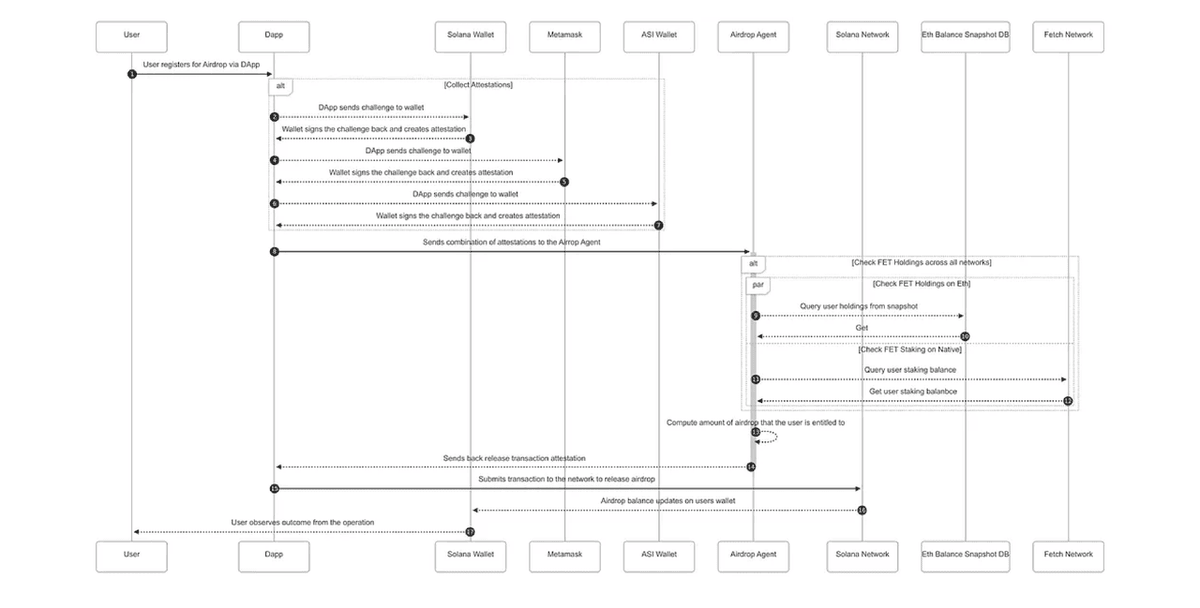
Check out our latest article to see how to power cross-chain airdops with uAgents + @Fetch_ai tech stack.
See how agents handle airdrop distribution autonomously to verify wallet ownership, execute drops, and prevent fraud.
Read @chiragmaliwal3's article here: https://t.co/aorJnrsi5G
@Mettalex — Transforms DeFi trading with an AI-powered platform for easy cross-blockchain trades, which is currently in a public testing mode.
Their AI agents speed up trade by solving issues like slow swaps and limited access to funds across chains. The system runs on various devices for better security and reliability, using https://t.co/eOLF9e4I24’s tech to ensure smooth, safe trading.