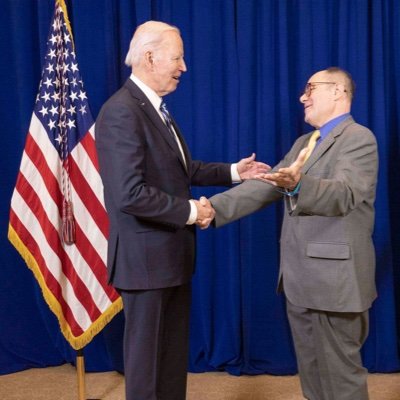
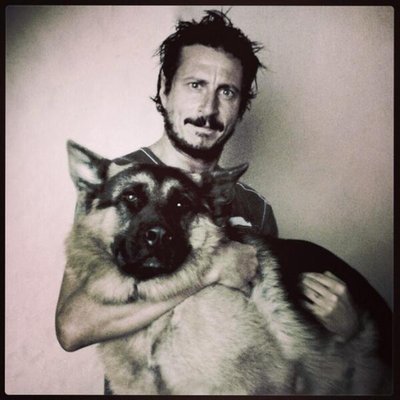
I used to be a public somebody - Now I'm just a bipolar type 2-1/2 (with an anxiety feature) trans woman... who takes a lot of meds. I got a Wikipedia page too
@valor4us, What do you want to do about your Kristin Beck plaque on the San Diego @LGBTCenter Veteran's Wall of Honor -- when we were both added/honored as the first 2 activist #trans veterans added to that wall? Would you appreciate the plaque removed? Just wondering.
Autumn is a mostly dog name.
🐶⬜🟦⬜⬜⬜😃
In a stadium of 100,000 people and 100,000 dogs, 66 dogs and 37 people would be named Autumn.
(Why, in the gawds's names, would this be true?)
What about your name? https://t.co/Id9cZSqv8v
@BrenMCO 2. Your bathroom statements aren't factual. For example, Gainesville, FL passed an transgender civil rights law in 2008. When checked 7-years later, there were no trans related public restroom incidents https://t.co/TQPxVuBDpA
I want to go back to being "just a girl who loves anime and ramen." In today's climate of #antitransgender sentiment, that's just a luxury -- even for me, a Californian
@chasestrangio The @nytimes allows/prints what Bayard Rustin called the we/they distinction ("we are like this; they are like that") against #trans people. They-ing trans people is okay, even though the we/they distinction would never be allowed against any other minority population
The @nytimes doesn't print articles about other minority groups which rely on Rustin's "we/they distinction." Not about Blacks; not about Muslims; not about women, not even about gays. But #trans people -- the we/they distinction is allowed/printed. 6/6
What the NYT published on 6/7/2015: "People who haven’t lived their whole lives as women, whether Ms. Jenner or Mr. Summers [a Harvard scientist who showed differences between male and female brains], shouldn’t get to define us,'.. 1/n
https://t.co/lH51XaZMCu
As far back as 2015, the @nytimes has been publishing "balanced" commentaries that use what Bayard Rustin referred to as the "we/they distinction" against trans people. You know, "we are like this, but they are like that." 5/n
@BrynnTannehill @drjilliantweiss .."Muslims are like that, but we are like this," or especially "women are like that, but we are like this," but the Times is comfortable publishing pieces which communicate "we are like this, and trans women are like that." And that's wrong. #trans@nytimes 2/2
@BrynnTannehill @drjilliantweiss The NYT likely doesn't consider themselves a bigoted publication, but the kind of we/they distinctions they print fosters bigotry that's called #transphobia. The Times wouldn't publish a piece where the we/they distinctions were "blacks are like that, but we are like this,".. 1/n
In today's political climate, #trans community has lost all ability to control the extent to which people can publicly manifest #antitransgender sentiment. @BrynnTannehill describes how in a number of her tweet streams. Paying attention, & acting, is more important than ever. 5/5
#Trans people are the new gays.
"There are four burdens, which gays, along with every other despised group, whether it's blacks follow slavery and reconstruction, or Jews fearful of Germany, must address... 1/n
"...such that even though some whites continued to hate us, they could not openly manifest that hate. That's our job today: to control the extent to which people can publicly manifest antigay sentiment." ~Bayard Rustin 4/n
"Our job is not to get those people who dislike us to love us. Nor was our aim in the civil rights movement to get prejudiced white people to love us. Our aim was to try to create the kind of America, legislatively, morally, and psychologically... 4/n