In the 9th century, a Hindu king minted gold coins in Kabul. On them: Nandi, Shiva's bull, and a Sanskrit inscription. Not a metaphor. An actual coin. In an actual treasury. In what is now Afghanistan.
In Russia, on the banks of the Volga river, archaeologists found a bronze figurine of Vishnu. It has been dated to the 7th century CE. A Vishnu idol, in the Russian heartland, over a thousand years ago. There is no satisfying explanation for it in mainstream history.
In Denmark, a silver cauldron was found, and on its panels was a deity seated in perfect yogic posture, surrounded by animals, wearing antlers. Celtic Europe. 100 BCE. The same iconography as the Pashupati seal from Mohenjodaro, 2500 BCE. Separated by 4,000 kilometres and 2,500 years. Same posture. Same symbolism. Same roots.
This history exists. It is in inscriptions, coins, temple walls, manuscripts.
This history was never taught. I am only reiterating it. Follow along.
Taittiriya Upanishad 1.11.2
Matridevo bhava. Pitridevo bhava. Aachaaryadevo bhava. Atithidevo bhava.
"Let your mother be a god to you. Your father, a god. Your teacher, a god. Your guest, a god."
The last line, atithi devo bhava, became the most widely exported Vedic idea. It is why Hindu kingdoms opened their doors to foreign traders, scholars and artists. A civilisation spreads when the door is always open.
In 1025, the same decade Mahmud of Ghazni was dismantling the Hindu Shahis in the northwest, a Chola king in the south sent a war fleet across the Bay of Bengal to attack Srivijaya in Sumatra. Two ends of the subcontinent, two completely different stories, in the same ten years.
We flatten all of it into one tale of invasion and loss. India in 1025 was not simply in decline. It was complex. Rajendra Chola's navy raided fourteen cities across the strait and came home with tribute. His fleet kept permanent garrisons in the Andaman Islands, twelve hundred kilometres out into the bay. Inscriptions confirm it. India had a forward maritime base there centuries before the British thought to build one.
The Cholas exchanged embassies with Song China and sent bronze Shiva figures as far as East Africa. For about four hundred years the most powerful navy in Asia flew Chola colours. Most Indians have never been taught a word of it. That silence is the thing I keep coming back to.
7/7: Hindu civilisation did not need armies to change the world. The decimal system is on every phone, every computer, every satellite in orbit. The most successful civilisational export in history. Most people do not know where it came from.
6/7: Fibonacci, 1202 CE: The nine Indian figures. Not Arabic figures. Indian figures. We call them Arabic numerals. The naming is a historical accident. The origin is documented by the people who transmitted it.
Building the decade-by-decade chronology of the Hindu Shahi dynasty.
The hardest part; reconciling conflicting dates across Arab chronicles, Indian copper plate inscriptions, and numismatic coin sequences.
They often disagree by 10 to 20 years on the same events. The past does not yield itself cleanly.
The Iron Pillar of Delhi has stood in the open air for 1,600 years without rusting. Metallurgists in the 1990s found it contains a protective iron compound not understood by Western science until the 20th century.
Gupta-period Indian metallurgists solved corrosion resistance 1,600 years ago. Still standing at Qutub Minar. Still unexplained by most history textbooks.
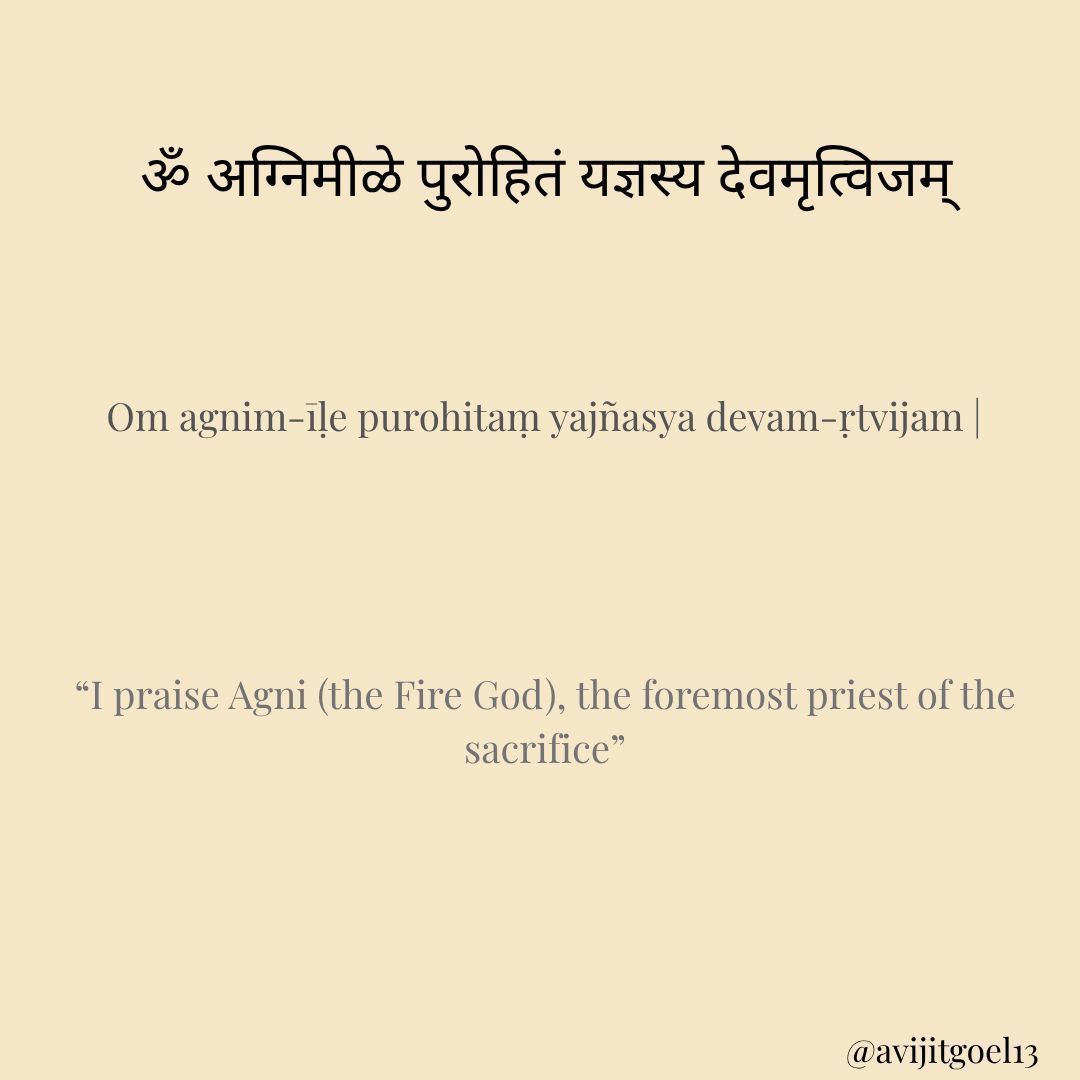
Rigveda 1.1.1 ; I praise Agni, the household priest, the divine minister of the sacrifice, the invoker, best bestower of gifts.
The Rigveda opens not with a creation myth or a king's glory. With fire. Agni; the sacrificial fire that connects the human to the divine. The first word of India's oldest text is a verb of praise. A civilisation that begins with gratitude.
#ancientindia #historyofindia #indianculture #heritageofindia #history #upsc #indiancivilization #vedicperiod #Bharat
Every smartphone on earth runs on Indian mathematics. Brahmagupta formalised zero as a number with arithmetic properties in Ujjain in 628 CE. Al-Khwarizmi translated Indian texts into Arabic in Baghdad.
His name is the origin of the term 'algorithm'. Fibonacci called them the nine Indian figures in 1202 CE. We call them Arabic numerals. We should call them Indian numerals. The naming is a historical accident. The origin is not.
#ancientindia #historyofindia #indianculture #heritageofindia #history #upsc #indiancivilization #vedicperiod #Bharat
When the British suppressed the devadasi tradition in the late 19th century they were not suppressing entertainment. They were suppressing a 2,000-year tradition of embodied scientific knowledge. Its revival in the 20th century was a recovery, not a nostalgia project.
Rasa theory: Bharata's eight fundamental emotional states and their formal production in audiences. The dancer is not feeling the emotion. She is producing its signs with mathematical precision so the audience feels them. Performance as information transfer. This is the world's oldest formal semiotics.