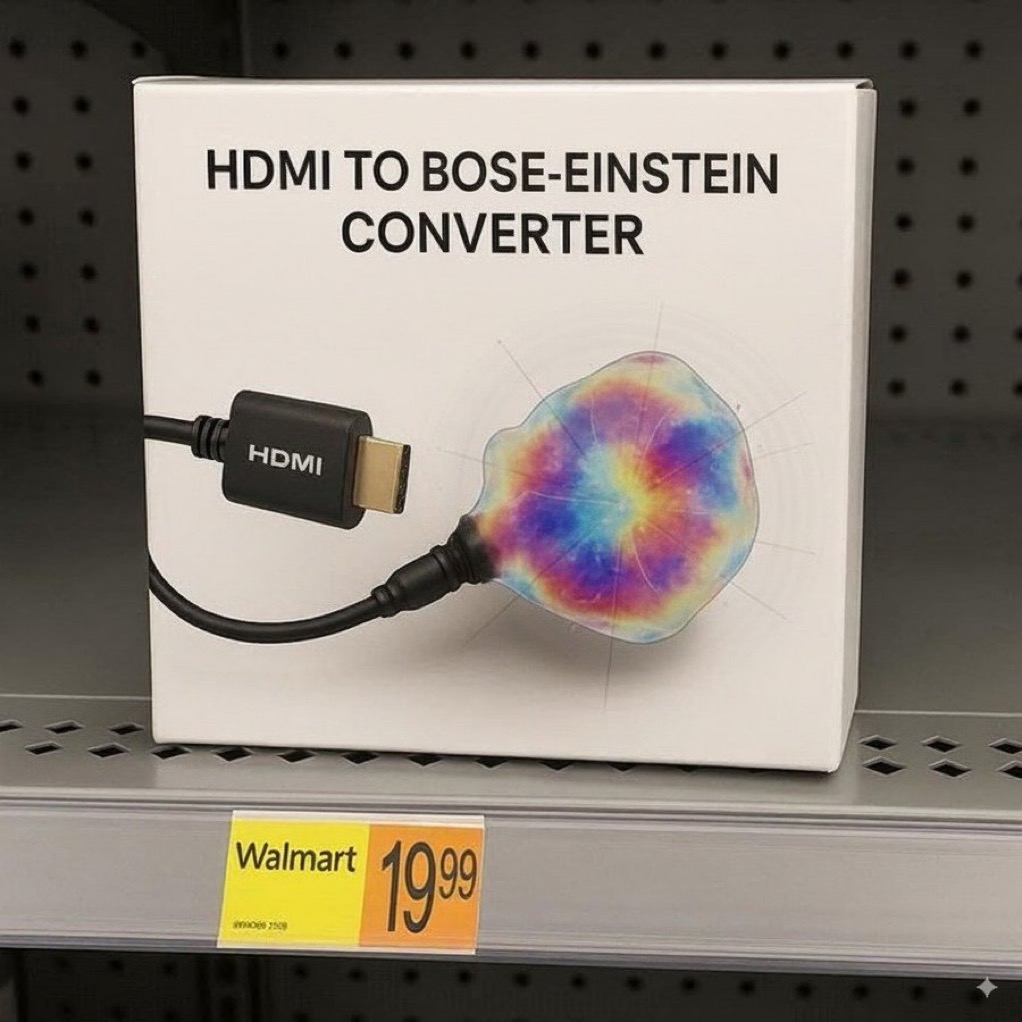
Awesome talk by Avinal Kumar on glibc's charset/conversion subsystems: "Lost in translation" https://t.co/bRBM1iFHYO which he presented at https://t.co/VcpWfUg61Z (https://t.co/UoORO001LL)
@Moto@Snapdragon I hope it is a reasonably sized phone and not a mini-tablet. I haven't seen a single post on Twitter or Reddit asking for 6.8 in phone, but a lot for small phones.
Excited for the GOS Motorola phones. My only issue would be Signature is too large and Razr is too expensive.
If only @Moto can make a compact high-end phone. I am sure that most GOS users want the same.
Take inspiration from Pixel 4a or Zenfone 10.
PLZ MAKE A SMALL PHONE.
We have a partial port of GrapheneOS to the Pixel 11 series after a week of work on it. We're unable to complete the port due to lack of support for ARM hardware memory tagging in software, firmware and near certainly hardware. It appears Google cut an important security feature to save money.
ARM hardware memory tagging (MTE) is used by GrapheneOS across the entire base OS including the kernel and every standard base OS process. It's only temporarily disabled for a few device-specific processes. It greatly improves protection against nearly all remote exploits and many local exploits.
Pixel 8 launched with hardware MTE support in October 2023. We integrated it into our hardened_malloc project and began using it across the OS later that month. Android and the Pixel OS never started using it by default. Android Advanced Protection Mode in Android 16 enables it for a few processes.
Apple's Memory Integrity Enforcement (MIE) is an always enabled feature on the iPhone 17. It's simply a high quality implementation of MTE using the latest standard extensions. It uses MTE in the most secure mode in the kernel and a large portion of userbase. They did a very good job integrating it.
Apple's MIE and Android 16+ AAPM don't use MTE for user installed apps unless those explicitly opt in. GrapheneOS enables it for more apps automatically and has a toggle for users to opt-in for every user installed app. There's a per-app toggle to opt-out for incompatible apps which is uncommon.
Neither iOS or Android encourage app developers to opt into MTE and other more aggressive security features used in the base OS. Apple's docs warn developers of performance and stability issues. Even Signal doesn't opt-in. Our approach enables forcing using MTE in the standard allocators regardless.
Pixel 11 does have security improvements including moving to post-quantum secure verified boot (ML-DSA) and replacing Samsung Shannon IMS with AOSP IMS. Titan M3 should significantly improve protection against data extraction in Before First Unlock state. It's too bad they ruined it by cutting MTE.
Pixel 11 series is a lot more expensive for an incremental improvement to the CPU, the same underpowered GPU and reduced RAM for the Pro base models. They finally caught up to the last generation of Qualcomm cellular radio. It's overpriced, the upgrades aren't impressive and losing MTE is appalling.
Compared to the Pixel 11, a Snapdragon 8 Elite Gen 5 has ~40% higher single threaded CPU performance, ~80% higher multi threaded performance, over 100% higher GPU performance and a far better cellular radio. It also finally has MTE. The next gen is what will be in the first Motorola with GrapheneOS.
Pixel 9a and earlier (including Nexus devices) were the Android Open Source Project reference devices. Pixel support was removed from AOSP with Android 16. It's now harder to support Pixels than many other devices and massive progress towards open source firmware and driver libraries was discarded.
Compared to the stock Pixel OS, GrapheneOS ships AOSP patches months earlier and Linux kernel patches many months earlier. However, we rely on them for firmware and most driver updates. We also want to move to new kernel branches earlier. These things can be improved with our Motorola partnership.
We strongly recommend against buying Pixel 11 devices. Pixel 8, 9 and 10 have much better overall security for GrapheneOS. Pixel 10 is cheaper with similar hardware and MTE. Pixel 11's Titan M3 should improve BFU security for users without a strong passphrase, but losing MTE craters AFU security.
We haven't determined what to do about this situation. It may be best for us to skip the Pixel 11 series devices. We can shift our focus entirely to the upcoming Motorola devices instead. Pixel 10a was really a 9th gen Pixel, so hopefully the Pixel 11a does the same with 10th gen and includes MTE.
@AyushSarode07@kartikktwt In fact if you are using Apple Music on iPhone/iPad over bluetooth, you are probably getting worse quality than Apple Music on Android.
@AyushSarode07@kartikktwt It is only noticeable if you are using a proper hardware (external DAC), or else the only improvement over other services is spatial audio.
Fun fact: None of the Apple devices (except newer AirPod Max headphone) can consume the high-quality audio that Apple Music provides 😂.
Awesome talk by Avinal Kumar on glibc's charset/conversion subsystems: "Lost in translation" https://t.co/bRBM1iFHYO which he presented at https://t.co/VcpWfUg61Z (https://t.co/UoORO001LL)
@github should add a feature that groups contribution by Human vs AI work. Some of the PRs are so complex that I can bet this contributor won't be able answer anything about it.
Absolute waste of countless great opportunities.
Origin, our code hosting platform, is now live.
It's fast, easy to use, and deeply integrated with Cursor.
Get started by syncing your repos from GitHub.