Thanks to Eden Mama’s master work & Rona Shaharabani’s lipid phantom, the answer is yes — both protocols estimate WF, T1, and their dependency (tissue relaxivity) reliably across scanners & studies.
Measuring qMRI water content in the brain just got more flexible!
https://t.co/Besll1P4gr
Following a great discussion with @Jose_P_Marques, we asked together: can MP2RAGE map water fraction like VFA?
In the past year and a half, we have been intensively protesting and fighting the Israeli government in an attempt to stop the war, secure the release of all hostages, and prevent the ongoing humanitarian crisis. Until now, our protests have primarily been focused internally.
ELSC invites applications for a tenure-track faculty position in neuroscience.
We're looking for exceptional early-career scientists to lead innovative, interdisciplinary, and impactful research.
Apply Now:
https://t.co/AOXhTkuErW
https://t.co/O5Ko7rsEXX
This connection between brain tissue properties and motor symptoms sheds light on the neural substrates of PD—and may support earlier diagnosis or targeted interventions.
Huge credit to Elior Drori and the team. More to come. #Parkinsons#qMRI
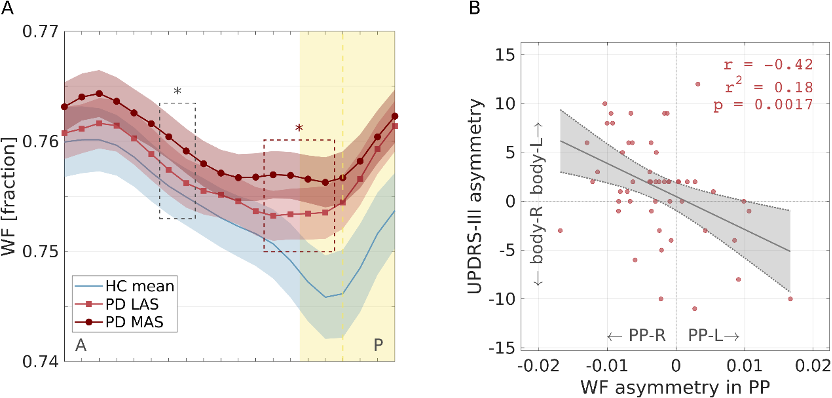
Excited to share our new work just published in @Nature_NPJ Parkinsons!
Led by my brilliant PhD student Elior Drori, we present a detailed look at brain microstructure in Parkinson’s using advanced quantitative MRI (qMRI).
🔗 https://t.co/aIctTZWlUf
Notably, water content asymmetry in the posterior putamen correlates with motor asymmetry (MDS-UPDRS III).
This links a non-invasive MRI biomarker with a key behavioral hallmark of early PD.
In March, we hosted the workshop “Brain Iron, Homeostasis: Imaging and Intervention”. All talks are now available online—highly relevant for the brain iron research community! https://t.co/Tr7Uo6AZzU
7/ Future Directions: These findings emphasize the potential of repurposing existing weighted MRI data for better analyses of neurodegenerative & developmental conditions. Further refinement and validation will help expand its utility. #BrainResearch
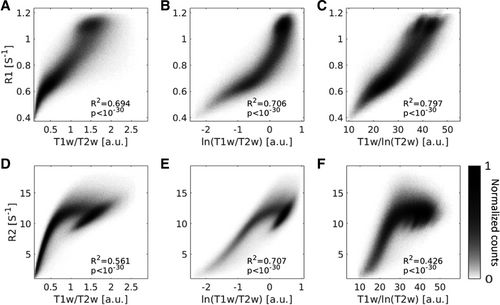
6/ Potential Impact: While not perfect, this approach could enable and expand the use of large datasets like ADNI, UK Biobank, and PPMI for standardized, semi-quantitative brain analysis across clinical and research domains. #DataScience
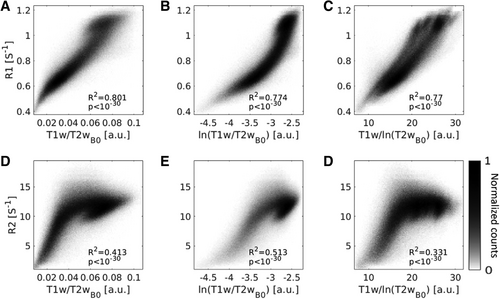
5/ And in cases where T2w images were unavailable (e.g., UKBiobank), we found that diffusion (B0) data can serve as an effective replacement, broadening the method’s utility.
3/ Our Approach: Using simple mathematical operations derived from the signal equations (e.g., T1w/PDw, ln(T2w/PDw)), we present a method to approximate R1 & R2 values from weighted MRI. We validated this approach with synthetic, phantom, and human clinical datasets.
1/ I’m thrilled to share our new MRI study! We propose a method to approximate quantitative MRI (qMRI) parameters (R1 & R2) using widely available clinical and large-scale datasets, leveraging weighted MRI images like T1w, T2w, & PDw. https://t.co/2NIOwdP6Cw #Neuroimaging
2/ Why It Matters: qMRI provides critical insights into brain microstructure (e.g., myelin, water content) but requires long scan times and is often missing in clinical studies. Our method attempts to bridge this gap by approximating qMRI-like insights using weighted MRI data.