SUNDAY OCTOBER 25, 2026 KEITH UPDATE - PART 2 (Video)
Below is a 5 minute video Keith's wife, Kari, made of herself explaining Keith's current condition from Keith's ATM studio. Just a head's up, some portions are difficult to hear, but Kari and Keith are strong and faithful. Please repost so everyone who loves him can see this. Thank you, and please pray.
- Dan
#Patheads #putthatinyourpipe #keithheads #MalinakMiracle @JeffyJFR@PatUnleashed @realkriskruz @glennbeck@StuDoesAmerica@Rowdy_Introvert@ShannonBream
@VivekGRamaswamy Ours? No MY Founding Fathers did. Grifting off of unsuspecting people in your Alzheimer’s drug scam is unforgivable. You’re a billionaire because you dumped stock before trials deemed it ineffective. My people do not make a living screwing old oadies from their pensions
@realBradStaggs@KeithMalinak Praying for the Malinak family. They are great people and I all to pray for Keith and his family. We will reach out and see if we can help in any way. @KeithMalinak
@DavidZsutty Yes they did. From my daughter, an AB Honor Roll student taking ALL AP classes in the top 20% of her graduating class, a Girl Scout Gold Award recipient and many church charity mission trips on her application. Denied- twice.
@vmwilliamson1@laralogan@JulieTo83606360@Support@elonmusk Agree. I am tired of people saying this (X) is a free speech platform. I am shadowbanned by same A commie aholes who most likely aren’t even American citizens. As a veteran, this does not make me happy to say the least!
He tucked his severed arm into his waistband and kept firing—then what happened next will break you.
January 8, 1968. A rice paddy in Vietnam.
Twenty-year-old Gary Wetzel looked down at his body and saw the impossible.
His left arm was hanging by threads of flesh. His right arm was shredded. His chest was torn open. His leg was bleeding into the muddy water.
Two enemy rockets had just exploded inches from where he stood as a door gunner. The blast had hurled him out of his helicopter and into the paddy below.
Most men would have died from shock alone.
Gary Wetzel stood up.
His helicopter crew was part of the 173rd Assault Helicopter Company, inserting troops into what had become a kill zone. The moment they touched down, enemy fire erupted from every direction. Then the rockets came.
Now, bleeding out in a rice paddy, Gary realized something through the haze of agony: his machine gun was the only weapon still hitting the enemy position. American troops were pinned down. Men were dying. That automatic weapons emplacement had to be silenced.
And he was the only one who could do it.
Gary climbed back into his gun well.
He took his left arm—useless, nearly severed, hanging by skin and muscle—and tucked it into his waistband to get it out of the way.
Then, using his mangled right arm, he grabbed his machine gun.
And he opened fire.
The pain should have killed him. The blood loss should have knocked him unconscious. The shock should have shut his body down.
But Gary Wetzel kept firing.
He stayed at that gun until he eliminated the enemy emplacement that was slaughtering his brothers. Only then—only then—did he try to tend to his wounds.
He attempted to reach his aircraft commander, who was also badly hit. But his body had finally reached its limit. He collapsed, unconscious.
When he woke up—minutes or hours later, he couldn't tell—his first thought wasn't about survival.
It was about his crew.
Gary began dragging himself, inch by agonizing inch, across that rice paddy toward where his crew chief was trying to pull the wounded commander to safety.
He passed out from the effort.
He woke up.
He kept crawling.
When he finally reached them, Gary helped move the commander behind a dike. Then darkness took him again.
The next morning, rescue forces found Gary Wetzel barely alive. He'd been on the critical list for a week.
Doctors amputated his left arm in a field hospital. Infection set in. He needed another surgery in Tokyo, where physicians removed over 400 stitches and fought to keep him breathing.
But here's the part Gary remembers most.
While recovering in that Tokyo hospital, some of the men he'd saved—the soldiers whose lives he'd bought with his blood and his arm—found out he was there.
They walked up to his bed, one by one.
"Are you Gary Wetzel?"
"Yeah."
And they pulled out photographs. Wives. Children. Girlfriends waiting back home.
"Hey, man," they'd say, tears streaming. "Because of you, this is what I've got to go back to."
That's when Gary understood.
Not just in military terms—enemy eliminated, mission successful, lives saved.
But in human terms.
Families that would stay whole. Children who would grow up with fathers. Love stories that would continue. Futures that would happen.
November 19, 1968: President Lyndon B. Johnson pinned the Medal of Honor on Gary Wetzel's chest at the White House. He also received the Purple Heart and Air Medal. He was promoted to Specialist Four—a rank earned in the most brutal way imaginable.
After five months in hospitals learning to live with a prosthetic arm, Gary returned to South Milwaukee, Wisconsin. He went to work as a heavy equipment operator—a job that requires two hands.
Except Gary figured out how to do it with one and sheer determination.
He married Kathy. He raised a family. He lived quietly, never seeking attention.
But Gary Wetzel has never stopped serving.
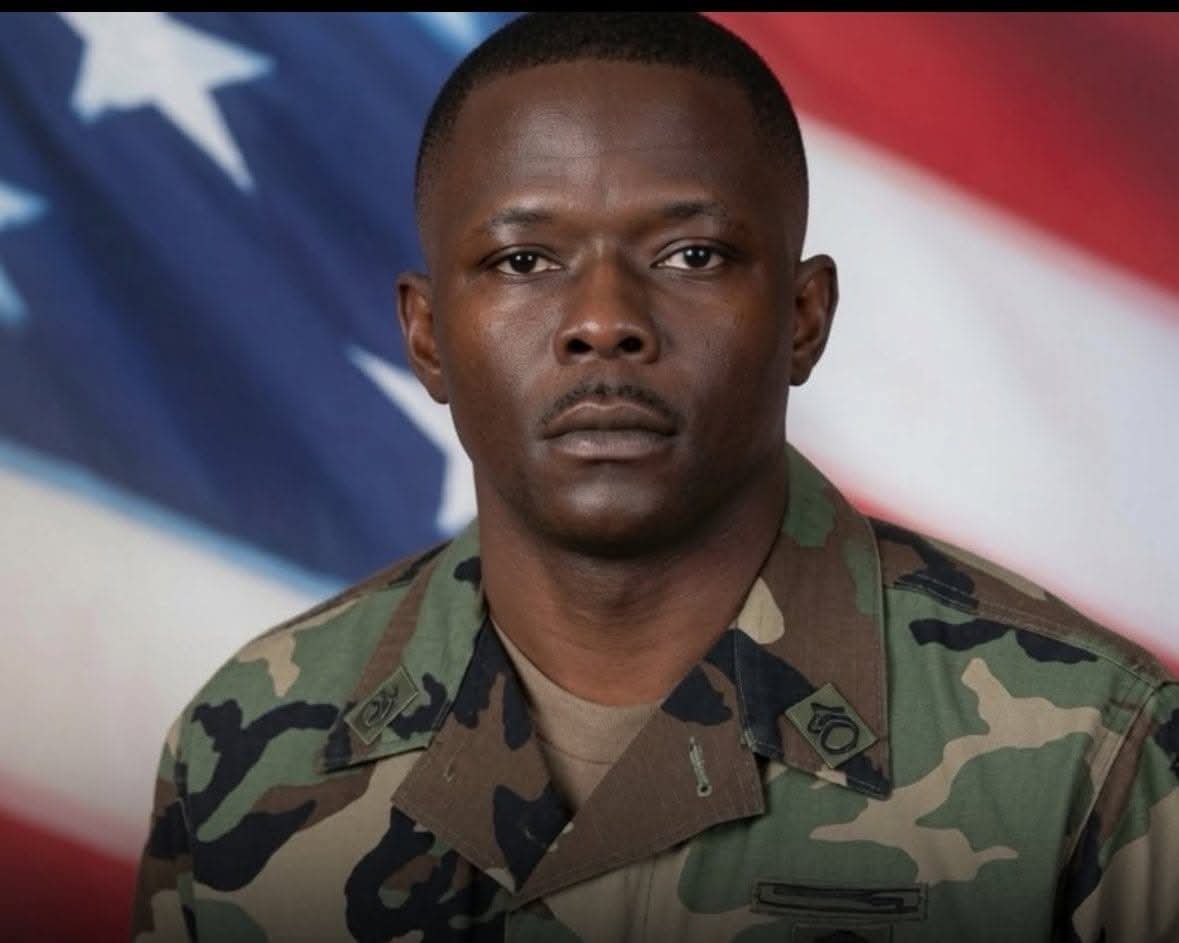
He was burning alive, yet he kept re-entering the burning Bradley Fighting Vehicle until all six soldiers and the Iraqi interpreter were safe. Burns covered 72% of his body. His first words were, ‘How are my boys?’ He died three weeks later. It took 16 years for him to receive the Medal of Honor. HIS NAME IS SERGEANT FIRST CLASS ALWYN C. CASHE, NEVER FORGET!
He was burning alive, yet he kept re-entering the burning Bradley Fighting Vehicle until all six soldiers and the Iraqi interpreter were safe. Burns covered 72% of his body. His first words were, ‘How are my boys?’ He died three weeks later. It took 16 years for him to receive the Medal of Honor. HIS NAME IS SERGEANT FIRST CLASS ALWYN C. CASHE, NEVER FORGET!
If you watched a loved one die while you stood on the other side of a window because of COVID protocols, remember Dr. Fauci.
If you became a pariah among your friends and family during the COVID era, remember Dr. Fauci.
If you're still feeling the effects of your illness or from the 'cure' itself, remember Dr. Fauci.
If your child missed out on sports, activities, camps and other fun childhood experiences, remember Dr. Fauci.
If your child missed out on attending school or had developmental issues because of masks, distancing and isolation, remember Dr. Fauci.
Please do NOT let this go, @RandPaul. Thank you for demanding accountability for one of the most notorious Americans in history.