The armed confrontation in Mogadishu is as ill-timed as it is counterproductive.
More gravely, it underscores a deeper and longstanding failure: for decades, the city’s civilian population has been subject to successive leaderships that have consistently subordinated public welfare to other priorities.
Primum non nocere — first, do no harm — constitutes not the aspirational ceiling but the ethical minimum that all parties are obliged to observe.
"JACOBS: “And just like you couldn't admit that the shoes the president bought you were too big, you clearly don't know what winning means.”
RUBIO: “I don't know what shoes she's talking about. What is she talking about?” #SignsOfTheTimes.
NEW: Secretary of State Marco Rubio blasts the Foreign Affairs Committee after today’s hearing turned into a "circus" in the House.
Democrat Rep. Sara Jacobs bizarrely attacked Rubio over the size of his shoes while claiming that he doesn’t know what “winning” means.
JACOBS: “And just like you couldn't admit that the shoes the president bought you were too big, you clearly don't know what winning means.”
RUBIO: “I don't know what shoes she's talking about. What is she talking about?”
JACOBS: “Your shoes look very nice today, Mr. Secretary.”
RUBIO: “How can you see them? They're way down here. We're talking about shoes. Are you guys kidding me? I mean, is this the Foreign Affairs Committee, or is this like a circus?”
South Africans have truly disappointed Africa.
Let me qualify: the xenophobic and self-hating South Africans who attack fellow Africans in South Africa are a shame to South Africa and a shock to all Africans.
Ghana advises its citizens to avoid non-essential travel to South Africa, citing risks from anti-immigrant movements targeting African migrants
https://t.co/2MBdjac9lH
.@AsstSecStateAF Outgoing SBO Nick Checker:
The Trump Administration is uniquely committed to Africa. This commitment is born out of a desire for mutually beneficial partnership and cultivation of true relationships–the first step of which is done by developing trust. We respect our African partners and therefore we do not feel the need to lie to them for our own moral purposes.
The United States will slash the number of embassies in Africa that process visas by more than half, the Associated Press reported on Monday, citing sources. https://t.co/dUkAPfucRX
This is leadership. Somali-Kenyans (I am only a neighbor) will be every bit justified in voting for Ruto (or anyone with that last name) for any office he aspires to for the rest of their lives.
On behalf of the Government and the Republic of Kenya, I extend my sincere apology to the people of Northern Kenya for the hardships and exclusion you have endured over the years.
Your resilience in the face of these challenges is a testament to the strength and patriotism of this region.
Today, however, we are charting a different course. Our administration is making significant progress in restoring equity, expanding opportunity, and ensuring that Northern Kenya takes its rightful place in our nation's transformation journey.
The United States urges all stakeholders to exercise restraint and avoid actions that fuel violence or instability.
We encourage all parties to commit to dialogue and cooperation in support of peace and stability across Somalia.
HOW OHIRSI’S (2026) WHEELBARROW MOTION THEORY CHALLENGES AND ADVANCES LEE’S (1966) PUSH-PULL MODEL
For six decades, Everett S. Lee’s (1966) push-pull framework has anchored migration scholarship. Lee identified four determinants of migration: origin-side push factors, destination-side pull factors, intervening obstacles, and personal characteristics.
The model’s elegance is also its limitation — it treats push factors as discrete, additive, and static conditions present at the moment of a migration decision.
The WMT [https://t.co/VMhPYgn4GH] challenges all three assumptions:
Against additivity: Lee lists push factors independently. OHirsi demonstrates that climate stress and institutional corruption are not parallel variables — they are mutually reinforcing.
Environmental degradation erodes state capacity; weakened institutions fail to deliver climate adaptation; that failure deepens environmental crisis. The combined displacement force is compounding, not additive.
Against stasis: Lee treats origin conditions as a snapshot. OHirsi models them as a deteriorating system — a feedback loop in active motion, producing progressively more uninhabitable and ungovernable territories over time.
Against external obstacles only: Lee locates intervening obstacles — distance, borders, financial cost — outside the origin. OHirsi identifies a critical internal obstacle: corruption dismantles the formal migration infrastructure from within.
Documentation systems collapse, legal channels close, institutional trust evaporates. Irregular migration is therefore not a preference; it is a structural consequence produced at the origin.
https://t.co/jH1YxUdHeG
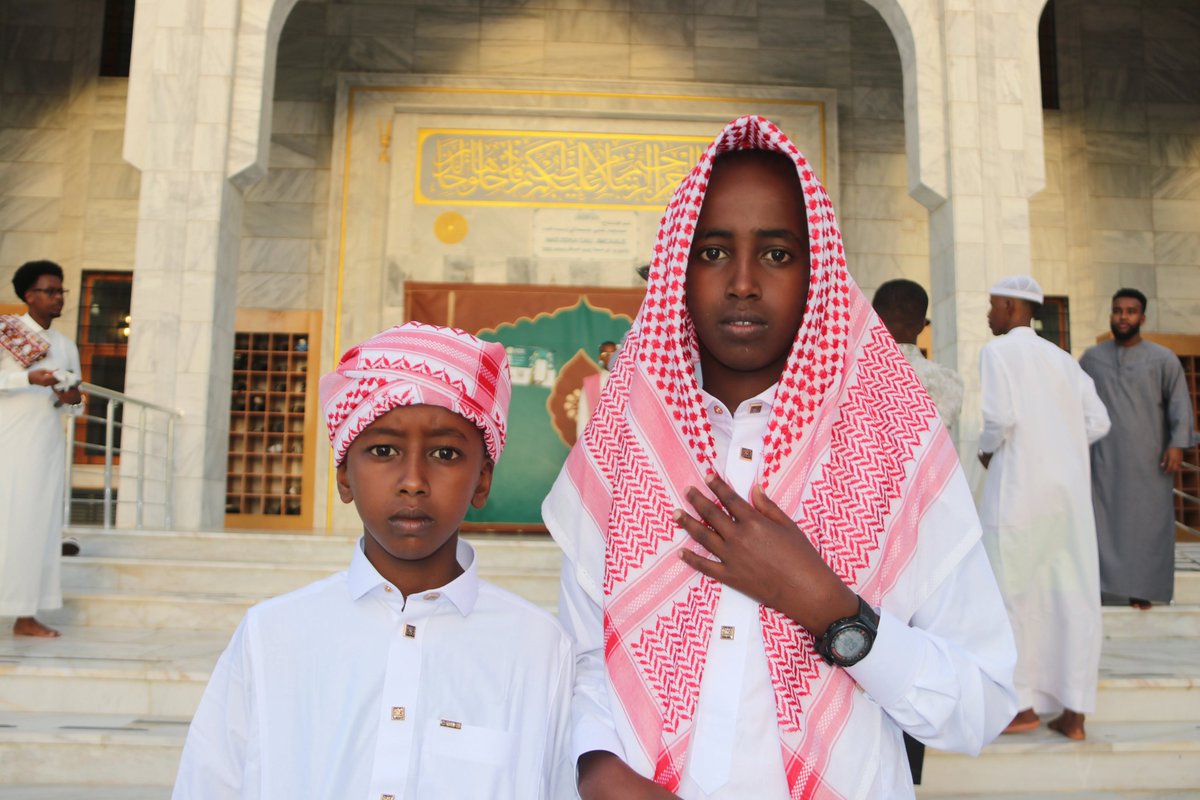
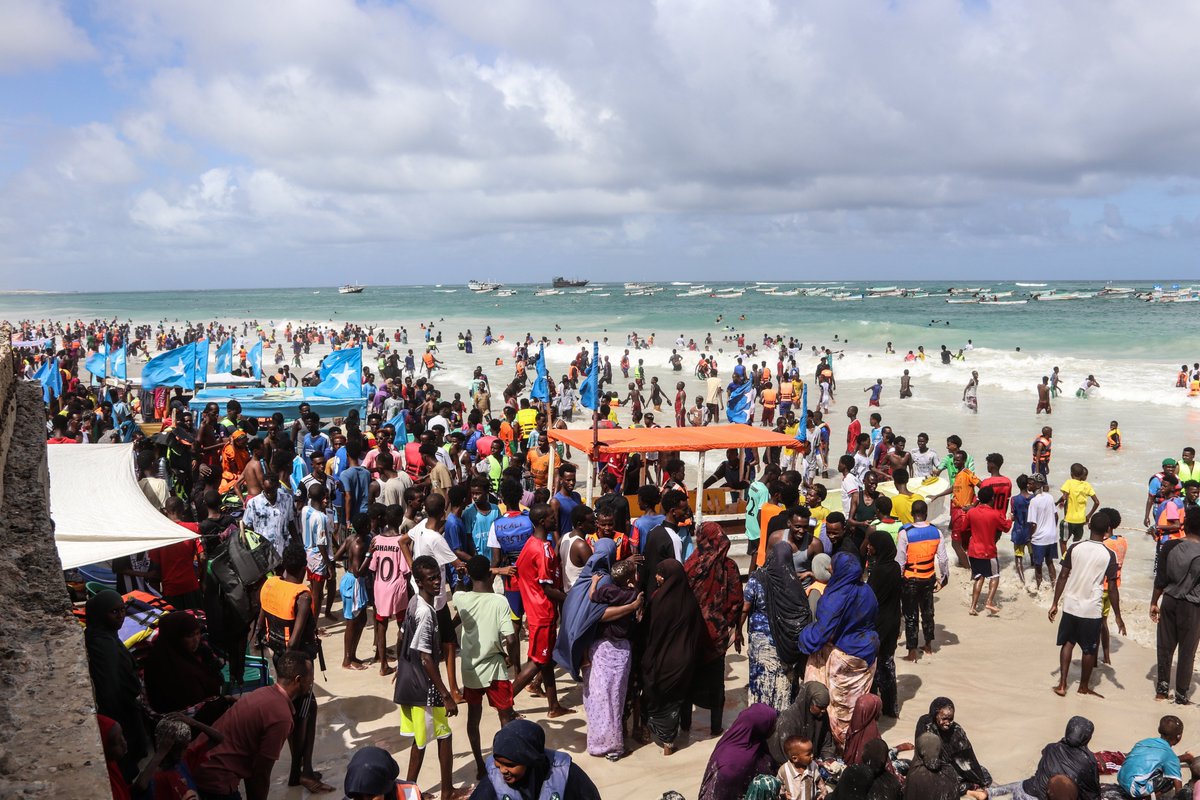
In Somalia’s capital, Mogadishu, families and communities gathered across the city on Wednesday to celebrate Eid al-Adha, the Festival of Sacrifice, which marks the end of the Hajj pilgrimage period.
— in pictures https://t.co/5xxdF8ecTN
@dhoorebbc May Allah ﷻ bless Hargeisa with health, wealth, and wisdom. Whoever faults you for highlighting positive things in a Somali land is themselves at fault.
Ciid Wanaagsan — To Those Who Can Celebrate It
Eid ul-Adha carries one of the most demanding stories in the human moral imagination. A man told to slaughter his son. A man who walked toward it. That is what this day commemorates — not comfort, not ease, but a faith willing to pay the highest price. We remember it with takbeer, with sacrifice, and with sharing meat among those who have none. It is a profound occasion. I do not diminish it.
But I will not pretend either.
For most Somali families across the peninsula, today is not a day of celebration in any material sense. There is no sheep. In many homes, there is barely a meal. The child in the IDP camp outside Mogadishu does not know it is Eid except that someone told them so. The family in the Jubba Valley flooded out last season remains displaced. The young man in Huddur with no work, no prospects, and no functioning state knows what day it is. He simply cannot feel it the way the occasion asks.
I have sat with enough of these realities to know they are not abstractions.
What refuses to leave my mind is this: almost none of what our people suffer is beyond human remedy. The clan violence — man-made. The corruption hollowing out every institution — man-made. The political theater substituting for governance — man-made. The droughts that kill at unnecessary scale — man-neglected, with early warning systems never built, water infrastructure never invested in, and pastoralists left to face a changing climate with nothing but their born resilience. Even the floods carry a human signature. Disaster in Somalia is rarely just natural. It is natural plus accumulated failures of those entrusted to govern.
This is not a counsel of despair. It is a naming of things.
It is addressed directly to every person in a position of authority — political, religious, traditional, intellectual, including myself. Do not, on this day, send a congratulatory message to people who have nothing to celebrate and believe you have discharged your duty. You have not.
Prophet Ibrahim (AS) was not tested so that his followers could issue press releases. The qurbaan is a reminder that leadership costs something. That faith costs something. That if you hold authority over suffering people, the least the day asks is honesty about that suffering — and the most it asks is action.
Speak plainly from your pulpits. Convene your elders for something beyond ceremony. Use your office to serve those who pay your salary honestly. Write something that might lose you a friend.
I ask Allah ﷻ — who hears what no microphone carries and sees what no camera reaches — to give the Somali people a real way out. Not the kind announced in press conferences that dissolve before the ink dries. The makhraj that only He ﷻ can grant — the lifting of a burden that human failure has made heavier than it needed to be.
And to Muslims everywhere carrying this Eid under despair, hunger, wars, and leaders who celebrate while their people starve — the same prayer: Allahuma farrij.
Ciid Wanaagsan. عيد مبارك.
— Yours, Adam Aw Hirsi
I followed the antecedents of the friction between former comrades. For Diomaye, he had to govern a nation that elected him president.
For Ousmane, he had to stick to the campaign pledges that brought them and their party to power.
My respects to both of them. ❤️🇸🇳
Senegal’s President Bassirou Diomaye Faye has dismissed Prime Minister Ousmane Sonko and dissolved the government, according to an announcement on state television
https://t.co/jVvFe7awQy