Sacramental Sci-Fi Universe
No Easter Sunday without Good Friday & Holy Saturday
"May this flame be found still burning by the Morning Star..."
CAESAR WATCHES
ROME RECEIVED IN CHAINS
A FISHERMAN FROM JUDEA
AND THE FISHERMAN WON
ET PISCĀTOR VĪCIT.
Peter, the Rock, the Fisherman from Bethsaida – the "House of the Fisherman" – was crucified in Nero's Circus, under the decree of Emperor Nero, the Pontifex Maximus, High Priest of Rome.
But Peter's Successors would some day conquer and inherit the High Priests of Rome.
Enter St. Damasus. 🧵
“Consider this unique and imposing distinction. Since the writing of human history began, Joan of Arc is the only person, of either sex, who has ever held supreme command of the military forces of a nation at the age of seventeen.” — Louis Kossuth
(Alexander the Great, groomed from birth, and taught by Aristotle, only attained his leadership at 20.)
Mark Twain admired St. Joan of Arc above all other men. He wrote her praises many times, and even his magnum opus was written about her, in honor of her.
- "Whatever thing men call great, look for it in Joan of Arc, and there you will find it.”
- “She is easily and by far the most extraordinary person the human race has ever produced.”
- “She is the wonder of the ages.”
Because of her trials, Joan of Arc has the unique designation of being the person from the Middle Ages about whom we have the most first-hand witness accounts — many from people hostile to her, and all accounts given under oath. There are no legends about Joan. The stories, the miracles — they're all true.
As Mark Twain's character puts it:
“It took six thousand years to produce her; her like will not be seen in the earth again in fifty thousand. Such is my opinion."
Joan is what Feminists wish they wish they could be. They cannot even fathom how she transcends their warped aspiration of a "strong woman", and is no myth.
Truly, Joan was a New Judith:
“How long will you waver, O faithless daughter? For the Lord has created a new thing on the earth: a woman protects a man.” — Jeremiah 31:22
St. Joan of Arc, pray for us!
Alleluia!
Risen is the Lord of hosts,
the King Almighty!
When Isaiah saw his Lord,
he cried out, asking:
“O Son of God,
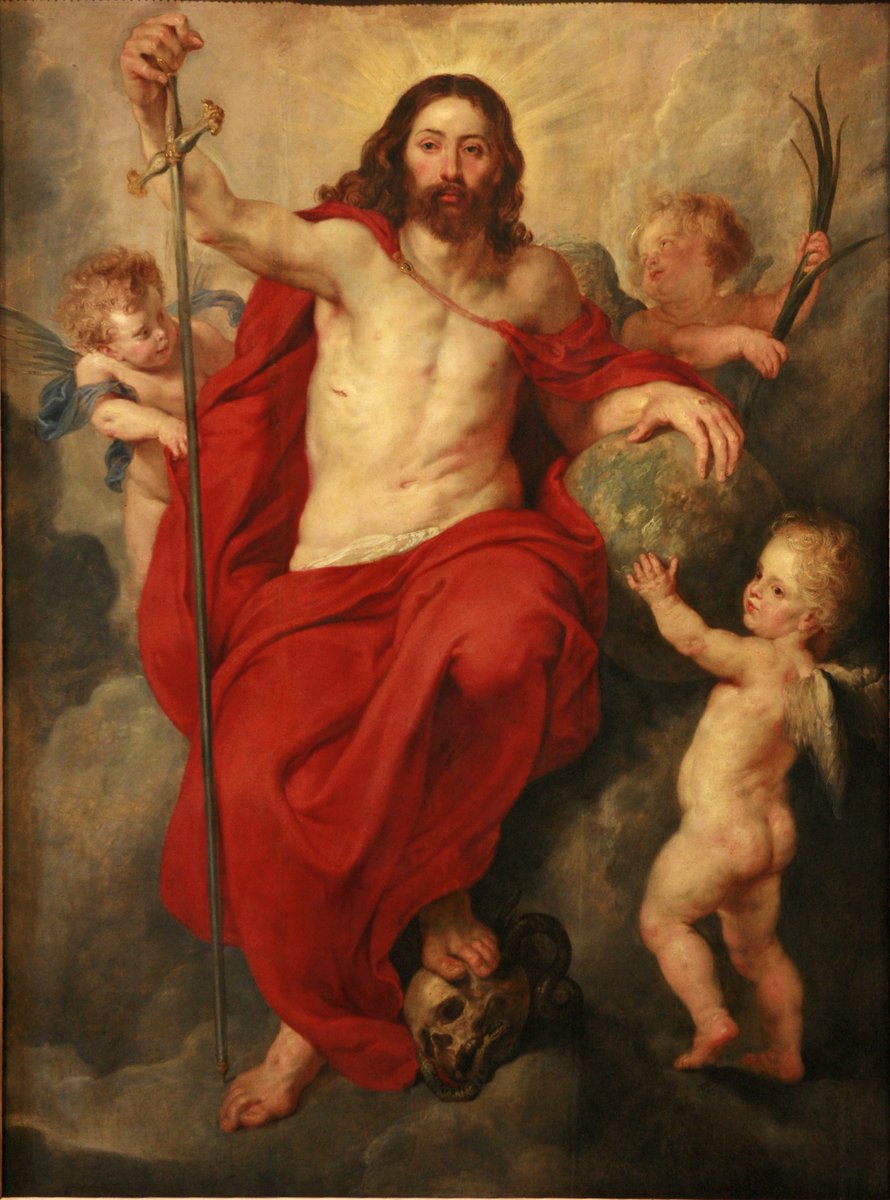
who has dyed your garments red as blood?”
Jesus then replied:
“I have trampled Death itself
to save My Loved Ones,
and the blood of conquered Death
has stained My garments.”
Alleluia!
Our Lord has been raised!
— Maronite Divine Liturgy, Entrance Hymn for the Sunday of the Glorious Resurrection, Verse 2
#EasterSunday #Maronite
When we're in the midst of suffering, confronted by evils, or dread them beyond the horizon, it is hard to see the good in Creation which God so loves. Evil is a terrible, terrible reality. But... I remember a friend once reflected that St. Peter's words at the Transfiguration were perhaps the most profound words in all of the Divine Library: "Lord, it is good that we are here." Even the mere suggestion is surprising: not divine words uttered by God – but the fumbling of a Creature — as St. Luke says, "He did not know what he was saying." But it's these words of a man surprised by the glory of God that stand out. In that moment, he comes face to face with God Himself. The greatest glory, the greatest beauty, the greatest peace. Words cannot describe what the heart undergoes in this encounter. But for that brief moment, Peter saw the fullness of God's beauty...a transfigured view so brilliant, so wonderful...
It all makes sense to me – given Peter's high priestly role, as if speaking on behalf of Creation to the Creator Himself, transfigured before him, seeing for the first time the Divine glory piercing through the veil into Creation. Such a wonderful declaration cannot come from God. It must be a response from the Creature: one smitten by the beauty of being so loved as to share in the great gift of being, and so he declares in thanksgiving – in eucharistia – to the Creator: It is Good that We are here! In the face of...the face of God, even the darkest darkness scatters. The heart can sing nothing else. "It is Good that We are Here!" So then, by St. Peter's words, the Transfigured Christ is our great beacon of hope in this World.
— Pope Simeon, the Fifth Age
If you are a Christian, then Western colonisation was good as it brought the Gospel of Our Lord and Saviour Jesus Christ to a people living in superstition and savagery.
Therefore, it was right.
If you are a humanist, then Western colonisation was good as it brought advanced technology, medicine, and education to a people living in primitive conditions.
Therefore, it was right.
If you are an atheist, then Western colonisation was good as “Right, as the world goes, is only in question between equals in power, while the strong do what they can and the weak suffer what they must”.
Therefore, might makes right.
On January 1 in 404 A.D., an angry Roman gladiator stabbed to death the monk Telemachus because he tried to stop a brutal gladiatorial duel. The martyrdom of Telemachus led to Emperor Honorius declaring an end to the duels. To an audience in February 1984, President Ronald Reagan shared this account of what happened:
"It was at a time of a festival in Rome. They were celebrating a triumph over the Goths. And he followed a crowd into the Colosseum, and then there in the midst of this great crowd, he saw the gladiators come forth, stand before the Emperor, and say, 'We who are about to die salute you.' And he realized they were going to fight to the death for the entertainment of the crowds. And he cried out, 'In the name of Christ, stop!' And his voice was lost in the tumult there in the great Colosseum.
"And as the games began, he made his way down through the crowd and climbed over the wall and dropped to the floor of the arena. Suddenly the crowds saw this scrawny little figure making his way out to the gladiators and saying, over and over again, 'In the name of Christ, stop.' And they thought it was part of the entertainment, and at first they were amused. But then, when they realized it wasn't, they grew belligerent and angry. And as he was pleading with the gladiators, 'In the name of Christ, stop!' one of them plunged his sword into his body. And as he fell to the sand of the arena in death, his last words were, 'In the name of Christ, stop!'
"And suddenly, a strange thing happened. The gladiators stood looking at this tiny form lying in the sand. A silence fell over the Colosseum. And then, someplace up in the upper tiers, an individual made his way to an exit and left, and others began to follow. And in the dead silence, everyone left the Colosseum. That was the last battle to the death between gladiators in the Roman Colosseum. Never again did anyone kill or did men kill each other for the entertainment of the crowd.
"One tiny voice that could hardly be heard above the tumult. 'In the name of Christ, stop!' It is something we could be saying to each other throughout the world today."
In 532, he was a Roman priest walking the streets of a city haunted by its pagan past. His name was Mercurius.
By January 2, 533, he had changed the face of the Papacy forever.
He had been born into a Rome that was struggling to find its footing. The Western Empire had collapsed. The city was recovering from Gothic invasions and living under the shadow of Ostrogothic rule. But amidst the ruins of the Caesars, the Church was rising as the new foundation of the West.
Mercurius was a faithful servant. He was the son of a man named Projectus. He had risen through the clerical ranks, serving as a dedicated deacon during a time of intense theological dispute and political maneuvering.
But there was a problem.
His name.
"Mercurius" was not a Christian name. It was a direct reference to Mercury, the Roman god of commerce, trickery, and travelers. It was a name steeped in the mythology of the very paganism the Church had spent centuries overcoming.
How could the Vicar of Christ bear the name of a Roman idol?
It was a contradiction that could not stand. A Bishop of Rome could not preach the Gospel while carrying the label of a false god.
So, when the votes were cast and he was elevated to the Chair of Saint Peter, he made a decision that no one had ever made before.
He refused to rule as Mercurius.
On January 2, 533, he stepped forward and adopted a new name: John II.
It was a moment of total transformation. He honored Pope John I, a martyr who had died just years prior, signaling a connection to the saints rather than the spirits of antiquity.
He chose to erase the pagan mark. He chose to honor the martyrs. He chose to define his future by his faith, not his birth.
This single act of humility sparked a revolution in tradition. Before John II, Popes kept their baptismal names. After him, the practice of taking a regnal name became the standard, a sign that the man had died to his old self to serve the Universal Church.
During his two-year pontificate, John II did more than just change a name. He fought for doctrinal unity against heresies in the East. He ratified the *Codex Justinianus*, helping to weave Christian principles into the fabric of Roman law, a legal legacy that underpins Western civilization today.
He proved that a name matters. It signifies who you serve and what you stand for.
Today, when we hear names like Benedict, Francis, or John Paul, we are hearing the echo of that decision made in 533.
It reminds us that true leadership often requires we leave our personal identities at the door.
One priest left his name in the history books to give his title to the Lord.
A Good man, though a slave, is free; but a wicked man, though a king, is a slave. For he serves, not one man alone, but what is worse, as many masters as he has vices.
-St. Augustine
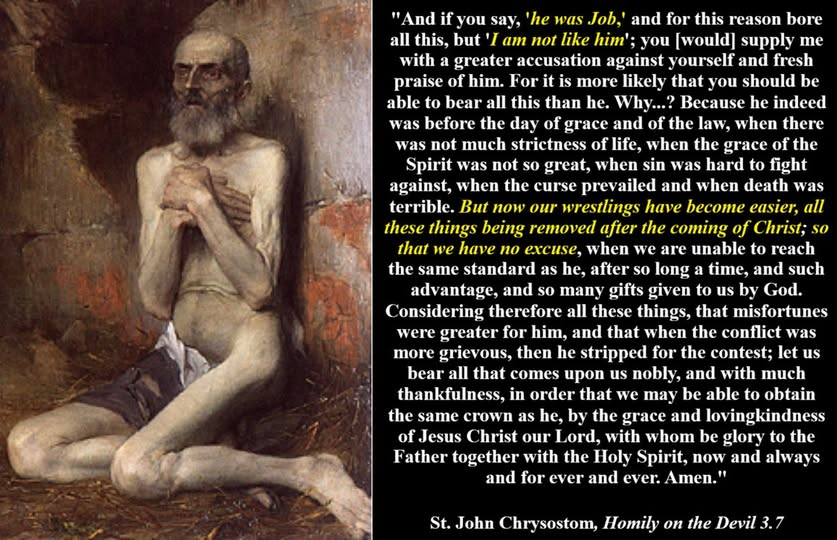
St. John Chrysostom speaks about the great power that Christians have to wrestle and fight against the devil. He points to the example of Job. But then, Chrysostom supposes the objection, "Yeah, well that was Job and I'm not a great Saint like he is... so it is different with me. I can't handle that."
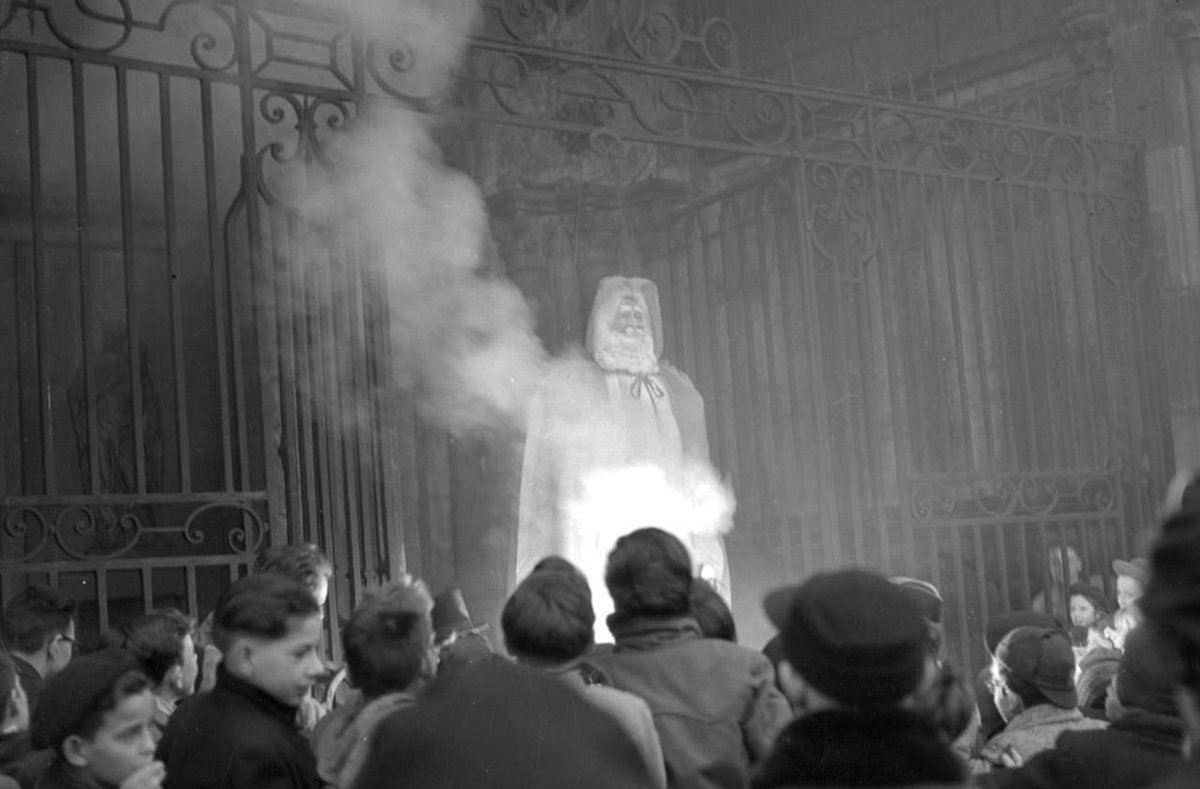
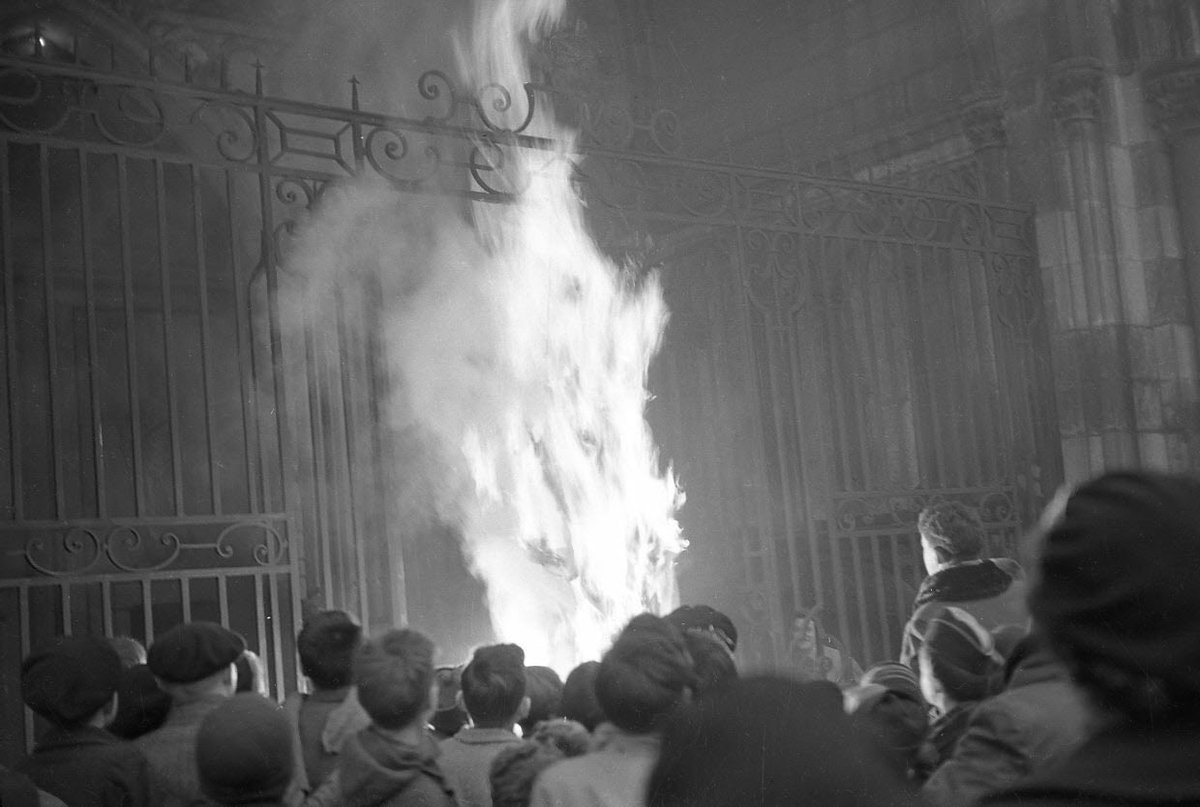
french catholics hanging and burning an effigy of santa claus in front of over 200 children to protest the “paganization” and commercialization of christmas (1951)
To give, and not to count the cost
to fight, and not to heed the wounds,
to toil, and not to seek for rest,
to labor, and not to ask for any reward,
save that of knowing that we do thy will.
-St. Ignatius of Loyola
An inscription on the Vatican Obelisk in St. Peter's reads:
"Christ conquers.
Christ reigns.
Christ commands.
May Christ defend his people from all evil."
Rome conquered the World.
And the Fisherman conquered Rome.
Pope St. Damasus, ora pro nobis!
VIVA CHRISTO REY
ROME RECEIVED IN CHAINS
A FISHERMAN FROM JUDEA
AND THE FISHERMAN WON
ET PISCĀTOR VĪCIT.
Peter, the Rock, the Fisherman from Bethsaida – the "House of the Fisherman" – was crucified in Nero's Circus, under the decree of Emperor Nero, the Pontifex Maximus, High Priest of Rome.
But Peter's Successors would some day conquer and inherit the High Priests of Rome.
Enter St. Damasus. 🧵
Damasus grew up in the City of Rome when it was a pagan Empire persecuting Christians, and in his 80 years lived to become the official head of the Religion of Rome as a Christian Empire. His prayers for a Pax Christiana were answered, and Damasus saw Christ tame mighty Rome.