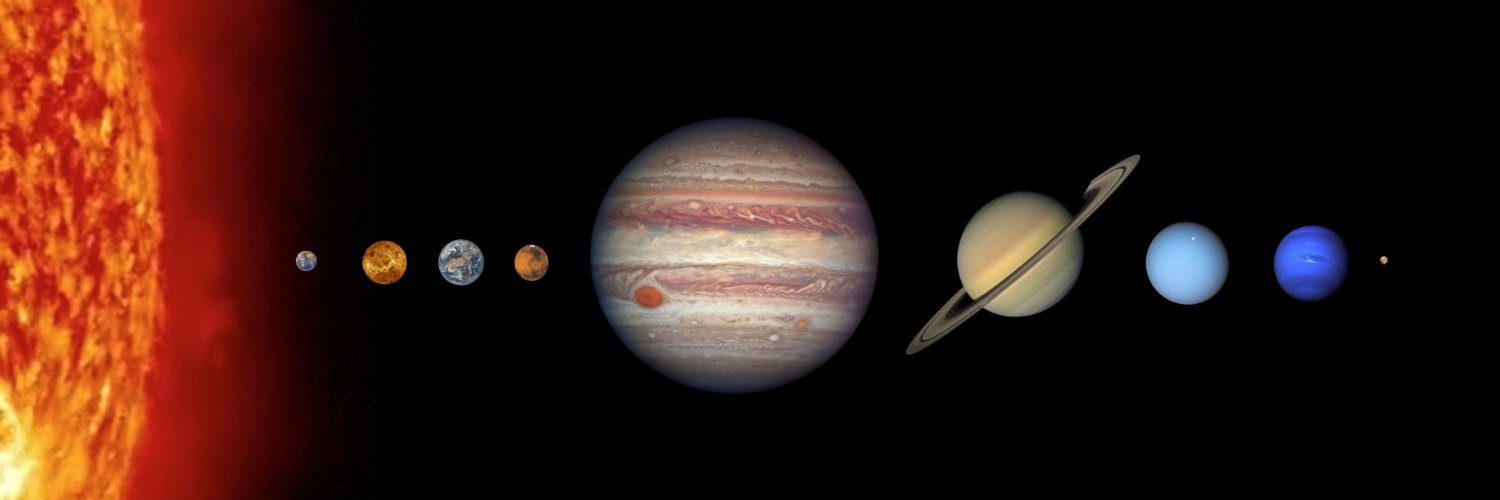
Every second, our Sun fuses in its core 620 million metric tons of hydrogen to produce 606 million metric tons of helium, with the missing mass being converted into energy as per E=mc²
Isaac Newton (1643 - 1727), an English mathematician, physicist, and astronomer, thought that time exists independently of change. Gottfried Wilhelm Leibniz (1646 - 1716), a German mathematician, philosopher, and scientist, believed that time is meaningless without change
Io, the innermost of Jupiter's largest moons, is constantly stretched and compressed by Jupiter's immense gravitational pull. This tidal flexing generates enough heat to power hundreds of active volcanoes, making Io the most volcanically active world in the Solar System
The light that started travelling across the universe when it became transparent 300,000 years after the Big Bang is the Cosmic Microwave Background radiation, originally gamma rays, but now red-shifted to microwaves due to the expansion of the Universe
If time began at the Big Bang, then there is no "before", so nothing could have existed before. Modern theories, however, leave open possibilities, such as earlier phases of the Universe, different notions of time, or a deeper timeless reality
Because Earth’s rotation axis is angled 23.5°to the Sun, between the 20th and 23rd of December, the region around the Arctic Circle receives no sunlight at all, while the Antarctic Circle gets 24 hours of sunlight
Nucleocosmochronology is used to determine the age of our Sun (4.57±0.02 billion years) by comparing the observed ratios of abundances of heavy radioactive and stable nuclides to the primordial ratios predicted by nucleosynthesis theory
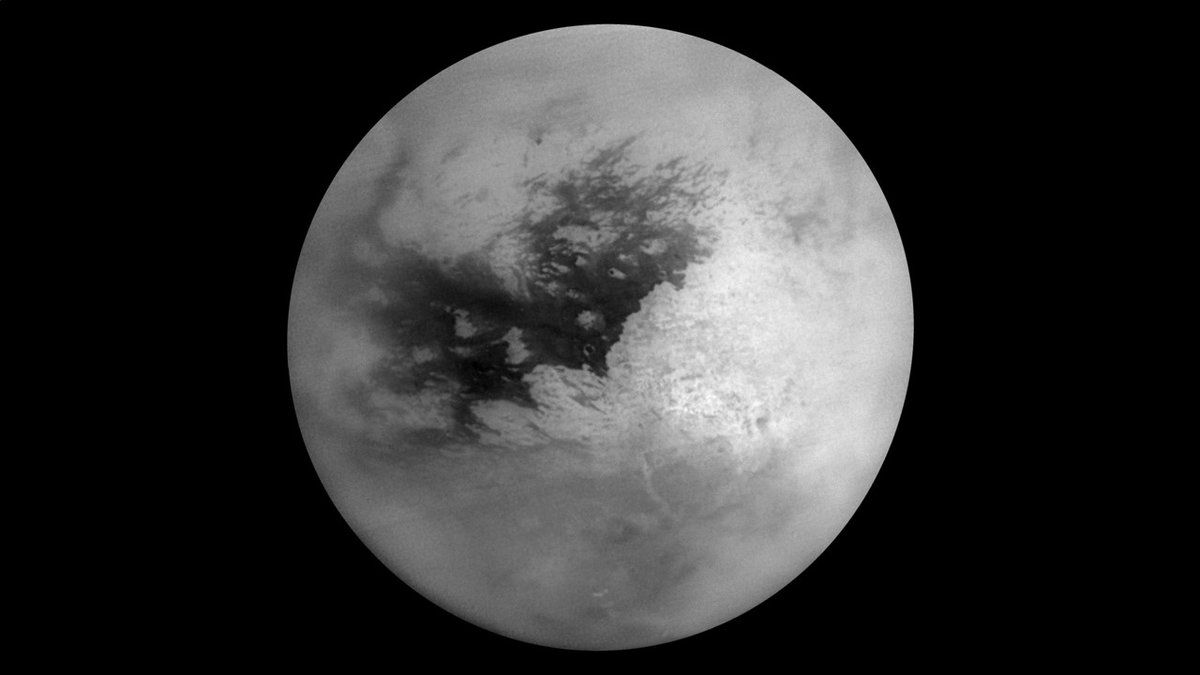
Of the over 420 confirmed moons in the Solar System, we have successfully landed spacecrafts on two of them: Earth's Moon (384 thousand km away) and Saturn’s Titan (1200 million km away)
Hydrogen and Helium are by far the most abundant elements in the Universe. The rest of the elements in the periodic table account for just 2% of the total mass of the ordinary matter in the Universe
Schrödinger's equation does not predict the exact location of a quantum particle. Instead, it describes how the probability of finding the particle at different locations evolves over time
Einstein's Special Theory of Relativity showed that space and time are not independent quantities. Because measurements of space depend on time and vice versa, they are best described as components of a unified entity called spacetime
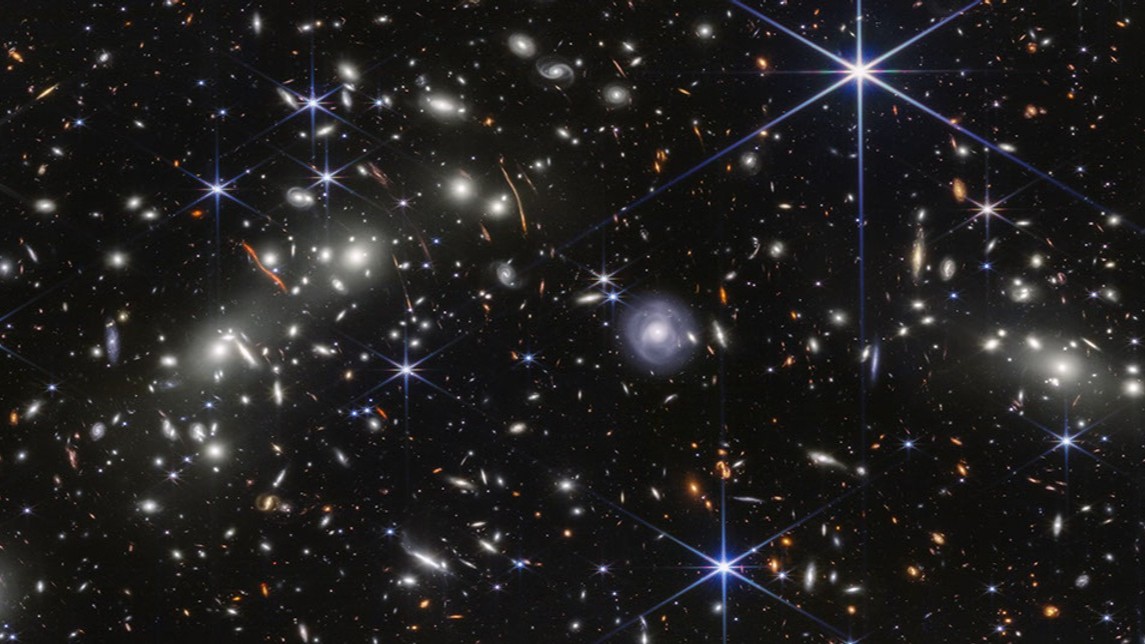
In the 1920s, Edwin Hubble provided the first conclusive evidence that the spiral nebulae seen through telescopes were actually distant galaxies beyond the Milky Way
Nine billion years after the Big Bang, a young star built from hydrogen and helium gas mixed with ash from dead stars took shape, ignited nuclear fusion, and… our Sun was born
The record for the longest space dive is held by American computer scientist Alan Eustace, who fell over 42 km in 4 minutes and 27 seconds, breaking the speed of sound on his descent to the surface of Earth
Nuclear fusion in the Sun produces only electron neutrinos, but during their journey to Earth, they oscillate between flavours and by the time they reach detectors on Earth, they are a mixture of all three types; electron, muon, and tau neutrinos
Iapetus, the third largest moon orbiting Saturn, has an equatorial ridge 1,300 km long, 20 km wide and up to 13 km high. How this massive structure formed is a mystery
When the Universe was about 380,000 years old, the nuclei of hydrogen and helium atoms captured free electrons to form electrically neutral atoms. This allowed photons to travel freely without constantly scattering off charged particles, making the Universe transparent to light
The oldest light we can observe in the Universe is the Cosmic Microwave Background radiation, whose photons have been travelling across space for over 13 billion years
The gluon carries the strong force that binds quarks into protons and neutrons. Since gluons themselves carry the strong charge, they interact with one another, creating a force that does not spread freely over large distances, keeping the quarks confined inside atomic nuclei