Things to try. Things to notice. Things to explore.
Your curiosity already knows where to start. Follow along, and let's see where it takes you. Stay curious. ✨
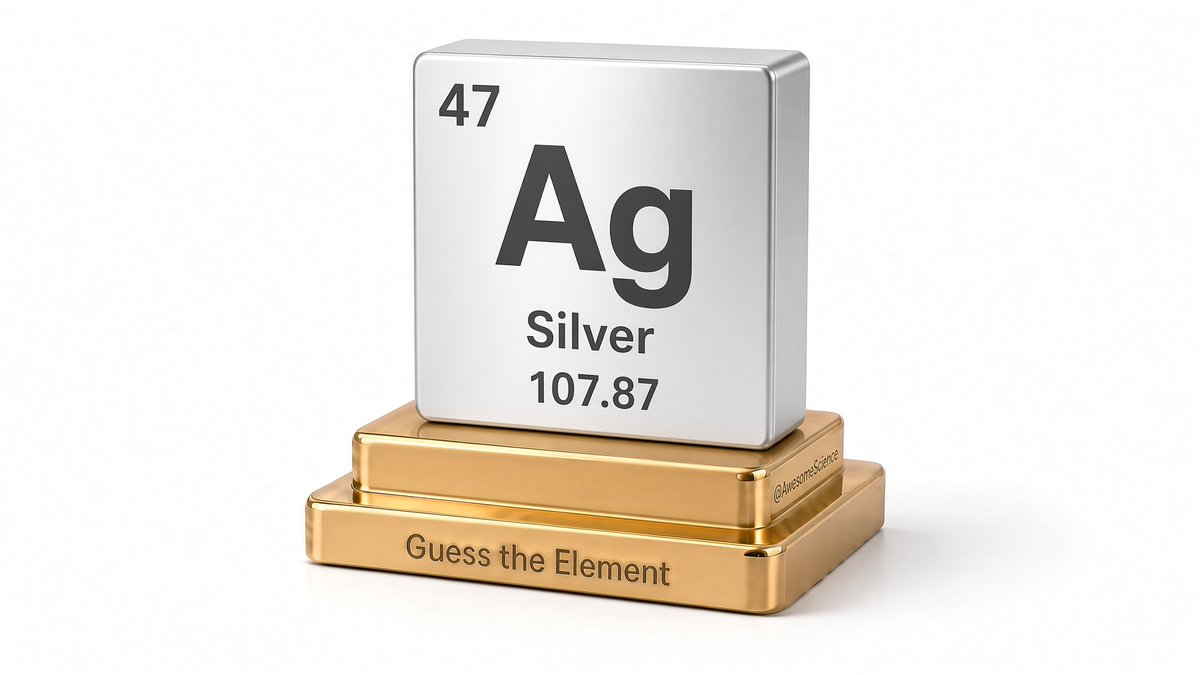
Guess the element — Expert, Keen, Everyday. Try to land it in three.
1/4 Expert:
1. Even trace amounts of its ions are toxic to many microbes — the oligodynamic effect behind old drinking vessels and antimicrobial coatings.
2. Molten, it dissolves a surprising amount of oxygen, then “spits” that gas out as it freezes — an old foundry quirk of the pure metal.
3. Its halide salts darken in light, and that light sensitivity powered classical photography for more than a century on plates, film and paper.
3/4 Everyday:
7. Knives, forks and spoons marked “sterling” are 92.5% this metal.
8. Second-place medals at the Olympics are made mostly of it.
9. A 25th wedding anniversary is traditionally named for this metal.
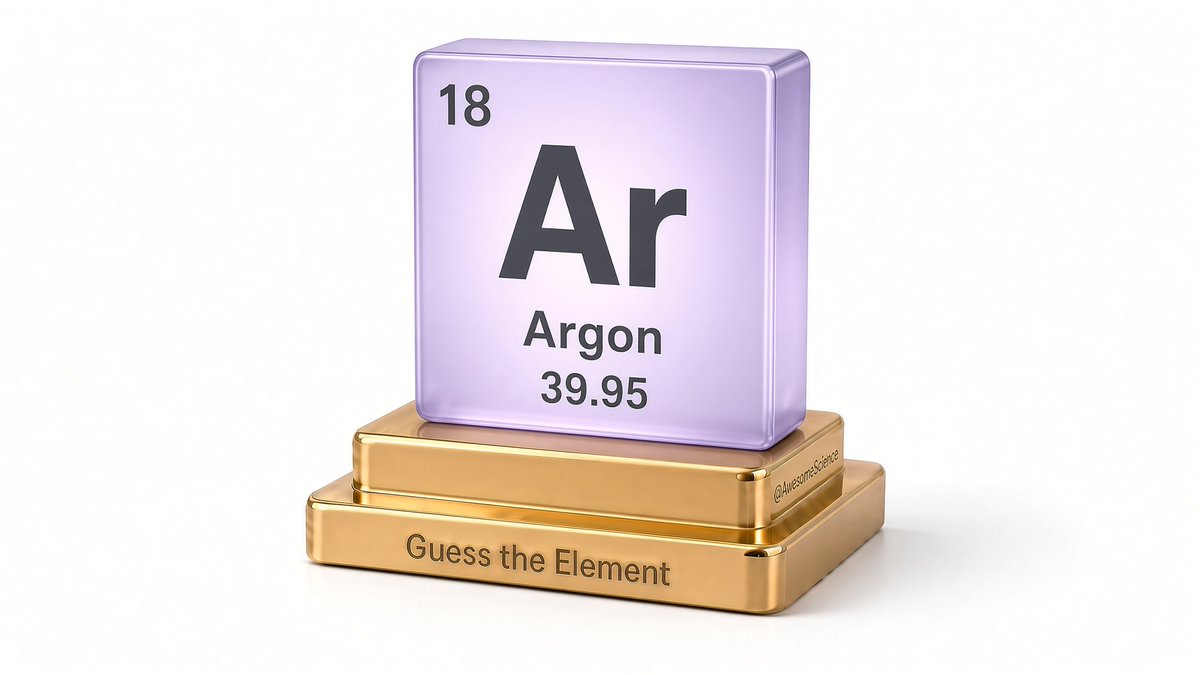
Guess the element — Expert, Keen, Everyday. Try to land it in three.
1/4 Expert:
1. In 1894 Lord Rayleigh and William Ramsay chased why nitrogen taken from air weighed slightly more than nitrogen made by chemical reactions; stripping everything known from an air sample left a gas whose spectral lines matched no known element.
2. Nearly all of Earth’s atmospheric stock of it leaked from rocks, made by the slow decay of a radioactive isotope of a common metal — the basis of a classic rock-dating clock.
3. It stays liquid only from about −189 °C to −186 °C, a window barely three and a half degrees wide.
3/4 Everyday:
7. Winemakers blanket wine in tanks and barrels with it, keeping oxygen off the surface so the wine won’t spoil.
8. The gap in many double-glazed windows is filled with it because it is a poorer heat conductor than air.
9. It is the third most abundant gas in the air you breathe — about one percent of dry air, after nitrogen and oxygen.
The two fish tied by a cord:
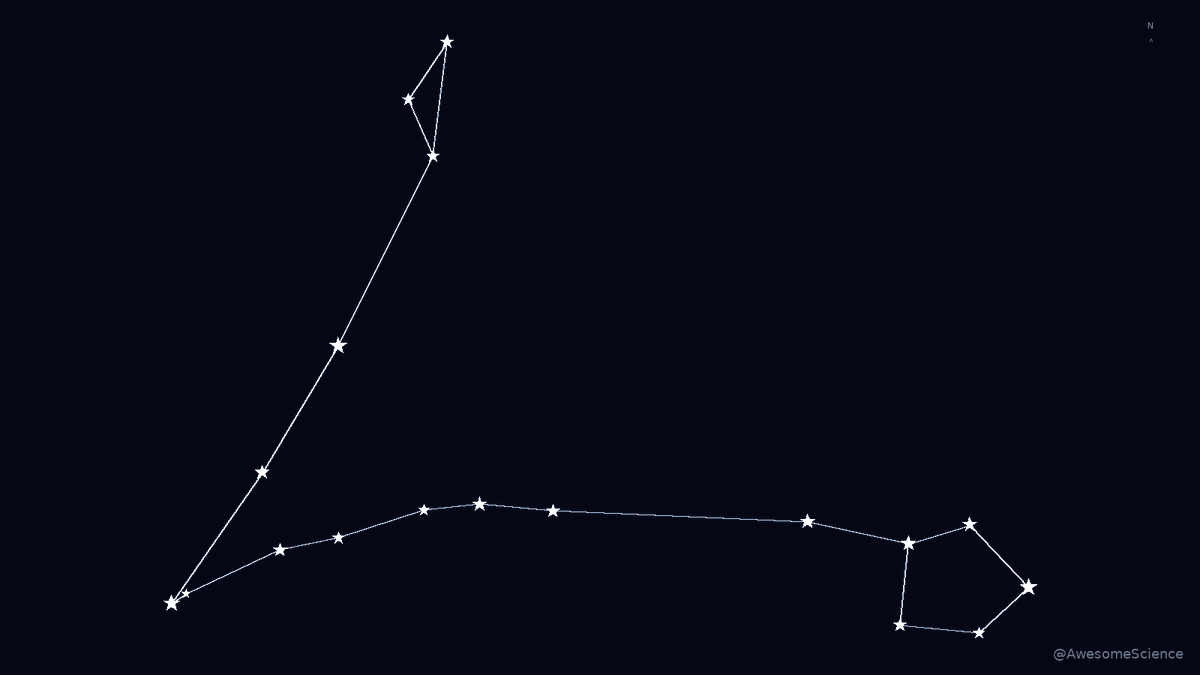
A faint V of stars cradles the Great Square of Pegasus from the south and east.
Pisces is the Fishes. One of the ancient sky figures Ptolemy listed — two fish swimming different ways, joined so they cannot drift apart.
Greek lore says Aphrodite and her son Eros fled Typhon as fish, bound together so they would not lose each other. Alrescha, from Arabic for “the cord,” is the star that marks the knot.
About two thousand years ago the March equinox sat in Aries, and that crossing became the sky’s zero — the First Point of Aries. Today the same March crossing sits in Pisces, but we still call that zero by the old name.
Stay curious:
Locate the Circlet under the Great Square.
Can you find the knot that joins the two fish?
Where does the Sun’s March crossing sit now?
The octant that holds the south — and almost no pole star:
A blank patch of sky sits at the bottom of the world. No bright beacon marks it.
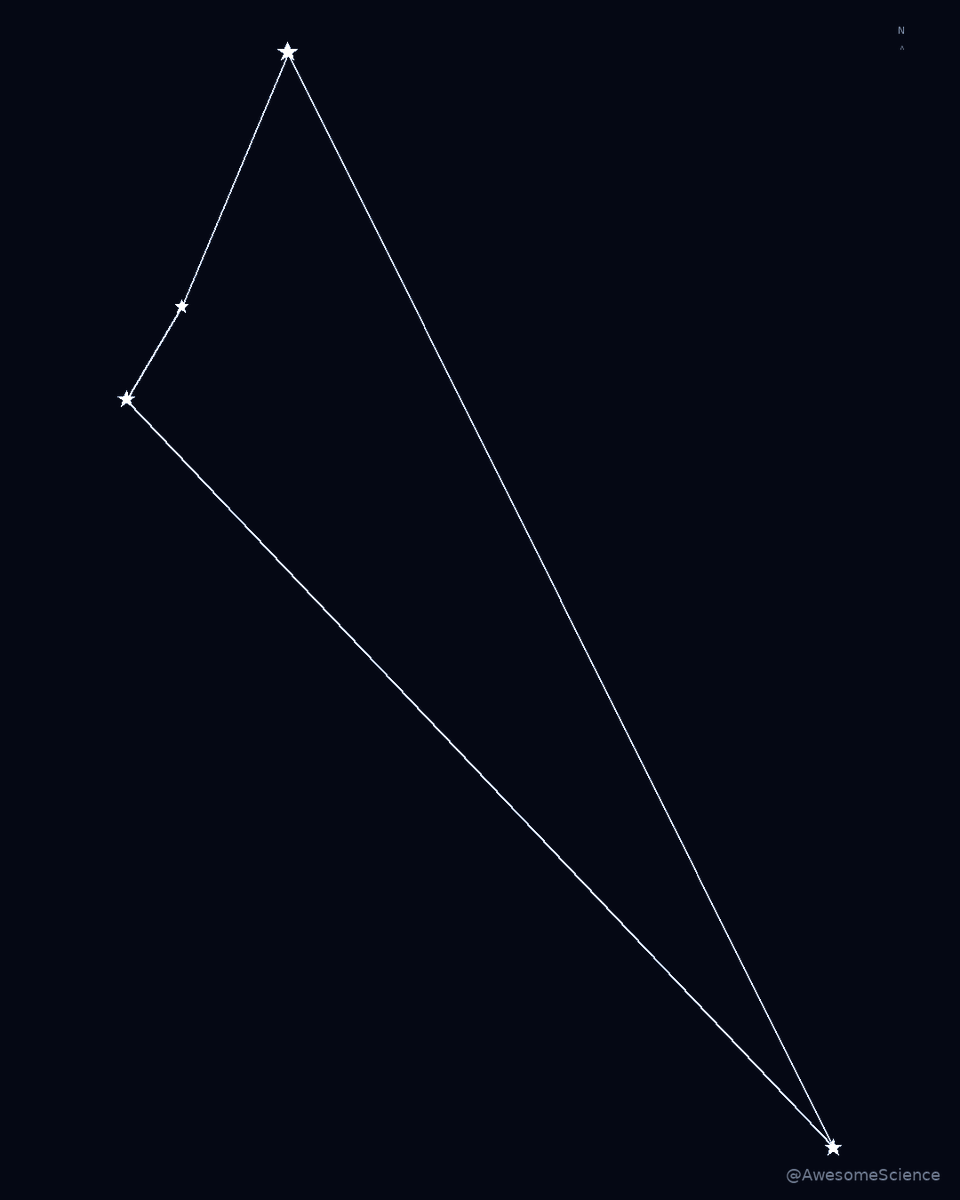
Octans is the Octant. French astronomer Nicolas-Louis de Lacaille drew it for a reflecting octant — John Hadley’s tool for measuring a star’s height, forerunner of the sextant. This figure holds the south celestial pole.
There is no southern Polaris. Sigma Octantis sits about a degree from the pole at roughly magnitude 5.4 — too faint to steer by. The pole is drifting farther into emptier sky. Use the Southern Cross and the Pointers of Centaurus instead.
Stay curious:
Locate the empty south celestial pole — then use the Southern Cross and the Pointers to find south.
Why put a navigator’s octant around a pole with no bright star?
How is an octant different from a sextant?
Sources for Study Lab #1:
Roediger, H. L., III, & Karpicke, J. D. (2006). Test-enhanced learning: Taking memory tests improves long-term retention. Psychological Science, 17(3), 249–255. https://t.co/LCbwbXqdMe
Yang, C., Luo, L., Vadillo, M. A., Yu, R., & Shanks, D. R. (2021). Testing (quizzing) boosts classroom learning: A systematic and meta-analytic review. Psychological Bulletin, 147(4), 399–435. https://t.co/r7ccjJBlLh
Study Lab #1: Reread it, or quiz yourself?
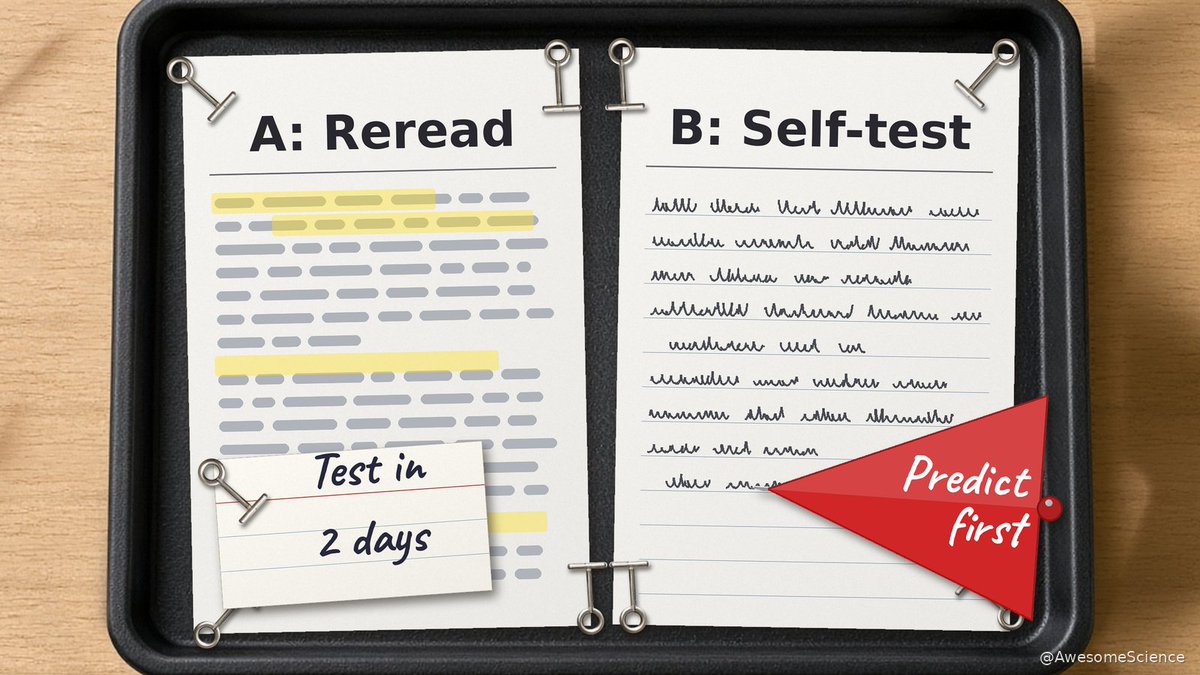
Tonight: pick two textbook passages you haven't studied yet, about the same length and difficulty. Read each one for 7 minutes. Then reread Passage A for 7 more minutes. For Passage B, close the book and spend those 7 minutes writing down everything you remember. Don't check it.
Independent variable: reread vs. self-test
Dependent variable: ideas you can write from memory
Controlled: time, passage length and difficulty, no other review
Delay: 2 days
Saturday: on a blank page, write all you remember from each passage. Then check against the book and count the ideas you got.
Predict first: which passage will you remember better?
The classic result: 120 college students did this with two short passages, about the sun and sea otters (Roediger & Karpicke, 2006). Tested 5 minutes later, rereading won: 81% vs. 75% of ideas recalled. Two days later, self-testing won, 68% vs. 54%. After a week, 56% vs. 42%. The self-testers never got to check their answers.
Your result is a sample of one. Their finding has been repeated many times, including in classrooms: a 2021 review of 222 classroom studies (48,478 students) found that quizzing boosted learning.
Next Thursday: one big flashcard stack vs. four small ones.
Sources in the reply.
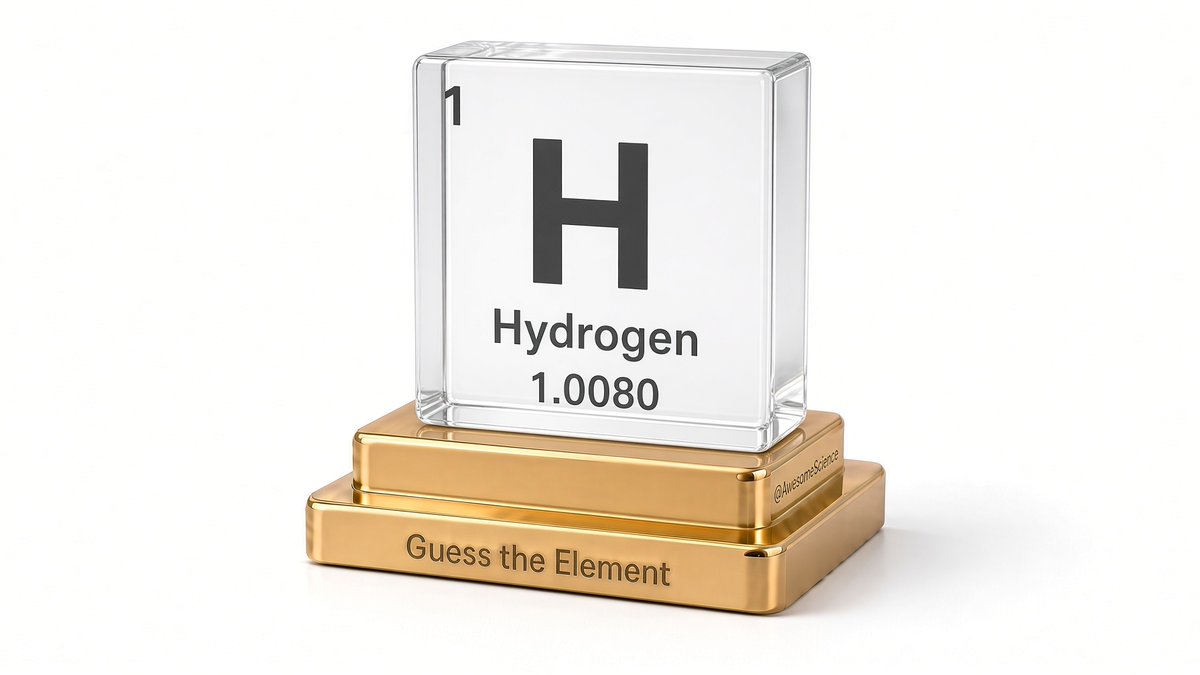
Guess the element — Expert, Keen, Everyday. Try to land it in three.
1/4 Expert:
1. By mass it is the most abundant element in the observable universe — roughly three-quarters of ordinary matter — yet free molecules of it are scarce in Earth’s air.
2. Its visible spectral lines (the Balmer series) were a key test that a new quantum model of the atom passed in 1913.
3. It is the only element whose isotopes have distinct names in common use; the heaviest of its three is radioactive.
3/4 Everyday:
7. The sourness of lemon juice and vinegar comes from its positive ions; the more of them a solution holds, the more acidic it is.
8. Gasoline, natural gas and candle wax are made mostly of compounds built from just two elements: carbon and this one.
9. Water is two atoms of it bonded to one atom of oxygen.
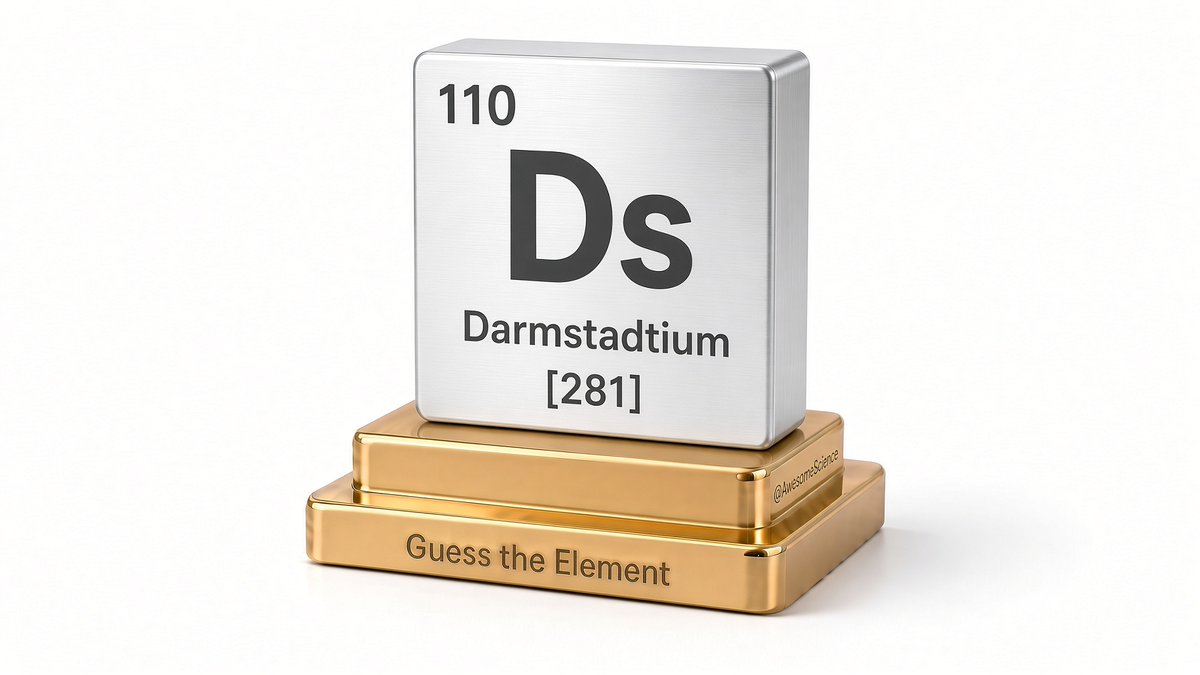
Guess the element — Expert, Keen, Everyday. Try to land it in three.
1/4 Expert:
1. Attempts to make it failed at a Soviet lab in 1986–87 and at a German lab in 1990.
2. Its discovery run, directed by Sigurd Hofmann, fired nickel-62 nuclei at a lead-208 target.
3. Runs in 1994 and 1995 at Russian and American labs gave suggestive but inconclusive hints of it.
3/4 Everyday:
7. Its November 1994 discovery ended a ten-year stretch with no newly made element.
8. Its first atom appeared on November 9, 1994; two more followed on November 12 and 17.
9. Its discoverers considered naming it after Wixhausen, the suburb where their lab stands.