I just don't understand it, so a Chinese has the right to order eviction of people from their houses in STONERIDGE and call for their demolition and that doesn't make Zimbabwe angry as a nation?
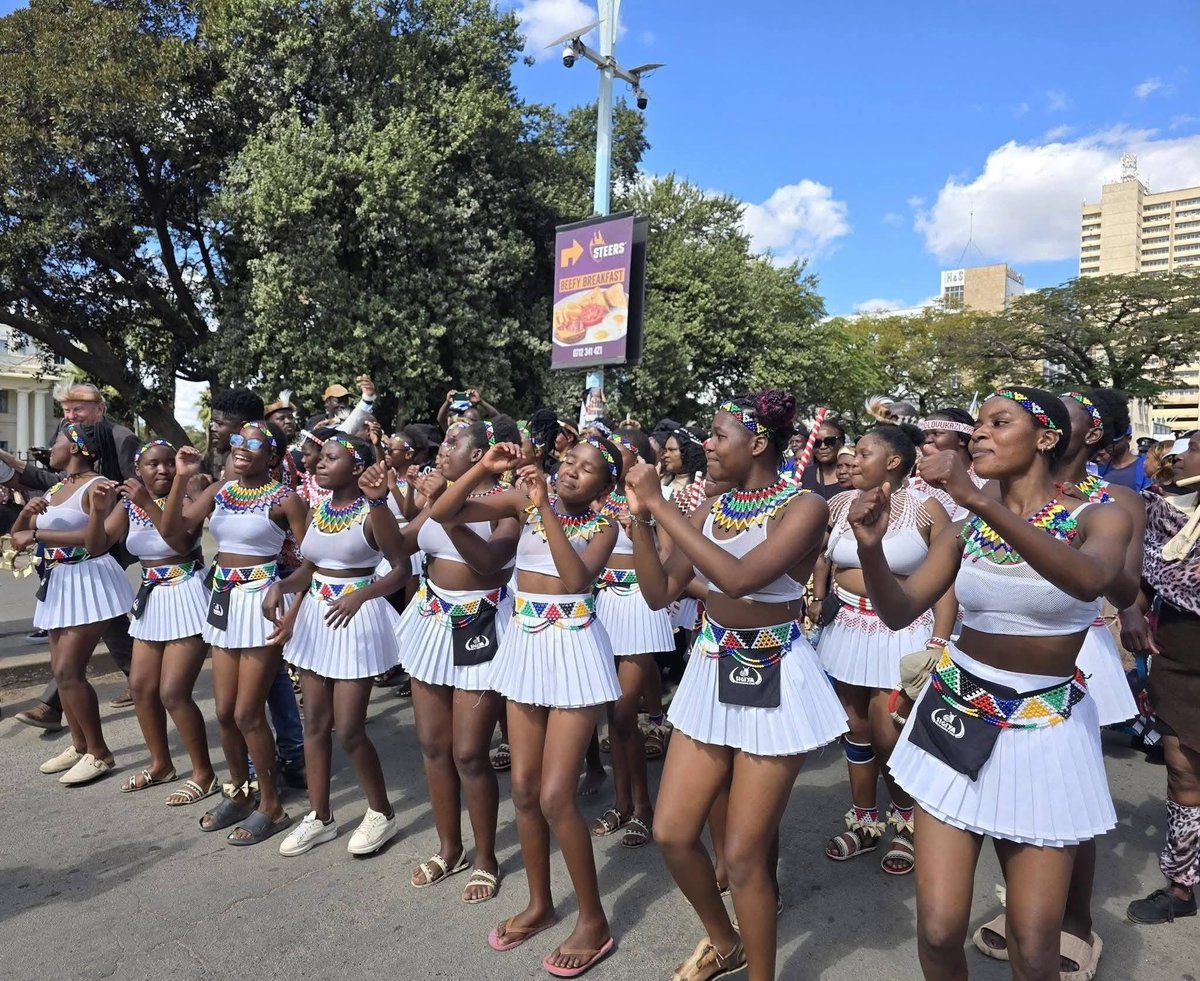
We are just slay queens.
@lavidaNOTA As long as you hate other Africans, you hate yourself. Now every black person has to carry an ID to prove themselves if they cannot speak another language. As if Zulus are making an effort to learn Sepedi
This week could become one of the most consequential moments in Zimbabwe’s post-independence history. Forty-six years after independence, Parliament is set to debate Constitutional Amendment Bill No. 3, a proposal that would fundamentally reshape Zimbabwe’s political system and alter the way power is exercised and transferred.
Among its most controversial provisions is the proposal to extend President Emmerson Mnangagwa’s term of office beyond 2028 to 2030, granting him an additional two years as president beyond the ten-year limit currently prescribed by the Constitution. The Constitution, as it stands, limits a president to two terms of five years each, a maximum of ten years in office.
This Bill will put an end to Vice President General Constantino Chiwenga's hopes of ever becoming President of Zimbabwe if it becomes law because his political pathway will have been closed.
The Bill also seeks to increase the presidential term from five years to seven years. Even more significantly, it proposes replacing the direct election of the president by the people with an indirect system in which the president would be elected by Parliament. If enacted, Zimbabweans would no longer cast ballots directly for their head of state. Instead, Members of Parliament would now choose the president.
The proposed amendments go further than that. They will expand the number of individuals entering Parliament through presidential appointment rather than direct election, increasing presidential influence over key institutions of the state. This would further concentrate power in the executive and reduce democratic accountability.
If this Bill becomes law in its current form, the consequences could extend far beyond President Mnangagwa himself. With the ruling ZANUPF party holding a dominant parliamentary majority and the opposition fragmented and weakened, the likelihood of meaningful resistance inside Parliament appears limited and academic, short of a miracle.
The mathematics of the proposal are straightforward, if the bill passes this year, ZANUPF will be assured of the presidency for the next 18 years without fear of any meaningful opposition.
If President Mnangagwa receives the additional two years, his tenure would extend to 2030. Under the proposed constitutional framework, a successor chosen in 2030 would serve a seven-year term until 2037. If re-elected for a second seven-year term by parliament, that president would remain in office until 2044.
In practical terms, this means that from 2028 onwards, Zimbabwe will go for sixteen years without a direct presidential election. The presidency would effectively be determined by Parliament rather than by the electorate. Given the current political realities, this would significantly strengthen ZANUPF’s ability to retain control of the presidency for decades to come and also control the fiscus, which is the feeding trough.
This concern is heightened by the effects of constituency delimitation carried out before the 2023 elections. The distribution of constituencies now disproportionately benefits ZANUPF strongholds while reducing the electoral weight of opposition areas.
The reality is that ZANUPF currently enjoys a substantial parliamentary advantage. If Parliament becomes the body that elects the president, that advantage becomes even more politically significant.
The debate therefore goes beyond Emmerson Mnangagwa. It is about the future architecture of the Zimbabwean state. It is about whether power should continue to derive directly from the vote of ordinary citizens or whether it should be transferred to a parliamentary process dominated by political parties.
For many Zimbabweans, this is not simply another constitutional amendment. It is a defining question about the future of democracy, accountability, and political competition in the country.
Those who believe the Bill will be stopped point to divisions within ZANUPF itself, particularly opposition from elements aligned with Vice President General Constantino Chiwenga. Yet even if internal resistance succeeds in blocking the proposal, the contest remains largely an internal ZANUPF struggle rather than a challenge emerging from a strong opposition movement. The political debate is taking place almost entirely within the ruling establishment.
That is why this week matters. The decisions taken in Parliament will shape Zimbabwe’s political landscape not merely for the next election cycle, but for a generation.
History often turns on moments that seem ordinary while they are unfolding. This may be one of those moments. If the amendments pass, Zimbabwe will enter a fundamentally different constitutional era. If they fail, it will represent one of the most significant setbacks to an attempt to restructure the country’s political system since the adoption of the 2013 Constitution.
Whatever one’s political views, this is a week that deserves the attention of every Zimbabwean. The choices made now may determine how political power is acquired, exercised, and transferred for many years to come.
In a week when Zimbabwe’s central hospitals do not have the most basic drugs, when roads are riddled with potholes, when unemployment remains estimated at well over 90% in the informal economy, when corruption and looting are rife, when many households go for days without running water, and when a dysfunctional government appears to be at war with itself, Parliament will be debating whether this record deserves an extension of power.
Instead of debating how to fix the healthcare system, create jobs, restore public services, tackle corruption, or provide clean water, legislators will be debating whether the political leadership responsible for this state of affairs should be given more time in office through Constitutional Amendment Bill No. 3.
The question before Parliament is simple. Does this record justify extending presidential tenure and changing the rules of the political game, or should they at least attempt to uphold the principle that Zimbabwe is a democracy and reject the Bill?
Any serious student of Zimbabwean politics understands the reality. With the opposition weakened and largely ineffective, the prospects of stopping the Bill through conventional parliamentary means appear slim. Short of a major political rupture within the ruling establishment, or some form of intervention from forces opposed to the extension project, many Zimbabweans are now hoping against hope.
This week may well determine whether Zimbabwe remains a country where citizens have a realistic opportunity to change their leadership through the ballot box, or whether the door closes even further on that possibility.
The tragedy for Zimbabwe is that there is no conventional opposition that is visibly strong enough to stop this Bill. The traditional opposition has been weakened to such an extent that many Zimbabweans who have never been members of ZANUPF now find themselves looking towards Vice President Constantino Chiwenga as the only figure within the system who might be capable of mounting any meaningful resistance.
Yet even if he were to prevail in this internal struggle, it would not represent a fundamental change of direction. It would still be ZANUPF. It would still be the same political system, the same party, and largely the same state architecture, only with a different face at the top.
That is the real tragedy of Zimbabwean politics in 2026. The destruction of a credible and effective opposition has left many citizens with no alternative centre of political power to rally behind. As a result, hopes that would ordinarily be invested in an opposition movement are now being placed in a faction of ZANUPF itself.
Zimbabweans are effectively watching an internal contest within the ruling party and hoping that one faction is strong enough to stop Constitutional Amendment Bill No. 3 from becoming law. That is how narrow the political space has become.
It is heads, you get ZANUPF. Tails, you still get ZANUPF.
It is also important to note that the Members of Parliament who will be debating this Bill have a direct personal incentive to support it. Under the proposed changes, they too stand to benefit from a two-year extension of their own terms in office. In other words, they are not being asked to make a decision that affects only the President. They are being asked to vote on a measure that could also prolong their own stay in Parliament.
This creates an obvious conflict of interest. The very individuals tasked with deciding whether the extension is in the national interest are themselves among its beneficiaries. For many Zimbabweans, this raises a fundamental question about whether Parliament can impartially adjudicate a matter from which its members stand to gain politically and financially.
Put simply, the Bill does not merely extend the tenure of the President. It also extends the tenure of many of the politicians who will be voting on it. That sweetener cannot be ignored when analysing the politics surrounding Constitutional Amendment Bill No. 3.
That is why it is important to understand why President Mnangagwa and his allies, are opposed to subject the bill to a national referendum.
For many citizens, the hope that this Bill can be stopped increasingly resembles the words spoken by Emperor Haile Selassie and later immortalised by Bob Marley, a fleeting illusion to be pursued, but never attained.
Whether that pessimism proves justified remains to be seen, but the fact that millions of Zimbabweans are now pinning their hopes on a battle within ZANUPF rather than on a democratic alternative tells its own story about the state of the nation.
https://t.co/ruhOrCIezH
Hi guys ! Please help me raise money to help support Dementia patients and families ❤️❣️
Any donation goes a long way..
I will be walking 60 miles in June to support this cause ..
Thank you for your generosity !
https://t.co/ruhOrCIezH