Statins continue to protect lives among individuals aged 70 and older, as a new randomized clinical trial shows that older adults who discontinued their medication experienced higher rates of heart attacks, strokes, or death.
Published in The New England Journal of Medicine, the STREAM trial enrolled 1,880 adults aged 70 and older who had been taking statins to prevent a first cardiovascular event. All participants had at least two chronic health conditions, though none had previously diagnosed cardiovascular disease. Investigators randomly assigned the volunteers either to stop taking their statins or to continue standard treatment, tracking typical participants for roughly two years and following some for up to four years.
Over the course of follow-up, 12.7% of the participants assigned to discontinue statins suffered a nonfatal heart attack, nonfatal ischemic stroke, or death from any cause, compared to 9.2% of those who remained on the medication, representing an absolute difference of 3.5 percentage points.
Despite this higher event rate, the trial technically met its predefined two-year noninferiority criterion. This statistical conclusion stems from the study's design, which permitted a small reduction in average event-free survival time. Over the first two years, the discontinuation group lost an average of two weeks of life free from a heart attack or stroke, falling within the preset allowable margin of 5.2 weeks. However, meeting that statistical threshold does not prove that stopping therapy carries zero added danger.
Furthermore, halting statin therapy yielded no measurable improvements in quality of life, muscle aches, falls, or muscle wasting. Although roughly 14% of participants eventually switched away from their assigned treatment group, supplementary analyses confirmed the primary results. Ultimately, the trial's independent safety board advised participants in the discontinuation group to consult their healthcare providers about restarting treatment, reinforcing that statin cessation at age 70 should be an individualized medical decision rather than a blanket rule.
[Rodondi, N., Haller, M. L., Bardoczi, J. B., et al. (2026). Discontinuing Statins in Older Adults without Cardiovascular Disease. The New England Journal of Medicine. DOI: 10.1056/NEJMoa2606634]
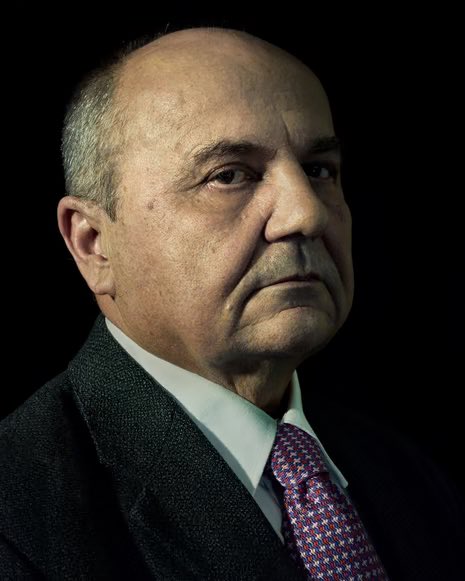
“Rusya için bu, son savaştır. Bu bir sondur. Mevcut çatışma, Rusya’nın girişeceği son savaş olacaktır. Ülkenin parçalanma süreci çoktan başladı; bu, Varşova Paktı’nı ve Sovyetler Birliği’ni tarihe gömen tarihsel sürecin bir devamıdır.
Rusya, kendi sonunu bizzat hızlandırdı: Petrol, doğal gaz, elmas ve altınla beslenerek yüz yıl daha durağan bir şekilde varlığını sürdürebilirdi; ancak bunun yerine, Sibirya ve Uzak Doğu üzerindeki kontrolünü dahi tam olarak sağlayamazken, Ukrayna’da savaş açmayı tercih etti. Oysa Sibirya olmadan Rusya hiçbir şey üretemez.
Rusya Maliye Bakanlığı’nın verileri henüz topyekûn bir çöküşü göstermese de, savaşın giderek artan maliyetini gözler önüne seriyor: Bakanlık, eylül ayı sonunda 2026 yılı için öngörülen bütçe açığını 7,3 trilyon rubleye çıkardı. Bu rakam, başlangıçtaki hedefin iki katı olduğu gibi, tam kapsamlı işgalin başlamasından bu yana kaydedilen en yüksek seviye; üstelik bu yıl vergiler yeniden artırılmış olmasına rağmen.
Nihayetinde çatışmalar Rusya’nın kendi topraklarına sıçrayacak; bölgesel feodal yapılar kaynaklar üzerinde birbirleriyle savaşmaya başlayacaklar. Ülke, 1917–1919 döneminin bir benzerine, yani Kolçak gibi ‘savaş ağalarının’ hüküm sürdüğü bir döneme doğru sürükleniyor.
Dolayısıyla, ne olursa olsun Rusya çoktan kaybetti; Ukrayna ise ne yaşanırsa yaşansın, çoktan kazandı. Şunu da itiraf etmeliyim ki, kendi vatanım olan Ukrayna ile büyük bir gurur duyuyorum: Onu üç gün içinde ele geçirmeyi planlıyorlardı, oysa Ukrayna beş yıldır direniyor.”
(Viktor Suvorov; 1978 yılında ailesiyle birlikte, İngiliz istihbaratının yardımıyla Birleşik Krallık’a iltica eden ve burada daha sonra istihbarat analisti olarak görev yapan eski bir Sovyet yetkilisi)
Kaynak: @francescoproia
🚨 Scientists have developed an implant that turns excess blood sugar into a substance the body can eliminate!
Researchers at ETH Zurich, Switzerland, have developed an experimental device called ECHO that uses electricity and specially engineered gold and platinum nanoparticles to convert glucose into gluconate, which can be removed through urine.
The fascinating part? The implant can be wirelessly activated and connected to a glucose monitoring system. It switches on when blood sugar rises and turns off when levels fall.
In experiments, the device successfully controlled blood sugar in diabetic mice for six weeks. The researchers also observed weight loss in the animals.
Could an electronic implant one day offer another way to manage type 2 diabetes without relying entirely on conventional medications?
Source: Maity, D., Guha Ray, P., Buchmann, P., Charpin-El-Hamri, G., & Fussenegger, M. (2026). Wireless electrocatalytic closed-loop system for drug-free management of diabesity. Science, 394(6822).
This is the one time I'll tell you to take a mineral with a grain of salt. Okay, maybe a 1.8 cm grain.
That's the size of the blue salt cube in the photo. It comes from the "Frozen Blue" seam in the 10th ore zone of the Intrepid Potash East mine near Carlsbad, New Mexico. Phil Simmons collected it, and it's now in Kevin Brown's collection. That's a thumbnail, and the color is still that deep.
The color is the part I care about most. There's no blue pigment in there and no copper or cobalt hiding in the salt. Pure NaCl should be colorless. As I understand it, the blue is radiation damage. The potash ore around it is full of sylvite, which is KCl, and a small fraction of all potassium is the radioactive isotope K40. Over a very long time, that decay kept hitting the halite lattice next to it and knocking electrons out of place. Those loose electrons get trapped where chloride ions are missing, and that's a color center. If the damage keeps building, sodium atoms can clump into tiny colloidal specks of sodium metal. Those specks give the deep blue and sometimes purple you see in pieces like this. Howard and Kerr made that gamma ray argument in Science back in 1960, and later lab work on Polish Zechstein blue salt looked at which specific color centers are involved.
So the blue is basically a dose record, burned into the crystal. I love that. Most mineral colors are a trace element along for the ride. This one is the lattice getting beat up by its neighbors for a couple hundred million years.
One more thing I learned from people who collect underground there. Blue halite in Carlsbad seems to show up right next to colorless, high grade sylvite. Some pieces sold as "blue halite in clear halite" are really blue halite sitting in colorless sylvite. I can't tell which one this matrix is from a photo, so I'm not going to guess. Check your labels anyway.
The geology under Carlsbad is a giant Permian evaporite pile. It's the Salado Formation in the Delaware Basin, and the potash zones are in the McNutt Member. That's a few hundred meters of salt left behind by an evaporating sea more than 250 million years ago. Most of it ends up as fertilizer.
That's why these are hard for me to get. It's a working potash mine, and you can't buy a ticket to dig there. Specimens only come out when someone with underground access saves them before the ore heads to the mill. Nobody is going to schedule a fee dig in an active mine just so I can get a cube.
Collector tip, learned the hard way: halite hates humidity. Mine got cloudy and its edges went soft in one muggy summer. Keep them in a closed case or box with silica gel packets, and swap the packets out regularly. Never rinse one in water, and don't park it in the bathroom or the kitchen. If any sylvite is attached, it's even fussier than the halite.
Have any of you seen blue salt in person? I want to know whether the color looked as dark in hand as it does in photos.
Link in 🧵
Le Reblochon. Né d’une petite fraude savoyarde.
Dans les alpages de la vallée de Thônes, au XIIIe siècle, les paysans payaient une redevance calculée sur la quantité de lait trait. Devant le contrôleur, ils laissaient une partie dans le pis. Une fois parti, ils « reblochaient » : une seconde traite, plus riche en crème.
Ce lait gras donnait un petit fromage fondant, longtemps gardé pour la maison. On l’offrait parfois aux Chartreux : « fromage de dévotion ».
Au début du XXe siècle, à peine 40 tonnes par an. Le train, le ski et le tourisme l’ont sorti des vallées. En 1958, il est parmi les premiers fromages à obtenir l’AOC. Aujourd’hui AOP, produit uniquement en Haute-Savoie et dans le Val d’Arly.
Lait cru entier de trois races seulement : Abondance, Tarine, Montbéliarde. Pâturage obligatoire, foin local, rien d’ensilé. Affinage minimum 18 jours. Pastille verte pour le fermier (un seul troupeau, deux fois par jour à la ferme), rouge pour le laitier.
Environ 15 000 tonnes par an. Un fromage né d’un détournement d’impôt, qui a gardé le goût du lait le plus riche.
Le terroir se triche parfois. Il se protège toujours.
🏘️ Warum enden so viele #Ortsnamen in Mitteldeutschland auf „-leben“?
📍 Besonders häufig sind sie in der Magdeburger Börde und im Thüringer Becken.
📜 Die Endung ist mit „Lehen“ verwandt: Land, das zum erblichen Besitz überlassen wurde. #SchonGewusst?
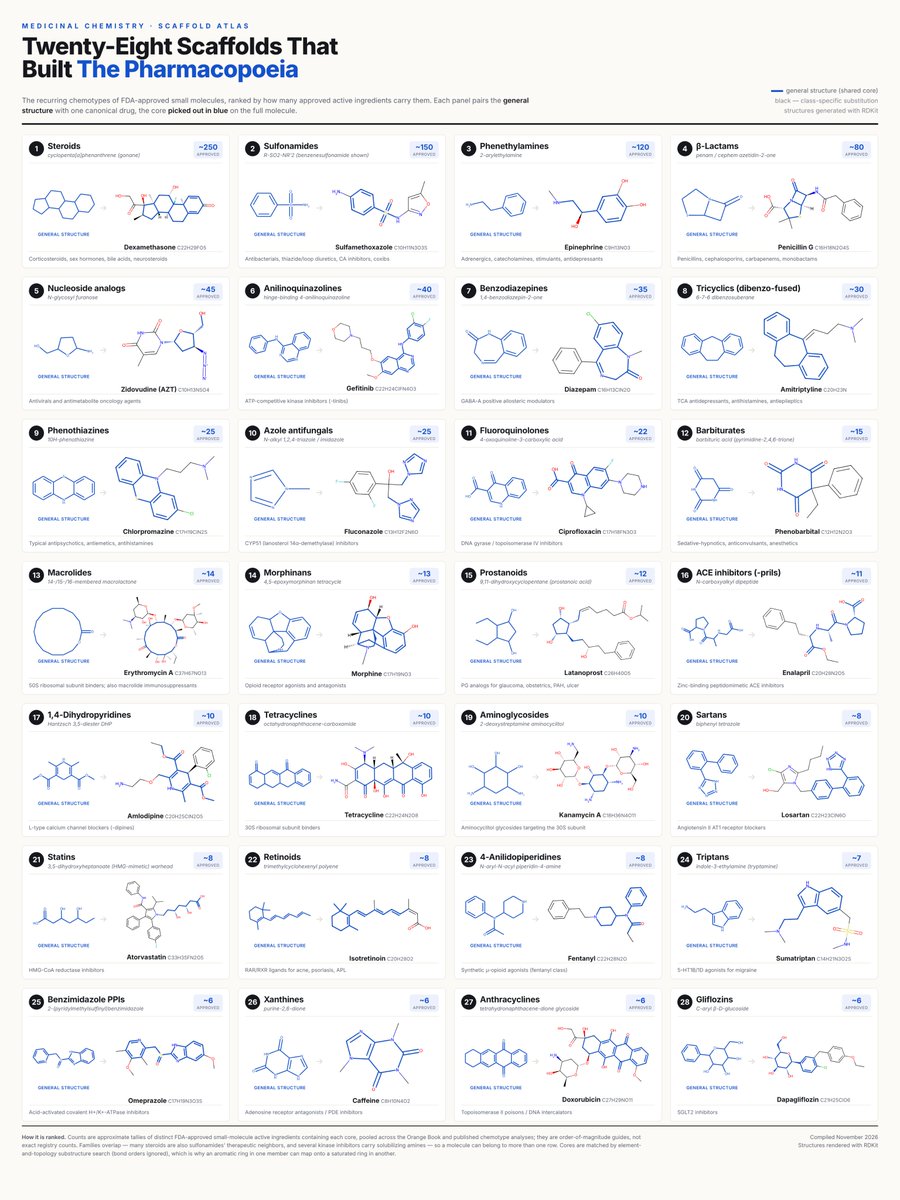
students should be able to recognize the most common drug structures and guess at least some of the relevant information like drug class, indication, or target class. this is just pattern recognition. here are the most common chemotypes.
Jethro Tull performing “Bourée” for French Television in 1969 “Bourée” is an instrumental and a flute-based adaptation of Johann Sebastian Bach’s “Bourrée”. The Bach version was written for lute, and is his fifth movement of the Suite in E minor for Lute. Also known as “Aufs Lautenwercke” (works for the Lute), Bach wrote the piece in the early 1700s. In an interview, Ian Anderson explained why he decided to adapt the Bach composition. He said: “I got to the point where I was playing the flute every night on stage in the early part of ‘68, and so by the end of the year, I was casting around for an instrumental piece as a successor to the Roland Kirk piece, ‘Serenade to a Cuckoo,’ which I’d been playing most of 1968. I wanted something that had a syncopated jazzy feel, but a melody that wasn’t associated with the jazz world or the blues world. And ‘Bourée’ was a little bit of music that came to me through the floorboards of my bedsitter in London, because there was a media student in the room below who kept playing over and over again this refrain of the Bach tune “Bourée.” He played it on classical guitar, but he only ever got the one bit, he never progressed beyond that basic thing. So I kept hearing that over and over and over and over again, and decided that I would try to use that little tune some way as a starting point for an instrumental piece. And Martin Barre, who literally at that point in January ‘69 was just kind of auditioning to join the band, said, ‘Oh, I know that. I think I’ve got the sheet music somewhere for Bach’s ‘Bourée.’’ So it was something we could fairly readily embark upon as a variation on a classical piece of music.”
El que no se vuelve loco con Santana en Woodstock no tiene sangre. 22 años, percusión real y fuego 🔥 Hoy te meten autotune para disimular que no afinan en vivo 🎸
¿Hay alguna banda actual con este nivel o el talento real murió? Los leo 👇
#Santana#Rock