When Papal infallibility was passed at Vatican 1 (1868) two-thirds of all Catholic historians teaching at German Universities severed their ties with the Church. And prominent theologian of the day like Dr. Johann Joseph Ignaz von Döllinger was excommunicated and died out of communion with the Latin Church, with Rome denying him the right to plead his case something they let Martin Luther do
“When infallibility was eventually passed by Vatican I, ignoring the standard of general consensus, the rebellious and sometimes retributive actions following the council were to be expected”
“Unable to reconcile Papal Infallibility with the historical record, two-thirds of all Catholic historians teaching at German Universities severed their ties with the Church. In other countries theologians and historians left the Church for the same reasons." (August Bernhard Hasler, "How the Pope became Infallible." Trans. Peter Heinegg, Doubleday and Co., Garden City, New York, 1981, p. 227, as referenced in Whelton p. 176.)
One of the prominent theologians of the day, his prominence being emphasized by how much pressure was placed upon him, was Dr. Johann Joseph Ignaz von Döllinger (1799-1890), Professor of Canon Law and Church History at Munich University, President of the Bavarian Royal Academy of Sciences. The professor rejected the threats of the Pope saying that to support papal infallibility would make everything he had ever taught or been taught to be heretical. "If I had obeyed the summons to affirm the new dogmas on oath, I should thereby have declared myself to have been a heretical teacher, and not only myself but also my deceased teachers." (Ibid, p. 174). Döllinger, the revered Roman Catholic
theologian and scholar, was summarily excommunicated on April 23, 1871 at 72 years of age. He died in 1890. The Church denied him the right to plead his cause, something it allowed Martin Luther to do”
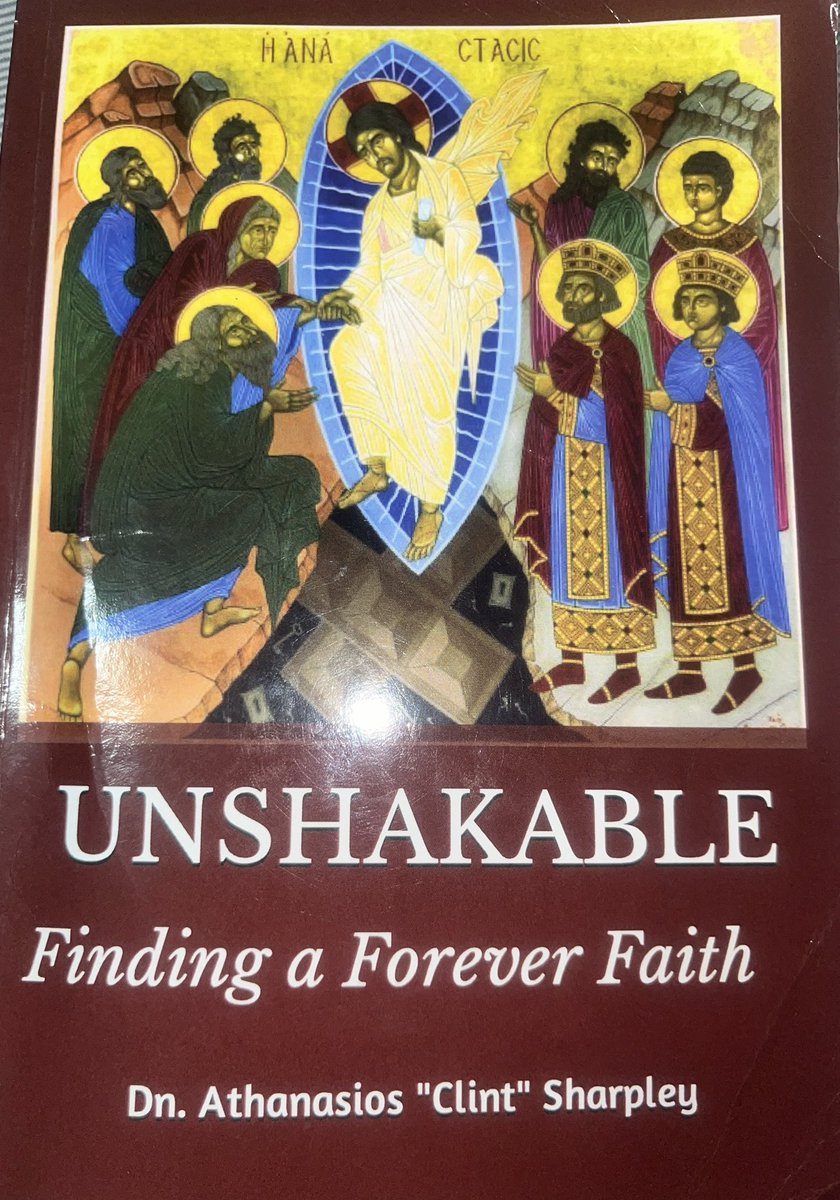
Johann Joseph Ignaz von Döllinger, quoted in Dn. Athanasios "Clint" Sharpley, Unshakable: Finding a Forever Faith, citing August Bernhard Hasler, How the Pope Became Infallible, p. 174.
@grok But having a twelve million disparity is pretty glaring and makes the voting critique of Vatican 1 pretty valid, even if in principle they follow a primordial pattern, they intensified it so much that the disparities can’t be ignored
@grok If it intensified an old structure that implies a departure from said structure, it no longer remains the same, hence why they have to opt for “it’s the same in principle” because it’s not actually
Right but these councils were passed by consensus of the Church and by the spirit speaking through the whole.
Twelve million German Roman Catholics were represented by nineteen bishops, while seven hundred thousand inhabitants of the Papal States were represented by sixty-two
That’s a massive departure from what we previously see, even if in principle they tried to follow the same structure.
Considering you guys let the heretic Martin Luther plead his case, but refused someone who was formerly of your own is a bit interesting.
He chose to die out of communion with Rome rather than to betray Church history and his Roman Catholic teachers and affirm a heretical doctrine.
Was the voting method for Vatican 1 heavily criticized? As the Church had abandoned the structure laid out in the Council of Jerusalem and instead opted for something new.
“Closer scrutiny reveals that twelve million German Roman Catholics were represented by nineteen bishops, while seven hundred thousand inhabitants of the Papal States were represented by sixty-two"
@ErickYbarra3@Ayiana__ Thankfully a canon was passed at Chalcedon giving the right of appeal with the same scope. St Gregory's theory of dual headship comes out on top, and now Constantinople has the primacy of appellate jurisdiction in the East
Thank you again! Legitimately means a lot to have you respond to these questions.
You accept Canons 4-6 as binding on paper however no matter how you read the Canons, there’s no Universal Power for the Pope stated or implied ANYWHERE in these canons. You have to read your Papal framework backwards and assume it for it to fit. Otherwise if we go by the text and canons by themselves there’s absolutely nothing for universal Roman Jurisdiction at all , it’s only assumed via argument from silence and assuming and applying a later papal framework to the Canons and to Church history. There is no Vatican 1-2 Papal power in Canons 4-6
Do we know how these canons were interpreted by the Fathers? Genuinely curious.
Thank you for the responses! Would love to see you and Erick live talk about the canons with some knowledgeable Orthodox people
Cheers
Thank you for your time and answer Dr Boyce! Respectfully and humbly however, I believe you’re reading your Roman Catholic position into the canons. 4-6 have every opportunity to mention universal papal authority when regarding church structure and it’s missing completely and only assumed.
For Canon 4
Bishops are chosen by the bishops of their own province, with the metropolitan confirming all of that. Ordination is governed by the people in their own jurisdiction, not the Pope in Rome. This a pattern in the Canons, no type of primacy is ever established, just assumed.
For Canon 5
Excommunications are handled and investigated within each province through its bishops and synods that meet twice yearly. Regional ecclesiastical authority for each Jurisdiction can be seen rather than universal Roman control over disciplinary matters. We’re told specifically the seasons of these synods and the people that shall attend, that being all the Bishops that govern the Province the synod is being held in. The Pope being head Bishop of the universal Church and it’s structure is absent when talking about something as controversial as excommunicating someone from the Body of Christ. Universal papal power is absent when talking about WHO handles excommunications and HOW they’re handled.
For Canon 6
Alexandria, Rome, and Antioch are recognized as having ancient regional jurisdictions by the time of the canons. Rome is mentioned in authority alongside the other patriarchal sees rather than being declared the universal authority over all Churches.
You said “Recognizing regional jurisdiction is not the same thing as denying universal primacy”
The problem is you assume the thing in question, it’s essentially an argument from silence, you assume universal primacy but nowhere in the actual Canons do you find any of the wording for something like Vatican 1-2. Instead you see how Bishops come together in unison to handle excoms rather than appealing to one Bishop(Pope) and you see the ancient authority and jurisdiction for the patriarchal sees rather than universal authority for Rome. The Canons have 3 separate occasions regarding jurisdictions and excommunications to mention Papal power and authority and its silent every single time, once again these ideas are read backward into the council, they’re only assumed, never stated.
Cheers and once again thank you for the reply! Would love to see you talk about this with an Orthodox guest.
Thanks for the question. Canons 4–6 regulate metropolitan jurisdiction, something Catholics don’t deny. Canon 6 actually appeals to Rome’s ancient custom as a precedent for Alexandria’s jurisdiction. Where does the canon restrict Rome’s authority exclusively to its own territory? Recognizing regional jurisdiction is not the same thing as denying universal primacy. Even Vatican I preserves the ordinary and immediate jurisdiction of individual bishops.
This is not a Yahweh passage @MikeWingerii; this is a Davidic King passage where the King is called “God” by metonymy not by ontology. This passage actually proves Jesus is not God but a human anointed by God - since David was a human anointed by God. Of this is a Yahweh passage then David himself is God ontologically. @OneGodPodcast