The Ghana Armed Forces impressively cleared 170km of the Accra-Kumasi corridor quickly. Because of that, some people now want the military to be given the contract to build the road itself. I know that sounds great. But it raises more questions than it answers.
There’s the question of capacity. Right of way clearing is very different from the work involved in building the road itself. The expressway is expected to have eight interchanges and major bridges over the Birim and the Pra.
What comparable highway work has the military done in Ghana? What paving and bridge equipment does it have? Is Ghana’s military the most qualified in the country relative to local contractors? And if the military would in turn subcontract the actual construction, then we have added a layer, not capacity.
Then there’s the issue of cost. If the military gets the job, there is no bid, so there is no price benchmark. The Finance Minister has said the project will cost about $4 billion. Is the military route the most cost effective and best value for money? We would not know, because nothing would be tested against a competing price.
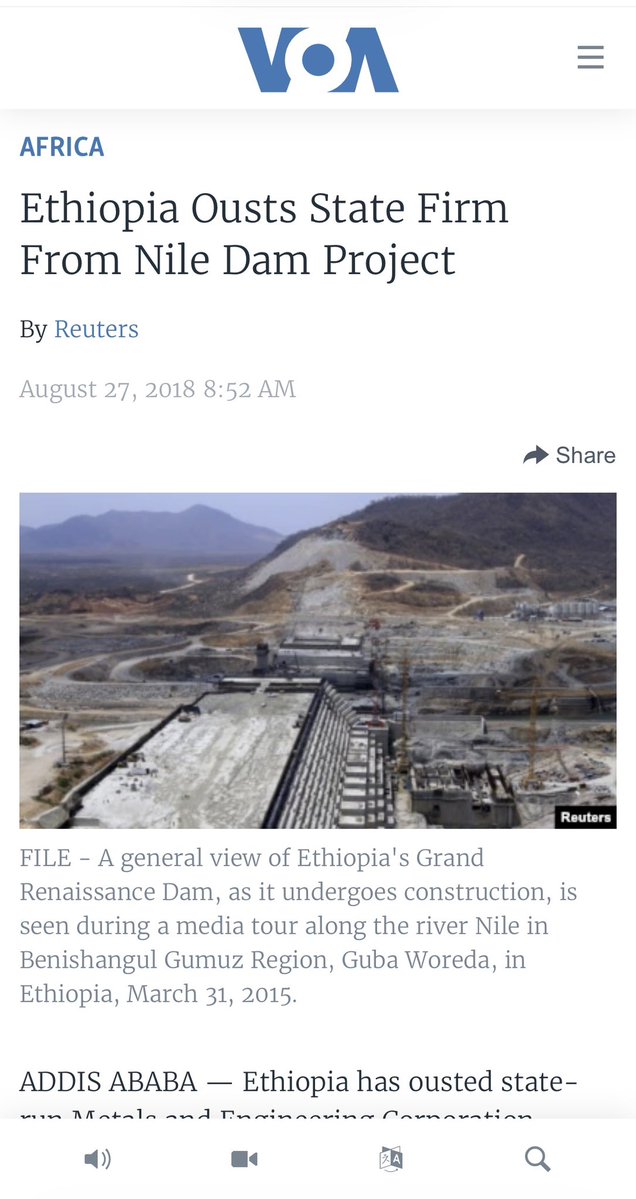
Then there’s the issue of governance. Military spending is one area the Auditor General hardly audits, in the name of national security. How would a $4 billion investment fare in all that? Ethiopia gave its military run company, METEC, work on the Grand Renaissance Dam. It was thrown off the project in 2018 over delays, the chief executive was arrested, and investigators found suspicious procurement worth more than $2 billion.
Is there a happy medium? I think so, but it runs the other way from what is being proposed. The military does the enabling works. Design, construction and supervision are competitively sourced and done by qualified civilian road contractors, with the Ghana Highway Authority and the SPV managing the contracts, which is their job anyway.
There have been proposals to assign the project to local contractors capped at 10km each. Does the military get one of those lots instead of the whole project?
Fund availability is one of the root causes of project delays in Ghana. Finance minister says the full funding would be available by the end of the year. So what prevents competent local contractors from effectively executing this project?
We need more discussion on this, and we need it before selection starts, not after.
A meeting is set for 9am. People start arriving at 10:30 and laugh “Ghana time.”
You enter a government office and the person being paid to serve you behaves like you interrupted their wedding.
A trotro driver stops in the middle of the road to pick passengers and everybody behind him must understand.
Someone throws pure water rubber into the gutter, then complains when Accra floods.
A politician promises ten things, delivers two, and supporters say “But the previous government delivered one.”
We have created excuses for almost everything. Then we travel somewhere else, see people respecting time, rules and basic standards and say “Ei, these people are serious.” Smh
*Policy Bites from the News Reel*
Analyst Caleb Ziblim at Ghanaian media giant, Multimedia, says Ghanaian Members of Parliament (MPs) have been given a 100% pay hike.
Their base salary has thus jumped from GHS 30,000 to GHS 60,000.
When millennial Shatta Wale heard that Ghanaian MPs earn $2650 (GHS 30,000) a month. He expressed total shock.
First, he says it is ridiculously small. Second, he doesn't think if that were true MPs would be able to afford the cars and houses he sees them in.
Shatta clearly wouldn't see anything off about MPs earning $5300 a month. It might make their cars and houses less incongruous.
In fact, some millennials point to MPs of the United Kingdom earning $11,000 base pay a month.
Gen Zee commentators (analyst Caleb Ziblim's kind and kin) are like: "wait a frigging minute!" Look, we have Internet, okay?
First, there is something called Purchasing Power Parity. A dollar in UK buys less than it does in Ghana and a bit more in the US, home of the dollar.
So, the $11k the UK MP earns is actually like $12,240. And the $5300 the Ghanaian MP earns feels more like $12,220. Almost equal!
Then there is cost of living. UK MPs must work in London and keep a flat there. Ghanaian MPs work in Accra. Accra rent (crazy as it is) is still ~60% lower than in Greater London.
So, what's with the pre-internet arithmetic, Gen Zees dare Millennials.
Well, for us policy analysts the real issue is how to set the socioeconomic distance between politicians and the average citizen by fiat of public pay policy.
The average band 5 NHS nurse (entry-level degree nurse) with 4 years experience hits ~$4400 a month. That is 40% of the salary of a UK MP.
A GHS nurse of equivalent standing (using Single Spine 18L rank in 2024 with ~19% cumulative adjustment since then) earns about $425 a month, base. That is 8% of the Ghanaian MP's base.
A whopping 12.5x socioeconomic distance imposed by public pay policy. Even at the old pay scale, it would still be more than 600% higher than a degree nurse.
Methinks this time, Gen Zees are sounding more serious than Millennials.
Howzat?
Dear Hon Kofi Adams.
Ghana DOES not need 10 new stadiums. We are not there yet. Even Morocco with all their grand ambitions does not have a stadium in all their 12 regions.
It is your duty as a Minister to offer Professional advice to advise the President.
Already, there are number of Multipurpose sports complexes constructed by the previous administration that remain in the bush either due to poor siting or non-completion.
Advise that the funds for these 10 new proposed stadiums be used reasonably.
Ghana needs one world-class Olympic stadium of not less than 80,000 capacity, along with the ultramodern facilities in Accra region.
Preferably on Dodowa stretch, Saglemi area or Tema Akosombo stretch with future plans of rail connections.
This stadium only for FIFA CAF category A international matches and Olympic events.
Revamp Accra, Kumasi, Takoradi and Tamale stadiums.
Construct roof canopy over Accra and Kumasi stadium. Importantly, remove the aponkye grass over there and lay quality pitches.
Complete Kaneshie and other major complexes.
Strengthen NSA in terms of personnel to ensure proper maintenance.
Not every region needs an airport and same for stadiums.
Don’t go and throw money away. We never learn.
If you or I say the Israeli prime minister ‘influences’ American politicians to get them to think his way and fight his wars, it’s antisemitic. But if the Israeli prime minister says it…
1. Emmanuel Quaye shot to fame playing "Strika," a child soldier character besides Idris Elba's "Commandant" in the Hollywood flick, "Beasts of No Nation".
2. Unlike his co-star, Abraham Attah, another child actor from Ghana, global stardom didn't extract Strika from poverty and into bigger roles in Hollywood, such as an appearance in a Marvel blockbuster.
3. I don't have much insight into why. But Strika was in the news for theft this week, and what he is accused of stealing puts the spotlight on the subject of industrial minerals I was on about in Kigali this week. Though I doubt the connection is clear to most readers.
4. Strika was accosted by area boys for stripping off pedestrian bridge metal railings for sale as scrap.
5. There is a literal crisis of people dismantling and ripping out metal infrastructure to sell off as scrap across Africa. Traffic lights. Rail lines. Drainage coverings. Anything with enough metal.
6. The bizarre trend is often reduced to poverty and left at that. But a deeper problem exists: a fast growing continent that is not producing enough metals to sustain even the low level of current industrial output.
7. That is why in recent talks and interviews I have strongly pushed for an emphasis on industrial minerals, a category of natural resource where Africa is seriously deficient.
8. Were Africa to merely increase its consumption to the global average, it would need 14 times more steel than is currently being produced.
9. The craze over scrap is a mere signal of this serious deficiency. But should industrialisation seriously take off, the pressure would become even more intense.
10. Unlike South Korea, Taiwan, and Japan, most African countries have yet to develop mineral supply security arrangements.
11. Very likely because of the myth that Africa is awash in minerals (e.g. the "30% of world minerals" trope) and the strategic complacency it has created.
12. Hopefully, the continent starts to take industrial mineral exploration seriously by incentivising data collection by companies that have neither the intention nor massive capital it takes to actually mine.
13. Doing so requires a data rights & monetisation scheme.
14. We are pushing just such a protocol in the name of Royale. See the first comment for a link to the recent talk and the technical whitepaper.