This week marks one year since the launch of Foundry Private Wealth.
Foundry began with a clear purpose: to take exceptional care of the clients who placed their trust in us, continually raise our standard of service, and build deeper relationships with the individuals and families we serve.
The branding took longer than expected, but I am very proud of what we are presenting today. The practice is also stronger with Maya joining the team and Stephanie continuing to provide rock-solid service and support.
Our work centers on two closely connected areas: guiding individuals and families approaching or living in retirement, and continuing to deepen our expertise in serving business owners before, during, and after an exit. Many of the families we serve are current or former business owners, making this a natural extension of the work we already do.
Our mission is to help individuals, families, and business owners navigate important financial transitions with clarity and confidence. Through thoughtful planning, disciplined investment guidance, and coordination with the appropriate professionals, we help clients protect their wealth, make informed decisions, and use their resources to support the lives, families, and futures that matter most to them.
One year in, I am proud of our progress, grateful to our clients and professional partners, and excited about what comes next.
https://t.co/fZklFq6rUo
#FoundryPrivateWealth #PrivateWealth #BusinessOwners #RetirementPlanning
September's relatively flat S&P 500 performance masked a growing dispersion beneath the surface. Meanwhile, the bond market took center stage. Get the details in the latest market recap: https://t.co/u1XW0EhT2x
What’s cheap right now?
Not what’s popular. Not what’s performing best. Not what’s making headlines. What is actually inexpensive relative to the value it provides?
One area that stands out to me today is safety.
For much of the last decade, investors were not paid very much to own the safest parts of their portfolios. Cash yielded next to nothing, and high-quality bonds offered little income. Taking more risk often felt like the only way to earn a meaningful return.
Today, that has changed.
Treasury yields have moved higher, pushed by inflation concerns, fiscal concerns, and uncertainty about interest rates. Whatever the combination of causes, investors are now being paid more to own an asset widely considered among the safest in the world.
Meanwhile, the VIX, commonly called the stock market’s “fear gauge,” remains relatively low. Despite geopolitical uncertainty, market gyrations, and a steady stream of concerning headlines, the market is not currently placing an especially high price on protection from volatility.
In other words, safety is paying more while fear remains relatively inexpensive.
One reason I appreciate high-quality bonds is that they offer definition. With an individual bond, you know its coupon rate and maturity date. Assuming the issuer meets its obligations and you hold the bond to maturity, you know when the principal is scheduled to be returned and the income you are expected to receive.
That does not mean bonds are without risk or that investors should abandon stocks. It simply means that, compared with much of the last decade, investors are once again being compensated for prudence.
The things people most want often become expensive. The things they overlook can quietly become attractive.
Sometimes boring gets undervalued. Sometimes that is exactly where opportunity lives.
This week I had lunch with my friend Dylan. Years ago, we were teammates on the Ride 430, an annual charity cycling event supporting military charities and the families they serve.
For ten years, I participated in the event annually. Each year, we rode roughly 430 miles from Scottsdale to San Diego over four days, crossing the Arizona and California deserts and climbing through the mountains on our way to the coast.
Dylan and I spent plenty of time remembering just how brutal those rides could be. There were early mornings, relentless heat, long stretches of desert, mountain climbs, headwinds, and moments when we felt completely spent with miles still ahead of us.
Yet we loved it. The difficulty was part of the appeal. It strengthened the camaraderie, intensified our shared sense of purpose, and made the experience that much more rewarding. We found energy in our teammates, in the cause we were supporting, and sometimes simply by deciding to keep moving forward when stopping would have been easier.
Most importantly, our fundraising provided incredible support to military families. Seeing the personal impact, hearing the stories that resulted from that support, and forming relationships with some of the families made the purpose behind every difficult mile very real. Those personal connections were life-changing and remain the most meaningful part of the experience.
The mental reset was a beautiful additional side effect. For four days, life became remarkably simple. The emails, deadlines, business concerns, and daily distractions faded into the background because the challenge demanded our complete attention. We focused on the next climb, the next mile, supporting our teammates, remembering why we were there, and finding a way to keep going.
The ride also taught me that there was usually more left in the tank than I thought. Encouragement from a teammate, a reminder of the families we were supporting, or simply the decision to continue could help me find another gear.
As we approach the end of another fiscal year, I have been reviewing the year behind me and thinking about the goals and opportunities ahead. My lunch with Dylan reminded me that a mental reset does not always have to be comfortable or restful. Sometimes doing something difficult and meaningful is exactly what we need to clear the noise, restore our focus, and remind ourselves that we are capable of more than we think.
What’s your Ride 430? And when did you last go looking for it?
#FoundryFriday #Purpose #Perspective #Resilience #MentalReset
I was 25 years old on September 11, 2001, and twenty-five years later, I can still remember that morning very clearly.
For whatever reason that day started a little earlier than normal. I was driving to our Merrill Lynch office, which was only about 10 minutes from home, listening to Howard Stern on the radio. The conversation was focused on reports that a plane had struck one of the World Trade Center towers. At that point, nobody really knew what had happened. There was confusion, concern, and growing anxiety as details slowly emerged. I remember the anxiety in their voices.
When I arrived at the office, I sat down with my senior partner, Chris, in his office. We watched the news on a small television, probably only 10 or 12 inches across. Flat screens were still a thing of the future. As we sat there trying to make sense of what we were seeing, the second plane struck the other tower.
In that instant, both of us knew this was not an accident.
America was under attack.
I still remember the feeling in the office as everyone tried to process what was happening. Shortly afterward, we were instructed to shut things down and go home. Nobody knew what might happen next. There was uncertainty, fear, and a sense that the world had suddenly become a much different place.
Instead of heading straight home, I met up with another Chris, a friend and coworker who had started in the business around the same time I had. We found ourselves sitting in a local Mexican restaurant watching the news for hours. Like everyone else, we were trying to make sense of it all. We talked about the shock, the devastation, and the confusion unfolding right before our eyes. Every few minutes there seemed to be another update, another question, another piece of news that was difficult to comprehend.
A few months earlier, senior partner Chris and I had been talking about how my generation had never really experienced a national tragedy or challenge. Difficult things happened in the world, but they often felt distant. They happened somewhere else, to someone else. They rarely felt close enough to truly affect our daily lives. It would have been a conversation I never would have remembered.
September 11 changed that.
In a matter of hours, the world felt different. What had previously seemed distant was now on American soil. The sense of security many of us took for granted was suddenly gone.
Like many advisors, I spent the following days speaking with clients, friends, and family members. Some had connections to New York. Some were in New York. Some who worked in the area. Some simply needed someone to talk to as they processed what had happened.
The conversations changed almost immediately. Nobody was talking much about business, markets, or portfolios. The focus shifted to family, friends, relationships, and gratitude.
As devastating as that day was, I also remember the weeks and months that followed.
I remember people checking on one another. I remember conversations that had nothing to do with work, politics, or markets. Friends called friends. Families gathered. Neighbors looked out for one another. People seemed a little more patient, a little more grateful, and a little more aware of what truly mattered.
Twenty-five years later, that is what I find myself reflecting on most.
The attacks changed the world, but they also reminded us how important our relationships are. How quickly life can change and how valuable family, friendships, and community can be during difficult times.
Today, I find myself grateful for the people in my life and for the opportunity to spend time with them. And while I wish the circumstances had been different, I also remember how powerful it was to see a country come together and support one another in a moment of tremendous adversity.
That may be the lesson from 9/11 that I carry with me the most.
I have always thought of Labor Day as a three-day weekend and the unofficial end of summer. I generally knew how the holiday began, but I was curious about the actual details. So, I did a little research, and now you can impress your friends and family with the history too!
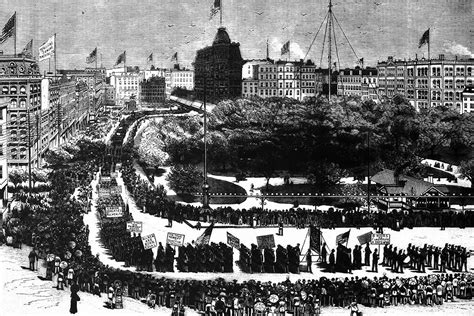
The first Labor Day celebration took place in New York City on September 5, 1882. Oregon became the first state to officially recognize the holiday in 1887, and in 1894, President Grover Cleveland signed legislation making the first Monday in September a national holiday.
Labor Day was created to recognize American workers and their contributions. Today, it has also become a familiar mile marker, signaling the unofficial end of summer and the transition into the final third of the year.
Whatever the weekend entails for you, I hope it is enjoyable and safe. Happy Labor Day!
August brought renewed volatility, shifting market trends and uncertainty in the bond market. Despite these pressures, the underlying backdrop reinforced that the US economy continues to expand. Get the details in the August market recap: https://t.co/rSu7Q8SbmA
Why do you own what you own?
Over time, portfolios can become like a garage that hasn't been cleaned out in years. A stock was purchased because a friend recommended it. A theme was added after a market event. A position grew larger simply because it performed well.
Before long, what was once intentional can start to resemble overflow storage, filled with things that made sense at one point but haven't been revisited in years.
Two aphorisms I come back to often:
We can't control the market, but we can control what we own.
Rebalance, or the market will do it for you.
The market will do what it does. What we can control is the quality of what we own, how much risk we take, how diversified we are, what we pay in fees and taxes, and whether the portfolio still fits the plan.
The harder part today is the noise. Every day there's a new prediction, a new hot stock, a new crisis, or a new expert with absolute certainty about what happens next.
One principle that extends well beyond investing: don't listen to the loudest voices in the room. Listen for the quietest.
The loudest are usually selling certainty. The quietest ones are asking better questions.
Sometimes the most valuable exercise isn't finding the next great investment. It's revisiting the reasoning behind what you already own and confirming it still fits the plan.
When was the last time you had that conversation?
As summer winds down, I thought I would share a few books I have read over the past year or am currently working through.
Much of my daily reading is tied to markets, investments, economic news, financial planning, and analysis. These are the books I picked up outside of that simply because the subjects interested me:
Breath by James Nestor
The Creative Act: A Way of Being by Rick Rubin
The Man Who Solved the Market by Gregory Zuckerman
The Next Conversation by Jefferson Fisher
Thinking, Fast and Slow by Daniel Kahneman
Who Not How by Dan Sullivan and Benjamin Hardy
The Outsiders by William N. Thorndike
It is a varied mix of health, creativity, investing, communication, psychology, leadership, and business. Despite the range, many of the same themes kept showing up: thinking independently, making better decisions, communicating clearly, and continuing to learn.
What is the best book you have read recently?
Nothing on the calendar Sunday, so we just drove. Payson, Pine, Strawberry, Camp Verde. Lunch at Sip at 5600, honey stand, lavender farm cookies (worth the trip alone).
Coolest spot we found: still 93 degrees. AZ in August, undefeated.
Best part of a good plan? Room for days like this.
I've been asked the same question several times recently:
"When are you going to retire?"
It's a fair question. After all, when someone trusts you with their financial plan and life savings, they want to know you'll be around to help guide them through the years ahead.
The funny thing is that in my 20s, I probably thought I'd be retired by now.
Today? Not even close.
I'm having more fun than ever.
One thing I've learned is that experience compounds. Just like investing, knowledge, perspective, and judgment build over time. Every client conversation, market cycle, business transition, and life event adds another layer to the advice we provide.
I believe I'm a better advisor today than I've ever been.
So if you're wondering, the answer is simple:
I'm not retiring anytime soon.
I'm grateful for the relationships, the conversations, and the opportunity to help clients navigate some of life's biggest decisions. Looking forward to many more years of doing work I truly enjoy.
#FinancialPlanning #WealthManagement #RetirementPlanning #FoundryFriday