There is always that person that will come under this kind of tweets and say “it cannot happen again now”.
Hopefully when Jarus Homes and my other businesses become multi dollar businesses, same will be said: “that was then”. And that then, in future, will be the same period you are saying it cannot happen.
@SirJarus The type of friendships/partnerships this current generation may not get to experience because the Nigeria of today doesn’t provide the environment for this type of growth opportunity anymore 💔
GTB
- Fola Adeola
- Tayo Aderinokun
friends, colleagues from CMB, first business they did together was to open a barbers shop in Ikoyi, before later co-founding GTB. They also attempted jointly owning a gym in Kano as staff of CMB.
Access
- Aig-Imoukhuede
- Herbert Wigwe
colleagues from GTB
Oando
- Wale Tinubu
- Mofe Boyo
- Osaze Osifo
- Jite Okoloko
friends, Mofe & Wale lawyers
Sahara Group
- Tonye Cole
- Tope Shonubi
- Ade Odunsi
friends, school mates.
Notable business partnerships that endured.
"The world is falling backwards!" writes @mattbish about the results of the new 2024 Social Progress Index, delivering a stark reality check on global wellbeing. How is this going to affect us and our democracy in 2024? 👇
https://t.co/AGEcv8ak1u
🗓️ Save the date! The 2024 Social Progress Index launch is just around the corner. Join us on January 11th to uncover fresh insights into social progress across the globe. https://t.co/1Iqq82KfVP
The Central Bank of Nigeria is set to launch its Price Verification Portal on August 31 2023.
Please read this explainer written in 2021, some elements may have been changed or updated, but the broad idea remains.
Understanding CBN’s new guidelines on import and export financing
The Central Bank of Nigeria's (CBN) new import and export financing guidelines via an eValuator system are set to effect on February 1, 2022. So, let's talk about it.
Introduction of the Policy
The Central Bank of Nigeria's new guideline on imports is based on the electronic submission of invoices called e-vouchers. This new guideline is mandatory for all imports above $10,000. These new e-Vouchers will be issued and authenticated by Authorized Dealer Banks (ADBs).
Importers of any good or service into Nigeria must register that good or service supplier into an electronic database. This database is updated annually. The importer of any good or service will then submit import papers to complete a Form M. Still electronically, the price the importer will quote will be based on a "Global Price Verification Mechanism (GPM) guided by a benchmark price. The GPM will advise a benchmark price for all goods and services, which is the actual spot price advised to the importer by the supplier.
The Benchmark Price
The new guideline revolves around this benchmark price. If the supplier wishes to import, his quoted price on the invoice presented to his bank (ADB) should be at most 2.5% of the verified global benchmark price. If the quoted price exceeds 2.5%, Form M will be queried and not processed in Form M or NXP. It is the responsibility of the importer to ensure that their supplier complies.
Let me summarize this way. If you intend to import a BMW 5 Series car from BMW of Atlanta, these are the steps under the guideline.
1. Go to BMW of Atlanta, and obtain an Invoice.
2. BMW of Atlanta will register on a dedicated electronic portal provided by CBN but operated by the CBN agent service provider. This registration will cost $350 and be valid for 12 months.
3. The CBN's service provider will issue BMW of Atlanta a digital certificate. BMW of Atlanta will sign your eInvoice with this digital certificate.
4. BMW of Atlanta will provide the authenticated eInvoice to you
5. The CBN's service provider will transmit the BMW eInvoice to CBN, specifically the Nigeria Single Window Portal Trade Monitoring System (TRMS)
If the BMW of Atlanta quoted price for your BMW 5 series is more than 2.5% of the benchmark price, then your Form M will not be processed.
This guideline also applies to exports; the critical difference for exporters is that the exporters from Nigeria are quoting a price as the supplier. They must quote within a 2.5% band as well.
Thus, if I am a Cassava chip exporter and get an order from China, I cannot quote a selling price below 2.5% of the benchmark cassava chip price as CBN advised. This is an important distinction. Now, let us talk about the exchange rate mechanism in Nigeria.
Why is Exchange Rate Important?
When you import, you are buying Forex; in effect, you are taking Forex away from Nigeria; you "weaken" the Naira. When you export, you bring Forex into Nigeria and "strengthen" the Naira.
The CBN and all Central banks always promote exports; however, not all Central Banks want a strong currency. Strong export economies such as China, Germany, Switzerland, and Japan prefer a weaker currency to ensure their exports are competitive. The CBN's goal is to have a "strong" Naira to the US Dollar by words and deeds. The CBN has defended the Naira exchange value in relation to the US Dollar to ensure it does not weaken further. The CBN is rightly wary of imported inflation.
Nigeria, however, is also an exporting nation, she exports Crude oil, Cocoa, Cashews, and many other commodities, but Nigeria's CBN also has a Capital Control policy. This means the inflow and outflow of foreign capital in and out of Nigeria is controlled and regulated. The CBN sets the Exchange rate of the Naira to the dollar, not the interplay of Demand and Supply. Thus, Nigeria has two rates, the official NAFEX rate, which exchanges $1 to about N414 and the unofficial rate at about $1/550.
The Export v Import Gambit
Many exporters from Nigeria are willing to sell their local commodities at a discount to the international commodities market because this attracts international buyers. They, however, do not remit their Forex to the official channels but rather to the unofficial market to take advantage of the higher exchange rate. So, exporters can earn more from the arbitrage in selling USD to the unofficial market.
The CBN has a standing policy that exporters must repatriate all exports within 90 days for oil and gas transactions and 180 days for non-oil exports. The CBN had in January 2021 instructed banks to prohibit Nigerian exporters that fail to repatriate Forex earnings from banking services with effect from January 31, 2021.
CBN has tried sticks of sanctions and carrots of paying N5 per deposit to encourage the repatriation of proceeds back to Nigeria, but this has not succeeded. This policy is an export-import gambit. The exporter will have to invoice at the benchmark prices, enabling them to earn more from the export side by selling at higher prices. Still, they will then remit Forex at the lower exchange rate.
The CBN objective of a "strong" Naira is thus affected by the low foreign reserves it must defend the Naira. The low reserves are a function of the non-remittance of export proceeds promptly as well as a fall in remittances generally.
Exports win, Imports lose?
This new e-Voucher guideline raises commodity prices in Nigeria. It removes the advantage of lower prices from Nigerian exports, but more remittances should flow to the CBN. Importers have a more challenging time.
However, is the 2.5% not too narrow a band? When you buy a BMW in Atlanta, three main factors drive your selling price.
1, Cost price, how much is the car worth?
2. Your profit margin, how much do you want to make?
3. Inflation expectation, what will it cost you to replace your stock?
The BMW from Atlanta is sold in United States Dollars; however, you are importing to sell in Nigeria for Naira. According to the CBN, the OTC FX Future dollar rates to Naira for delivery in May 2022 show a further weakening of the Naira to N432.32. The futures price is thus my replacement cost in 5 months. Therefore, all traders add a margin that captures this inflation expectation. The language in the CBN circular explicitly suggests that the margin is a firm 2.5%; it implies ignoring the inflation reality. Many importers will no longer open Form M, finance their imports, or change destination ports.
However, this policy has some good points; it allows the CBN to have a database of importers and import requests. Every time a new supplier registers, it's a trade forecast for the CBN. It is an early notice to the Central Bank of Nigeria that it must have forex reserves to meet that Forex demand. This will allow more long-term planning and management of the reserve position. It will also remove the fraudulent request for FOREX on non-existent trades and overall reduce slippage.
We shall revisit this policy.
“You pray to catch the bus & then run as fast as you can, cos then if you miss the bus, then it’s not your bus.
But if you don’t run, that could have been your bus, & if you don’t pray, that could have been your bus. You can’t pray to catch the bus and stroll down the streets.”
Exciting to see @jaimegarciag speaking at the @DINADECO and @ifamcr forum on innovative entrepreneurship and reactivating the local economy, where he presented the Social Progress Index. We are proud to be making an impact in Costa Rica!
Let's use World Creative and Innovation Day as a reminder to embrace new ideas and find solutions to the world's most pressing problems. Who is your inspiration that drives positive change in the world?
@sophsutherland, our Global Communications and Marketing Director, breaks down some eye-opening results of the Social Progress Index for the United States 🇺🇸 in her latest interview with @FrontierCorp.
I co-assessed the factors limiting the interest and willingness of potential professionals to pursue forestry education and career, taking a case study in Nigeria. The work got featured on the CSA news and could be read here.
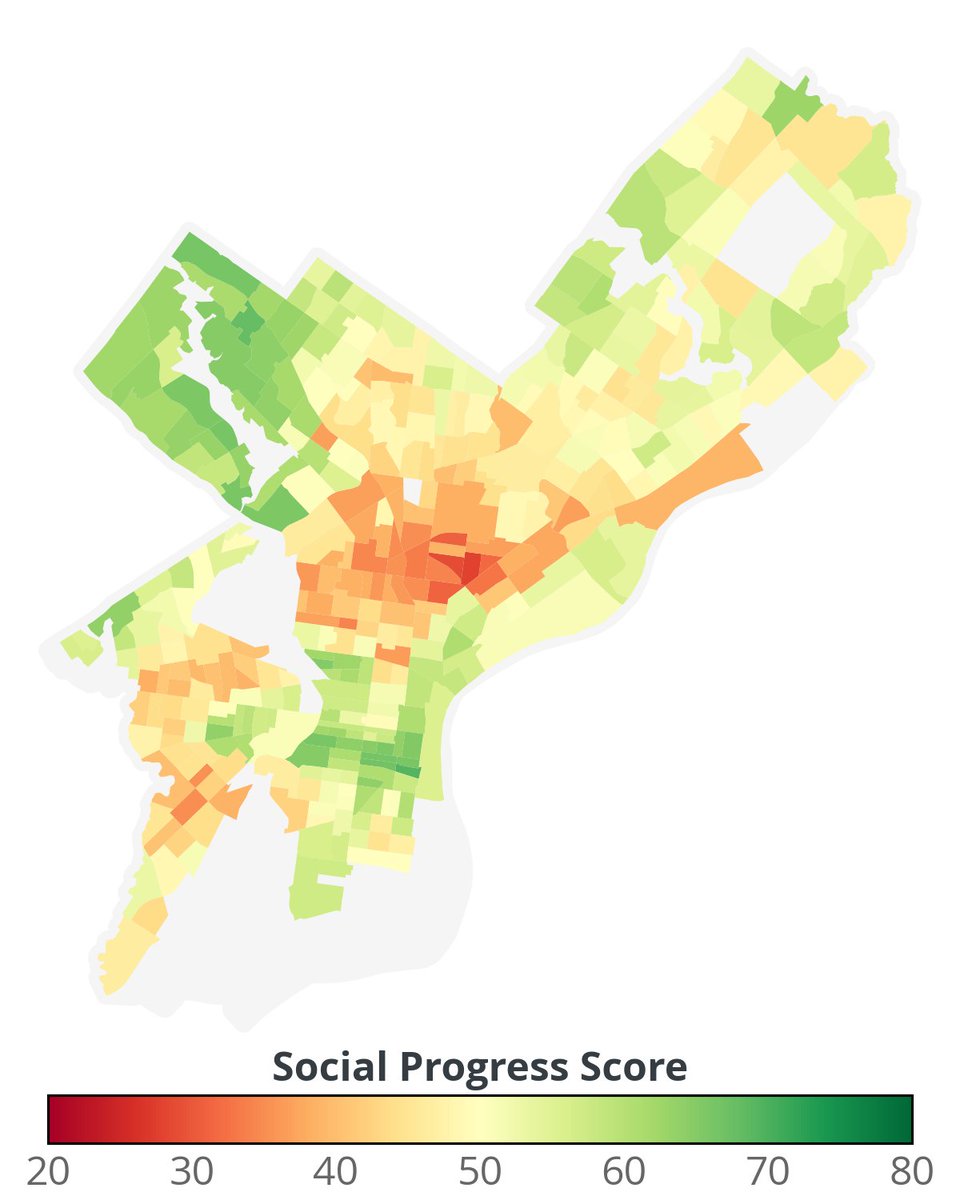
Yesterday our office launched ProgressPHL, an interactive dashboard tracking key indicators that provide detailed information about what is going on in each of Philadelphia’s neighborhoods. https://t.co/aN35oRrTUf
The Progress PHL is a data tool created with the Social Progress Index framework. It helps Philadelphians and decision-makers better understand their needs and build sustainable communities. @PhilaController
https://t.co/hrg9iUNUgZ
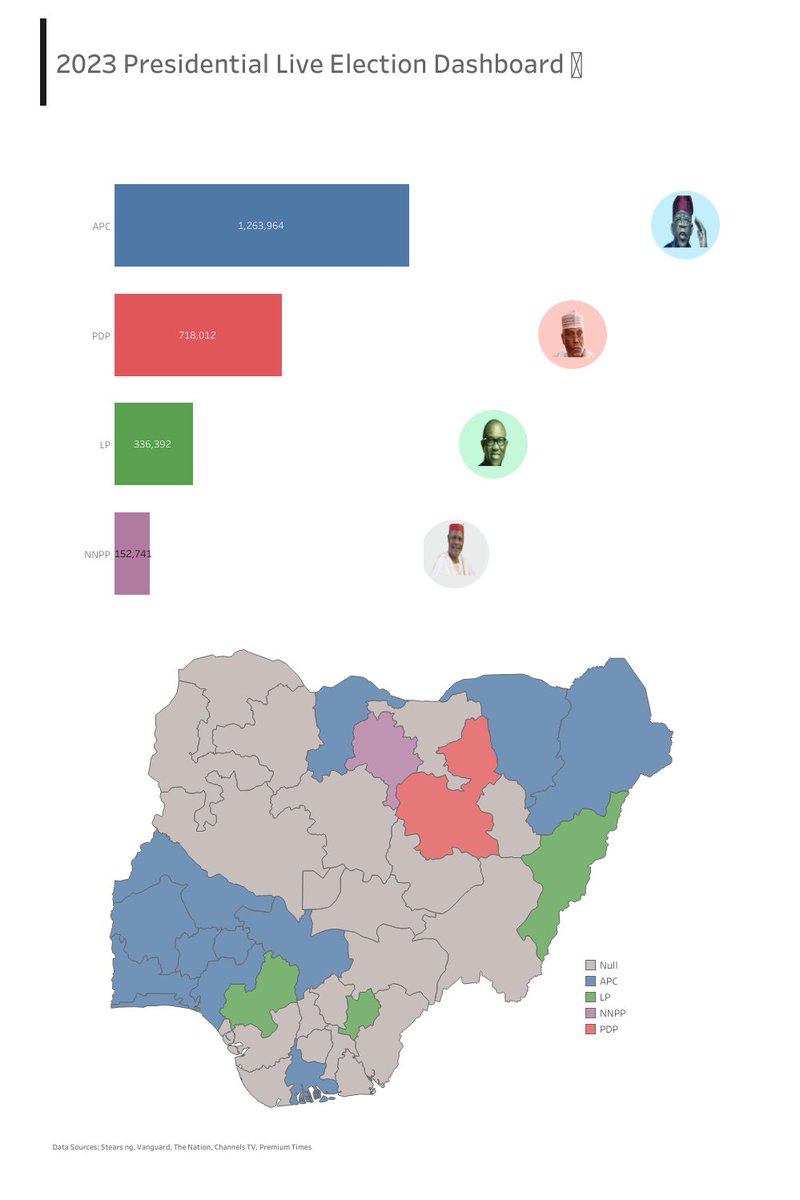
We spun up a "near" real-time dashboard of the election result and you can access it below...
We're updating the backend as soon we get verifiable data from reputable sources
#NigerianElections2023
https://t.co/i1MWQWWhc3
"The last farming season was really discouraging as we were dealt twins blow of drought & flood among other issues.." - account of one of our farmers during our offline survey. We will appreciate if you can share your experience with us in this survey - https://t.co/RdhTQ0tWem
Is it legal for the National Assembly to approve the request of the Federal Government to securitise the Ways and Means, which is in clear breach of the CBN Act? More importantly, what were the borrowings used for? #AskQuestion#GetInvolved
In 2021, FG used 91% of its N4.64tn revenue to service public debt. Unless something drastic happens with revenue growth, the FG will spend more on servicing debt. This has implications for inflation, economic confidence, higher interest rates & weakened exchange rates.
According to a recent MTF, Nigeria's debt servicing cost is projected to reach N10tn in 2025. If National Assembly approves this action, FG's public debt will rise from its current state by 59% - from $89.5b to $142b.