Atiku Abubakar's plan to bring back fuel subsidy would cost about N20 trillion a year, close to two-thirds of Nigeria's N32.2 trillion capital budget for 2026.
States would go back to owing salaries. Reserves would drain, FX would slip out of businesses' reach, and Nigeria would return to a hand-to-mouth economy. We cannot afford that.
The 2027 election is a contest of ideas. Tinubu's market-driven approach is Nigeria's best chance at prosperity. Atiku's subsidy pledge is a bid for votes, the same populism that kept our leaders doing the wrong thing for decades.
Peter Obi says whatever wins him attention. Nigeria is too serious for panderers.
For years, Nigerians begged for a leader who would take the hard decisions. Those who came to power with extraordinary goodwill avoided them. Tinubu knew the cost and took them anyway.
Love him or hate him, Bola Tinubu is Nigeria's best bet in 2027.
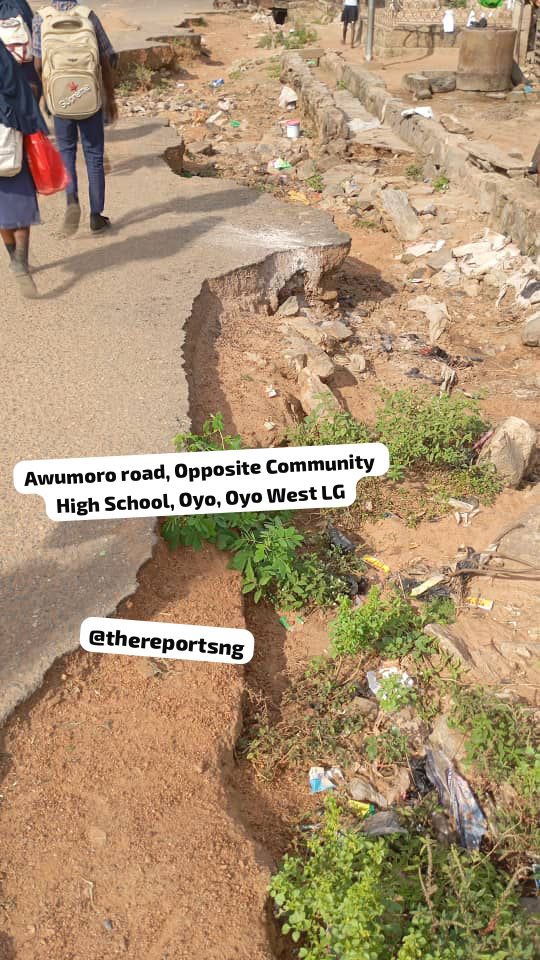
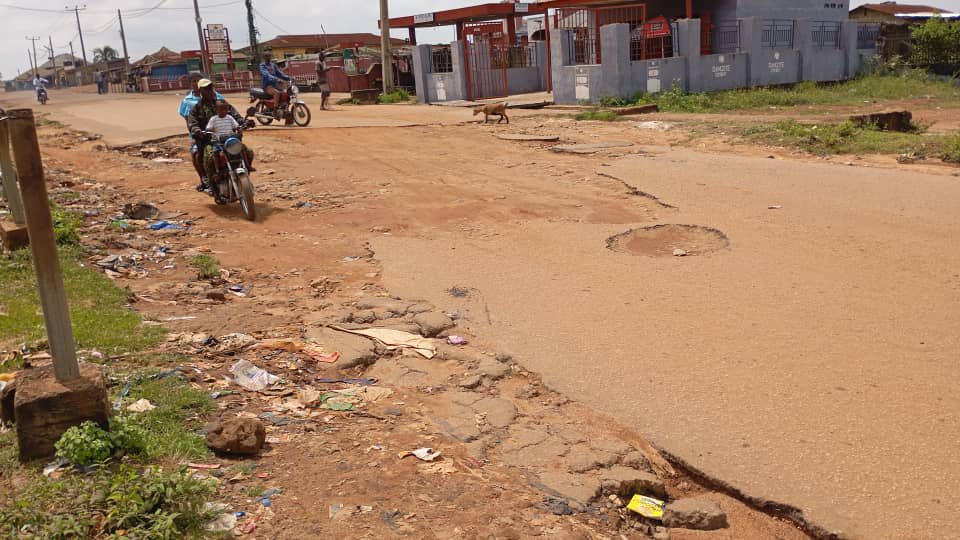
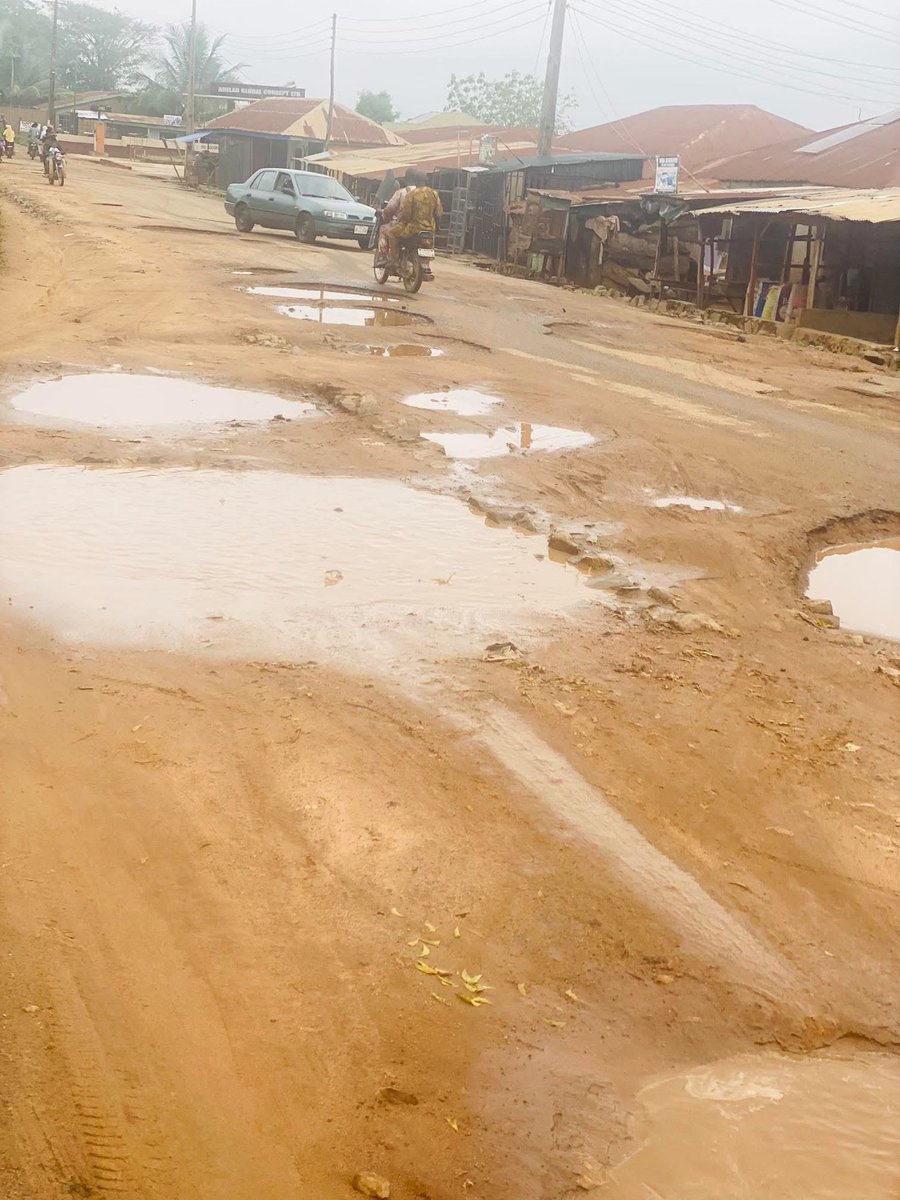
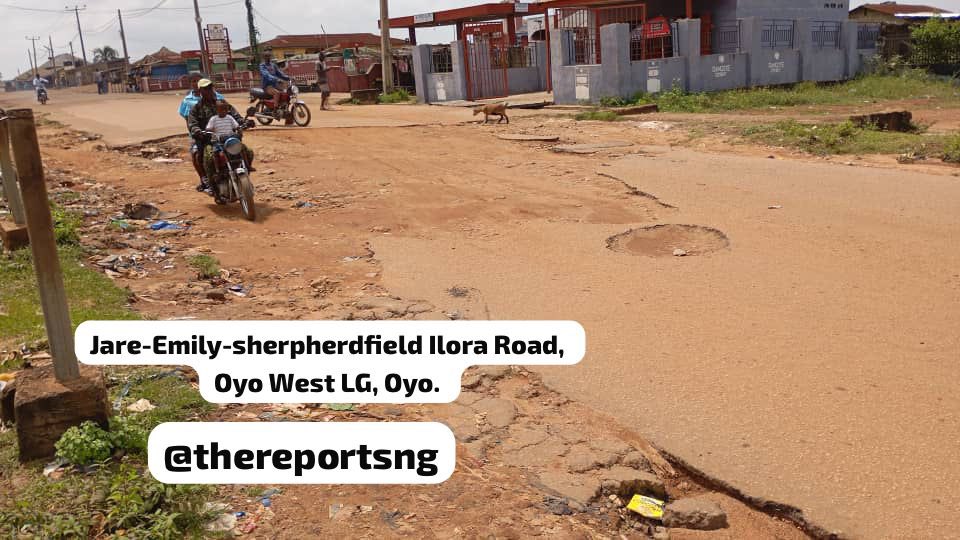
These are some local government roads in Oyo West Local Government that I personally worked on, not the whole Local government in Oyo, or Oyo State so, when Governor Makinde boldly said he has done extremely well for the LG, and that there's no need for them to exist, we will remind him how shameful and wrong that statement is.
Note: Some of these roads are also very busy state roads, including the road that leads to Emmanuel Alayande University of Education, among others.
Note: The federal government hasn't stopped paying the local government allocation but, the state government didn't deny sitting on those allocations just because he felt there was no need for them to exist.
I would read this if I were you.
Real Madrid's players have just received their new BMWs. Beautiful cars, and a beautiful sponsorship deal.
Now imagine this. Vinícius has his own personal deal with Mercedes. Does he drive the BMW? Can he post the Mercedes? Who wins?
This is a hypothetical, as far as I know Vinícius has no Mercedes deal. But this kind of clash happens all the time, and agents deal with it quietly in every contract negotiation. Let me show you how.
First, you have to understand that a footballer's image has two sides.
The first is his collective image. That's the player as part of the club: in the club kit, in the team photo, at the BMW handover. The club owns the commercial rights to that and sells it to sponsors.
The second is his individual image. That's the player as himself: his face, his name, his personal brand. The player can sell that to his own sponsors.
In Spain, the law leaves the split to the parties. Article 7.3 of Royal Decree 1006/1985, which governs professional athletes' employment, says that the player's share in the profits from the commercial exploitation of his image is whatever is agreed in the collective agreement or the individual contract. In plain English, there's no fixed rule. The contract decides.
So how do contracts deal with a clash like BMW and Mercedes?
The key concept is category exclusivity. When BMW signs with Real Madrid, they don't just pay to be a sponsor. They pay to be the only car brand associated with the club. Real Madrid promises them the "automotive" category. That promise only means something if the players don't undermine it.
So player contracts at big clubs usually have three types of clauses:
Players can have their own sponsors, but not in categories the club has already sold, or not when the player is wearing anything connected to the club.
A player's personal sponsor can never use the club's name, crest, kit or stadium. Mercedes could use Vinícius the man, but never Vinícius the Real Madrid player.
Players must take part in the club sponsors' events, like the BMW handover, and use their products when on club duty.
You must have already seen this in action. You probably just didn't notice. Mbappé has his own deal with Nike, but Real Madrid are an Adidas club. So in club photos, training and matches, he's in Adidas. Boots are usually carved out of club kit deals, so he can wear Nike on his feet. That carve-out exists because players and agents fought for it. That's a long story but you can read about it on your own if you can.
Despite all of that, there are some possible legal issues though. If a player signs a personal deal first, and the club later sells that category to a rival brand, who has to give way? If the contract doesn't say, you have a fight on your hands.
The fix is in the drafting. As an agent, I'd want a clause like this in a player contract: "Any personal sponsorship agreement entered into by the Player prior to the Club's grant of category exclusivity to a third party shall be respected, provided that the Player shall not use the Club's intellectual property in connection with such agreement."
That one sentence protects the player's existing deals and gives the club what it needs to sell exclusivity.
I hope you have learned something today.
My name is Ajoje. I am a FIFA Licensed Agent and International Sports Lawyer. I write on the Law and Business of Football, a lot. Repost and Follow if you want to read more posts like this.
Demanding from Abuja what he wouldn't give his own local governments as a governor.
The Supreme Court ruled against him in 2021 and again in 2024. Now he wants to be president.
Do the receipts add up?.
"Why didn't he play him? He tried to be clever."
If you've watched football long enough, you've said this. I've said it too. A coach leaves out a player, the team loses, and suddenly everyone on social media is a better coach than the man who spends every day with the squad.
It is very easy to criticize them.
Cesc Fàbregas, who coaches Como, just explained some of the things we don't see. Talking about why Tasos Douvikas didn't play against Feyenoord, he said: "There are no geniuses here. We have all the information. Maybe a player was ill yesterday, maybe his partner is pregnant and he didn't sleep, maybe something else happened."
That's the part fans never get. A coach is not just picking his best eleven. He is dealing with humans. He is managing tired bodies, sick players, players with problems at home, and players whose minds are somewhere else that week. And he can't announce any of it at a press conference.
But Fàbregas didn't stop there. He said football is becoming more dangerous, and not only for players. He mentioned Vincent Kompany. In October, Kompany was rushed to hospital after collapsing during a training session.
He had been nursing a virus in recent days and had missed some of his team's training sessions. When he came back, he said something every football fan should read twice: "I was quite simply ill and perhaps didn't listen closely enough to my body."
Now I know what some of you are thinking. "Abeg, they are paid millions. What are they complaining about?"
I understand. When a player earns more in a week than most people earn in years, it's hard to feel sorry for him. But let me ask you a simple question. Does a bigger salary give a human being a bigger heart? Stronger lungs? More hours of sleep in a night?
It doesn't. Money changes your bank account. It doesn't change your biology. A player on £300,000 a week still tears his hamstring when he plays too many games without rest.
A coach on a big contract still collapses when he ignores a virus because there's a match on Sunday. The salary pays for their work. It doesn't buy away their limits as humans.
And this is where the law comes in, because footballers and coaches are not just entertainers. They are employees. Their clubs are their employers. And in most countries, employers owe their workers a duty of care.
Take Italy, where Fàbregas works. Article 2087 of the Italian Civil Code says an employer must take the measures that, given the nature of the work, experience and technical knowledge, are necessary to protect the physical integrity and the moral personality of its workers.
Germany, where Kompany works, has a similar rule in Section 618 of its Civil Code, which requires employers to protect workers against danger to life and health as far as the nature of the work allows.
In plain English: the club can't just say "he's paid well, he'll manage." It has a legal responsibility to look after the health of the people who work for it, physical and mental.
Clubs can manage training loads, medical staff and recovery. What they can't fully control is the calendar. Fàbregas listed it himself: "football is faster and more physical, there are more matches, less recovery time and more travel."
Those decisions are made higher up, by leagues, confederations and FIFA, and the clubs then have to squeeze their players into them.
So what's the fix? Part of it is what Fàbregas is already doing: rotation, honest communication, and a coach brave enough to rest a player even when fans will scream.
Part of it is on us, the fans and the media, to stop treating every rested player as a "clever" mistake. And part of it has to come from football's rule-makers, who need to treat rest and recovery as a health issue, not a scheduling inconvenience.
The next time your coach leaves out your favourite player and you lose, ask yourself one thing before you tweet: what does he know that I don't?
My name is Ajoje. I am a FIFA Licensed Agent and International Sports Lawyer. I write on the Law and Business of Football, a lot. Repost and Follow if you want to read more posts like this.
This is a victory for football.
CAS has just saved African football. The 2025 AFCON final has been handed back to the pitch where it was won.
Congratulations to Senegal.
I never doubted the arbitration would go their way. It was as easy to call as Nigeria’s 16 January 2027 election (Bola Tinubu will win).
Once you learn to detach your emotions, the future gets a lot clearer.
A major step forward for Nigeria’s digital economy 🇳🇬
We have published Nigeria’s first Digital Services Sector Mapping Report and updated the CAC registry with 17 new sectors and 68 digital services, ensuring Nigerian firms are better classified, represented, and 👇🏽
A student is travelling and has successfully passed through all screenings. Airline staff at boarding gate verify their ticket and pass them through.
The last bag check, and then the staff demand money from the student. Student says, "Sorry, I have no cash on me."
This bag-check official replies, "I have an Opay account, you can send it there."
Student puts a call across, seriously confused and afraid they'd not be let through to the boarding gate, because they have delayed the bag check while keeping the passenger standing unnecessarily.
This behaviour must stop. Begging is becoming institutionalised, and all airlines and service providers are advised to develop a system that allows them identify these personnel and remove them from our airports.
This menace has become too much. It is bad image. It is harassment. It is inconvenient. This has nothing to do with poverty or salary; it is fast becoming a cultural trend, and must be rejected.
Even I get harassed on almost EVERY trip. On my return from Canada a couple days ago, it happened again. I told this personnel (uniformed officer in this case), "I am the one passengers report you to, when you do things like this. Who may I report you to, when you do it to me? This is not a great look. You are wearing a uniform!"
She looks at me, uncovered, and goes, "Okay do am as oyoyo (gift) for us na. You be big man."
I sighed and left.
At the NCAA, we are designing an advisory to educate passengers on how to navigate this challenge. If this challenge was random, one could excuse it. But, how can you defend something so rampant, it respects nobody, not even the image of the country we serve, nor shame in the presence of strangers.
This is embarrassing. Some passengers have actually missed flights after passing screening, because of the vindictiveness of some of these horrible personnel. At the risk of sounding holy-sanctimonious, we will not allow this to fester beyond this point.
We will engage the employers of these service providers and demand more from them! Enough, please.
People travel for different reasons. Some, for medicals. Some are running away from abusive partners and have barely enough to pay for a taxi on arrival at destination. Others came in a hurry and have no cash on them. Some are struggling with infants while you harass them. For a lot of others, they are travelling on tickets purchased by their organisations. They even had to borrow monies for upkeep while abroad, because estacode has not been paid before departure date.
These are the people you harass for money? Why won't they lay curses on you? Do you think every traveller is financially comfortable? Even if they were, why not offer such professional service that they choose to tip you by themselves?
Why are we never focused on providing world class service before reward? Why do we want to be given money for doing nothing? Why are you not afraid to offer a stranger your account details for such harassment? Are you not afraid of being sacked?
Every time, "Saner climes...."
Is those climes, is it only governments that are responsible for what you admire about them? Isn't it collective responsibility?
Well, this must begin to change. Passengers are advised to report every single case of such harassment. This is not a campaign against people's livelihoods. It is a battle for the soul and image of our country.
The airport is the first impression that the world has of us. We will not lose that space. There is no argument that makes this menace okay.
Why are there nine microphones in front of the imam of the Grand Mosque? This is the sound system of the Grand Mosque.
Three at the top, for the recitation. Three in the middle, for bowing. And three at the bottom, for prostration. In each three: one main, one backup and one for emergencies. From there, his voice goes out through more than 8,000 speakers, across about 650,000 square metres.
Long before loudspeakers, when the Prophet, peace be upon him, was ill, Abu Bakr, may Allah be pleased with him, made the people hear the takbir (Sahih al-Bukhari 712; Sahih Muslim 418). In the Grand Mosque, that job has its own place: the Mukabbiriya. There, the muezzin repeats each takbir after the imam, in a louder voice, so the congregation can hear.
Today, about 100 microphones pick up the imams, the muezzins and the preachers, and 21 independent systems control the sound in each part of the mosque, separately. About 120 engineers and technicians watch over it, around the clock. Around the mosque, more than 260 speakers line the roads, on a network of over 8 kilometres of cable and fibre optics. The minarets' speakers carry only the adhan and the iqamah, and are switched off during the prayer, so nearby mosques aren't disturbed. And if something fails, a backup takes over by itself, without anyone noticing.
All of this, so that when the imam recites, hundreds of thousands hear him, clearly, as one.
Allah says in the Quran:
“So when the Quran is recited, then listen to it and pay attention that you may receive mercy.” (Al-A'raf 7:204, Sahih International)
Recitation: Sheikh Saleh Bin Humaid (Fajr, 2 Ramadan 1447). The takbir in the film is from the same prayer: the imam, then the muezzin.
Sources: Saudi Press Agency (SPA) · General Authority for the Care of the Two Holy Mosques · Sahih al-Bukhari 712 · Sahih Muslim 418 · Quran translation: Sahih International
Follow @haramain_info for a new film from the Haramain every day.
#MasjidAlHaram #GrandMosque #Makkah #Haramain #Kaaba
Mapo Hall was so filled up yesterday that Security Agents were stationed at the entrance to stop people regardless of class from entering the arena again. It was an herculean task for the security agents, they started appealing to the wild but determined crowd "please there's no space again, please.". The joyous crowd, although accepted their fate, stayed glued on the streets from Beere to Yemetu, from Yemetu to Total Garden, from Total Garden to Gate..... they refused to go. President Tinubu, in appreciation of this, while leaving Mapo Hall drove slowly to appreciate the anti-Wailers crowd by waving his hands ✋️ from his untinted vehicle, this made the crowd went wilder shouting "Tinubu, Our Jagaban, see as e fresh. I love you sir....Asiwaju Omo OlodoIde..."
Nigerian Masses love TINUBU too much!
It is humbling to see you around. We're glad you liked the Conference. We hope to see you at The Renaissance 2.0, InshaaAllah. Thank you, indeed. Jazakum Lahu Khairan.
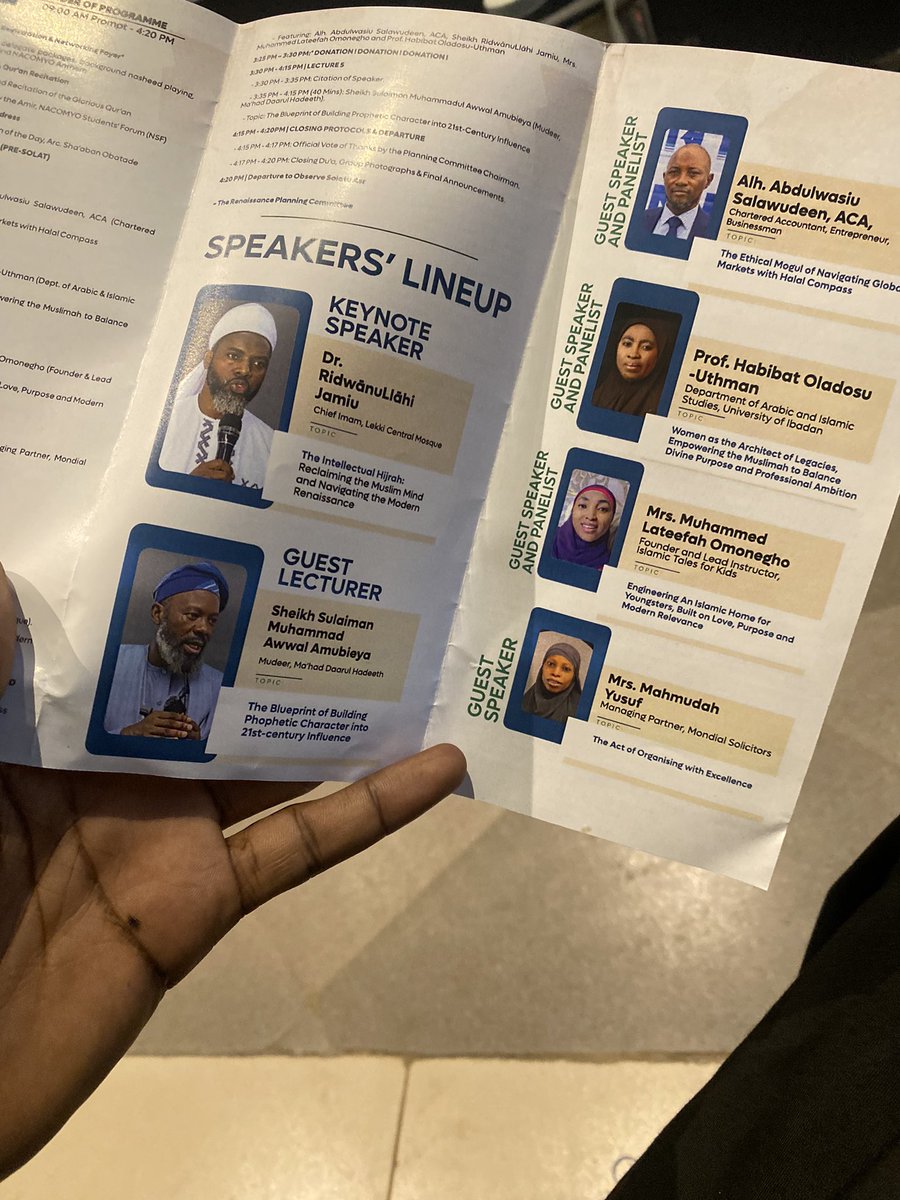
Exactly a week ago, I attended a program organized by NACOMYO in Ibadan, Oyo State. I had the privilege of listening to lectures delivered by distinguished speakers, including Dr. Jamiu (Chief Imam of Lekki), Sheikh Awwal Ambieya, Prof. Habeebat, Mrs Lateefah, Mrs Mahmoodah.❤️