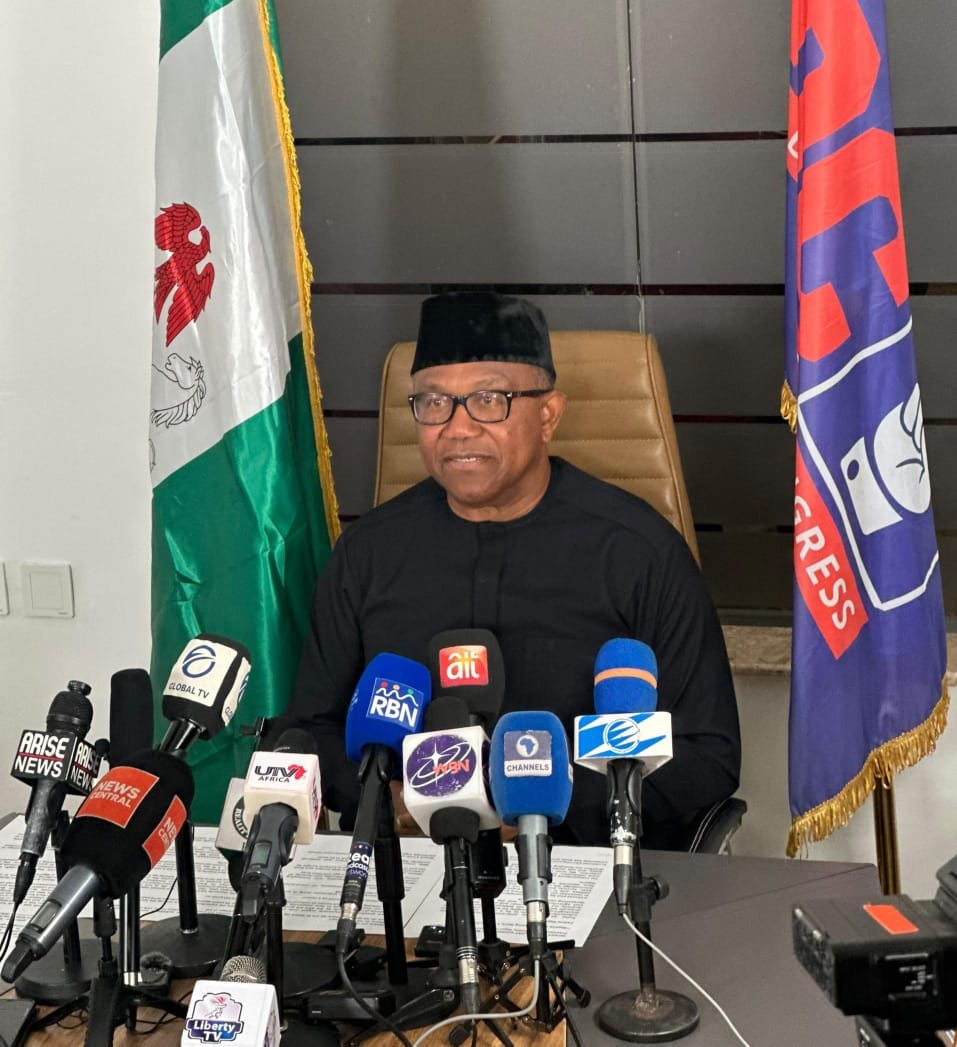
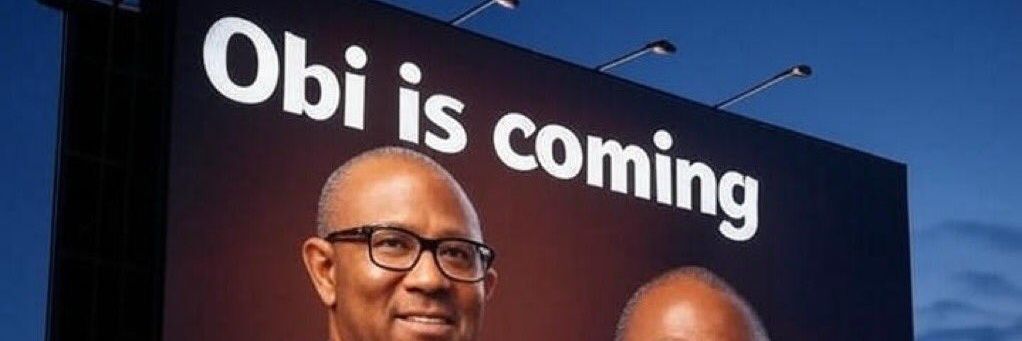
Ikechukwu Tobechukwu is TWO today, join me and my family in thanking God for his life and for him to grow up having the qualities of @PeterObi .
Your prayers.
Happy birthday IKECHUKWU Jr.
This brings back fond memories of our many road trips across Nigeria in 2022–23 —especially the night we spent sleeping in our cars at a fueling station in the forest outside Kaiama, Kwara State.
His Excellency Peter Obi and I are still agile and fully ready for the task ahead. Are you? - RMK
Independence Is Meaningless Without Real Freedom
As we continue to reflect on Nigeria’s Independence, we must remember that independence means very little if citizens cannot freely express themselves, within the bounds of the law, without fear.
Reports that some Nigerians in Akwa Ibom were arrested simply for identifying with the Obidient Movement should worry every Nigerian who believes in democracy and freedom, especially when such identification is a constitutional right.
One of the greatest tragedies of our society is that people who once described themselves as freedom fighters can become defenders of oppression when they eventually occupy positions of authority. Those who once complained about injustice can become comfortable with injustice when it is being perpetrated against people they disagree with. That must not be the Nigeria we accept.
Our independence must ultimately mean freedom from fear, injustice, intolerance and abuse of power.
Nigeria must belong to all of us. -PO
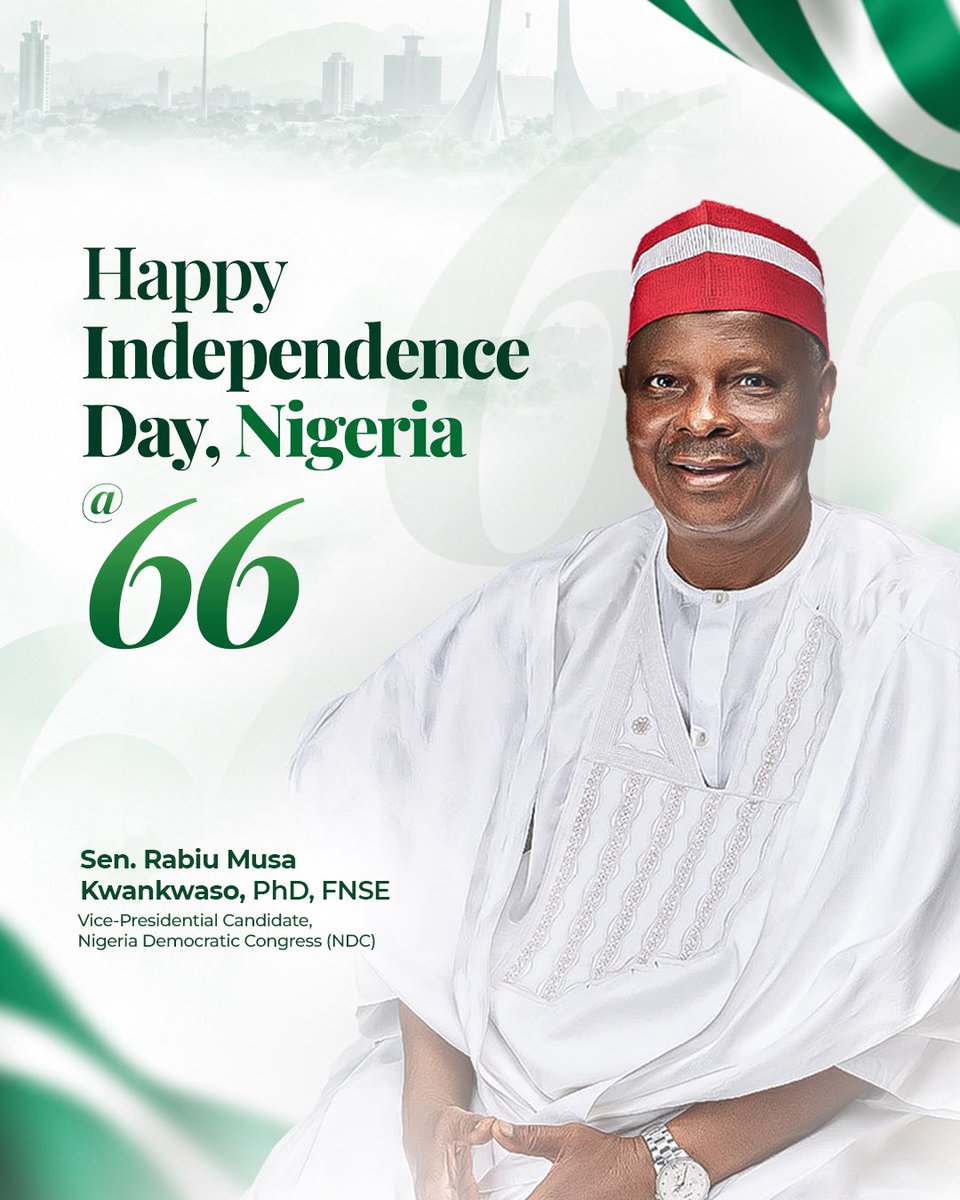
NIGERIA AT 66: OUR FUTURE IS IN OUR HANDS
Fellow Nigerians,
Today, as we celebrate the 66th anniversary of our independence, I congratulate Nigerians at home and across the world.
Independence Day is not only a day for celebration. It is also a time to reflect on where we are, where we want to be, and what we must do to get there.
Nigeria is blessed with enormous human and natural resources. Yet, too many of our people are living with insecurity, poverty, unemployment, hunger and inadequate access to quality education and healthcare.
This should concern every Nigerian, particularly those entrusted with leadership.
We cannot continue to accept a situation where our children are out of school, farmers cannot safely access their farms, young people struggle to find opportunities, and communities are displaced by insecurity.
As echoed by our Presidential
Candidate, His Excellency Peter Obi, Nigeria must move from consumption to production.
We must invest in our people, especially our young population. We must make education a priority, support agriculture and industry, empower entrepreneurs and create an environment where hard work can translate into prosperity.
Security must also remain a fundamental responsibility of government. Nigerians deserve to live, farm, trade and raise their families without fear.
All through my time as a student union leader, parliamentarian, minister and governor, I have always believed that leadership must be measured by results, not by promises.
Our people deserve a government that is accountable, disciplined and focused on improving their lives.
Nigeria is not without problems, but neither is Nigeria without solutions. What we need is the courage, competence and commitment to implement those solutions.
On this Independence Day, let us renew our faith in Nigeria and our determination to build a country that provides opportunity for every citizen, regardless of where they come from.
A new and productive Nigeria is POssible, and it shall be OK with our country.
May God bless the Federal Republic of Nigeria and its people.
Happy Independence Day, Nigeria. - RMK
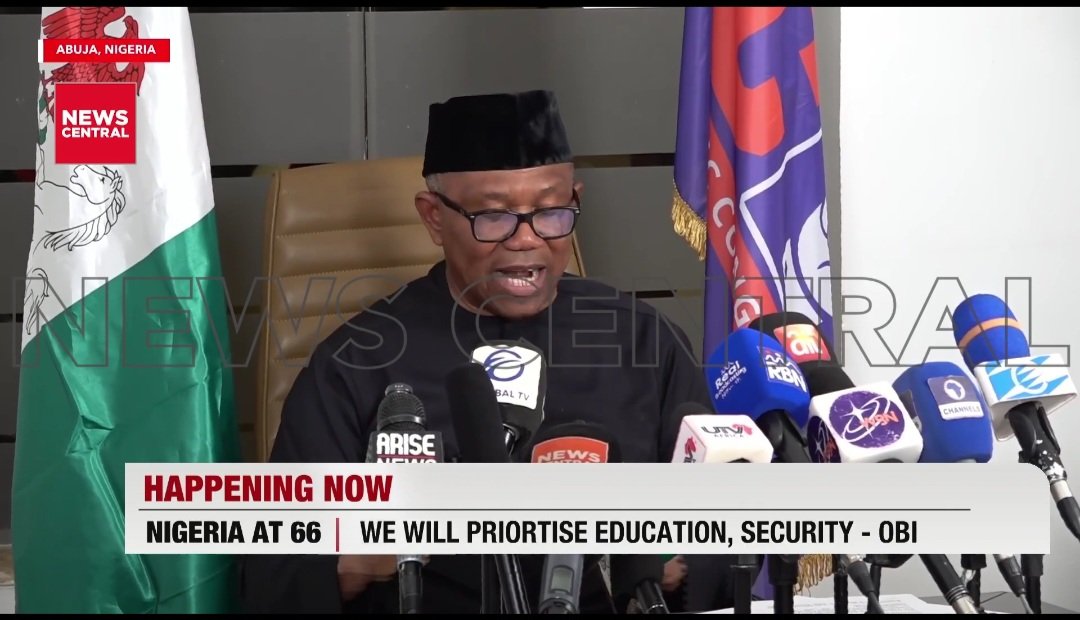
Nigeria at 66: Looking Back, Looking Forward
Fellow Nigerians,
Today we mark the sixty-sixth anniversary of our independence. It ought to be a day of celebration and thanksgiving to God Almighty for the gift of life and for the immense blessings He has bestowed on our nation—our diversity, our abundant human and natural resources, our vast agricultural potential, and the relative absence of devastating natural disasters.
It should also be a day of appreciation and patriotism: a day to remember our founding fathers and all those who made selfless, and in many cases supreme, sacrifices for the birth, survival and growth of our dear nation. We must acknowledge the efforts of past and present leaders who have laboured, however imperfectly, to build a better Nigeria.
Yet independence anniversaries must never be reduced to mere celebration. They are moments for honest national reflection. We must look back, examine where we stand today, and ask ourselves whether we are moving in the direction our founding fathers envisioned.
In national planning and strategy, every serious nation must continually ask three fundamental questions:
Where are we today?
Where do we want to be?
How do we get from where we are to where we want to be?
These questions are especially urgent now. Despite the enormous promises made by the APC-led government in 2023, our nation continues to face deepening challenges across virtually every critical sector of national life.
Today we stand before the world as a nation:
With an extraordinarily large population living in poverty and severe hardship; over 140M
With one of the largest populations of out-of-school children in the world; over 18M
Where insecurity, terrorism, banditry and kidnapping continue to threaten lives and livelihoods, just recently 37 young Nigerians in their productive age lost their lives
Where millions of Nigerians struggle with hunger and food insecurity; over 40M Nigerians will be in extreme hunger by the end of 2026.
With unacceptably high rates of infant and maternal mortality; Nigeria today is the worst place to be born.
Where youth unemployment and underemployment remain alarmingly high; over 35M
Where drug abuse and substance misuse increasingly threaten our young population; today 14% as against global average of 6%
Where life expectancy remains among the lowest globally, today 54 years against global average of 74 years
And the list goes on.
This reality demands serious, sober and honest reflection. Socrates taught that “the unexamined life is not worth living.” By the same principle, an unexamined nation cannot successfully chart its future. We must therefore ask ourselves: Are we cursed, or have we become the curse through the choices we have made and the failures we have tolerated?
The answer cannot be that Nigeria is cursed. We are a nation immensely endowed and blessed. Our greatest problem is not a lack of resources; it is the failure to convert our enormous resources into human development, productivity, security and shared prosperity.
Only yesterday, Senator Rabiu Kwankwaso and I returned from a two-day visit to Sokoto State. We held extensive consultations with people from different parts of the state on insecurity, out-of-school children, poverty, youth unemployment, drug abuse and other challenges confronting our people.
In concluding the visit, we went to the Internally Displaced Persons camp at Ramin Kura within Sokoto metropolis. What we saw was deeply troubling. Thousands of women and children live in deplorable conditions, displaced from their homes and deprived of the basic necessities of life. Many of the children have no access to education. Mothers and children have limited access to basic healthcare. These are Nigerians who should be living in their communities, going to school, farming their land, conducting their businesses and contributing to the economy. Instead, they live as displaced persons in their own country.
Instead of that empty and useless independence broadcast by Tinubu, watch this emotional moment with Peter Obi and Kwankwaso.
We’re going somewhere, brethren!
I bought fuel yesterday in Toronto, Canada, at $1.7999 CAD per litre, and it cost about $98.95 CAD to fill up my tank. This should ideally last me about a week or more.
Now, the minimum wage in Canada is $17.95 CAD per hour, which means someone who works an average of 8 hours a day will earn $143.60 CAD before tax. A day's salary is enough to fuel his or her car for 2–3 weeks. This means that even one of the lowest earners in Canada can afford to own and drive a car daily without the cost of fuel becoming an overwhelming burden. Public education for children is also free and of high quality.
In Nigeria, fuel is about ₦1,300 per litre. It would cost about ₦88,000 to fill up a similar tank. The minimum wage in Nigeria is ₦70,000 per month. This means that an entire month's minimum wage cannot even fill the tank once.
A minimum-wage earner in Nigeria cannot realistically afford to own, fuel, and maintain a car. The same person still has to afford food, rent, children's education, healthcare, electricity, transportation, and other basic necessities. The list goes on.
In fact, even a bank manager in Nigeria earning ₦1 million monthly could still struggle to maintain a decent standard of living after covering these basic expenses.
This is one reason poverty is so widespread in Nigeria. The cost of basic living is simply too high relative to what the average person earns.
You don't just have an income problem in Nigeria. You have an affordability problem.
For millions of Nigerians, simply living a decent life has become too expensive and increasingly impossible.