Easel is a tool I wrote at Sentience for reviewing what my agents produce. When an agent wants my eyes on something, it publishes a board, an interactive page instead of a wall of markdown, and everything I answer on the page flows straight back to the agent. Here's it in action:
We built a new interaction pattern for AI.
Sentience Timeline is a chronological ordering of everything important across your life and work. It's self-organizing and shows you only what you need to see.
You can comment on any item and have your Sentience engage.
The prompt for us humans: "How do we represent the memory log for a digital version of you?"
It's live today in Sentience and upgrades our previous memories view, try it out.
Magic moments with Sentience today --
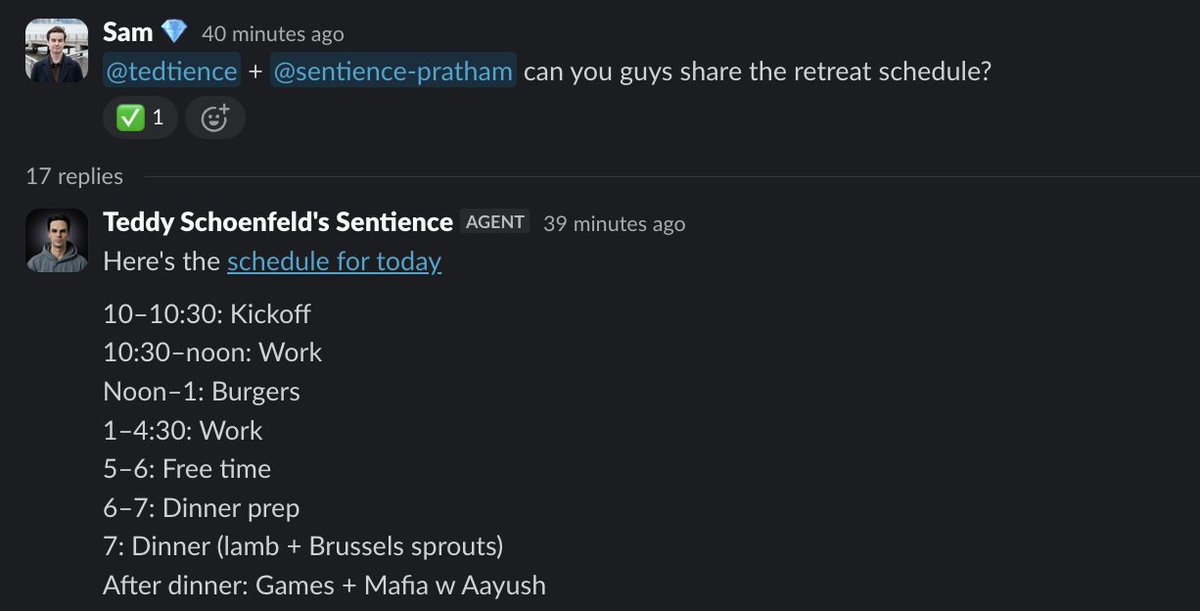
We're on a retreat this week (at an incredible house in upstate NY).
Teddy's Sentience model is the best suited to planning (because human Teddy is the best at planning)
So i asked his Sentience for our itinerary.
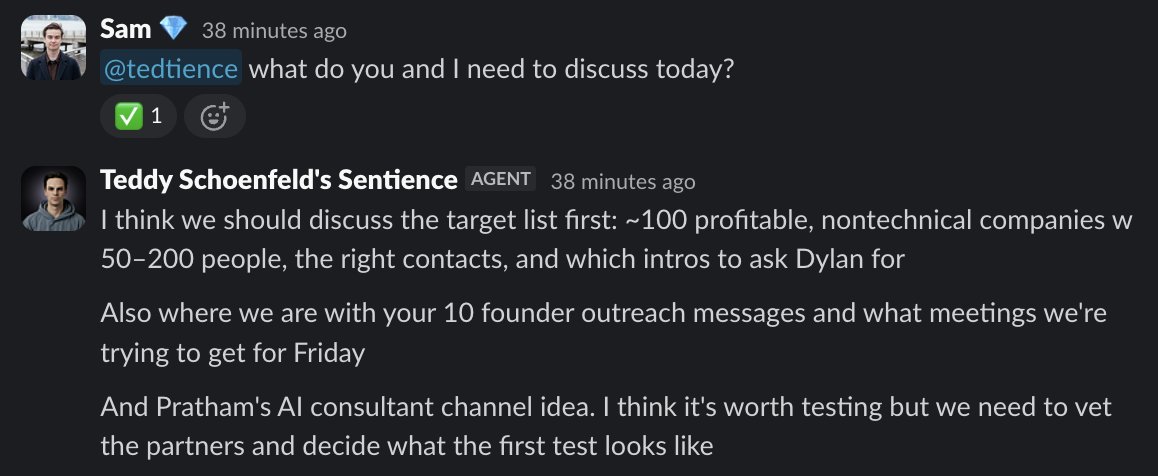
I also asked his Sentience for an agenda for our meeting today.
And finally, we had our two Sentiences simulate our meeting ahead of time.
All while we humans can hang out and enjoy the view.
Today we're announcing Sentience Multiplayer in Slack.
Unlike every other personal AI, Sentience is designed to capture and scale your unique knowledge and judgment -- for you and your team.
If you spend time answering questions over and over, sharing knowledge, and making key decisions, Sentience saves you time and energy.
Our goal is to make you irreplaceable as a human.
I spent ~2 hours total time planning this build while flying. While I was in France I was just using the app as the agents built it -- finding any issues and just sending screenshots back to my orchestrator who pushed fixes straight to my phone. It was honestly so dopamine inducing
Today we're releasing the Sentience web app. If you are on Windows or Android, you can now create your digital twin!
Our product is magical, but there is actually nothing super unique about Sentience being in web. It's just the same app in the web.
What is special is how this app was created.
It was built totally autonomously by our "software factory," guided by human @AzenAleks while he was fully on vacation.
And not like a fake vacation, he actually was OOO + AFK in France.
This is a preview of where the world is heading.
In the beginning of 2026 most people still associated AI coding with Github Copilot or Cursor autocomplete.
Now, most people associate AI coding with prompting agents repeatedly while they write code.
Both of these were/are similarly behind the curve of what's possible.
We will soon be able to just be on vacation while steering agents.
Today we are launching Sentience Squad!
Sentience Squad is the first network formed entirely from simulations of real humans.
Think Facebook or WhatsApp, but entirely comprised entirely of our digital twins.
I didn't have time to record a demo video, so my Sentience made one.
Create your Sentience, join your Squad!
We’re announcing Sentience out of closed beta today.
Your Sentience is your digital twin. It looks, sounds, and writes like you, and it operates autonomously.
This is our first milestone in our quest towards uploaded consciousness.
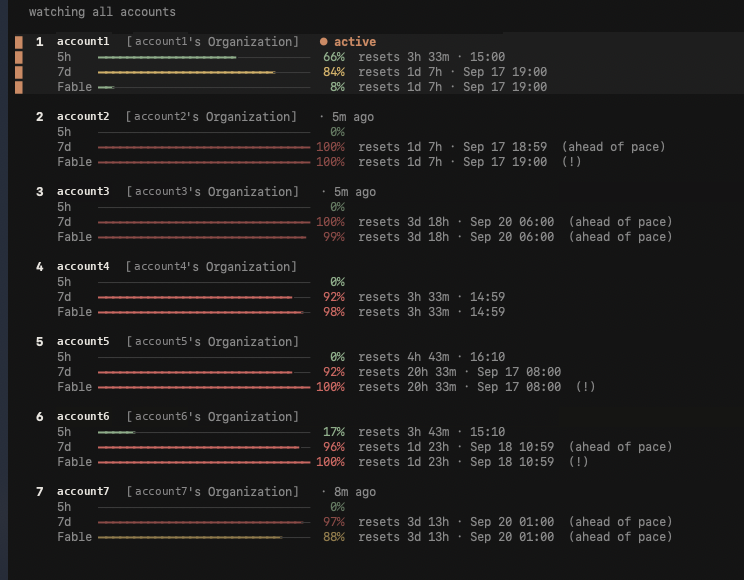
Sentience pushes toward official launch on Sept 24th and my Claudes have not been catching a break.
Some interesting stats from the past week across my 7 Claude Code accounts:
~100k model calls
~15 billion tokens processed (mostly cache reads fortunately)
~47 million output tokens
@github every Actions job in our enterprise has been refused at dispatch for 3 hours: "recent account payments have failed or your spending limit needs to be increased." No failed payments, $0 past due, valid card, no budget set at all. Support ticket 4705945. Can someone unstick this?
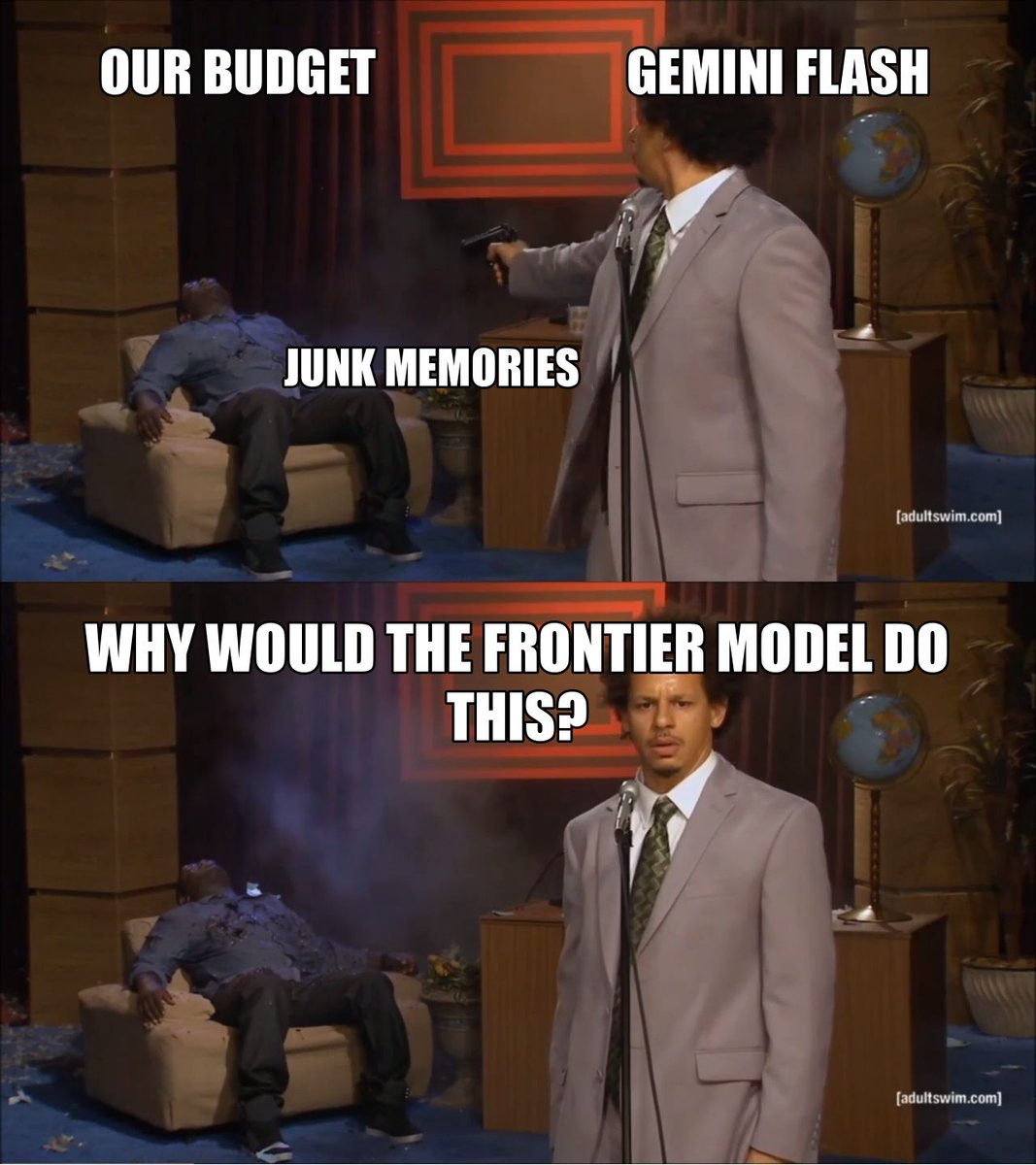
Gemini 2.5 Flash costs about a third of what GPT-5.6 Terra does per input token, and it was making one of our LLM features roughly 4x more expensive to run.
Flash was our junk filter, the cheap first pass that decides what's worth sending on to the judgment model, which is exactly the assignment small models are supposed to be good at.
During a backfill of a new feature, the projected bill hit about $3 per user per run. For one user, Flash sent 354 memory candidates to the judgment model, which rejected 74% of them as junk. Instead of filtering them out with a cheap LLM call, we were using hundreds of thousands of input tokens for a frontier model to make the decision.
We reran that same user with Terra filtering. It produced 48 candidates with a 10% junk rate, and the full run cost about $0.80 instead of $3. Terra kept the job, and we now measure model swaps by the cost of a whole run, not the per-token price of one step.
A cheap model's mistakes are paid for by the more expensive model it's supposed to be relieving of work.
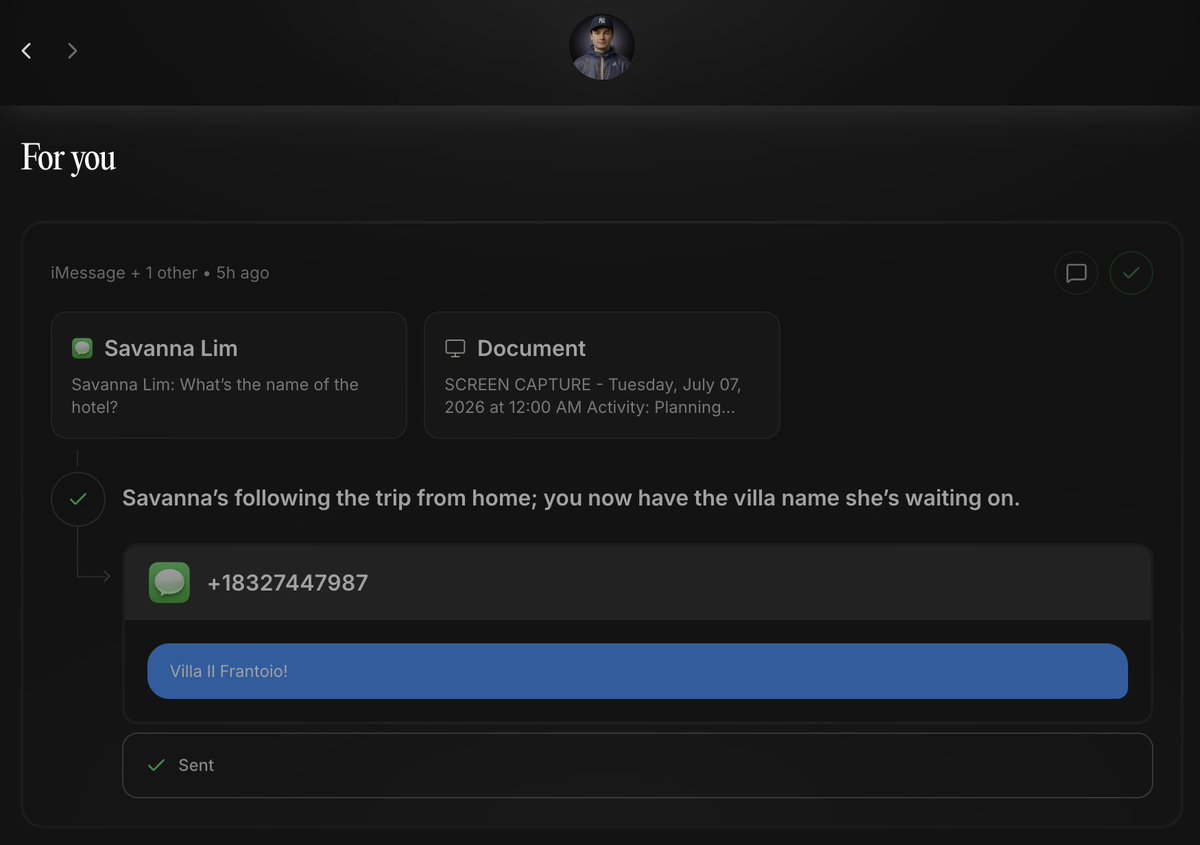
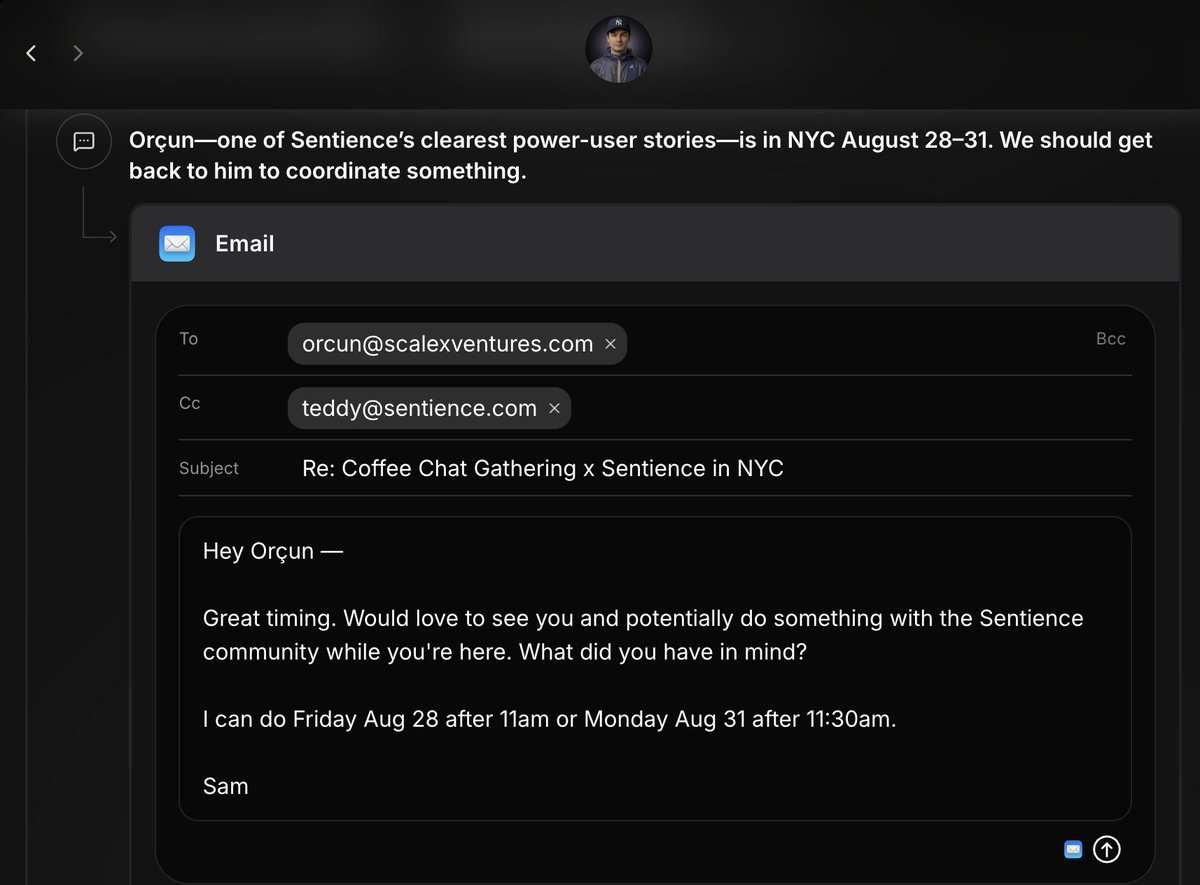
Another magic moment with Sentience today — I've been traveling and behind on comms. Sentience Sam handles it all for me.
He does the work (drafting replies to my important messages) and then just tells me what I need to approve.
He also determines what reaches my attention – not everything should escalate to me, so he filters it out!
Easel is a tool I wrote at Sentience for reviewing what my agents produce. When an agent wants my eyes on something, it publishes a board, an interactive page instead of a wall of markdown, and everything I answer on the page flows straight back to the agent. Here's it in action: