Código de Barras de DNA de Leopardus pardalis
1/7Técnica propuesta por Hebert et al., 2003 como un sistema de identificación de especies utilizando el gen mitocondrial COI en animales y el gen matK del cloroplasto para plantas, regiones estandarizadas del genoma. #2023BNTT_IPN
For anyone interested in teaching or learning PCR and DNA barcoding, here’s some recommended reading: four articles written by DNA barcoding educators describing lesson plans, learning objectives, and experiences running their courses.
For teachers, these articles might be useful to build, structure, or improve a course.
For learners, they might provide interesting insights into what to learn and practice from a “teachers’ lesson plan” perspective, going way beyond what a basic protocol might offer.
All of these studies had very similar aims but used different methodological approaches in terms of DNA extraction, software, and course length. So there are plenty of methodological options to look into and find out what suits you best.
⭐ The first article, by Erasmus (2021), describes DNA barcoding as a component of a third-year biochemistry course in British Columbia, Canada. The lesson plan involved a one-hour lecture and two three-hour laboratory sessions based on DNA barcoding stoneflies (Plecoptera).
The practicals used Chelex resin for DNA extraction; FinchTV for chromatogram inspection and editing; and the Barcode of Life Data Systems (BOLD) and NCBI’s GenBank for sequence identification:
Erasmus, D. J. (2021). DNA barcoding: A different perspective to introducing undergraduate students to DNA sequence analysis. Biochemistry and Molecular Biology Education, 49(3), 416-421.
https://t.co/xb7S4j8Oal
⭐ The second article, by Shevcenko et al. (2019) covers a course of 10 one-hour sessions framed around the DNA barcoding of caddis flies (Trichoptera) in New Jersey, USA.
Over this course the students learned about sample collecting; insect diversity; vouchering and photographing of collections; extracting DNA using the HotSHOT method; PCR of the COI barcode region; gel electrophoresis amplicon visualisation; Sanger sequencing; editing DNA sequences; uploading results to the Barcode of Life Data Systems (BOLD); and phylogenetic analysis.
Shevcenko et al. (2019). Undergraduate teaching of scientific concepts using DNA barcoding of Trichoptera. Zoosymposia, 14, 16-31.
https://t.co/EduppmkGNW
⭐ A third article, by Casanova & Shumskaya (2021), covers the DNA barcoding of fungi over three laboratory classes. The practicals used a spin column kit DNA extraction (Powersoil from Qiagen), and DNA analysis via NCBI’s BLAST search tool and free MEGA phylogenetics software:
Suárez Casanova, V. M., & Shumskaya, M. (2021). Exploring DNA in biochemistry lab courses: DNA barcoding and phylogenetic analysis. Biochemistry and Molecular Biology Education, 49(5), 789-799.
https://t.co/0lxO4v6heJ
⭐ And finally, for those short of time or for remote homework purposes, two simple exercises by Al-Deeb (2021) in basic BLAST searching and phylogeny construction using the online https://t.co/wgUd48aWz5 tool, designed as a basic introduction and to break through barriers arising from the fear of bioinformatics:
Al-Deeb, M. A. (2021). Using DNA Sequences and Phylogenetic Trees as Tools for Teaching Entomology to Undergraduate Students: A Simple Approach. Advances in Entomology, 9(4), 147-154.
https://t.co/FQT66Qun6c
If any of these are useful to you, please let us know. We’d also be very glad to know of any similar articles we can add to this list for future posts!
@redbioipn@soyadriana_mar Hola buen día ¡claro! también se tomarán a consideración las secuencias que se han publicado en la plataforma de NCBI y BOLDSystems
Código de Barras de DNA de Leopardus pardalis
1/7Técnica propuesta por Hebert et al., 2003 como un sistema de identificación de especies utilizando el gen mitocondrial COI en animales y el gen matK del cloroplasto para plantas, regiones estandarizadas del genoma. #2023BNTT_IPN
@soyadriana_mar ¡Hola buen día! Sí estaremos trabajando con filogenia y por el momento las muestras corresponden a individuos del estado de Tamaulipas😄
¡Muchas gracias por su atención!
Puedes visitar el siguiente enlace:
https://t.co/hN6ZCANnOy
Si requieres más información o tienes dudas
¡Con mucho gusto te responderé!😄
#2023BNTT_IPN#RedBIO#IPN#CBG#LabMedicinaDeConservacion
7/7 El resultado será la identificación precisa e información sobre la diversidad genética de las poblaciones, la abundancia y distribución de las poblaciones, contribuyendo a la evaluación del estado de conservación. Proyecto desarrollado en el #CBG del #IPN en Tamaulipas.
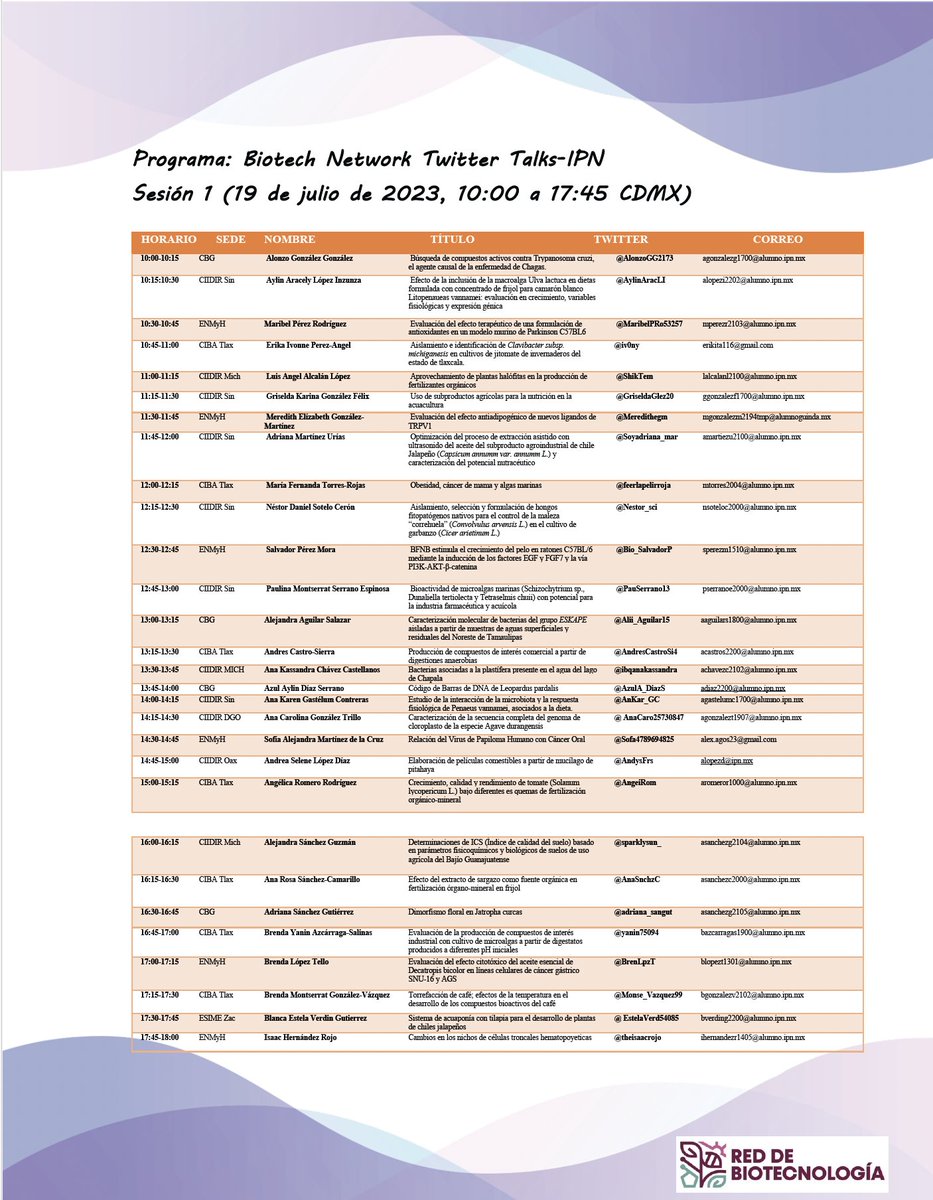
#2023BNTT#IPN#RedBio#Programa Estamos Listos para empezar nuestros conversatorios mañana 19 de julio a las 10:00 h tiempo de CDMX. Síguenos, aprende y diviértete.