For the “boom boom Tel Aviv” idiots:
The biggest mistake people make when looking at war is assuming the objective is to hit the enemy’s capital as quickly as possible. That’s political theater, not military strategy.
If you look at the strike map, Iran isn’t behaving like a country trying to maximize headlines but like a military attempting to shape the battlespace.
The targets are not random or insignificant. Iran is dismantling the entire American military ecosystem in the region:
Early warning radar sites.
Air defense systems.
Aviation facilities and hangars.
Logistics hubs.
Fuel and ammunition storage.
Forward operating bases.
CENTCOM support infrastructure.
Bases supporting operations in Syria and Iraq.
Naval and maritime surveillance assets.
Intelligence collection and communications nodes.
Look at jordan as an example. Most people couldn’t point to Tower 22 or Muwaffaq Salti Air Base on a map, yet they’re arguably more important militarily than firing a few missiles at downtown Tel Aviv.
Tower 22 supports operations at Al-Tanf. Muwaffaq Salti hosts American aircraft and coalition operations. Erbil supports intelligence and special operations. Bahrain hosts the U.S. Navy’s Fifth Fleet headquarters. Kuwait is a massive logistics and staging area. Qatar hosts the forward headquarters of CENTCOM and the largest U.S. air base in the Middle East. These are the eyes, ears, and connective tissue of American power projection in the region.
From a military perspective, you don’t begin by punching the strongest part of your opponent. You isolate him.
There are several principles of warfare being applied here:
1. Suppression of enemy support infrastructure.
2. Degradation of intelligence, surveillance, and reconnaissance capabilities.
3. Attrition of air defense and interceptor inventories.
4. Disruption of logistics and sustainment.
5. Political pressure on host nations.
6. Shaping the operational environment before attempting anything larger.
The United States does not fight Middle Eastern wars from Washington or even from aircraft carriers alone. It fights them from an interconnected network of bases stretching from Jordan to Qatar to Kuwait to Bahrain. If that network becomes degraded, every sortie, every intelligence feed, every resupply mission, and every interceptor launch becomes more difficult and more expensive.
People screaming “just bomb Tel Aviv” fundamentally misunderstand what modern warfare looks like. Destroying a radar site that enables coalition air operations can be militarily more valuable than causing superficial damage to a symbolic target.
There’s another aspect people are missing: INTERCEPTOR ECONOMICS.
Every Patriot interceptor fired costs millions of dollars. Air defense inventories are finite. Sustained operational tempo places enormous strain on maintenance crews, missile stockpiles, and logistics chains. If an adversary can force you to defend a dozen locations simultaneously, you’ve already begun winning the resource allocation battle.
Historically, successful military campaigns begin with degrading command-and-control, communications, air defenses, and logistics before moving to decisive operations.
Whether one agrees with Iran politically is irrelevant to the military analysis. What we’re witnessing is not random retaliation, it is a deliberate campaign aimed at systematically degrading the regional architecture that allows the United States and its allies to project military power across the Middle East.
Wars are won by destroying capabilities, not by chasing viral videos of missiles landing in capital cities and gay techno songs. The boring targets on a map are often the most important ones
Iran has been bullied, plundered, terrorized, sanctioned and attacked for decades.
Iran suffered -but never retaliated.
Yemen has been under the most brutal blockade, aimed at starving an entire population, for over a decade.
Yemen suffered -but never retaliated.
They endured unimaginable suffering despite having strategic power over the entire world economy.
They chose to suffer when the world was watching them die of starvation, being attacked and assassinated.
Not anymore. The era of terrorism, subjugation and oppression by the global elites is over.
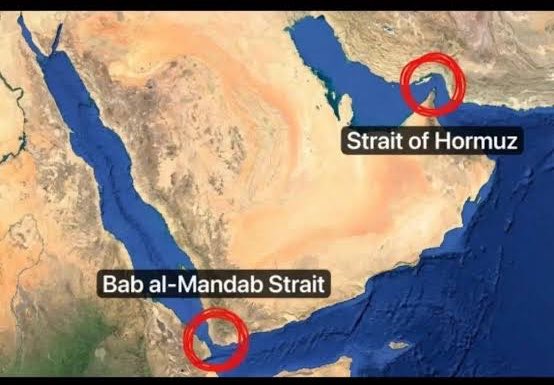
Both Straits are now closed.
Let that orange fuck open it if he can.
@MaxBlumenthal If next time he tells you say 1 bad thing about Iran then you can say that Iran has not destroyed The Satanic Western Created Military Base called Israel yet and that's the bad thing 😂
@MaxBlumenthal If next time he tells you say 1 bad thing about Iran then you can say that Iran has not destroyed The Satanic Western Created Military Base called Israel yet and that's the bad thing 😂
IRGC SPOKESMAN:
"Because you targeted our leaders' private residences and families, all your leaders in the region will now be targeted at their private residences as well".
China openly challenges Trump.
Trump: "We need two billion dollars a day to reopen the Strait of Hormuz."
Chinese Foreign Minister: "The Strait was open before the war. The root of the problem lies in your illegal actions against Iran; you have created a global crisis out of nothing."
ممنون ایران 🫡 #Iran
در صندلی پشت سر من، در هواپیمای ایرانی که محاصره یمن را شکست، کودکی نشسته بود که بیش از سه سال به همراه مادربزرگش در خارج از کشور و دور از پدر و مادرش سرگردان شده بود.
به محض اینکه وارد حریم هوایی یمن شدیم، اشکهای شوق و دلتنگی برای وطنش سرازیر شد.
Iran is destroying the many layers of defense that the US created in the Persian Gulf and Jordan to protect the Zionist regime from Iranian missiles and drones. Iran will wait for Netanyahu to strike first, as it enjoys the growing political crisis inside the Zionist regime.
Iran continues to punish Gulf states for hosting American military.
The video shows oil infrastructure destruction in Dubai.
Dubai is helping people leave the country on planes at a rate of 48 planes per hour.
Iran's IRGC says it has completely destroyed Amazon's central data hub in Bahrain with several cruise missiles and warns more are coming, per Fars News.
The attack marks a new phase: Iran is now targeting U.S. tech infrastructure. The IRGC has warned 18 American tech companies — including Microsoft, Intel, Cisco, and Google — that they are legitimate targets. AWS facilities in the UAE and Bahrain have already been hit before, disrupting banking and critical systems that rely on Amazon's cloud.
Data centers are now strategic targets. Iran argues these companies support U.S. military and intelligence operations. By striking Amazon, Tehran is signaling that American tech firms operating in the region are no longer off-limits. The war has expanded into the digital domain.