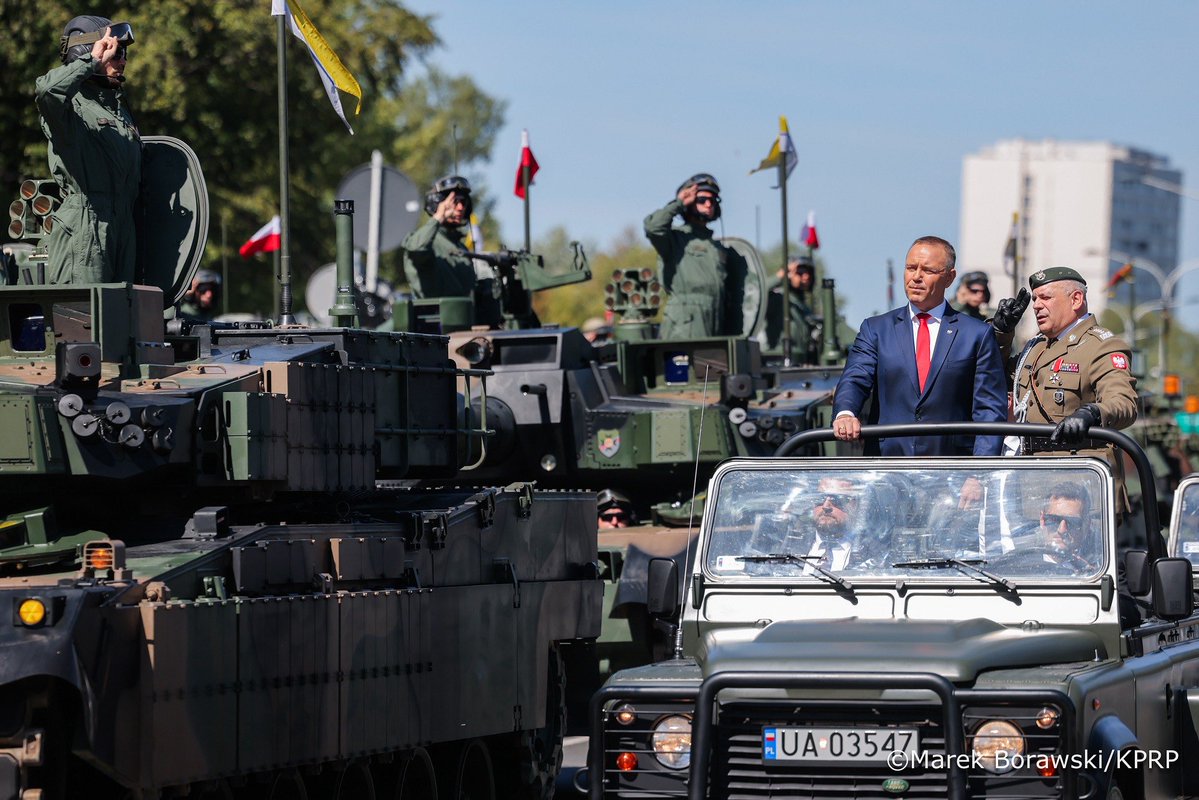
15 August – the anniversary of the victorious 1920 Battle of Warsaw – marks Polish Armed Forces Day. To observe the occasion, the armed forces took part in a grand parade along Warsaw’s Wisłostrada throughfare, where spectators could see the very latest land and air equipment.
What was the key to victory in 1920 was a strong and united nation, emphasised the President of the Republic of Poland, Karol Nawrocki.
https://t.co/mi3a7jAfTK
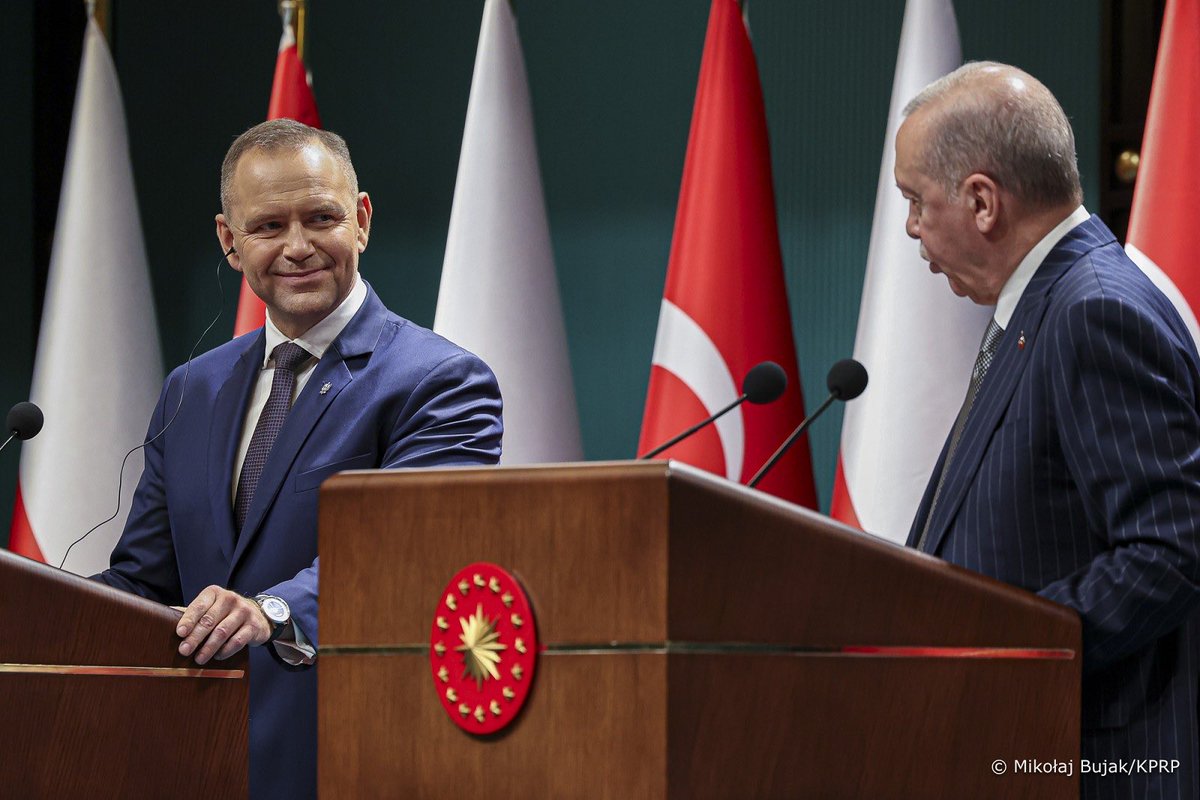
President @NawrockiKn visited Türkiye , where he participated in the North Atlantic Alliance Summit on Wednesday. During the talks in Ankara, the Polish leader highlighted three key geopolitical goals: strengthening allied solidarity, developing defense infrastructure on the eastern flank, and deepening relations with the United States in the face of the persisent threat from the Russian Federation.
“Poland’s expectations regarding the North Atlantic Alliance have been met,” said the President of Poland, adding that the Alliance is strong today and determined to defend the values for which it was founded.
https://t.co/Bg2mNWnQae
The 250th anniversary of the independence of the United States is the jubilee of a nation that has left an indelible mark on the history of the struggle for freedom and democracy. On this occasion, I extend my heartfelt congratulations to the American people and convey my greetings from Poland.
Poland and the United States were united by the ideals of freedom as early as in the 18th century. They were brought together by Pułaski and Kościuszko, the tradition of a constitutional state, by millions of Poles who have contributed to America’s success, and by our shared struggle for a safe and free world. We also remember American support for the rebirth of the independent Republic of Poland in 1918 and assistance in the fight against Bolshevik Russia.
Today, our alliance is one of the pillars of security for Europe and the entire North Atlantic Alliance. I am confident that, through the close cooperation between the Presidents of Poland and the United States, it will continue to grow stronger, to the benefit of both our nations.
I would like to thank President Donald Trump for his goodwill toward Poland and for our joint efforts to bolster our strategic partnership. Together, we are making it even stronger.
Polish President Karol Nawrocki met in Ankara with Turkish President Recep Tayyip Erdoğan; he visited the headquarters of Aselsan, a leading manufacturer of defence electronics; he also laid a wreath at the Atatürk Mausoleum. The President also visited the Incirlik Air Base and met with soldiers of the Polish Military Contingent (PKW). The Polish leader paid an official visit to Türkiye.
https://t.co/hhjrlkoVw1
The Russian drone strike on a residential building in Romania is deeply alarming. My thoughts are with all those affected. Poland stands firmly with Romania and condemns this unacceptable violation that endangered civilians on NATO territory. Russia must be held accountable for actions that threaten the safety and stability of Europe.
I stand and will continue to stand guard over the Polish-American alliance–a vital pillar of security for every Polish home and for all of Europe.
Good alliances are those based on cooperation, mutual respect, and a commitment to our shared security.
I thank U.S. President Donald J. Trump for his friendship toward Poland and for the decisions whose practical dimension we see very clearly today.
The security of Poland and the Polish people is my top priority!
🇵🇱🤝🇺🇸
The President of the Republic of Poland @NawrockiKn has appointed Bartosz Grodecki — a diplomat, civil servant, and security expert with nearly 20 years of experience in public service — as Secretary of State at the National Security Bureau to serve as the Bureau's Head.
* * *
Born in 1980 in Warsaw, Bartosz Grodecki is a diplomat, civil servant, and expert in security and migration policy. He is a graduate of the Faculty of Journalism and Political Science at the University of Warsaw and holds an MBA in cybersecurity management from the Military University of Technology.
From 2020 to 2023, he served as Undersecretary of State at the Ministry of the Interior and Administration. His responsibilities involved migration and border policy, cooperation with the EU in the area of internal affairs, issues related to foreigners and citizenship, cybersecurity, and repatriation. During the illegal migration crisis on the Belarus-Poland border, he coordinated a range of activities and represented Poland’s position in international forums and in relations with partners, emphasizing the protection of Poland’s national security, the safeguarding of the EU’s external borders, and counteracting migration pressure and human smuggling. He also participated in efforts to support Ukraine and assist war refugees during the crisis following the Russian aggression on Ukraine in 2022. Additionally, he played an important role in the evacuation of NATO collaborators from Afghanistan after the decision to withdraw the U.S. troops. He cooperated with democratic groups in Belarus and Moldova.
Earlier, from 2006 to 2020, he worked at the Ministry of Foreign Affairs, holding consular and managerial positions, including at diplomatic missions in Los Angeles, Malmö, and Stockholm. As Director of the Consular Department at the MFA, he was responsible for coordinating the activities of Poland’s consular service and managing crisis situations involving Polish citizens abroad.
After departure from public administration, he engaged in advisory and expert activities. Since March 2025, he has been affiliated with the Sobieski Institute as an expert. In recent years, he has also shared his expertise in the defense industry, cooperating with institutions and market entities. As part of his public activity, he focuses mainly on issues of national security, societal resilience, migration policy, and transatlantic and regional cooperation.
Leaders from Poland and Lithuania — U.S. allies on NATO's eastern flank — are planning to lobby President Donald Trump to shift American troops from Germany to their countries. (from @john_vandiver) https://t.co/0BWF5imna4
Here are some remarks made by Major General @Rzeczkowski_A, Director of the Armed Forces Supervision and Uniformed Services Department during his appearance at @Defence24Days int'l security conference:
▪️Following 2022, we all noticed that our strategies across the region and the Eastern Flank required urgent review. This started with the NATO Strategic Concept, followed by the EU Strategic Compass. The new concept of DDA — deterrence and defense — was developed, and that made all the countries across the region to update their strategies. For the Poles, particularly after the Russian aggression in Georgia in 2008 and then after the events of 2014 in Ukraine, Russia’s intention had been clear, but that was not the case of many countries of the flank.
▪️Another lesson learned from 2022 was that we needed to be able to counter a surprise attack and aggression. Some nations or individuals argued that Russia would likely remain under the threshold of war and continue to use active measures without crossing it. But after the attack of 2022 it became clear that there were no limits to Russian actions. This reflection laid the foundation for the new NATO force model, the new system of planning, the new readiness requirements, and additional spending across the region—as we understood that there was no time to waste anymore.
▪️The third take-away was that nations must have enough resources to conduct large-scale and longer operations. Previously, based on expeditionary observations from previous NATO concepts, we had focused more on capabilities supporting shorter, lower-scale engagements—but we were not ready for a major aggression. In some of our nations' operational constructs or doctrines, we assumed Russia would respect international law. So, all of society also had to transition to a new model—not only was the military system obliged to prepare, but the non-military subsystems required urgent attention as well.
▪️There were many other observations and lessons learned from Ukraine in the transformation domain. The decisions of Finland and Sweden—the new NATO members—were also strategic symptoms that the understanding Russia's intentions was improving.
▪️But the reflection on the Russian war in Ukraine is not the only accelerator of the modernization of the armed forces. We have also followed the recent USA military operations in the western hemisphere, as well as the Epic Fury against Iran. And we learn from that, too.
"(...) after the accesion of Sweden and Finland, NATO dominates the Baltic Sea, but Russia maintains its considerable capabilities there to project its power. Hence, the Baltic Sea is an arena where disruptive technologies will determine deterrence on the Alliance's eastern flank. There is no room for delays in the innovation cycle. That is why the launch of the world’s first NATO DIANA Living Lab - located at the Faculty of Electronics, Telecommunications, and Computer Science at Gdańsk University of Technology - is not an administrative decision, but a strategic one. The Living Lab fills a critical gap in the Alliance's innovation architecture. It serves as a bridge between the laboratory and the battlefield (...)” - wrote the President of Poland @NawrockiKn in a letter marking the opening of the NATO DIANA Living Lab at Gdańsk University of Technology.
The letter was read by Brig. Gen. (Ret.) Andrzej Kowalski, Deputy Head of the National Security Bureau, who attended the inauguration of the NATO DIANA Living Lab at Gdańsk University of Technology. The opening of the first facility of its kind within the Alliance marks a groundbreaking step. The investment in Gdańsk is, in effect, a technology testing ground in a quasi-operational environment, where dual-use and defense technologies are continuously installed, tested with the participation of military operators and civilian clients, and prepared for entry into government and NATO procurement chains.
The NATO DIANA Living Lab in Poland - the first one at @NATO - addresses a fundamental shift in defense technology: the bulk of innovation now originates outside the traditional defense sector, within a broad ecosystem of deep-tech and dual-use startups. Accelerating the “innovation-adoption” cycle is a prerequisite for survival on the eastern flank - the Baltic Sea, Ukraine, and potential crises in the Arctic require technological response systems measured in months, not years.
Numerous allied investments related to NATO’s DIANA defense innovation accelerator signify the recognition of Poland as a key hub for defense innovation on the eastern flank - and, in fact, across the entire Alliance. Poland is the only country in this region that possesses the full set of DIANA ecosystem tools: the Fort Kraków accelerator, 10 testing centers, the NATO Innovation Fund office, and as of yesterday, also the first Living Lab.
President @NawrockiKn at @CPAC USA 2026:
Ladies and Gentlemen,
Dear Friends,
Dear American Patriots,
It is a true honor to stand here with you in Texas – a land that symbolizes what America is all about: strength, independence, and pride in your nation.
I bring you greetings from Poland – a country that understands what freedom truly costs, and why it must always be defended.
This year, in just a couple of months, the United States will celebrate 250 years of independence.
Two hundred and fifty years ago, your Founding Fathers made a bold choice; a one full of uncertainty. They rejected tyranny. They rejected control from afar. They chose liberty, responsibility, and sovereignty.
And by doing so they changed the world. But let me tell you something that matters deeply to us in Poland: you were not alone in that fight.
When America fought for independence, Poles stood shoulder to shoulder with you.
Tadeusz Kościuszko and Kazimierz Pułaski – Polish patriots and soldiers of liberty – fought for American independence. Both devoted their lives to the same ideal: the defense of freedom.
And there is one more story – less known, but also important.
Haym Salomon. A man born and raised in Poland, who lived in New York City. When the Continental Congress was running out of money – Haym Salomon helped finance the American Revolution. He used his own resources to keep the cause of freedom alive.
He did not fight with a sword, rifle or cannon. He fought with commitment, with trust, with belief in the future of a free nation.
This is also part of our shared history. Polish heroes did not only fight for America. They helped build it.
They came because they believed something simple and powerful: that freedom anywhere is worth defending everywhere.
And as I am standing here I can state with certainty that this belief still connects and resonates in our nations today.
Ladies and Gentlemen,
Poland and the United States are not just allies. We are nations built on the same idea:
That government should serve the people – not rule over them.
That freedom must be protected – not managed.
That tradition matters – because it gives meaning to freedom.
In America, these ideas were shaped by your Founding Fathers. In Poland, they reach back centuries – to a time when we built one of the first republics in Europe, where power was limited, where citizens had a voice, and where liberty was part of our identity.
We are two nations, two continents apart – but rooted in the same Christian civilization.
And today, that civilization is under pressure. Not just from outside, but also from within.
We hear voices telling us that patriotism is something to be ashamed of. That borders don’t matter. That faith should be pushed out of public life. That tradition is something to be erased.
You hear it here in America. We hear it on the other side of the Pond, in Europe.
But let me say this clearly: a nation without identity is a nation without a future.
And I am sure that we – in Poland, and here in the United States – will not allow that to happen. Because we know something that many elites have forgotten: freedom does not survive on its own. It needs strong families. It needs strong communities. It needs people who are willing to defend it.
We also know that threats to our way of life are not just cultural. They are real. They are geopolitical. They are dangerous.
In Europe today, we face an aggressive Russia. A regime that invades its neighbors. A regime that destroys cities. A regime that believes power gives it the right to dominate others.
And today, that same regime tries to tell the world: “We are the defenders of traditional values”. This is a lie. Russia does not defend conservatism.
Russia represents corruption and violence.
True conservatism respects nations. True conservatism respects human dignity. True conservatism believes in freedom under law.
We also see other threats. The regimes in different parts of the world, spreading instability and terror in their respective regions and beyond. These authoritarian powers that want to reshape the world – not around freedom, but around control.
And in the face of these threats, we have a choice. To stand divided – or to stand together. Poland has made its choice. We stand with the United States, just like we always have: 250 years ago, during the First and Second World Wars, in the aftermath of the 9/11 terrorist attacks. Not because it is convenient. But because it is right.
Because, you know Ladies and Gentlemen, alliances are not built only in conference rooms and behind closed doors. They are built on the battlefield. They are built in moments of courage. They are built in moments of sacrifice – including the courage and ultimate sacrifice shown by the 66 Polish soldiers who gave their lives in Iraq and Afghanistan.
Poland and the United States have stood side by side not only in history, but in our own lifetime. We stood together in Afghanistan. We stood together in Iraq. And sometimes that partnership is written in the most powerful way possible. In blood.
Let me tell you a story.
Not long ago, in the White House, a solemn ceremony took place. The President of the United States Donald J. Trump awarded the Medal of Honor – posthumously – to Staff Sergeant Michael Ollis, who gave his life in Afghanistan. But he did not give it for his own countryman. He gave it to save a Polish soldier – Lieutenant Karol Cierpica, my friend.
In a moment of ultimate courage, he stepped forward. He took the blow meant for another man. A Polish man. A brother in arms.
The very same day that the Medal of Honor was bestowed upon Staff Sergeant Ollis by President Trump, Poland honored him as well.
Because Poland remembers. Because Poland understands what that sacrifice means. Because Poland knows that freedom is never free.
You cannot build a stronger alliance than this. This is not politics. This is brotherhood. This is what binds Poland and the United States together – not just as allies, but as family.
May Michael Ollis rest in peace!
May the 66 Polish soldiers who gave their lives for freedom, and the thousands of heroes from both our nations who made the ultimate sacrifice, rest in peace!
Let’s respect them together!
But let me add something important.
The challenges we face do not come only from outside. In Europe they also come from within our own community.
Let me be clear:
Poland made the right decision in joining the European Union and we want to be a part of the EU. I believe – and I hope the majority of my compatriots share this view – that Poland has a voice and the right to speak up. For the past 20 years, we have been part of the EU and now it needs urgent repair.
We see policies that – however well–intended they may be – risk weakening the very foundations of our strength. We see ever more powerful bureaucrats making decisions that go against common sense, and instead of strengthening Europe, they weaken it.
I’m talking about energy policies that move too fast, with no regard for economic reality and energy security. There are migration policies that fail to protect borders and social cohesion. There are moves to centralize decision–making, sidelining nations and democratic accountability.
And sometimes we see ideological projects that move us away from the values that build our Christian civilization, rather than reinforcing them.
I believe that: Europe and America are strongest when they respect their nations, when they respect their traditions, when they listen to their people.
Poland is committed to transatlantic realm of strong nations, and not a one that forgets where its strength comes from.
Ladies and Gentlemen,
Poland is a success story of freedom. Just one generation ago, we were behind the Iron Curtain. A communist system.
But that was not our choice. After World War II, Poland did not regain its freedom – even though we fought on every front of that war.
Unfortunately, after the brutal German occupation, another occupation came. This time – imposed by the Soviet Union.
And that occupation lasted almost fifty years. But let me tell you something important: the Polish people never accepted it.
Never.
Even in the darkest times, there were those who refused to surrender. The „Cursed Soldiers” – underground fighters or General Ryszard Kukliński who helped expose Soviet plans to attack NATO countries. In doing so, they not only defended Poland’s future but also built the foundations of the future Polish–American relationship.
There was also a man who reminded the world who we are. Pope John Paul II and finally a movement that changed history – Solidarnosc.
And yes – we were fortunate enough to have friends beyond our borders. Leaders like Ronald Reagan, who had the courage to call evil by its name.
Together, through faith, courage, and solidarity, we regained our independence.
And today?
Poland has become one of the fastest–growing economies in Europe. Our GDP has reached over one trillion dollars. Think about that.
In one generation we went from communism to prosperity. From control to opportunity. From dependence to strength. A nation finally free to realize its full potential.
And this did not happen by accident. It happened because we chose freedom. Because we chose hard work. Because we chose strong partnerships – with the United States, our European allies and like–minded partners around the globe. And this partnership is not just words. It is action.
We believe in our Polish–American alliance, but we also believe in the North Atlantic Alliance – the most powerful military alliance in the history of the world, led by the United States.
I agree with President Trump when he calls on European countries to increase their spending on our shared security. Yes, Europe must spend more. Yes, Europe must take greater responsibility for its own security.
In Poland, we understand this. That is why we stand as the eastern guard of Europe, of Western civilization, which we defend against tyranny, lies, and violence from the East: from Russia, though not only from there.
But we will not accomplish this great task alone, nor even in cooperation with the United States alone. We need our allies – we need their commitment and their sacrifice to preserve freedom. That is why we need to develop and strengthen NATO.
Today, Poland is one of the strongest allies of the United States in Europe. We invest in our military, because we know peace requires strength. We spend 5% of our GDP on defence. We invest billions of dollars in American–made military technology, including F–35s that are produced here in Texas. We host thousands of American troops, because we believe in real alliances, not symbolic ones.
And let me say this clearly:
We host American troops on the shoulders of the Polish taxpayer – because we understand what solidarity means. We understand what burden–sharing means. We do not just talk about alliance. We pay for it. We support it. We strengthen it.
And when American soldiers walk the streets of Polish cities, towns and villages – they are not strangers. They are welcomed and respected.
I would like to emphesise this: for the first time in history Poles are glad that foreign troops are stationed in their country.
Polish and American troops stand on the front line of NATO, because we understand what is at stake.
But our cooperation goes beyond security.
It includes energy independence. For years, some European states in their naivety decided to depend on unreliable partners, who use energy as a weapon.
Poland said: no. We chose diversification and cooperation with the United States. We chose independence.
And together, we are building something even bigger.
The Three Seas Initiative – a project that connects countries from the Baltic to the Adriatic and the Black Sea. It is about infrastructure. It is about Energy security. It is about economic strength. But above all it is about freedom.
For the past ten years, we have been turning this vision into reality. We are the fastest–growing region in Europe. We have invested billions of euros in roads, railways, broadband networks. We are doing this to create stronger connections and better opportunities for the 120 million people of Central and Southeastern Europe.
Because a region that is connected, developed, and independent is a region that cannot be controlled by authoritarian powers.
President Trump understands it. In 2017, Poland organized the Three Seas Initiative Summit in our capital – Warsaw. President Trump was there to support the Initiative. He also gave one of the most memorable speeches in our recent history.
Your President is a true friend of Poland but he is also a real fighter – for a better life for the American people, including the nearly 10 million Poles who have made America their home. We need leaders like him – leaders who put their people first, protect their jobs, defend families and secure their future.
Dear Friends,
We are living in a moment of decision. A moment when the future of our civilization will be shaped by the choices we make today.
Will we defend our values – or abandon them?
Will we stand strong – or step back?
Will we remember who we are – or forget?
Poland has made its choice. We choose sovereignty. We choose to respect tradition. We choose freedom.
Two hundred and fifty years ago, Americans proved that freedom can defeat tyranny. Decades ago, the people of Poland and other countries in Central Europe proved it again. And today, it is our responsibility to ensure that this story continues.
Not just for us. But for our children. For our nations. For the future of the free world.
So let me say this clearly, here in Dallas, Texas:
When Poland and America stand together – freedom wins.
When we stay true to our values – freedom wins.
When we have the courage to defend what matters – freedom wins.
God bless Poland!
God bless the United States of America!
And God bless the alliance between our great nations!
Welcome to the official X profile of the National Security Bureau in English. Follow us for information about the activities of the National Security Bureau related to security, both domestic and international, as well as the activities of the President of the Republic of Poland pertaining to security, defense, and his powers as commander-in-chief of the Polish Armed Forces.