For the AI era, Bilal Bin Saqib believes that the winner may be the infrastructure built long before AI became mainstream.
When the use case changes, the value of the underlying assets changes with it.
#BilalBinSaqib#AI#Innovation#Compute#FutureTech
Everyone's looking at GLM 5.2 as a model release.
I'm looking at it as the moment crypto miners became AI infrastructure.
Once a model can run a hundred steps without falling apart, you stop asking one question and start running ten thousand. Token demand doesn't grow linearly. It steps up hard.
At the same time, the frontier labs are heading to IPO. Those cheap tokens were bait. The bait is gone.
The thing that's actually scarce isn't chips. It's power. New entrants wait five to seven years for grid connection. That queue is a structural barrier.
Miners already solved it. A decade of cheap power, land, cooling, grid hookups. Everyone called it a dress rehearsal for nothing.
The asset didn't change. The use case is evolving. The pricing hasn't caught up.
Full article here: https://t.co/lhwdasLLCl
Bilal Bin Saqib challenges a common assumption: the real advantage isn't having the most compute, it's using it better.
History has shown that efficiency often beats abundance.
#BilalBinSaqib#AI#Pakistan#Innovation#FutureTech
We keep telling smaller countries they can't compete in AI because they can't afford the chips.
The people building those chips would laugh.
Today's hardware is provisioned ~5x beyond the work it actually does; almost nobody comes close to using it.
The frontier isn't a spending contest. It's an efficiency one.
And efficiency has always been the game of those who couldn't afford to be wasteful.
For a generation rich in talent but short on access, direction mattered.
@Bilalbinsaqib reframed blockchain not as hype but as a bridge connecting Pakistani youth to global opportunities through structure and participation.
#Pakistan#DigitalFuture#YouthEmpowerment
Representing Pakistan on the global financial stage. 🇵🇰
At the Point Zero Forum 2026 in Zurich, @Bilalbinsaqib discussed how AI and blockchain are redefining financial systems and creating new opportunities for the future.
#BilalBinSaqib#Pakistan#Zurich#DigitalEconomy#AI
Chairman PVARA and Minister of State Bilal Bin Saqib joined founders and investors at Unconference'26 to discuss the infrastructure behind Pakistan's digital future.
240 million people. 100 million+ unbanked. One of the world's fastest-growing crypto adoption rates.
#PAK#tech
Chairman PVARA and Minister of State @BilalBinSaqib MBE in a fireside chat at Unconference'26 by @paklaunchdotcom, joined by founders and investors from across the ecosystem.
From virtual asset regulation to stablecoin rails, the conversation explored what Pakistan's new financial infrastructure unlocks for builders today.
240 million people. 100 million+ unbanked. One of the fastest growing crypto adoption curve on earth.
Pakistan isn't waiting for the future of finance, we're building it.
.@Bilalbinsaqib spoke about a challenge that affects every modern state: how do you govern at digital speed?
The answer is not more complexity. It is better systems, faster decision-making, and technology that helps institutions serve people more effectively.
#Pakistan#AI
The AI race won't be won by the countries with the most graduates. It will be won by the countries that can turn talent into builders, researchers, and innovators at scale.
#BilalBinSaqib#AI#Innovation#FutureReady
China’s hard reset of 12,000 degrees proves the old educational playbook is dead.
For Pakistan, AI is the ultimate economic equalizer because the rules of global business have fundamentally changed:
> **Midjourney** generates $500M in revenue with a lean team of just ~100 people.
> **Cognition AI** hit a $26B valuation while its AI engine (Devin) autonomously writes 89% of its own code.
Scale is no longer about massive institutional headcount or legacy infrastructure. It is about compute, raw ambition, and aggressive national policy.
The nations that rewrite the rules of education today will dictate the terms of the next century.
History is full of ideas that were dismissed right before they changed everything.
The people who shape the future are not the ones asking what is possible today. They're asking what should be possible tomorrow.
#BilalBinSaqib#Innovation#FutureOfTechnology#Leadership
The next time someone with limited imagination tells you something cannot be done, remember this.
The future is rarely built by those who can only see the world as it already exists.
75 years of Pakistan-China friendship.
Honoured to attend the state banquet hosted by Premier Li Qiang at the Great Hall of the People, marking a relationship that has stood the test of time and continues to evolve into a partnership shaping the future of the region and beyond.
From grey areas to governance in one decisive year.
With the Virtual Assets Act 2026 and the establishment of PVARA, Pakistan moved from hesitation to institutional clarity. Regulation became strategy, and credibility followed.
#Pakistan#DigitalAssets#VirtualAssetsAct#PVARA
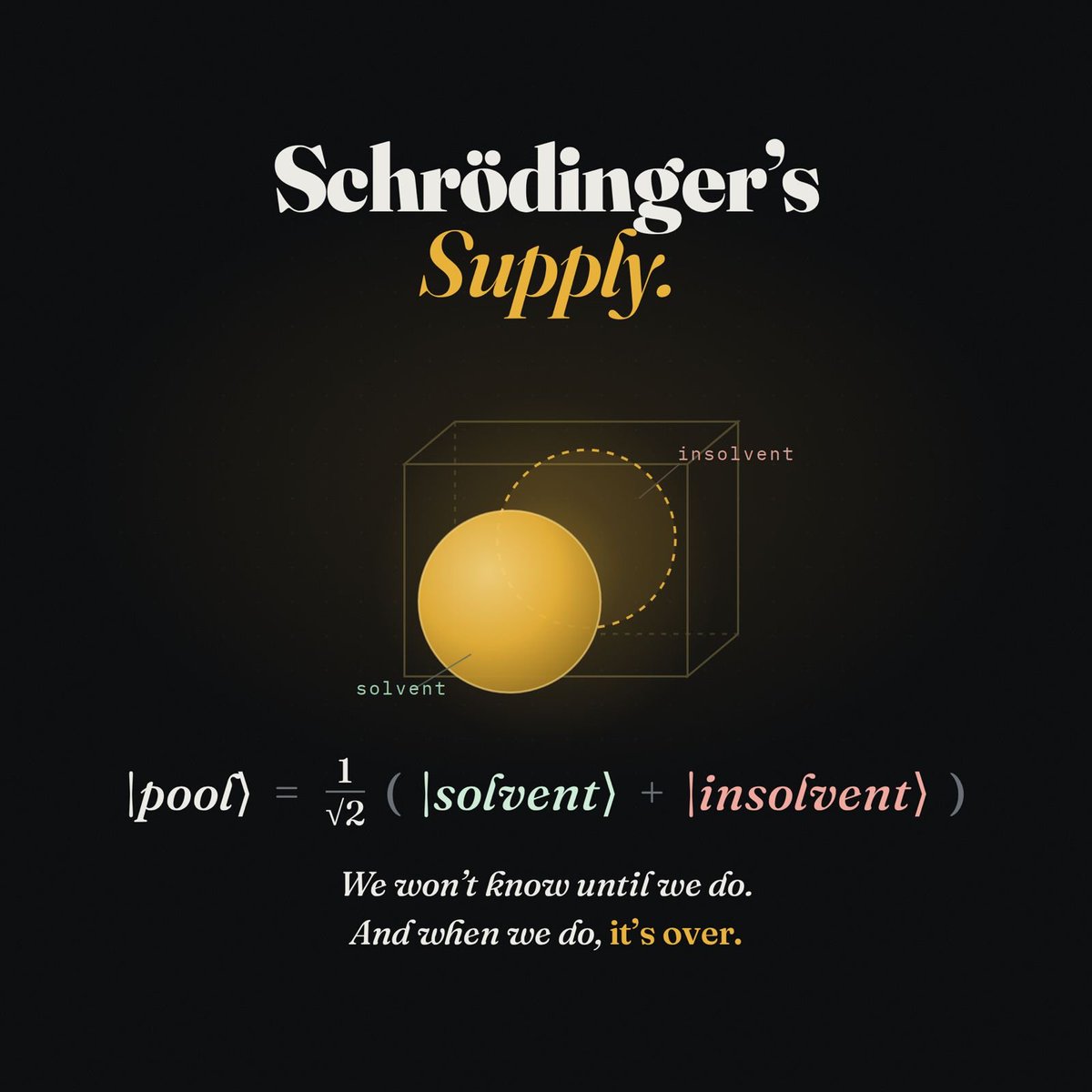
A system you can't observe is solvent and insolvent at once, so the fix isn't less privacy, it's verifiable solvency: proving the pool is whole without revealing who's in it.
Markets can price a loss; they can't price an unanswerable question.
"No evidence of exploit" and "provably no exploit" are different sentences, and the gap between them is where the next standard gets built.
Privacy is a feature; unfalsifiability is a liability, and separating the two is the work ahead.
A 4-year-old AI company now carries more paper value than the entire public markets of multiple emerging economies combined.
This is exactly the shift @Bilalbinsaqib has been highlighting that the world has moved from controlling land and oil to controlling intelligence infra.
Anthropic IPO valuation: $965 Billion (4 years old).
The Physical Economy:
Combined stock market cap of Pakistan, Bangladesh, & Nigeria: ~$190 Billion
Combined annual GDP (economic output): ~$1.35 Trillion
Anthropic's paper value is 5x the entire public market equity of those three nations - and it is rapidly chasing down their combined annual economic output.
Millions of people from 3 nations vs. ~5,000 employees. None of them owns the servers the whole thing runs on. They rent & run their tech. But not everyone gets to rent - the access part should be the focus.
We have officially transitioned from the economy of geography to the economy of compute. The physical barrier is gone. The only barrier left is access to the infrastructure layer.
The nations that figure out how to build and own their own intelligence layer will dominate the next century. The ones that just rent it will be left behind.