@StephenIgoe Backup comes in and gets a passing yard less than the golden child QB on three passes. I think talking about a two QB system after you finally get your recruits fully on the roster is a recipe for disaster big time. I’m looking at the schedule and you don’t see many wins
Greetings from Charlotte, the neighbors know we are an ECU household now! Honored to be the radio voice of Pirates Football this season & jumping on board #PirateNation!
Can’t wait to get to Greenville for practice and eating the best BBQ, not necessarily in that order.
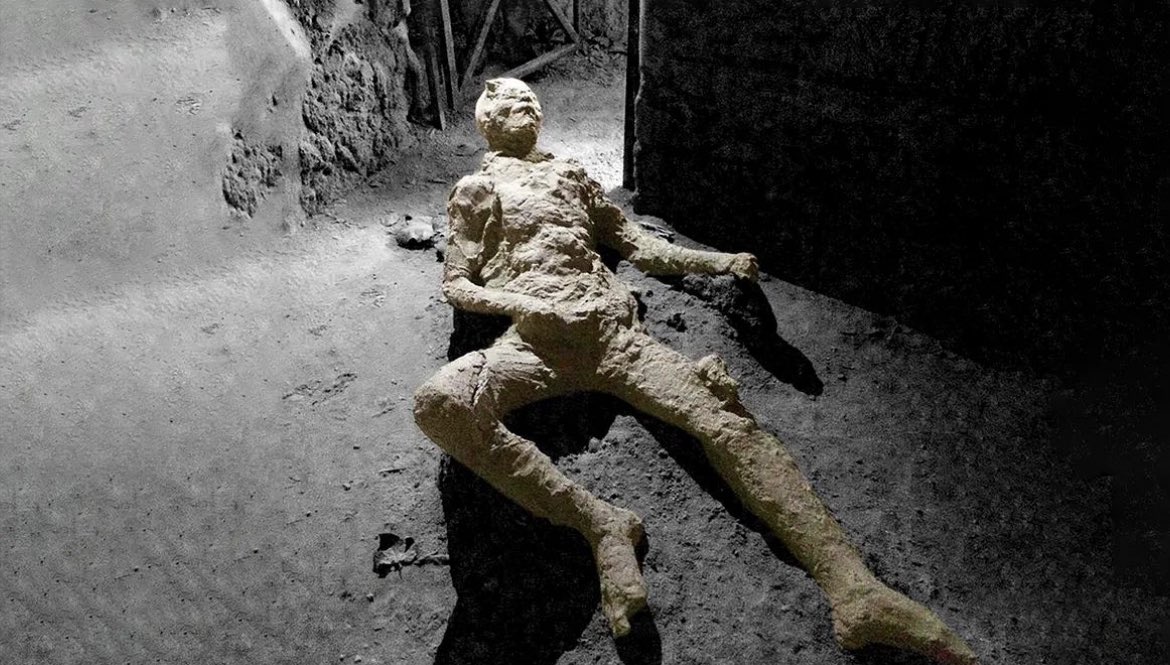
The photograph, released in 2017, showcases the remains of an individual who resided in Pompeii during the eruption in 79 AD. The posture of the body led to speculations suggesting that the man had died while masturbating. These theories ranged from the man employing self-pleasure as a coping mechanism to the notion that he had chosen to experience one last orgasm before his untimely demise. One online user humorously summarized the image as depicting an audacious individual indulging in a final act before confronting eternity.
However, the reality is that this man was not masturbating at the time of his death. The intense heat during the eruption caused his body to contort unnaturally. It is likely that he succumbed to the volcanic gas, and his body subsequently reacted severely to the heat, resulting in the observed position.
The catastrophic destruction of Pompeii occurred in 79 AD when the nearby volcano Mount Vesuvius unleashed a violent eruption, wiping out the Roman town. Despite the horrifying nature of this event, the ash from the volcano enveloped Pompeii, preserving it remarkably and offering us invaluable insights into Roman life.
The body depicted in the photograph is just one among thousands. Many of these ash casts lack a skeleton, as the ash's acidity has eroded it over time. Instead, they are hardened rock formations that replicate the original shape of the bodies they once covered. Nonetheless, some casts do still contain skeletons, enabling analysis to unravel the lives, deaths, and experiences of individuals within a Roman town.
In ancient Mesopotamia, around 1750 BC, an interesting incident occurred involving the first documented complaint, albeit in the form of a clay tablet. The complaint was composed by a man named Nanni and addressed to a merchant named Ea-nasir. Nanni expressed his frustration regarding the merchant's delivery of the incorrect grade of copper, despite having already made the payment. Additionally, Nanni highlighted his displeasure with Ea-nasir's disrespectful behavior towards Nanni's servant during their confrontation.
Curiously, this was not an isolated incident involving Ea-nasir. Archaeologists discovered over a dozen similar "letters" within Ea-nasir's residence. It became evident that Ea-nasir had gained a reputation for failing to deliver products that had been paid for or for mistakenly sending them to the wrong recipients. Moreover, whenever his business ventures faced challenges, he would promptly initiate a new enterprise.
These clay tablets, serving as historical evidence, shed light on early consumer complaints and the unethical practices of certain merchants during that era. The discovery of multiple complaint tablets offers a glimpse into the frustrations and grievances faced by customers, emphasizing the importance of fair trade and ethical business practices, even in ancient times.