Feijóo y Abascal aceptan ser entrevistados por el 'youtuber' Jordi Wild. Pedro Sánchez aún no ha confirmado su presencia en 'The wild project'.
https://t.co/P4r8Ez0kr8
Thanks to everyone for coming out to yesterday's event! Huge shoutout to @Valinorae for fulfilling a grand architectural vision down to the smallest details, @jaygee_hl for the top tier execution and coordination, and @iliensinc for the tireless work behind the scenes. Also thank you @RitzCarlton #Singapore for going above and beyond and for your warm hospitality. The community and ecosystem are deeply grateful to you all for putting on the best event that I and many others have ever experienced.
It's incredible to see how far Hyperliquid has come and the momentum with which the ecosystem is growing. Looking forward to another year of building alongside the ever-growing community.
The Big Difference Between HYPE and ASTER Burns
ASTER just burned 3.11M tokens worth ~$2.25M
Big number, but the more interesting question is: how effective is the burn mechanism?
Both Aster and @HyperliquidX direct 99% of fees toward their token economy, but the end result is different.
Hyperliquid:
→ Fees buy hyperliquid:native
→ HYPE goes to the Assistance Fund
→ HYPE is permanently burned
→ Fees directly reduce supply
Aster:
→ Fees buy aster-2:native
→ Bought ASTER goes to stakers as rewards
→ An equal amount of team allocation is burned
→ The bought tokens can return to circulation
So while Aster can generate impressive burn headlines, Hyperliquid has a more direct link between protocol revenue → market buyback → permanent supply reduction.
The real metric isn't how many tokens were burned.
It's how much of the protocol's revenue actually removes tokens from the market.
And that's where HYPE's mechanism currently looks more efficient.
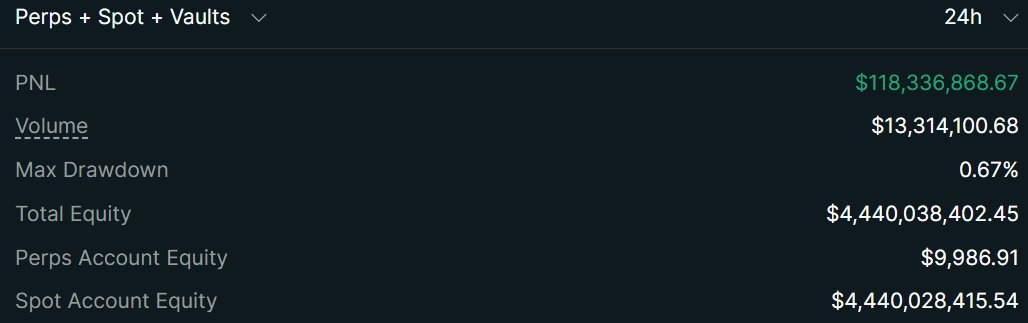
The Assistance Fund bought back $13,314,100 worth of hyperliquid:native over the last 24 hours, making it the second-best day ever, behind 10/10.
https://t.co/sIcXqKraga
Bloomberg Just Put Hyperliquid on the Institutional Map
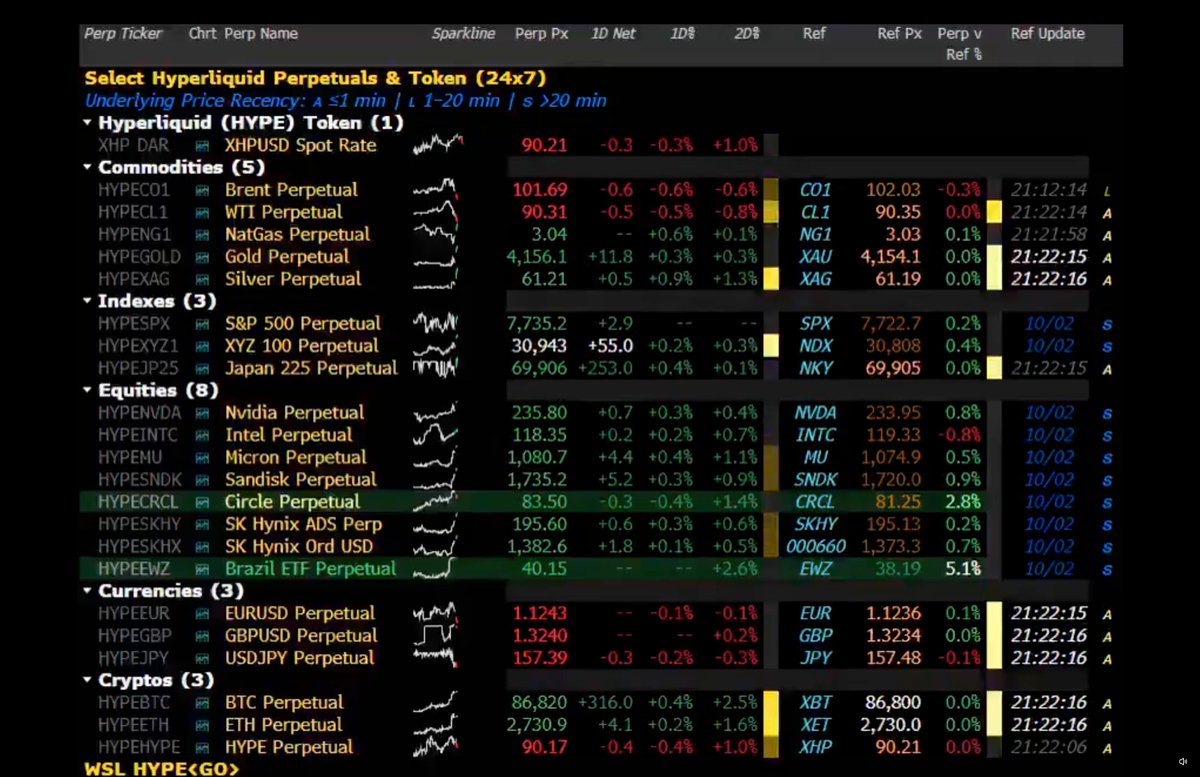
Bloomberg's @TheTerminal now lets users type WSL HYPE <GO> to monitor select Hyperliquid perpetuals 24/7 across crypto, equities, commodities, FX, and indexes.
No execution yet. But the bigger impact is institutional distribution.
Desks can now compare @HyperliquidX prices with Bloomberg references like BTC, NVDA, S&P 500, Brent and EURUSD without leaving their existing workflow.
Why it matters:
• More visibility → institutions can easily discover and monitor Hyperliquid markets
• More credibility → Hyperliquid becomes a recognizable price source alongside traditional markets
• Stronger ecosystem → reinforces the thesis of 24/7 on-chain markets across global assets
Bloomberg isn't bringing institutional capital to Hyperliquid overnight.
But it puts Hyperliquid where institutions already look for prices.
That is an important step toward making on-chain markets part of the institutional workflow.
USDC Reserves Are Now Fueling hyperliquid:native Buybacks
.@HyperliquidX received its first $14.58M $USDC payment through its AQAv2 mechanism, creating a new source of revenue beyond trading fees.
The key part:
• Users bridge USDC → Circle mints USDC on HyperEVM
• Hyperliquid earns fees on the USDC reserves, even when they are not being traded
• The first 30-day payment was $14.58M, implying roughly $193M annualized at the current scale
• Revenue goes to the Assistance Fund, which is used to buy hyperliquid:native
This means Hyperliquid can now monetize not only trading activity, but also the capital sitting on the platform.
AQAv2 adds another flywheel for hyperliquid:native: more USDC reserves → more reserve income → more hyperliquid:native bought by the Assistance Fund → stronger value capture for the token.
JUST IN: @HyperliquidX perpetual futures go live on Bloomberg Terminal, as the platform distributes its first $14.6M in stablecoin yield to fund $HYPE buybacks and burns, with annualized revenue approaching $193M.
It's OVER.
The SEC and CFTC are done waiting for the CLARITY Act.
Regulators have now made at least 9 moves to build crypto rules without Congress.
1. SEC Crypto Task Force
- define what is and is not a security
2. Project Crypto
- modernize SEC rules for onchain markets
3. SEC-CFTC crypto guidance
- classify crypto assets into clearer categories
4. SEC-CFTC harmonization MOU
- reduce overlap between the two agencies
5. Joint Harmonization Initiative
- create shared rules for crypto firms
6. CFTC Innovation Task Force
-speed up crypto and blockchain market rules.
7. CFTC crypto FAQs
- clarify how registered firms can use blockchain
8. SEC Innovation Exemption
- allow tokenized US stocks to trade onchain
9. CFTC proposed crypto market rule
- create a formal framework for crypto asset markets
Crypto may now move forward without CLARITY Act.
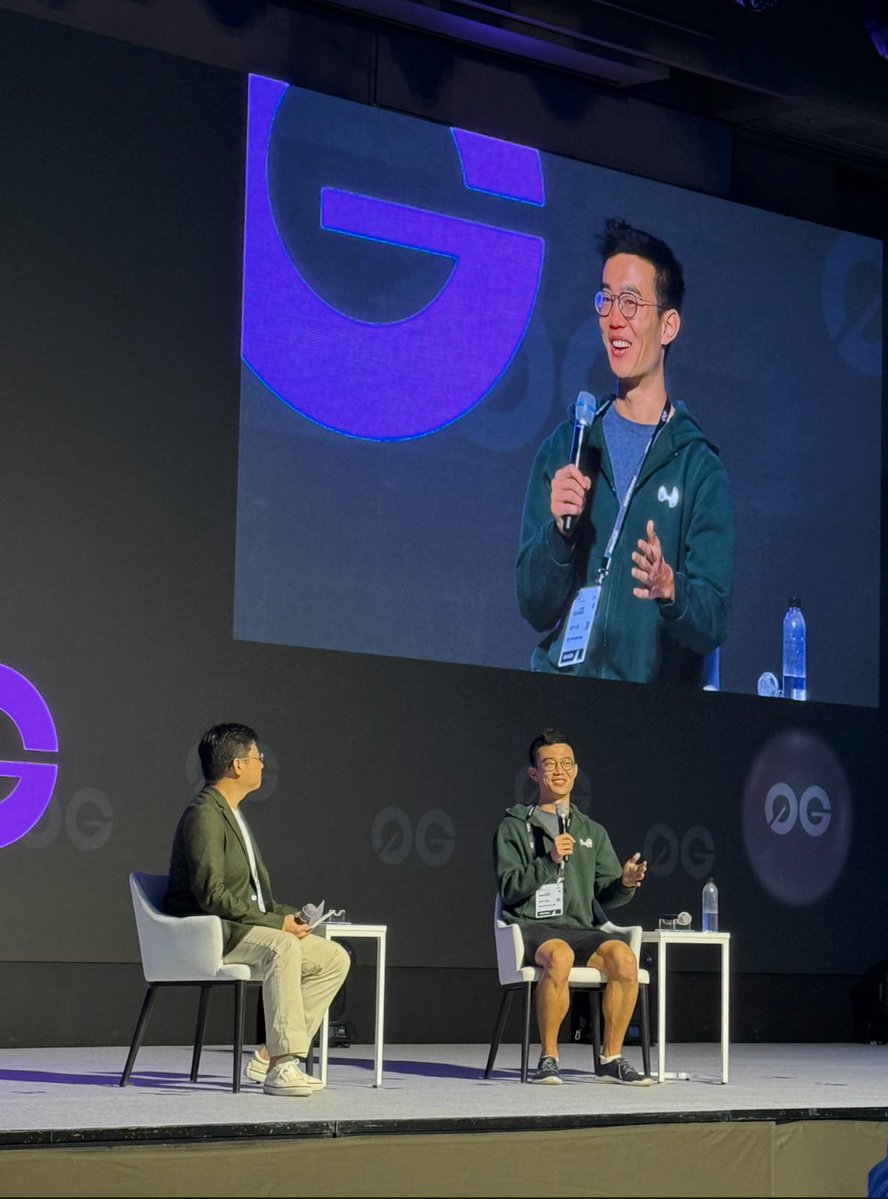
🔥 NOW: Hyperliquid CEO Jeff Yan at Korea Blockchain Week 2026 thinks private markets are a big opportunity.
“I think right now at least a lot of wealth is being created in a way that is really gate-kept.”
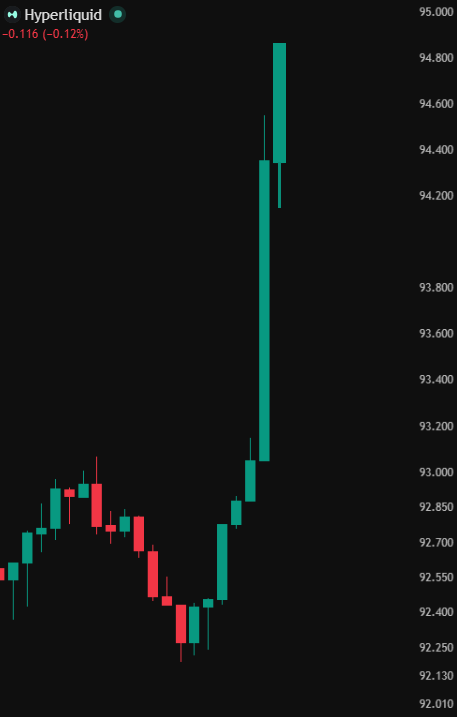
🚨BREAKING: $HYPE surges near $95 after Binance announces it will list Hyperliquid.
Binance will open spot trading for HYPE at 11:00 UTC today, with deposits already open and withdrawals starting tomorrow.
🔥 BULLISH: Crypto tokens tied to trading and tokenization have surged up to 50% as US regulators move to expand digital-asset markets, with $HYPE hitting a record $96, per Bloomberg.