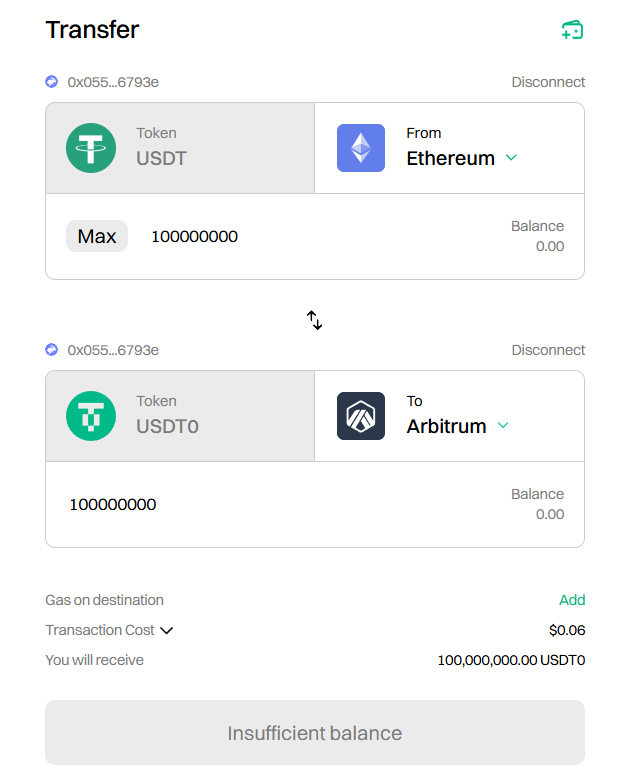
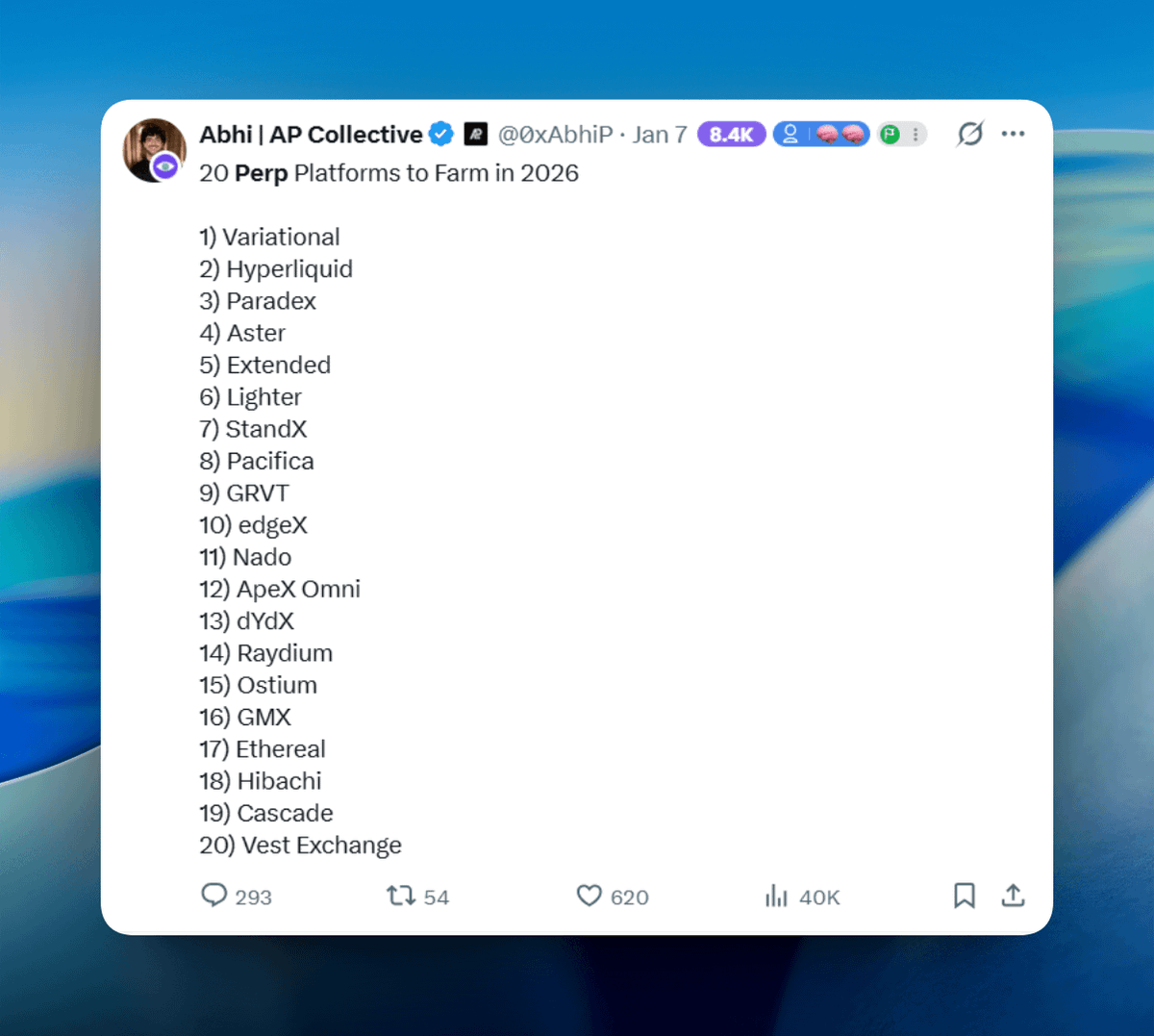
Is this real number?
It costs only 6 cents to bridge $100M from Ethereum w LayerZero OFT model 👇
https://t.co/NsReyyqOqa
There is NO slippage at all, available on HyperEVM, Tron, TON, SEI EVM, Berachain, L2s,...
WOW! Is this Hyperliquid season?
$HYPE around $57, one of the strongest charts right now. If you missed the recent run, don't worry.
Many still don't fully realize: $HYPE = HyperCore (perp) + HyperEVM (L1).
Perps volume is dominating, but the whole ecosystem is riding strong momentum with amazing numbers:
• TVL: $1.675B
• Stables mcap: $5.5B
• DEXs Volume (24h): $623.75M
• Fees (24h): $4.97M
• Daily users: 17K
Most activity come from lending, staking and derrivatives, but what stands out is the creativity of the protocols building here like Felix, Valantis or Hypezion Finance.
@0xHypezion Finance introduces a pooled-collateral, no-liquidation stablecoin ( $hzUSD ) combined with native yield ( $shzUSD ) and structural leveraged exposure to $HYPE ( $bullHYPE ) in one circular system.
$bullHYPE is really interesting:
• It gives users structural, perpetual leveraged long exposure to $HYPE without funding rates, margin calls, individual liquidations, or time-based decay.
• Can be traded or used in LPs
• It is not a perpetual future or borrowing-based position, so there are no funding payments. This makes it ideal for long-term bullish conviction on $HYPE.
Basically a perp without the usual perp pain. What do you think of this play?
$INK Airdrop Update
If you are farming $INK using @nadoHQ, this is one of the most important updates so far.
S1 recap:
• $61.2B cumulative perp volume
• $53.2M TVL
• 78,200 traders
• From crypto perps to commodities, FX, and US equity perps
S2 changes:
• Open access for everyone
• Trading competition
• Points system revamp
• Referrals v2: fee-based commissions (cash + points)
Coming soon: RWAs as collateral + fiat on/off-ramps.
No creator / ambassador program or social tasks.
Do you play?
$ZRO please do something
5 big names: @KelpDAO, @SolvProtocol, @re , @krakenfx , @Lombard_Finance have announced or completed migrations from LayerZero to Chainlink CCIP following the KelpDAO hack.
These moves involve roughly $4 billion in total assets/TVL.
Poor security, a slow response to the hack, and a tendency to deflect blame have seriously damaged LayerZero reputation.
• Massive funding
• Founder talked a big game
• One of the stingiest airdrops ever, users even had to donate just to claim
• Farmed contributors for Discord roles
• Confirmed airdrop S2 S3 S4 to farm fees, then cancelled
• Tech is arguably weaker than competitors
• Token price has been nuked
A project that came out swinging like a giant and ended up falling hard.
Real estate needed more than just any blockchain.
Real Estate’s Full-Stack Layer 1 is here.
Dedicated Technology. Focused Ecosystem. Asset-Specific.
) ✣ ( https://t.co/wD8UKg8GyA
Experience real estate, finally visible and readable to AI.
Every action earns XP. Continue your journey or start afresh.
Testnet is live: https://t.co/6Cayd9JySH
Be early.
Real estate needed more than just any blockchain.
Real Estate’s Full-Stack Layer 1 is here.
Dedicated Technology. Focused Ecosystem. Asset-Specific.
) ✣ ( https://t.co/wD8UKg8GyA
➟ I won big with $HYPE, $MYX, $ASTER. Here are my strategies for profitable perps farming
Imo, success requires low fees, high liquidity, and avoiding over-leverage amid volatile markets.
If you're farming perps, check this out ↓
Core Strategies
▸ Funding Rate Arbitrage:
- Go long spot/short perp when rates are positive/negative to collect payments delta-neutrally
- Use multiple DEXs to dodge Sybil checks and maximize airdrop points
▸ Opening Range Breakout:
- Trade small time-frame chart breakouts after first 15-30 min in range
- Trail stops instead of fixed TPs for bigger moves
▸ Demand Zone:
- Enter on small time-frame touches of support/resistance boxes
- Tight SL outside zone, trail for frequent volume generation
▸ Leverage:
- Limit to 2-10x, use limit orders only, diversify across assets/DEXs, and reduce sizes in high vol/news events
Plus, factor funding costs for holds >1 day, so scale out profits at multiple levels. Start small for airdrop farming, prioritizing volume via low-leverage trades.
What do you think?
➟ Stani, @aave founder, shared a compelling long-term vision for Aave's role in the decades ahead.
His core thesis:
The world is transitioning from a ''scarcity economy'' to an ''abundance economy'', driven by technological progress. Aave aims to become a primary capital engine financing this historic transition - powered by blockchain.
1⃣ Redefining ''Abundance'' and the role of finance
Historically, finance has always acted as the catalyst for major human inflection points - from railroads to electrification.
Modern technologies such as solar energy, battery storage, AI, and genomics follow the logic of economies of scale: the more we produce, the cheaper it becomes.
Ex: solar energy costs have fallen 99.8% since 1976.
However, reaching these ultra-low cost levels requires massive upfront capital deployment. Solar energy alone may require $15-50 trillion in investment by 2050.
In short: abundance is possible, but it must be financed first.
2⃣ Aave's strategy: Tokenizing ''Abundance Assets''
▸ The Problem:
DeFi has become highly efficient at mobilizing capital (supply), but lacks sufficient high-quality, productive collateral (demand).
▸ The Strategy:
Rather than focusing solely on crypto-native assets or US Treasuries, Aave plans to accelerate the tokenization of RWAs, such as renewable energy infrastructure.
▸ The Mechanism:
- Clean energy projects could tokenize their assets and use them as collateral to borrow stablecoins (e.g., GHO) on Aave.
- Developers gain faster access to capital.
- Depositors earn sustainable, lower-risk yield backed by real-world cash flows.
- Aave becomes the onchain liquidity layer funding real-world abundance.
→ It sounds bold, slightly crazy, and undeniably ambitious.
@aave TVL stands at ~$26.7B (@DefiLlama)
Tips how to avoid X ban from making crypto content
The rule of decline X monetization was existing since 2023
But yesterday, we got a chance to get fully banned
I guess you know how many people lost their X payouts last 6 months
Next stage is restriction of account (potentially)
True it or not, we have to be ready to any scenario and avoid triggers which can provoke ban
Actions to avoid X ban:
1. Stop posting any piece of content regarding to financial "advices" and market's moves (from speculation side)
Example: ICOs, Altcoins (overviews even), Memecoins etc.
2. Do exclusively educational content and leave the next mark under each your tweet:
"NFA, DYOR, educational content"
3. Leave a financial disclaimer in your bio (check out @Eli5defi as an example)
4. Less mentions of tokens' ticker (it gives a sign to initial X algo that you can potentially promote crypto)
The biggest problem of CT is in scammy schemes from rug founders and no growth potential (since all teams' tokens are getting dumped in a long-term)
That’s exactly what X is actively trying to fight against (it creates the damage to general reputation of social media)
As once InfoFi was creating a damage (because TL was flooded by farmers)
Main thing which you have to realize is:
"Nothing wrong happened, it was existing, just now we have a chance to get a restriction and just need to change an approach and adapt"
Stay safe my gang, more ways of monetization is coming soon ❤️
➟ Inference Labs = The Trust Layer for Verifiable AI
@inference_labs is an AI × web3 infra company building cryptographically verifiable AI systems using zk machine learning (zkML).
Its core mission is auditable autonomy: enabling AI agents, robots, and financial systems to produce outputs that are mathematically provable, privacy-preserving, and tamper-resistant.
Rather than competing on model performance, Inference focuses on trust infrastructure: turning AI outputs from opaque guesses into verifiable facts.
---
➊ The Problem: AI Lacks Auditability
Modern AI systems operate as black boxes. While outputs may be accurate, there is no reliable way to prove:
• which model produced an output
• whether inference was executed honestly
• or whether results were altered post-hoc
This lack of auditability limits AI deployment in high-stakes environments such as autonomous agents, robotics, DeFi, and regulated decision systems.
Traditional approaches (logs, audits, consensus) rely on trust assumptions rather than guarantees.
→ @inference_labs addresses this gap with cryptographic verification at the inference layer.
➋ Core Technology: Proof of Inference
Proof of Inference is a zk proof that attests an AI output was:
• generated by a specific, committed model
• on a specific input
• following the declared computation
• without exposing data or model IP
→ Inference runs offchain for efficiency, while compact ZK proofs enable onchain or offchain verification
→This converts AI outputs into provable, audit-ready artifacts.
➌ Technology Stack
• Inference Network™
A decentralized proof verification network designed for enterprise, robotics, and cross-chain AI workloads.
• DSperse
A modular zkML framework that slices inference into parallelizable components, reducing proof cost and memory requirements.
• JSTprove
An open-source zkML toolkit supporting ONNX models, lowering developer friction for verifiable inference.
• TruthTensor Crucible
A live agent testing environment (deployed on Polymarket) where autonomous agents operate with verifiable logs and cryptographic accountability.
➍ Ecosystem & Partnerships
@inference_labs integrates across decentralized compute, zk hardware and DeFi:
• Bittensor Subnet 2 (decentralized compute)
• Cysic (ZK hardware acceleration)
• Lagrange / DeepProve (verification libraries)
• Renzo, Testmachine, Smart Delegation (early adopters)
→ The ecosystem emphasizes infrastructure adoption over token incentives.
➎ Token & Economic Design
Unlike many AI-crypto projects, Inference Labs currently prioritizes protocol utility over token mechanics. While an ICO and community rewards exist, the strategy centers on:
• enterprise adoption
• verification fees
• crosschain infra usage
→ This contrasts with more consumer-oriented, token-driven AI networks.
➏ Competitive Positioning
Inference Labs differentiates itself by:
• cryptographic verification vs model consensus
• privacy-preserving proofs vs transparent heuristics
• infra focus vs application-layer AI
→ Competitors often optimize for scale and UX, while Inference Labs optimizes for correctness, auditability, and trust minimization.
---
Risks and Investment Thesis
• zkML remains technically complex and computationally intensive
• Adoption depends on enterprise and protocol-level integration rather than viral growth
• Token-light design may slow community-driven expansion
• Regulatory environments for verifiable AI remain fragmented
@inference_labs targets a foundational layer in the AI stack. As autonomous agents and AI-driven systems proliferate, verifiability becomes non-optional.
If Proof of Inference gains adoption as a standard primitive, Inference Labs could emerge as a critical trust layer for decentralized and regulated AI systems.
Key catalysts include enterprise deployments, decentralized proof network milestones, and onchain activity directly tied to AI verification.
➟ Preparing for 2026: The Highest-Probability Crypto Narratives
I went through a large number of reports, essays and forecasts from funds, institutions, and veteran market participants - to identify the trends with the highest probability of playing out.
This is NOT about price predictions. This is about market structure: what survives, what fades, and what actually matters long-term.
The theses are grouped by confidence level: high, medium, and low.
---
➊ High Confidence
• The end of ''regulation by enforcement''
Clearer, more crypto-friendly regulatory frameworks are coming.
• Hyperliquid dominates trading
Becomes the undisputed onchain trading engine.
• Stablecoins become core financial rails
The backbone of digital finance, not just a crypto niche.
• Bitcoin as a sovereign macro asset
$BTC increasingly viewed as digital gold at the nation-state level.
➋ Medium Confidence
• ''Revenue Meta'' survives and thrives
Protocols with real revenue keep growing despite market cycles and the collapse of the ''low float / high FDV'' model.
Standouts: Aave, Aerodrome, Hyperliquid.
• L1-L2 consolidation accelerates
• Capital rotates out of weak alts
Concentrates into Base and Solana.
• Prediction markets become ''truth engine''
Polymarket and Kalshi emerge as leading data sources.
• RWAs tokenization focuses on US Treasuries
• AI x Crypto shifts narratives
From models → infras and agents.
➌ Low Confidence
• The death of the 4-year cycle
• Digital Asset Treasuries (DATs)
Highly sensitive to crypto market volatility.
• The long-term viability of airdrops
Are airdrops dying… or just outdated?
• And Ethereum's fate
Will ETH actually outperform expectations in 2026?
Not many are betting on $ETH massively outperforming next year...
---
Less hype, less memes.
More revenue, more rails.
2026 is shaping up to be about infras + liquidity + who actually prints money.
➟ 2025 was the year @SentientAGI stopped being research-only.
Now real AGI infras is here.
▸Early 2025
• Sentient doubled down on OML (Open, Monetizable, Loyal AI), solving one of the hardest problems in AI: ownership, attribution, and incentives
• Fingerprinting + loyal models = open source that can actually scale
▸Mid-2025
• Sentient launched GRID: a decentralized AGI network. Not a chatbot or demo. It's a coordination layer for agents, models, data, tools
• Composable, open, permissionless AGI infra
▸ By H2 2025
• GRID expanded to 100+ partners. It was real integrations, real workflows, real traffic
• Sentient Chat, Dobby models, Open Deep Search, fingerprinting, ODS
▸ Late 2025
• Airdrop seasons, leaderboards, contribution tracking
• Sentient SERA
• Snapshot-based allocations signal serious design
▸ Sentient spent years doing the hard, unsexy work:
• Loyal AI
• Provenance
• Verification
• Open AGI coordination
Now they're positioned for distribution + monetization + tokenization.
IMO, 2026 is about adoption, scale and $SENT utility.
➟ @Talus_Labs is on holiday but I'm not.
They focus on the hard problems holding agentic systems back:
• Verifiable execution
• Shared, auditable state
• Real economic alignment
Agents on @TalusNetwork can custody assets, execute txs and coordinate across orgs with onchain settlement and cryptographic guarantees.
Key design choices stand out:
▸ Deterministic workflows
Every agent action is recorded onchain as a state transition. No black boxes. Full auditability.
▸ Composable agent stack
Tools, workflows, and even other agents plug together natively. No platform lock-in.
▸ Hybrid execution model
Heavy AI compute runs offchain, while proofs and state settle onchain. Scales without sacrificing trust.
▸Net result
Agents become first-class economic actors, not SaaS scripts.
Locked in 🐸