Das IAMO stellt seine Aktivitäten auf X ein. Das Institut wird auch weiterhin auf https://t.co/MjrG7N2bHK und anderen Plattformen berichten.
IAMO is discontinuing its activities on X. The Institute will continue to report on https://t.co/nrWVR7f2LD and other platforms.
Just published: a paper on institutional work in the #bioeconomy. We compare how innovative individuals drive change and create sustainable solutions in three emerging #biobased industries: chemical, construction materials and plastics. link: https://t.co/5naDJ0Oo4A
#iamoForum23 started with the speech of Prof. Thomas Glauben in the main hall of @iamoLeibniz. Entitled “International Agricultural Trade, Geopolitics and Global Food Security”.
Based on research from Ron Martin, Peter Sunley, @hansen_teis, @M_Grillitsch, @Michaela_Trippl and others, our results show how inherent trade-offs make designing effective green-growth policies a complex affair
#Trafobit members Ram Kamath's, @hermans_f, &
@ZhanliSun paper - "Policy instruments for green-growth of clusters: Implications from an agent-based model" is now available open-source at the EIST journal/@STRN_Network - https://t.co/Cmh5pjDbSb
Trafobit members Ram Kamath, @hermans_f, & @ZhanliSun have just published a new paper - "Policy instruments for green-growth of clusters: Implications from an agent-based model" in EIST @STRN_Network. Access the paper for free here till June 09 -https://t.co/kToxW88CQl
The #AgentBasedModel demonstrates ex-ante, the effectiveness of economic and regulatory instruments with different purposes (technology-push, demand-pull, systemic effects), in driving the development of green clusters
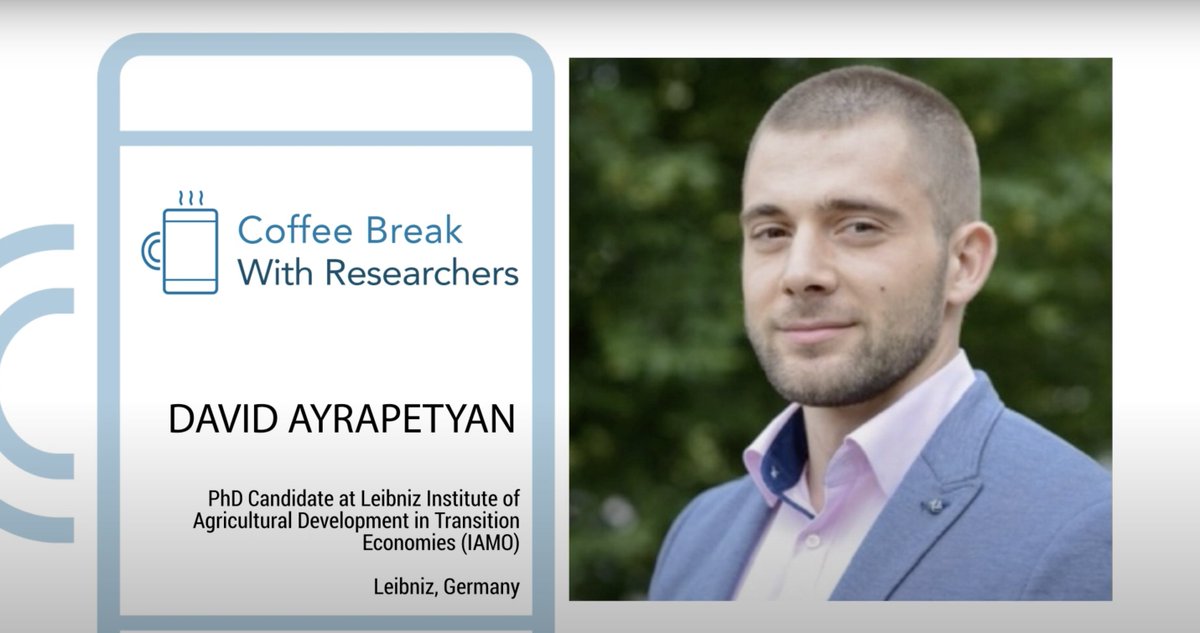
Congratulations to @Ayrapetyand! The winner of our next Coffee Break with Researchers! He is a PhD Student at the @iamoLeibniz and will explain his paper The role of #sustainability in the emergence and evolution of #bioeconomy clusters (2022). Looking forward!!
We demonstrate how cluster-greening is different from normal evolution, the multiscalarity of greening, and how its imperative that policies encourage not just technological-entrepreneurs, but also place-leaders, institutional-entrepreneurs - read more - https://t.co/jRQcKVcZmi
#Trafobit member Ram Kamath's latest open publication, with Dr. Aitziber Elola from @orkestra, and with Dr. @hermans_f from @iamoLeibniz, on how industrial clusters become greener, is available free to read, here - https://t.co/9OGsrCArce
Using the framework, we a created a 30-year event-history that shows how regional factors, industrial factors, and phenomena beyond the region shaped the #GreenInnovation behaviour of firms in the Basque Pulp-and-Paper #biocluster, and thus, its transition to sustainability
Paper alert! #Bioeconomy is on the rise to address daunting environmental challenges. Can #bioclusters help to achieve sustainability? More on this in the new paper authored by @Ayrapetyand, @NicoBefort, and @hermans_f.
free acces link:
https://t.co/5OR07BpTdc
Even green-clusters cannot be completely free of pollution and absolutely decoupled growth of clusters is close to impossible. This calls for greater nuance in defining the role of green-clusters in sustainable development. For more detail, go to :- https://t.co/Cmh5pjDbSb
Trafobit members Ram Kamath, @hermans_f, & @ZhanliSun have just published a new paper - "Policy instruments for green-growth of clusters: Implications from an agent-based model" in EIST @STRN_Network. Access the paper for free here till June 09 -https://t.co/kToxW88CQl
Our study indicates that it might be quite impossible for policy makers “to have their sustainability cake and eat it too”. Our results demonstrate how complex it is, to design effective instruments for the green-growth of peripheral-clusters.
⚠️Call to action for #bioeconomy experts
As #biomonitor_EU we need your help to explore bioeconomy monitoring practices and frameworks that could be applicable to your area of expertise.
Join the survey➡️https://t.co/oKgJRoxavF
You have time until March 30th