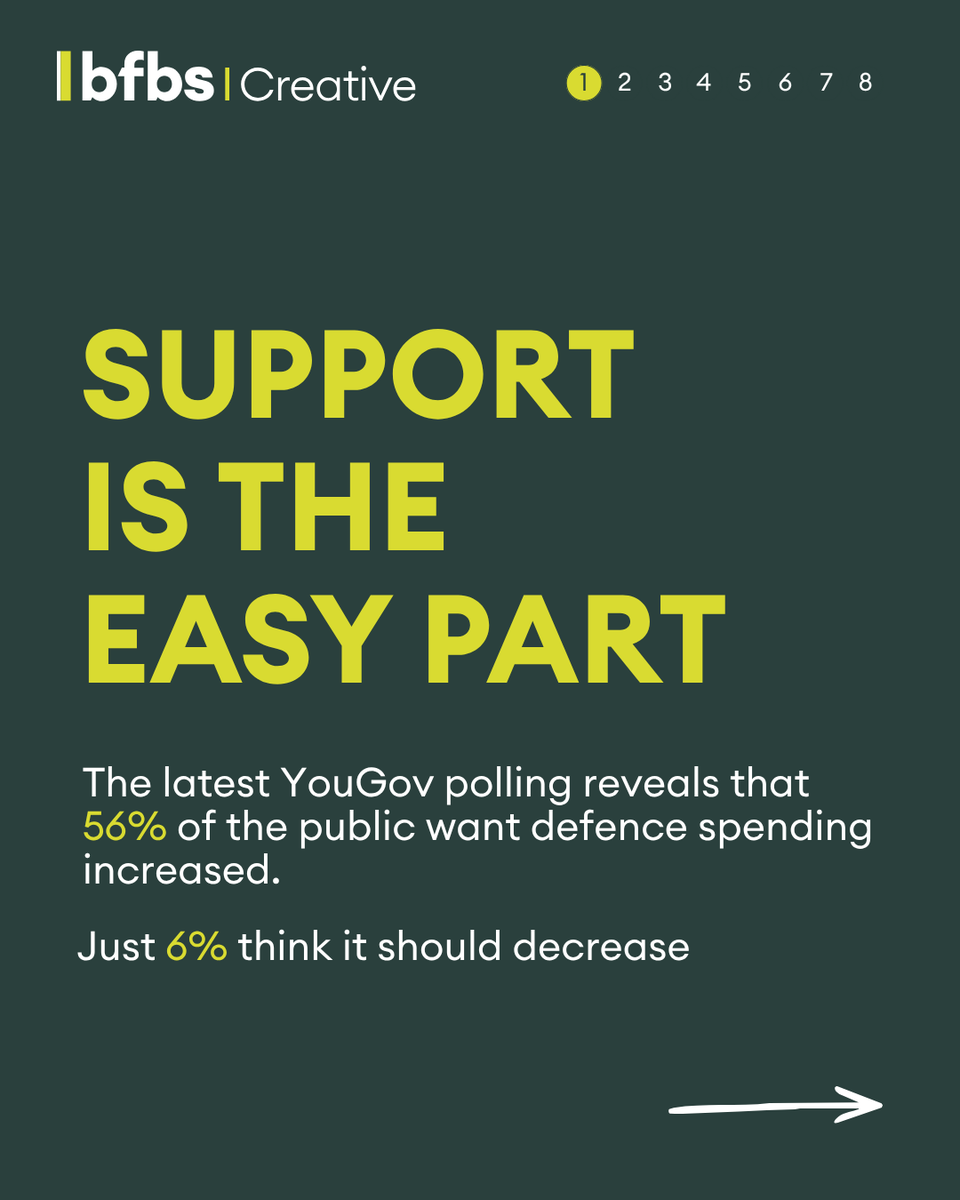
What if winning the argument for more defence spending was never the hard part?
New @YouGov polling shows 56% of the British public want defence spending increased. Just 6% want it cut.
That support holds across almost every group, which is incredibly rare. Only 18-24 year olds and Green voters break from that pattern.
However, the moment you ask how to pay for it, the consensus collapses.
We've pulled out what the findings mean for defence communicators.
Is the challenge convincing people to back defence, or convincing them to carry the cost?
Visit our LinkedIn page to see the full post:
https://t.co/ScFJUCHcv1
Source polling: YouGov survey of 2,076 GB adults, fieldwork 23–24 April 2026
https://t.co/h7wm6SZC10
#Defence #StrategicCommunications #AudienceInsight
🇱🇻 Two days in Riga. Dozens of speakers. Hundreds of conversations.
So, what were the key themes emerging from Day 2 of NATO Strategic Communications Centre of Excellence Riga StratCom Dialogue?
1️⃣ Automation
AI is rapidly changing the economics of communication. Campaigns that once required significant resource can now be created, adapted and distributed at a scale that was previously impossible.
The challenge is that scale and effectiveness are not the same thing.
As communication becomes easier to create, it also becomes easier to flood the information environment with content, noise and competing narratives.
2️⃣ Resilience
In an environment where influence can be generated at machine speed, resilience becomes increasingly important.
As 🇺🇦 Yaroslav Turbil put it, societies need to invest in their information "immune system", helping people identify manipulation and misinformation for themselves, rather than relying on it being debunked after the fact.
3️⃣ Shared reality
As AI-generated content becomes more accessible and information increasingly personalised, understanding what's real, what's trustworthy and who to trust is becoming more complex.
4️⃣ Strategic initiative
Tetiana Haiduchyk described this as the ability to defend the information environment proactively, rather than simply responding to it.
💡 Beneath many of these discussions was a broader question:
As AI becomes more capable, are we investing enough in the people behind it?
Technology will continue to evolve.
The ability to think critically, understand audiences, make sense of complexity and apply sound judgement remains essential.
Human judgement remains the decisive advantage.
Of course, some of the most valuable conversations happened outside the sessions.
Over the past two days, we caught up with familiar faces, made new connections and heard a wide range of perspectives on the challenges organisations are facing right now.
We're looking forward to continuing those conversations and helping organisations navigate an increasingly complex information environment.
If you weren't in Riga but would like to discuss an idea or comms challenge, get in touch via DM or email.
📩 [email protected]
#RigaStratComDialogue #StrategicCommunications #AI #InformationEnvironment #Resilience
One question kept resurfacing on Day 1 at NATO Strategic Communications Centre of Excellence
How do organisations navigate an increasingly complex world?
Across discussions on AI, trust, security, technology and the information environment, several related themes emerged:
→ Organisations are navigating increasing complexity and looking for ways to create greater clarity, understanding and resilience.
→ Trust was one of those themes, alongside broader conversations about credibility, audience understanding and how organisations can move beyond reacting to events and instead help shape the conditions for future success.
→ Increasingly, strategic communications is being recognised as a core capability, helping organisations make sense of complexity, understand audiences and create clarity when uncertainty is high.
Beyond the panels, the conversations continued in the Marketplace, with plenty of discussion around communications challenges, audience understanding and how organisations are navigating an increasingly complex environment.
We'll be back in the Marketplace for Day 2 tomorrow.
If you're attending and would like to discuss a communications challenge, exchange ideas or simply connect, come and say hello to Ethan and Daniel.
#RigaStratCom #StrategicCommunications #Defence #InformationEnvironment
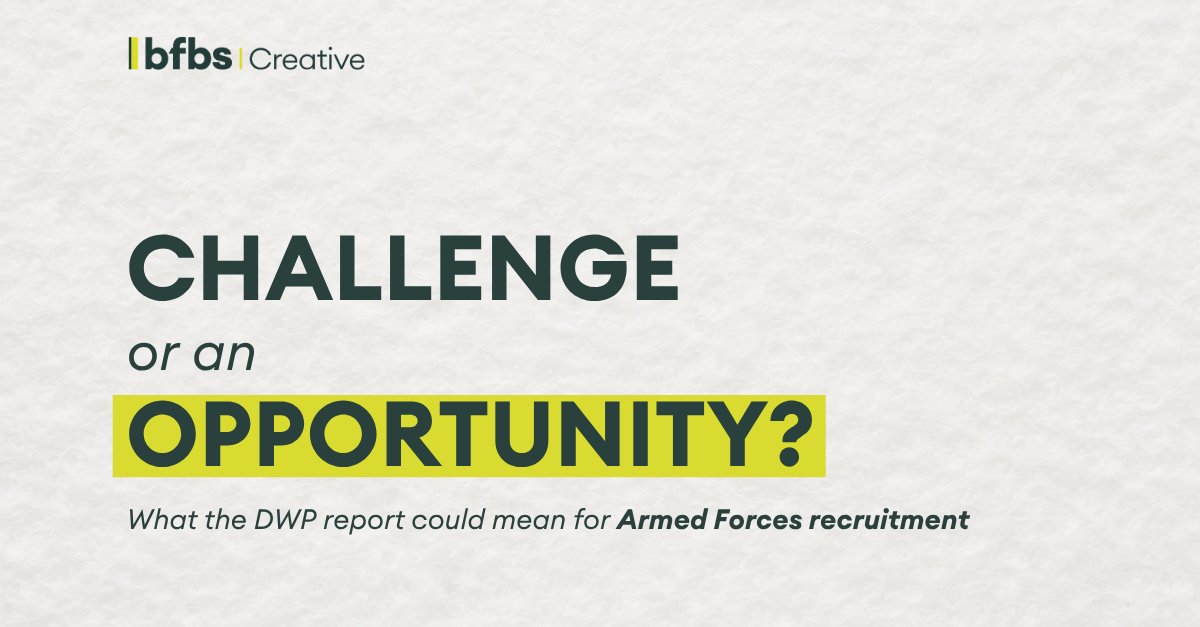
Challenge or opportunity?
The Department for Work and Pensions (DWP) latest Young People and Work report found that nearly a million young people are currently not in education, employment or training.
So it's easy to see why much of the conversation has focused on the scale of the challenge.
But the report also found that 84% want a job, education or training.
Which raises an interesting question for organisations competing for talent.
Could some of the young people often discussed as a workforce challenge represent an overlooked recruitment opportunity?
In this article, Tom explores what the findings could mean for Armed Forces recruitment.
Read more ↓
https://t.co/T3rFcJFSwt
#TheCommsDispatch #Recruitment #Defence #AudienceInsight
What if nearly a million young people who are not in education, employment or training aren't just a workforce challenge, but a recruitment opportunity?
The Department for Work and Pensions' latest 'Young People and Work' report highlights a stark reality: 957,000 young people in the UK are not in education, employment or training.
Much of the conversation focuses on the problem.
But one finding changes the conversation:
84% say they want a job, education or training.
So what is getting in the way?
We've pulled together some of the key insights from the report and what they could mean for Armed Forces recruitment.
Is the bigger challenge attracting young people, or helping them take the next step?
Interested in reading more? View our post on LinkedIn:
https://t.co/o3rYFOnZBm
#Defence #ArmedForcesRecruitment #YouthEmployment #Research
When someone trusts you with their lived experience, the responsibility doesn’t end with producing a good piece of content.
Our latest edition of The Comms Dispatch explores co-production and why the process of gathering, shaping and sharing stories matters just as much as the final piece.
A thoughtful article by Caroline Robbins on ethical storytelling and communication practice.
Read the full piece below 👇🏽
https://t.co/rwvrxdIxRd
#Communications #Storytelling #Defence #TheCommsDispatch
How do people feel after interacting with you at work?
Sometimes the smallest things can make the biggest difference: feeling heard, being welcomed into conversation or somebody simply taking the time to check in properly.
For Mental Health Awareness Month, our latest article reflects on belonging, listening and the everyday behaviours that can help shape workplace culture.
Inspired by conversations from The Culture Colonel hosted by Lindsay MacDuff, featuring guests Nick Wood and Siobhán Sheridan.
🔗 Read more on our website:
creative.bfbs/blog
#WorkplaceCulture #Leadership #Belonging #MentalHealthAwarenessMonth #TheCultureColonel
Your audience is forming opinions about you in spaces you don’t control.
And the people influencing them most probably don’t work for your organisation.
They’re creators.
Peers.
Commenters.
People who simply feel more authentic and relatable.
That shift is changing how trust and influence work online.
Tom explores why peer voices now often carry more weight than institutional messaging and what that means for modern communications.
So how do organisations better understand the voices, narratives and dynamics shaping their audiences online?
Our Information Environment report explores exactly that 👇🏽
https://t.co/SN7rlFnReb
#StrategicCommunications #InformationEnvironment
What if one of the strongest protections against extremism isn’t louder messaging, but connection?
Our latest article explores:
→ why isolation can make harmful narratives more appealing
→ how conversation helps build resilience and trust
→ what the RESIST 3 framework tells us about modern information threats
→ why human connection still matters in fragmented information environments
The conversations we create, encourage or avoid can shape more than we realise.
Read more 👇🏽
https://t.co/rwvrxdI01F
#StrategicCommunications #InformationThreats #NationalSecurity #Resilience
How much of yourself do you feel able to bring to work?
On our podcast, The Culture Colonel, Siobhan Sheridan CBE reflects on leadership, belonging and why feeling comfortable in yourself matters more than we sometimes realise.
In conversation with Lindsay MacDuff, Siobhán explores the pressure people can feel to fit in, and how simply showing up as yourself can quietly shape the culture around you.
A conversation about authenticity, belonging and the impact culture can have on how people feel at work.
🔎 Search The Culture Colonel, Season 2 Episode 5: 'Get Curious Before Getting Critical' wherever you get your podcasts, or listen here 👇🏽
https://t.co/3X3CPcK17e
#MentalHealthAwarenessMonth #Leadership #Culture #PsychologicalSafety
Why are some governments starting to communicate very differently online?
This edition of The Comms Dispatch takes a look at France’s French Response account and why it’s getting so much attention.
Tom explores what happens when government teams respond more quickly, communicate more directly and engage in the same online spaces where narratives are already forming.
The memes are what get attention. The bigger story is how these teams are operating online.
It’s about recognising that the information environment has changed, and that traditional communications approaches are increasingly being tested by it.
Read more 👇🏽
https://t.co/rwvrxdI01F
#StrategicCommunications #GovernmentCommunications #InformationEnvironment #Defence
Need to create communications, but not sure where to start?
From insight and strategy through to content and delivery, we can support teams at every stage.
Whether you need full delivery or targeted support, we’ll work alongside you in a way that works for you.
It’s all focused on creating impact where it matters.
Wherever you need it.
If this sounds familiar, let’s talk.
📩 [email protected]
#BFBSCreative #ArmedForces #Defence #StrategicCommunications #NonProfit
Good design is accessible design ✨
Small choices can make a big difference.
Colour contrast. Captions. Alt text. Readable fonts. Clear layouts. These details shape how people experience your content.
Accessibility isn’t an add-on. It’s part of creating better communications for everyone.
Our Senior Graphic Designer Elaine shares practical tips and useful resources to help you make your content more inclusive.
'Designing for Everyone: A Practical Guide to Accessible Digital Content'
Read the full piece on our website:
https://t.co/OcTd3o6V1A
#Accessibility #InclusiveDesign #BFBSCreative #Communications
Earlier this week, conversations about allyship were front and centre at the Naval Servicewomen’s Network Conference.
For many people, the next question is:
What can I do?
On our podcast, The Culture Colonel, Captain Tim Grimley shares practical thoughts on leadership, culture and allyship.
“In order to empathise, you must listen to the lived experience of our people, of our women.”
→ Feeling heard reduces stress
→ Inclusion supports wellbeing
→ Strong cultures build stronger teams
🎧 Hear Captain Tim Grimley with Lindsay MacDuff on The Culture Colonel
🔍 Search The Culture Colonel - Season 1, Episode 7 wherever you get your podcasts, or listen here:
https://t.co/iYVAkXCrKL
#Leadership #Allyship #Inclusion #StressAwarenessMonth
You’ve been given responsibility for communications and not sure where to start?
You’re not alone.
Here are five practical ways military leaders can build confidence, strengthen their approach and avoid common pitfalls.
Useful for anyone new to Defence communications, looking to sharpen their approach or wanting a practical refresher.
Know someone who may find it useful? This could be worth sharing with them.
Read more here: https://t.co/kxOcqJMcGo
#Defence #Leadership #Communications #Military
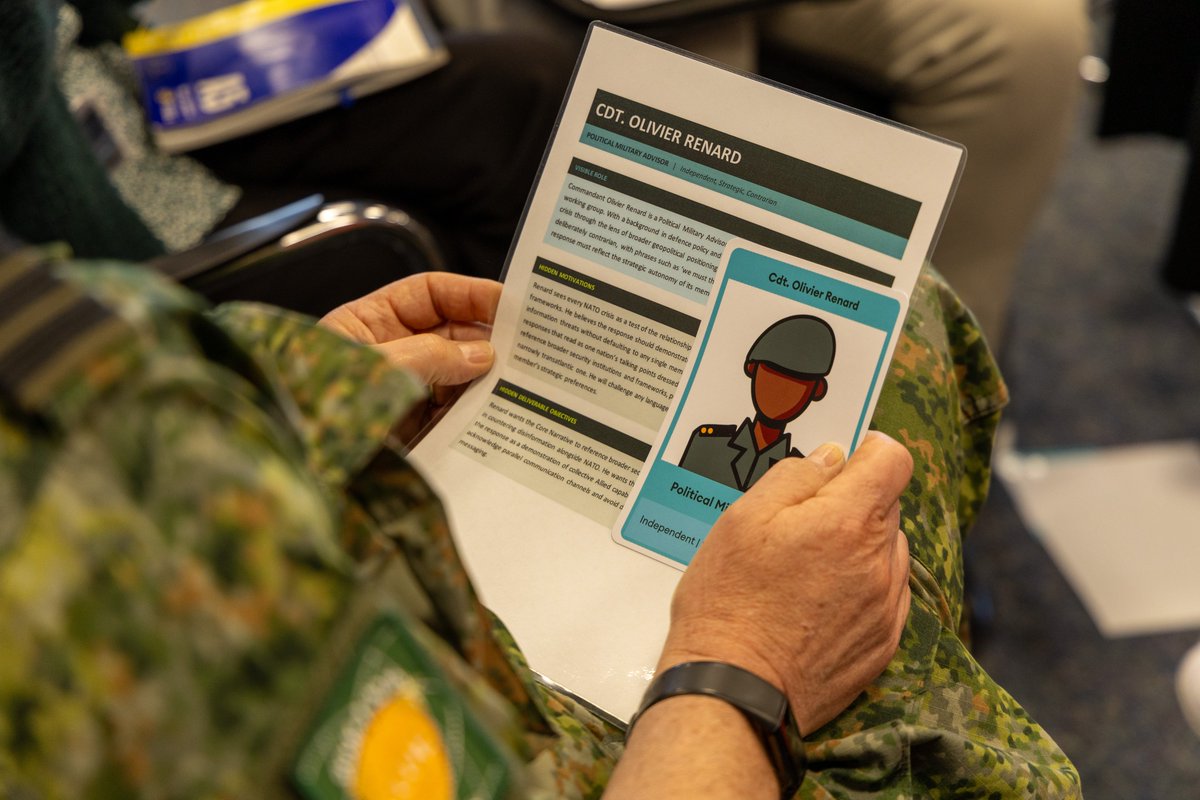
What if the biggest challenge in a crisis isn’t the threat itself, but how pressure shapes decisions in the room?
That was the challenge explored at @NATO Civil-Military Cooperation Centre of Excellence (CCOE) conference acaCIMICs VOL II’s, where Adam Waters represented @BFBSCreative .
Participants took part in Fault Lines, our disinformation simulation designed to reveal how pressure can affect decision-making through competing priorities, unclear ownership and incomplete information.
Because even strong teams can find decisions harder when the stakes are high.
Find out more: https://t.co/1dMDH8GXuL
Interested in exploring Fault Lines for your team?
📩 [email protected]
#BFBSCreative #NATO #Leadership #Resilience #DecisionMaking #StrategicCommunications
Power isn’t just a title. It’s how people make others feel.
In this episode of The Culture Colonel podcast, Adrian Bird reflects on why authority and leadership are not the same thing.
Titles can be assigned, but trust, credibility and influence have to be built over time.
That matters even more in pressured workplaces.
When people trust leadership, they’re more likely to speak up, ask for help and support each other. When trust is low, stress can grow in silence.
📷 Hear Adrian Bird in conversation with Lindsay MacDuff in Season 2, Episode 3: Be Excellent to Each Other with Adrian Bird.
Listen here: https://t.co/Wv8uNIDDWX
#StressAwarenessMonth #Leadership #WorkplaceCulture #Podcast #TheCultureColonel
Not every piece of misinformation needs a response.
But a lot of communication teams still feel the need to react to everything.
More posts.
More rebuttals.
More “correcting the record.”
The problem is, that can actually make things worse.
It can amplify noise, give attention to the wrong things, and pull you into the wrong conversation.
This piece looks at why better judgement matters more than louder communication.
Read the full piece here ⬇️:
https://t.co/vOvId7ecYG
#StrategicCommunications #Misinformation #CommsStrategy