Most of you remember when, in the peak-woke fever of name changing, Maury Hall at USNA was renamed Carter Hall.
Most just heard, "...Maury was a Confederate."
As usual at peak-woke, mostly emotion soaked smooth brain thinking was the norm.
Who was Matthew Fontaine Maury, and why did he have a building named after him?
This thread will hopefully cause some people to look at life with an adult's eyes.
1/x In the 1840s, a lame American naval officer, grounded at a desk in Washington, cut weeks off the world's ocean voyages without inventing a single machine. His raw material: a warehouse of logbooks nobody had ever read. Matthew Fontaine Maury, Pathfinder of the Seas. A 🧵
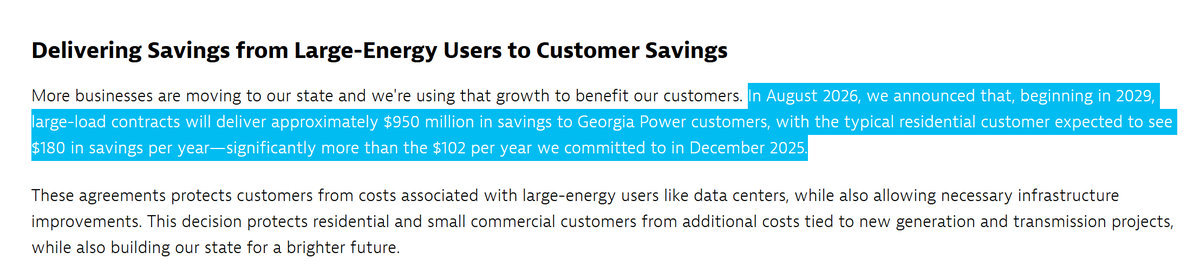
The electricity price news just keeps getting better for Georgians.
Georgia Power announced that new large-load contracts (overwhelmingly data centers) will save their customers nearly a billion dollars, erasing about $180 per year from their bills!
Bravo, the U.S. Air Force weapon systems officer who was stranded behind enemy lines in Iran for two days, tells 60 Minutes about the first message he was able to send to the U.S.: “God is good.” https://t.co/xqTEaggw2A
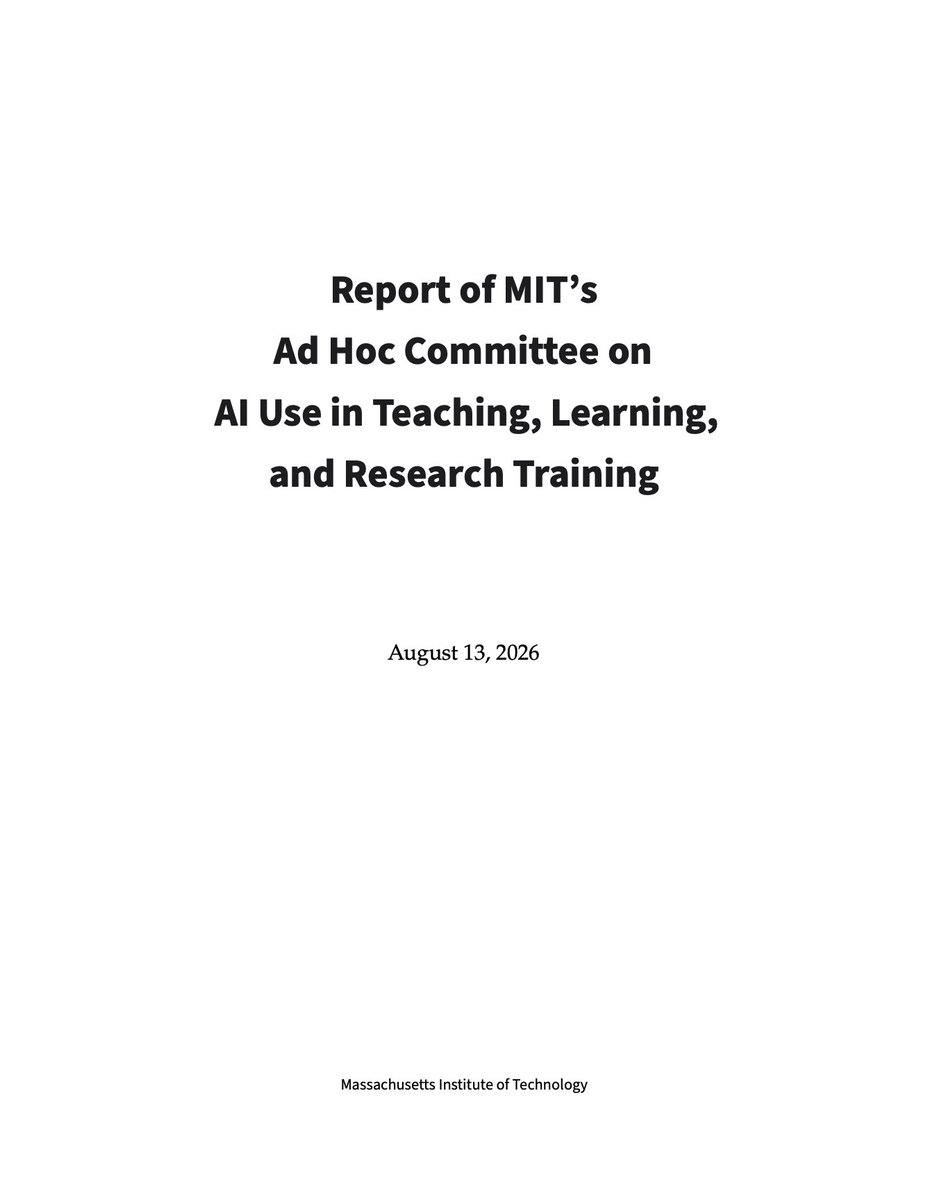
MIT published a brutally honest report on what AI is doing to students.
A committee of professors and students spent five months studying how AI changed learning on campus, and the findings read like a warning to every university on the planet.
Study groups are disappearing. Office hours are emptying out. Problem sets and take-home exams no longer prove anything, because AI can produce credible solutions to almost any written assignment in the undergraduate curriculum. Students who lean on chatbots lose mastery and confidence, and some slip into what the report calls cognitive surrender, reaching for AI at the first hint of struggle.
The numbers are rough. 46 percent of surveyed MIT undergrads use LLMs daily. 90 percent worry about their own overreliance. Undergrads who feel AI makes them replaceable now outnumber those who feel it makes them capable.
The committee's answer surprised me. They refused to fight AI with surveillance. The report calls AI detectors unreliable, says lockdown browsers feel like spying, and warns that policing students builds a classroom atmosphere of mutual distrust.
Instead, MIT wants to rebuild education around the things AI can't replace. That means oral exams, semester portfolios, in-person project work, and a required social component in every subject. The report even floats the idea of rethinking grades entirely, since without a GPA to optimize, much of the incentive to cheat with AI evaporates.
The committee warns professors against replacing undergrad research assistants with AI agents just because they're cheaper, because a university exists to grow people, not output.
The most famous tech school on earth admitted the machines broke its way of teaching. Its answer is more humans, not more software.
Yesterday, West Virginia put out a report on how data centers are affecting the state. How?
They're making it rich.
Data centers are allowing the state to cut income taxes, fund schools, rebuild sewers and water treatment facilities, curb electrical costs, and generate jobs!
This is what it means to be a hero!
Figure out what's the right answer.
Stick doggedly to ensuring that preparations are made.
Fight the skeptics.
See to it that there is follow-through.
We must fight stupid and dangerous ideas. My high school son told me this morning that a fellow football player was trying to convince him and his teammates that communism and socialism are good and capitalism is bad. We used the moment to strengthen his clear, fact-based response to this absurd position.
We discussed the tens of millions killed under communist regimes and how the United States fought throughout the Cold War to prevent communism’s spread.
The historical record provides conclusive evidence that communism and socialism have failed to deliver what they promise. The Soviet Union collapsed. Maoist China produced famine and mass poverty until it adopted market reforms. Cuba remains poor and repressive. Venezuela turned one of the world’s wealthiest countries into an economic disaster. These systems do not create equality or shared prosperity. They concentrate power and wealth in the hands of a ruling class while leaving everyone else poorer and less free.
Capitalism helped build the United States into the world’s greatest nation and only superpower. It rests on the principle that regardless of your background, hard work, initiative, and determination can produce prosperity and even wealth. @ConceptualJames
Parenting requires more than asking whether your children completed their homework. You must educate them, guide them, and prepare them to challenge bad ideas. If you allow algorithms, social media, and foreign-influenced platforms to raise and educate your children, do not be surprised when they believe stupid things.
Communism is a mortal threat to American liberty. @WhiteHouse
Did Lindsay Clancy ask her children whether they were “unable to emotionally handle” being strangled by their mother?
Did she ask a similar question of her husband?
Jeff Bezos @JeffBezos , I’m asking you to look at this once through the eyes of the people wearing the uniform since you own @washingtonpost.
We volunteered and accepted the bargain. Missed birthdays, broken bodies, years away from our families, hostile fire, and the possibility that if we die, our families get roughly $500,000 in life insurance. In much of America today, that barely buys a house.
We know our lot and we’re not complaining about it.
But the job is hard enough without having to wonder whether an American newspaper is going to publish classified wartime command deliberations because its newsroom despises the administration and wants another cheap political scalp.
Fight the President, the Secretary, the Pentagon. Whatever, that’s politics.
But when the ammunition for that fight is information tied to ongoing operations and the private judgments of senior commanders, you’re spending our risk to buy your headline.
That’s the part WE need you to understand.
Murphy already gets a vote. So does the enemy. Exhaustion, bad intelligence, mechanical failure and plain rotten luck all get votes. We volunteered to face those things.
We did NOT volunteer to become collateral damage in the Washington Post’s feud with an administration it hates.
Your reporters will publish the piece, watch the engagement numbers, and go home.
Some American kid will still be standing watch when they do.
Jeff, give us a fucking chance. Come on man. You’ve got to clean house at that paper. The journalists are too blackpilled to be of any use anymore. In fact, they’re literally harming us.
Our brothers and sisters are in a worse situation now due to this reporting. Don’t agree with the combat operations, fine. But come on. Leaking an SDOB? That’s objectively insane behavior.
***to my followers: share so we know he sees this.***
JUST IN: Trade unions threaten to withhold political support from candidates opposing data centers, warning thousands of blue-collar jobs could be lost.
This week in “data centers raise your bill:”
- Georgia Power: Residential savings go from $102/yr to $180/yr by 2029
- PG&E: 4th rate cut in 2 years, down 11% since 2024
- Indiana Michigan asks regulators for a rate reduction
All cite data center growth as the reason.
In Louisiana, data center deals are letting them freeze customer bills and expand energy production so the grid can be more reliable and cleaner.
Thanks, data centers!
this is misleading in 3 major ways. Ronan completely misrepresents how data centers are taxed.
1. it's uncommon to impose sales taxes on datacenters, for a very ordinary tax policy reason
2. data centers pay far more in taxes than just sales taxes - property taxes, corporate income taxes, tangible personal property, corporate income tax, gross receipts tax.
3. Georgia is not unusually lenient tax wise
1. DCs are often rightfully exempt from sales taxes
so data centers actually seldom pay sales taxes. this makes sense. sales tax is meant to fall on the final consumer, not an intermediate process. (that's not my opinion, that's just the tax policy consideration). a data center buying GPUs is not the final sale. the final sale is the consumer buying a subscription from OpenAI.
there's a reason we don't impose sales taxes on intermediate goods. you don't tax the wheat / the flour / the oven / the trucks. you just impose a sales tax on the final loaf of bread. otherwise you end up with multiple taxes embedded in the price of the loaf and a massively extractive tax system.
the same with GPUs. they are an intermediate input into a finished product which is a token delivered to a consumer. our tax system only approximates this and sometimes businesses and states have to negotiate. generally the answer is to waive sales taxes. in a study by the tax foundation only 1 of 12 states contemplated (CA) charged sales taxes to a datacenter [1].
the sales tax is not foregone entirely, it is just charged to the person or business consuming the final product.
also consider that if Georgia were to try and charge this tax, the DCs would just site themselves somewhere else, because most other states also don't impose this specific tax.
not to mention, even if the sales taxes were imposed, Georgia already has ANOTHER tax break [2] which contemplated this same principle (of not taxing intermediate computer goods). this is the older "High-Technology Computer Equipment exemption" which would give a tech company an exemption from most of the sales taxes on computer equipment purchased. a jan 2026 analysis [3] from the same group Ronan cites concludes that eliminating sales tax would not produce the "$474m in sales taxes" Ronan cites because 82.4% of equipment purchases would be excludable based on the prior exemption. so even if sales taxes were reimposed, it's not like datacenters would magically start paying all those taxes. so the $474m he's complaining about is largely fictitious.
2. sales taxes are just one piece of the puzzle
data centers pay wayyyy more in taxes than just sales taxes (which they often don't pay, by design).
an analysis from the tax foundation [1] looking at 12 common jurisdictions found that the main tax burdens for DCs were property taxes, corporate income tax, and tangible personal property. of those 12 jurisdictions, sales taxes only amounted to 13.7% of a datacenter's tax burden on average (since they are so frequently waived). so Ronan is complaining about the waiver of an infrequently imposed tax while ignoring the very significant taxes paid by datacenters. a billion-dollar datacenter in Atlanta GA, for instance, will pay roughly $108m in taxes over a decade to state and local governments, according to that analysis (excluding federal taxes!). and assuming NO sales tax. of that $108m paid to local and state, it's 58m in property tax, $34m in tangible personal property tax, $16m in electricity sales tax. the city county and state authorities are still very much benefiting fiscally from these datacenters.
so Ronan's analysis of $474m in foregone sales taxes vs only $41m back from the industry is wrong on both counts. Georgia would have never collected that $474m; DCs were mostly shielded from it anyway even if the special data center exemption was repealed. the audit Ronan cites does not consider the whole tax picture of local/municipal/city/state - it ignores property taxes, which is a majority a GA-based datacenter's tax bill!
as Ronan notes, at least 38 states waive sales taxes for DCs, which should tip you off that what's going on is not some super unusual bespoke tax break but in fact a very ordinary, widespread tax policy: not taxing intermediate computer equipment. sales taxes are a consumption tax. a datacenter buying servers or GPUs is not consuming. those are business inputs to a subsequent product. these are exempt for the broader tax policy reason of avoiding tax pyramiding.
3. Georgia isn't particularly lenient
so is Georgia super lenient in its tax treatment of datacenters? not really!
looking again at the tax foundation's analysis (last picture), a datacenter in Atlanta GA has a totally middle of the pack state+local tax burden. Georgia isn't some kind of bizarre tax haven for datacenters.
sources:
[1] https://t.co/RNUFLewd45
[2] https://t.co/zmePvJVmF2
[3] https://t.co/zHsYcVbUKm




![nic_carter's tweet photo. this is misleading in 3 major ways. Ronan completely misrepresents how data centers are taxed.
1. it's uncommon to impose sales taxes on datacenters, for a very ordinary tax policy reason
2. data centers pay far more in taxes than just sales taxes - property taxes, corporate income taxes, tangible personal property, corporate income tax, gross receipts tax.
3. Georgia is not unusually lenient tax wise
1. DCs are often rightfully exempt from sales taxes
so data centers actually seldom pay sales taxes. this makes sense. sales tax is meant to fall on the final consumer, not an intermediate process. (that's not my opinion, that's just the tax policy consideration). a data center buying GPUs is not the final sale. the final sale is the consumer buying a subscription from OpenAI.
there's a reason we don't impose sales taxes on intermediate goods. you don't tax the wheat / the flour / the oven / the trucks. you just impose a sales tax on the final loaf of bread. otherwise you end up with multiple taxes embedded in the price of the loaf and a massively extractive tax system.
the same with GPUs. they are an intermediate input into a finished product which is a token delivered to a consumer. our tax system only approximates this and sometimes businesses and states have to negotiate. generally the answer is to waive sales taxes. in a study by the tax foundation only 1 of 12 states contemplated (CA) charged sales taxes to a datacenter [1].
the sales tax is not foregone entirely, it is just charged to the person or business consuming the final product.
also consider that if Georgia were to try and charge this tax, the DCs would just site themselves somewhere else, because most other states also don't impose this specific tax.
not to mention, even if the sales taxes were imposed, Georgia already has ANOTHER tax break [2] which contemplated this same principle (of not taxing intermediate computer goods). this is the older "High-Technology Computer Equipment exemption" which would give a tech company an exemption from most of the sales taxes on computer equipment purchased. a jan 2026 analysis [3] from the same group Ronan cites concludes that eliminating sales tax would not produce the "$474m in sales taxes" Ronan cites because 82.4% of equipment purchases would be excludable based on the prior exemption. so even if sales taxes were reimposed, it's not like datacenters would magically start paying all those taxes. so the $474m he's complaining about is largely fictitious.
2. sales taxes are just one piece of the puzzle
data centers pay wayyyy more in taxes than just sales taxes (which they often don't pay, by design).
an analysis from the tax foundation [1] looking at 12 common jurisdictions found that the main tax burdens for DCs were property taxes, corporate income tax, and tangible personal property. of those 12 jurisdictions, sales taxes only amounted to 13.7% of a datacenter's tax burden on average (since they are so frequently waived). so Ronan is complaining about the waiver of an infrequently imposed tax while ignoring the very significant taxes paid by datacenters. a billion-dollar datacenter in Atlanta GA, for instance, will pay roughly $108m in taxes over a decade to state and local governments, according to that analysis (excluding federal taxes!). and assuming NO sales tax. of that $108m paid to local and state, it's 58m in property tax, $34m in tangible personal property tax, $16m in electricity sales tax. the city county and state authorities are still very much benefiting fiscally from these datacenters.
so Ronan's analysis of $474m in foregone sales taxes vs only $41m back from the industry is wrong on both counts. Georgia would have never collected that $474m; DCs were mostly shielded from it anyway even if the special data center exemption was repealed. the audit Ronan cites does not consider the whole tax picture of local/municipal/city/state - it ignores property taxes, which is a majority a GA-based datacenter's tax bill!
as Ronan notes, at least 38 states waive sales taxes for DCs, which should tip you off that what's going on is not some super unusual bespoke tax break but in fact a very ordinary, widespread tax policy: not taxing intermediate computer equipment. sales taxes are a consumption tax. a datacenter buying servers or GPUs is not consuming. those are business inputs to a subsequent product. these are exempt for the broader tax policy reason of avoiding tax pyramiding.
3. Georgia isn't particularly lenient
so is Georgia super lenient in its tax treatment of datacenters? not really!
looking again at the tax foundation's analysis (last picture), a datacenter in Atlanta GA has a totally middle of the pack state+local tax burden. Georgia isn't some kind of bizarre tax haven for datacenters.
sources:
[1] https://t.co/RNUFLewd45
[2] https://t.co/zmePvJVmF2
[3] https://t.co/zHsYcVbUKm](https://pbs.twimg.com/media/HQ03t7rXEAAf8aV.jpg)
![nic_carter's tweet photo. this is misleading in 3 major ways. Ronan completely misrepresents how data centers are taxed.
1. it's uncommon to impose sales taxes on datacenters, for a very ordinary tax policy reason
2. data centers pay far more in taxes than just sales taxes - property taxes, corporate income taxes, tangible personal property, corporate income tax, gross receipts tax.
3. Georgia is not unusually lenient tax wise
1. DCs are often rightfully exempt from sales taxes
so data centers actually seldom pay sales taxes. this makes sense. sales tax is meant to fall on the final consumer, not an intermediate process. (that's not my opinion, that's just the tax policy consideration). a data center buying GPUs is not the final sale. the final sale is the consumer buying a subscription from OpenAI.
there's a reason we don't impose sales taxes on intermediate goods. you don't tax the wheat / the flour / the oven / the trucks. you just impose a sales tax on the final loaf of bread. otherwise you end up with multiple taxes embedded in the price of the loaf and a massively extractive tax system.
the same with GPUs. they are an intermediate input into a finished product which is a token delivered to a consumer. our tax system only approximates this and sometimes businesses and states have to negotiate. generally the answer is to waive sales taxes. in a study by the tax foundation only 1 of 12 states contemplated (CA) charged sales taxes to a datacenter [1].
the sales tax is not foregone entirely, it is just charged to the person or business consuming the final product.
also consider that if Georgia were to try and charge this tax, the DCs would just site themselves somewhere else, because most other states also don't impose this specific tax.
not to mention, even if the sales taxes were imposed, Georgia already has ANOTHER tax break [2] which contemplated this same principle (of not taxing intermediate computer goods). this is the older "High-Technology Computer Equipment exemption" which would give a tech company an exemption from most of the sales taxes on computer equipment purchased. a jan 2026 analysis [3] from the same group Ronan cites concludes that eliminating sales tax would not produce the "$474m in sales taxes" Ronan cites because 82.4% of equipment purchases would be excludable based on the prior exemption. so even if sales taxes were reimposed, it's not like datacenters would magically start paying all those taxes. so the $474m he's complaining about is largely fictitious.
2. sales taxes are just one piece of the puzzle
data centers pay wayyyy more in taxes than just sales taxes (which they often don't pay, by design).
an analysis from the tax foundation [1] looking at 12 common jurisdictions found that the main tax burdens for DCs were property taxes, corporate income tax, and tangible personal property. of those 12 jurisdictions, sales taxes only amounted to 13.7% of a datacenter's tax burden on average (since they are so frequently waived). so Ronan is complaining about the waiver of an infrequently imposed tax while ignoring the very significant taxes paid by datacenters. a billion-dollar datacenter in Atlanta GA, for instance, will pay roughly $108m in taxes over a decade to state and local governments, according to that analysis (excluding federal taxes!). and assuming NO sales tax. of that $108m paid to local and state, it's 58m in property tax, $34m in tangible personal property tax, $16m in electricity sales tax. the city county and state authorities are still very much benefiting fiscally from these datacenters.
so Ronan's analysis of $474m in foregone sales taxes vs only $41m back from the industry is wrong on both counts. Georgia would have never collected that $474m; DCs were mostly shielded from it anyway even if the special data center exemption was repealed. the audit Ronan cites does not consider the whole tax picture of local/municipal/city/state - it ignores property taxes, which is a majority a GA-based datacenter's tax bill!
as Ronan notes, at least 38 states waive sales taxes for DCs, which should tip you off that what's going on is not some super unusual bespoke tax break but in fact a very ordinary, widespread tax policy: not taxing intermediate computer equipment. sales taxes are a consumption tax. a datacenter buying servers or GPUs is not consuming. those are business inputs to a subsequent product. these are exempt for the broader tax policy reason of avoiding tax pyramiding.
3. Georgia isn't particularly lenient
so is Georgia super lenient in its tax treatment of datacenters? not really!
looking again at the tax foundation's analysis (last picture), a datacenter in Atlanta GA has a totally middle of the pack state+local tax burden. Georgia isn't some kind of bizarre tax haven for datacenters.
sources:
[1] https://t.co/RNUFLewd45
[2] https://t.co/zmePvJVmF2
[3] https://t.co/zHsYcVbUKm](https://pbs.twimg.com/media/HQ03r5UWQAAjwgo.jpg)
![nic_carter's tweet photo. this is misleading in 3 major ways. Ronan completely misrepresents how data centers are taxed.
1. it's uncommon to impose sales taxes on datacenters, for a very ordinary tax policy reason
2. data centers pay far more in taxes than just sales taxes - property taxes, corporate income taxes, tangible personal property, corporate income tax, gross receipts tax.
3. Georgia is not unusually lenient tax wise
1. DCs are often rightfully exempt from sales taxes
so data centers actually seldom pay sales taxes. this makes sense. sales tax is meant to fall on the final consumer, not an intermediate process. (that's not my opinion, that's just the tax policy consideration). a data center buying GPUs is not the final sale. the final sale is the consumer buying a subscription from OpenAI.
there's a reason we don't impose sales taxes on intermediate goods. you don't tax the wheat / the flour / the oven / the trucks. you just impose a sales tax on the final loaf of bread. otherwise you end up with multiple taxes embedded in the price of the loaf and a massively extractive tax system.
the same with GPUs. they are an intermediate input into a finished product which is a token delivered to a consumer. our tax system only approximates this and sometimes businesses and states have to negotiate. generally the answer is to waive sales taxes. in a study by the tax foundation only 1 of 12 states contemplated (CA) charged sales taxes to a datacenter [1].
the sales tax is not foregone entirely, it is just charged to the person or business consuming the final product.
also consider that if Georgia were to try and charge this tax, the DCs would just site themselves somewhere else, because most other states also don't impose this specific tax.
not to mention, even if the sales taxes were imposed, Georgia already has ANOTHER tax break [2] which contemplated this same principle (of not taxing intermediate computer goods). this is the older "High-Technology Computer Equipment exemption" which would give a tech company an exemption from most of the sales taxes on computer equipment purchased. a jan 2026 analysis [3] from the same group Ronan cites concludes that eliminating sales tax would not produce the "$474m in sales taxes" Ronan cites because 82.4% of equipment purchases would be excludable based on the prior exemption. so even if sales taxes were reimposed, it's not like datacenters would magically start paying all those taxes. so the $474m he's complaining about is largely fictitious.
2. sales taxes are just one piece of the puzzle
data centers pay wayyyy more in taxes than just sales taxes (which they often don't pay, by design).
an analysis from the tax foundation [1] looking at 12 common jurisdictions found that the main tax burdens for DCs were property taxes, corporate income tax, and tangible personal property. of those 12 jurisdictions, sales taxes only amounted to 13.7% of a datacenter's tax burden on average (since they are so frequently waived). so Ronan is complaining about the waiver of an infrequently imposed tax while ignoring the very significant taxes paid by datacenters. a billion-dollar datacenter in Atlanta GA, for instance, will pay roughly $108m in taxes over a decade to state and local governments, according to that analysis (excluding federal taxes!). and assuming NO sales tax. of that $108m paid to local and state, it's 58m in property tax, $34m in tangible personal property tax, $16m in electricity sales tax. the city county and state authorities are still very much benefiting fiscally from these datacenters.
so Ronan's analysis of $474m in foregone sales taxes vs only $41m back from the industry is wrong on both counts. Georgia would have never collected that $474m; DCs were mostly shielded from it anyway even if the special data center exemption was repealed. the audit Ronan cites does not consider the whole tax picture of local/municipal/city/state - it ignores property taxes, which is a majority a GA-based datacenter's tax bill!
as Ronan notes, at least 38 states waive sales taxes for DCs, which should tip you off that what's going on is not some super unusual bespoke tax break but in fact a very ordinary, widespread tax policy: not taxing intermediate computer equipment. sales taxes are a consumption tax. a datacenter buying servers or GPUs is not consuming. those are business inputs to a subsequent product. these are exempt for the broader tax policy reason of avoiding tax pyramiding.
3. Georgia isn't particularly lenient
so is Georgia super lenient in its tax treatment of datacenters? not really!
looking again at the tax foundation's analysis (last picture), a datacenter in Atlanta GA has a totally middle of the pack state+local tax burden. Georgia isn't some kind of bizarre tax haven for datacenters.
sources:
[1] https://t.co/RNUFLewd45
[2] https://t.co/zmePvJVmF2
[3] https://t.co/zHsYcVbUKm](https://pbs.twimg.com/media/HQ0zBnEWkAA-gJH.png)








![nic_carter's tweet photo. this is misleading in 3 major ways. Ronan completely misrepresents how data centers are taxed.
1. it's uncommon to impose sales taxes on datacenters, for a very ordinary tax policy reason
2. data centers pay far more in taxes than just sales taxes - property taxes, corporate income taxes, tangible personal property, corporate income tax, gross receipts tax.
3. Georgia is not unusually lenient tax wise
1. DCs are often rightfully exempt from sales taxes
so data centers actually seldom pay sales taxes. this makes sense. sales tax is meant to fall on the final consumer, not an intermediate process. (that's not my opinion, that's just the tax policy consideration). a data center buying GPUs is not the final sale. the final sale is the consumer buying a subscription from OpenAI.
there's a reason we don't impose sales taxes on intermediate goods. you don't tax the wheat / the flour / the oven / the trucks. you just impose a sales tax on the final loaf of bread. otherwise you end up with multiple taxes embedded in the price of the loaf and a massively extractive tax system.
the same with GPUs. they are an intermediate input into a finished product which is a token delivered to a consumer. our tax system only approximates this and sometimes businesses and states have to negotiate. generally the answer is to waive sales taxes. in a study by the tax foundation only 1 of 12 states contemplated (CA) charged sales taxes to a datacenter [1].
the sales tax is not foregone entirely, it is just charged to the person or business consuming the final product.
also consider that if Georgia were to try and charge this tax, the DCs would just site themselves somewhere else, because most other states also don't impose this specific tax.
not to mention, even if the sales taxes were imposed, Georgia already has ANOTHER tax break [2] which contemplated this same principle (of not taxing intermediate computer goods). this is the older "High-Technology Computer Equipment exemption" which would give a tech company an exemption from most of the sales taxes on computer equipment purchased. a jan 2026 analysis [3] from the same group Ronan cites concludes that eliminating sales tax would not produce the "$474m in sales taxes" Ronan cites because 82.4% of equipment purchases would be excludable based on the prior exemption. so even if sales taxes were reimposed, it's not like datacenters would magically start paying all those taxes. so the $474m he's complaining about is largely fictitious.
2. sales taxes are just one piece of the puzzle
data centers pay wayyyy more in taxes than just sales taxes (which they often don't pay, by design).
an analysis from the tax foundation [1] looking at 12 common jurisdictions found that the main tax burdens for DCs were property taxes, corporate income tax, and tangible personal property. of those 12 jurisdictions, sales taxes only amounted to 13.7% of a datacenter's tax burden on average (since they are so frequently waived). so Ronan is complaining about the waiver of an infrequently imposed tax while ignoring the very significant taxes paid by datacenters. a billion-dollar datacenter in Atlanta GA, for instance, will pay roughly $108m in taxes over a decade to state and local governments, according to that analysis (excluding federal taxes!). and assuming NO sales tax. of that $108m paid to local and state, it's 58m in property tax, $34m in tangible personal property tax, $16m in electricity sales tax. the city county and state authorities are still very much benefiting fiscally from these datacenters.
so Ronan's analysis of $474m in foregone sales taxes vs only $41m back from the industry is wrong on both counts. Georgia would have never collected that $474m; DCs were mostly shielded from it anyway even if the special data center exemption was repealed. the audit Ronan cites does not consider the whole tax picture of local/municipal/city/state - it ignores property taxes, which is a majority a GA-based datacenter's tax bill!
as Ronan notes, at least 38 states waive sales taxes for DCs, which should tip you off that what's going on is not some super unusual bespoke tax break but in fact a very ordinary, widespread tax policy: not taxing intermediate computer equipment. sales taxes are a consumption tax. a datacenter buying servers or GPUs is not consuming. those are business inputs to a subsequent product. these are exempt for the broader tax policy reason of avoiding tax pyramiding.
3. Georgia isn't particularly lenient
so is Georgia super lenient in its tax treatment of datacenters? not really!
looking again at the tax foundation's analysis (last picture), a datacenter in Atlanta GA has a totally middle of the pack state+local tax burden. Georgia isn't some kind of bizarre tax haven for datacenters.
sources:
[1] https://t.co/RNUFLewd45
[2] https://t.co/zmePvJVmF2
[3] https://t.co/zHsYcVbUKm](https://pbs.twimg.com/media/HQ060GiWcAANafh.jpg)


