Business,Identity,&Networks (BINS)conference brings together economists who study how social,cultural, gender, identities&. networks affect firm outcomes
In Brazil, firm owners hire workers registered with the same political party as themselves. They appear to believe that copartisan workers will work better in the firm. Such workers get paid more and promoted faster.
Polarization in the board increase during presidential election years. It reduces forced ouster of the CEO. But reduces firm investment and environmental performance
Join us for the 3rd annual Business, Identity, and Networks (BINS) conference to be held virtually, July 20-21, 2023.
Hear from economists doing cutting-edge work on politics, race, gender identity in business
#EconConf#EconTwitter#EconC4P#diversityinbusiness
they find that courts and networks are substitutes for contract enforcement in the business world. But when disadvantaged castes’ entrepreneurs don’t have networks to use, they stand to gain more from improvements in courts.
Paola Giuliano (Keynote Speaker) speaks about her research in 20 minutes on "The Long-Term Effects of Immigrants in America", do join us.
Please register: https://t.co/AxLZGUGb0Q
#EconConf#EconC4P#diversityinbusiness#EconTwitter
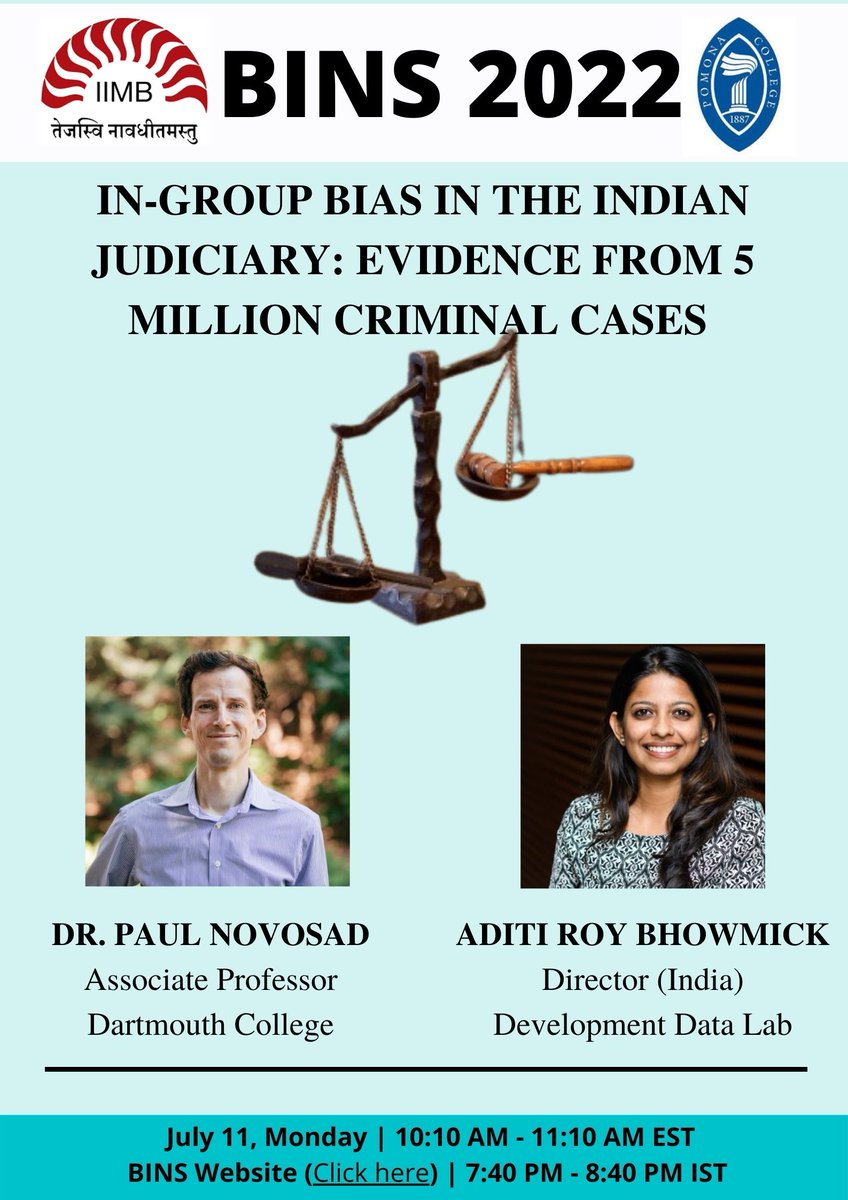
Aditi Roy Bhowmick and Paul Novosad speaks about their research in 10 minutes on "In-Group Bias in the Indian Judiciary: Evidence from Five Million Criminal Cases", do join us.
Please register: https://t.co/AxLZGUGb0Q
#EconConf#EconC4P#diversityinbusiness#EconTwitter
Panel discussion on Bridging the Gap: Learnings from Industry and Academia with industry practitioners Joyce Chen, Elda Pema and Dan Svirsky which will be moderated by @manishagoelecon will start in 30 minutes, do join us.
Please register: https://t.co/AxLZGUGb0Q
Yihui pan speaks about her research with Xiaoxia Peng in 20 minutes on "Ancestral Connections and Corporate Alliances: The Role of Culture in Mitigating Holdup".
Please register: https://t.co/AxLZGUGb0Q
#EconConf#EconC4P#diversityinbusiness#EconTwitter#EconC4P
they find that firm partnerships and joint venture location decisions are highly influenced by deep rooted cultural connections between regions and firm executives
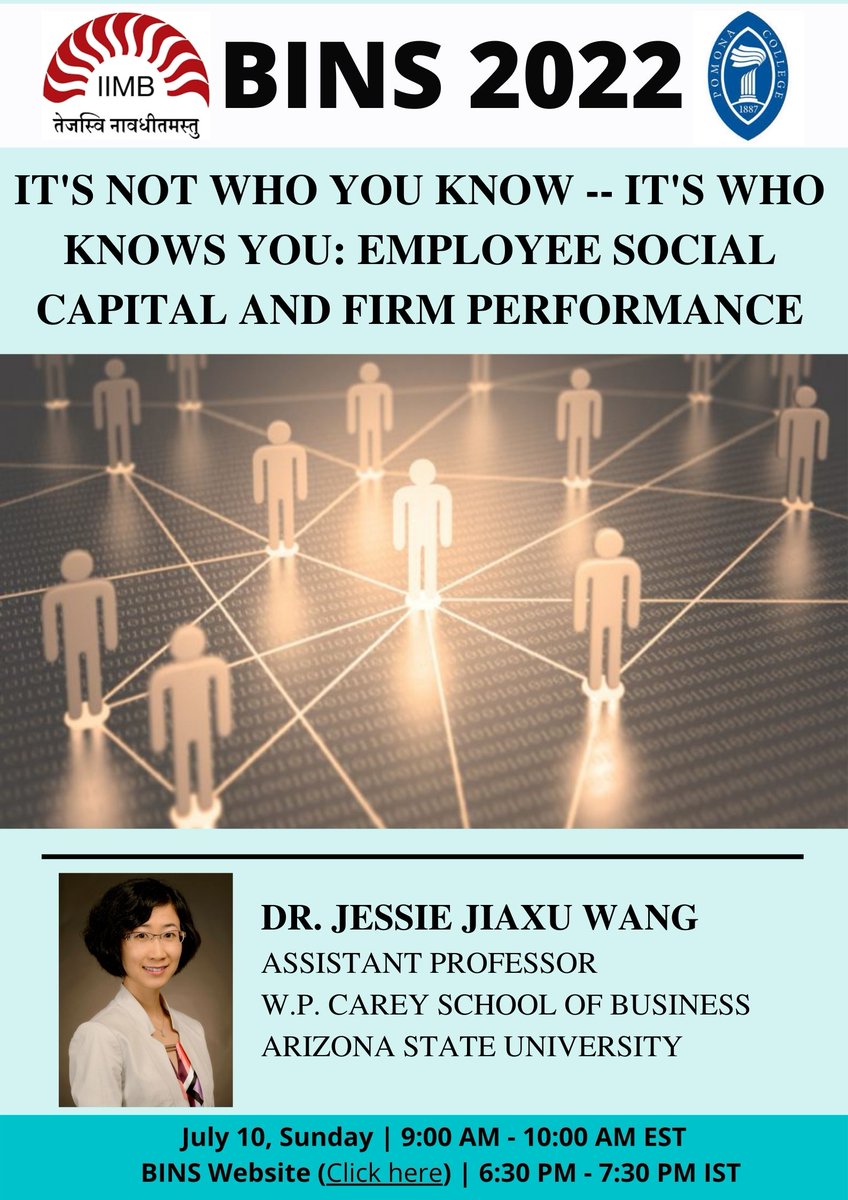
they find social networks matter for firms. Not just networks of top mgt but also of lower level workers. Not all networks are equal. If outside folks know a firm's employees, firm performance improves.
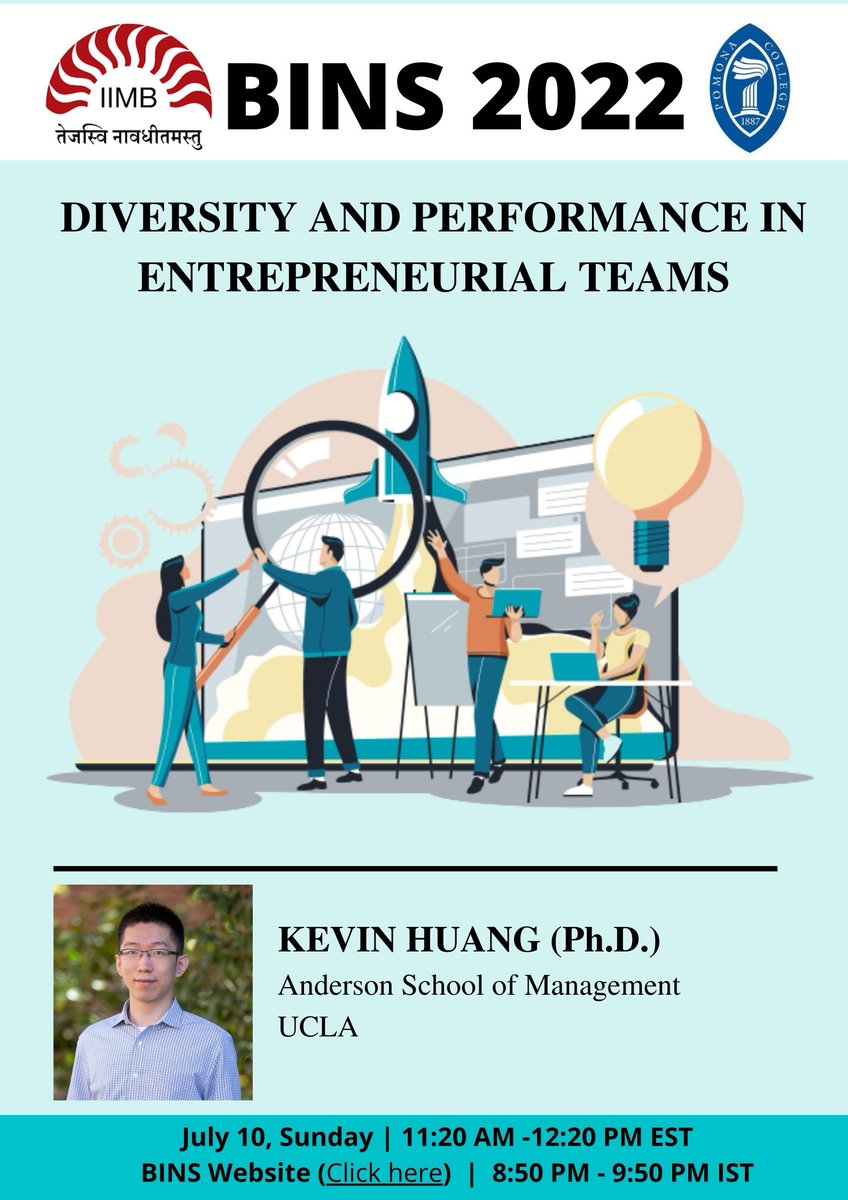
they find that Harvard business schools were not thrilled to be randomly assigned to entrepreneurial teams. When given the chance, they formed teams along gender and ethnicity.