🔥 THE BURN KEEPS GOING.
2.347% of $DELVER supply burned. That's 23,470,593 tokens gone forever.
Next stop: 3%
Already 34.7% of the way there.
Every dip feeds the fire.
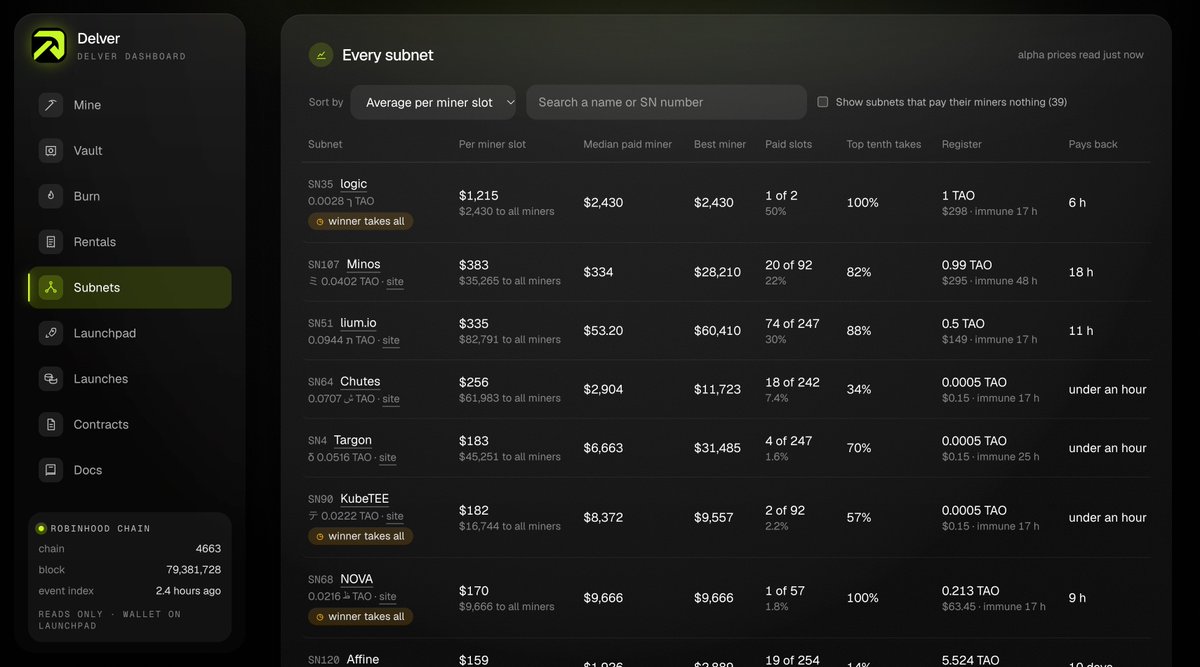
We’ve been building a new Subnets dashboard to answer a simple question:
What does mining on Bittensor actually pay, subnet by subnet?
Instead of looking at hashes, we’re tracking what miners earn from useful AI work comparing:
→ Average payout per miner slot
→ Median & best miner performance
→ Paid vs unpaid slots
→ Subnet registration cost
→ Payback time
→ Winner-takes-all dynamics
→ Total miner emissions
Every subnet becomes an opportunity that can be evaluated against its cost of entry and expected return.
Delver is entering a new phase.
A lot has been happening behind the scenes, and we’re now starting to move into the next stage.
Mining is live.
Infrastructure is growing.
The ecosystem is expanding.
And there’s much more being prepared.
We’re only getting started.
Delver is entering a new phase.
A lot has been happening behind the scenes, and we’re now starting to move into the next stage.
Mining is live.
Infrastructure is growing.
The ecosystem is expanding.
And there’s much more being prepared.
We’re only getting started.
⛏️ $DELVER Mining Update
We’re digging deeper into the actual performance of our rented mining capacity.
One interesting observation so far:
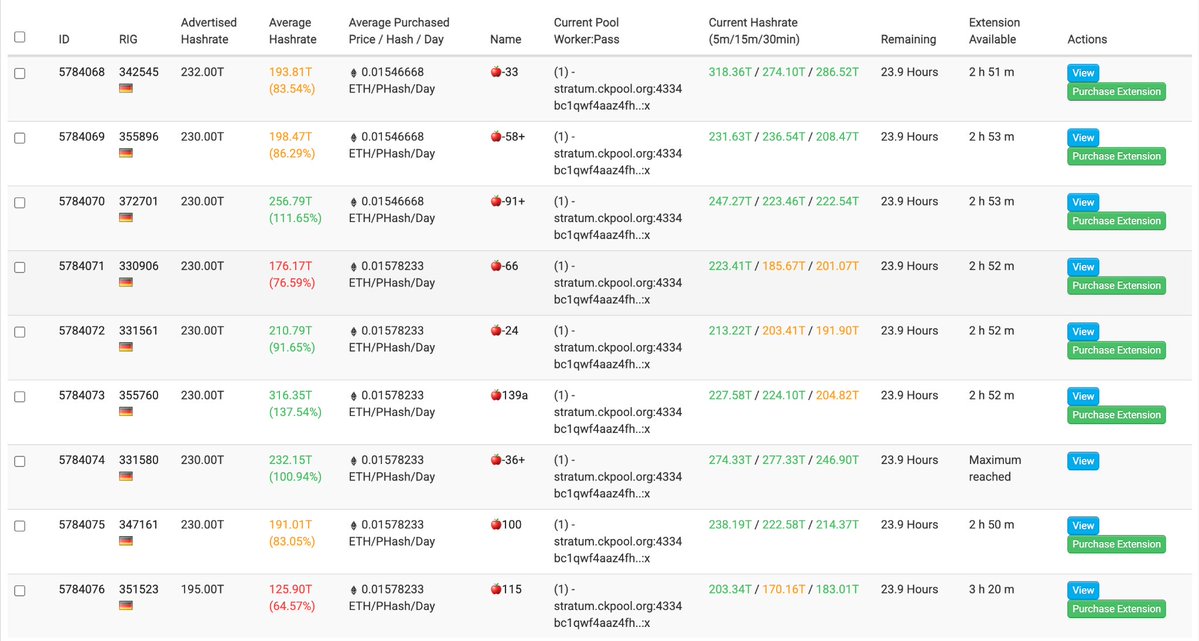
Advertised hashrate ≠ sustained hashrate.
Across the rigs we're monitoring, short-term hashrate can temporarily exceed the advertised capacity, while the 15m and 30m averages give us a much clearer picture of sustained performance.
Current observations show sustained delivery sitting around ~93% of advertised hashrate, while short-term peaks can reach 100%+.
That’s why we’re tracking:
• Advertised hashrate
• 5m / 15m / 30m hashrate
• Pool hashrate
• Accepted shares
• Uptime
• Rental duration
The goal is simple:
Don’t just show the hashrate. Prove the hashrate.
We’re building the infrastructure to make $DELVER mining performance increasingly transparent and measurable.
DELVER's Keeper runs on one principle: rules over discretion.
It buys only on dips, burns every token it buys, and records every transaction publicly onchain.
Now we're exploring how to make those rules even harder to game.
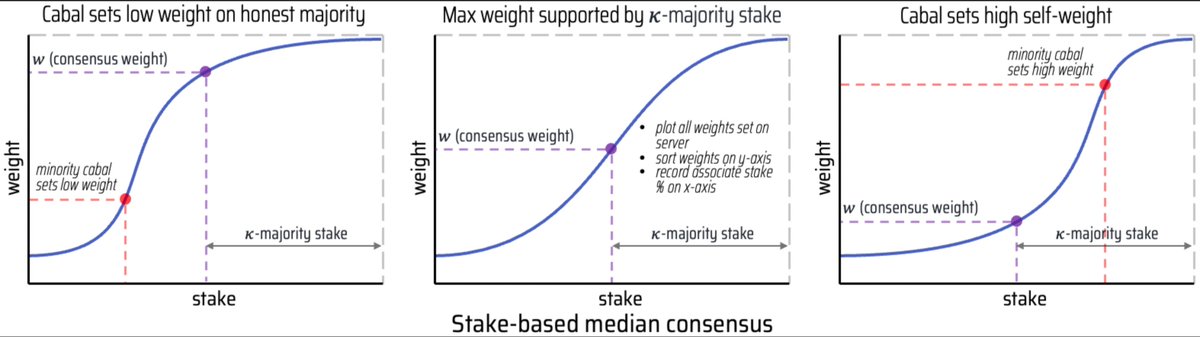
We're studying Bittensor's Yuma Consensus a mechanism designed to reduce reward manipulation in subjective networks through stake weighted consensus, consensus clipping, and time smoothed validator bonds.
The idea we're exploring is simple:
Don't let a single extreme input determine the outcome.
For DELVER, that could mean exploring a more robust reference mechanism where an isolated price spike can't disproportionately influence when the Keeper acts.
We're also looking at reproducible simulations so anyone can independently verify how different price conditions would affect DELVER's buy and burn behavior.
$DELVER
source : https://t.co/3dn2bfjAi4
SHA-256 for Bitcoin is LIVE on Delver
Bitcoin mining is now live on the Delver demo.
Every hashpower order is recorded alongside the transaction that paid for it showing what was purchased, where the payment came from, and what the mining pool measured afterward.
50% of each fee cycle is allocated to hourly hashpower rentals, powering:
1. Equihash → Zcash
2. SHA-256 → Bitcoin
The entire process is tracked through an append-only public log, making the mining activity transparent and verifiable.
Real orders. Real transactions. Real hashpower. Real mining.
SHA-256 for BTC is live demo below.
The mining operation is now fully live, with 9 active rigs running continuously and connected directly to the mining pool.
Across the entire fleet, we currently have more than 2.0 PH/s of advertised hashrate, with the combined pool-reported hashrate reaching over 2.1 PH/s at the time of this snapshot.
Every rig is actively contributing compute power to the pool, with individual rigs delivering between approximately 125 TH/s and 316 TH/s.
⚡ 9 Rigs Online
⛏️ 2+ PH/s Total Mining Capacity
📡 Direct Pool Connection
📊 Real-time Hashrate Monitoring
🔄 24-Hour Active Rentals
🟢 All Rigs Currently Running
This is more than just a dashboard number.
It represents the real infrastructure powering $DELVER's mining operation physical hashrate, active machines, live pool connections, and continuous participation in the network.
And this is only the beginning.
As we expand the operation, we can continue adding more hashrate, more rigs, and additional mining opportunities starting with @Zcash today and expanding into @Bitcoin and other networks over time.
Real rigs. Real hashrate. Real mining activity.
Delver is building the infrastructure behind the mining economy.